



The Art of Seasoning: How Gourmet Salts and Spices Shape the Kaviar Omakase
At Kaviar, seasoning is deliberate storytelling. The right salt or spice transforms an exceptional ingredient into a precise, layered bite — balancing texture, fat and brine to reveal nuance over the course of an omakase. This guide walks you through the flavor signatures of salts like fleur de sel and Maldon, the thought behind Japanese-inspired spice blends for A5 Wagyu and caviar, and chef-level techniques that protect and amplify premium produce. You’ll find pairing principles, a step-by-step approach for seasoning seared A5, and micro-pairing tips for caviar — plus visual and practical resources to sharpen your tasting. Select references to experiencing these rituals at Kaviar explain how a tasting menu and reservation let you see these techniques in action without overshadowing the wider culinary lessons.
Which premium salts do we use at Kaviar, and what do they taste like?
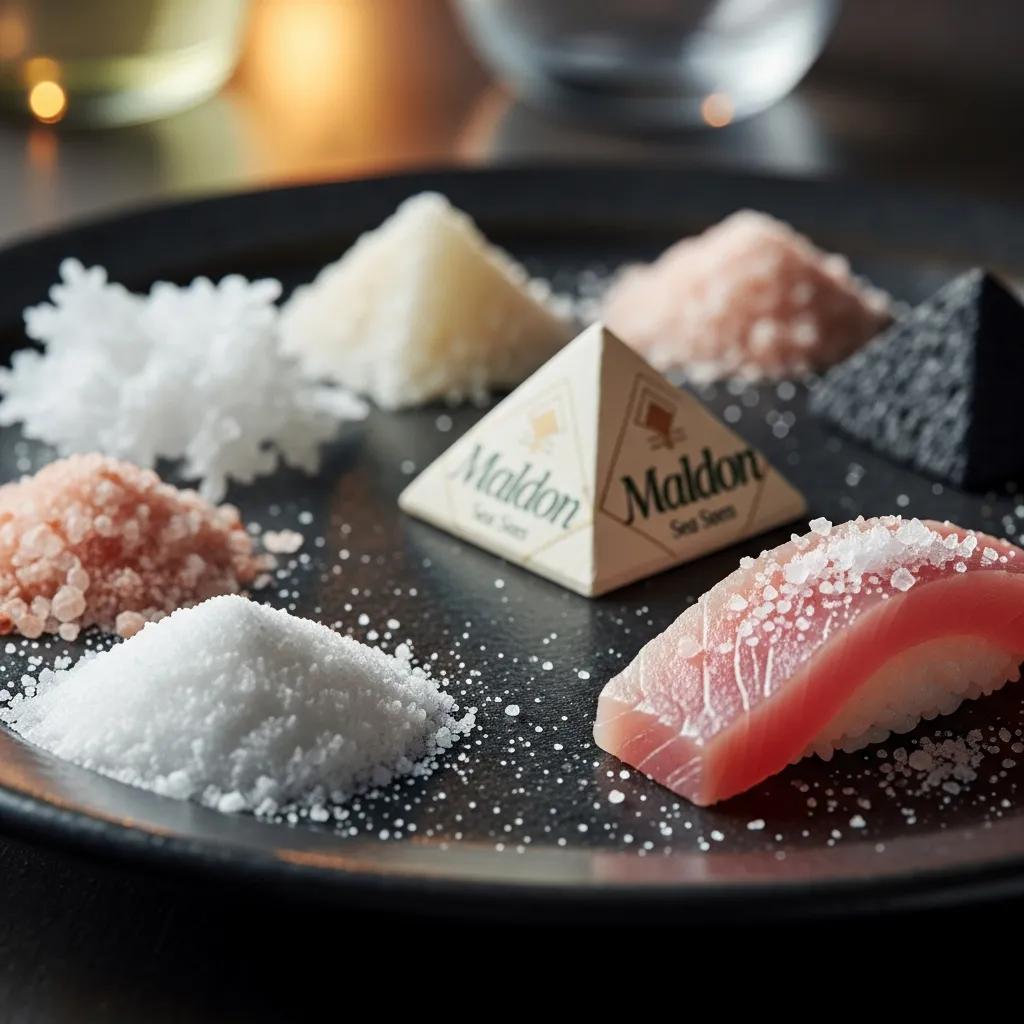
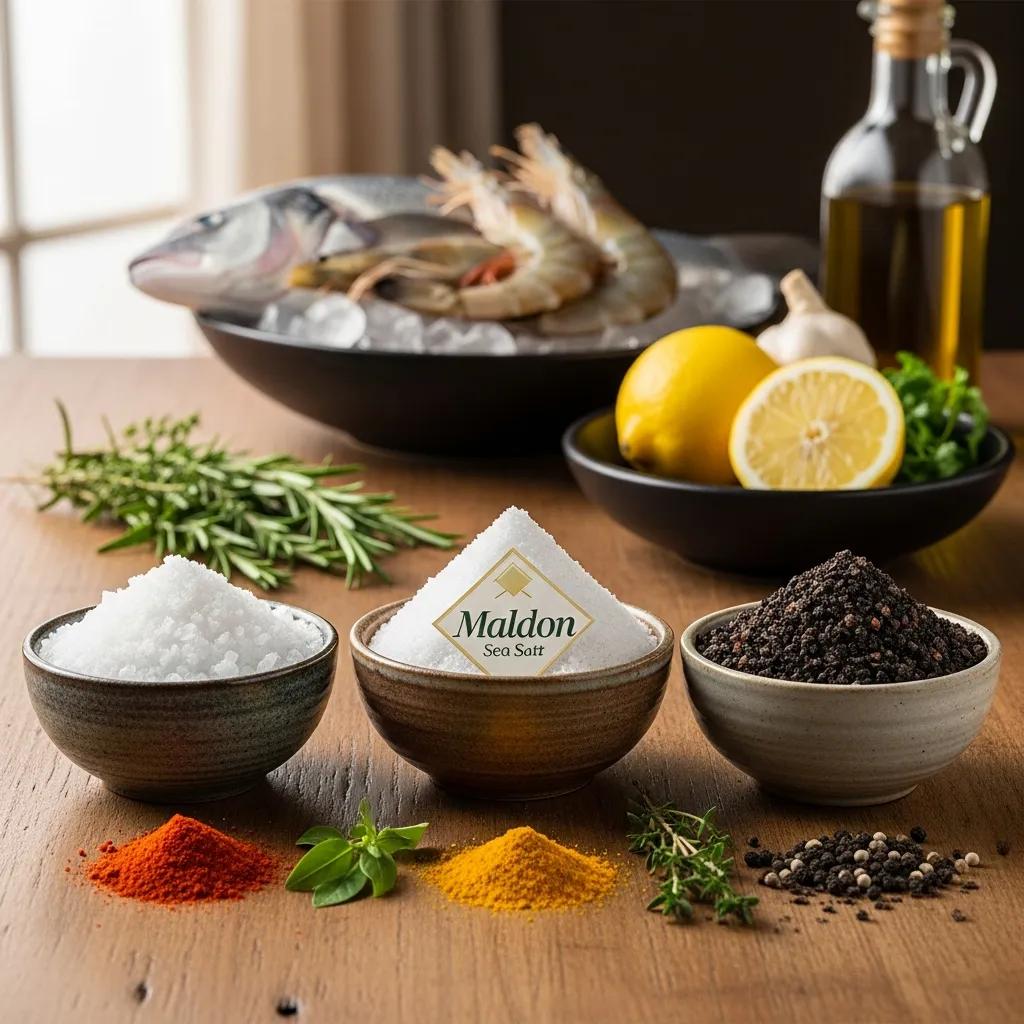
Salts differ by origin, crystal structure and mineral trace — and those differences change mouthfeel and how flavors open on the palate. Finishing salts such as fleur de sel, flaky Maldon and cold‑smoked sea salt deliver contrasting textures and subtle mineral notes that can lift sashimi or intensify the umami of seared beef. Chefs select salt with intent: a large flake gives crunch and immediacy, a fine grain dissolves to season internally, and a smoked salt adds aromatic depth without heavy spice. Knowing these roles helps both cooks and diners predict how a single pinch will shift balance during a tasting sequence.
Below is a compact comparison outlining origin, texture, flavor cues and ideal pairings:
This table shows how mineral source and crystal form influence sensory effect and practical use, helping you choose the right finishing salt for each course.
How do fleur de sel and Maldon elevate omakase pieces?
Finishing salts alter perception through texture, dissolution rate and mineral complexity. A whisper of fleur de sel on sashimi dissolves slowly, highlighting sweetness and briny nuance without upsetting delicate flesh. Maldon’s flaky pyramids add a purposeful crunch and a clean burst of salinity on a seared slice of A5 Wagyu, offsetting rich fat with tactile contrast. Chefs typically finish at the last moment so the timing of salinity matches each course’s intended peak — a small but decisive touch in the tasting’s narrative.
Where do Kaviar’s signature salts come from, and how are they used?
Provenance matters: salts harvested by hand from tidal ponds carry marine aromatics and a luxury story, while flaked salts from controlled evaporation deliver crisp texture for finishing. Smoked salts draw character from the choice of wood and smoking technique, adding aromatic echoes without heavy seasoning. Our chefs match origin to function — mineral‑forward salts that brighten, flaked salts that add texture, smoked salts that echo grilled notes — so provenance supports both flavor and the guest’s experience of the dish.
Which signature spice blends define Kaviar’s seasoning approach?
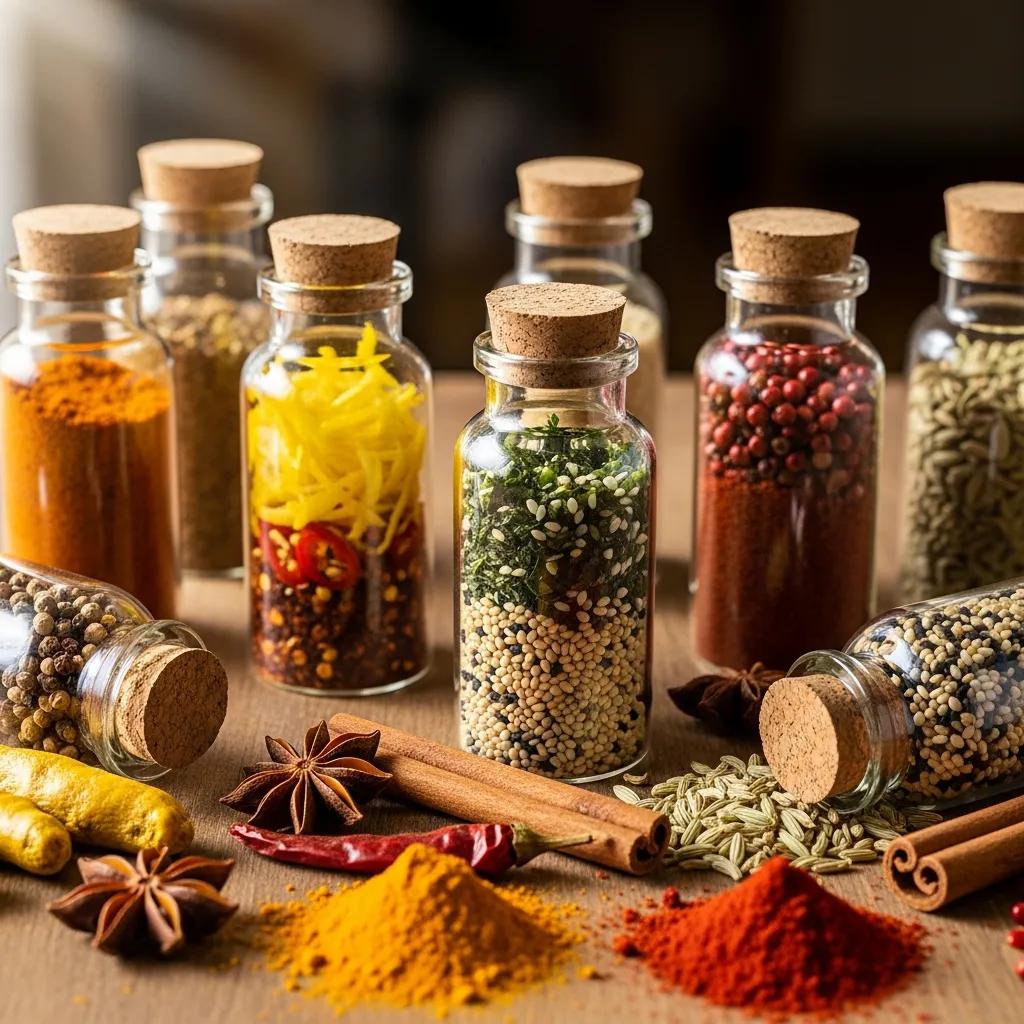
At Kaviar our blends are designed to support premium ingredients rather than overpower them. Citrus zest, toasted seeds and select peppers provide lift and counterpoint: a micro‑sprinkle brightens caviar, the right seed blend amplifies roasted notes on Wagyu. Technique matters too — light toasting to wake oils, gentle grinding to preserve volatile aromatics, and careful storage to avoid oxidation — because freshness determines how a blend behaves on the plate. The table below outlines representative blends, their components and culinary roles.
Use the comparison to understand how chefs employ each blend in service:
Framing blends this way helps chefs — and curious diners — anticipate how a micro‑application will alter a bite.
To experience these blends in context, book a tasting and sample chef‑paired applications across multiple courses.
How are Japanese spice blends tailored for A5 Wagyu and caviar?
Design principles differ by ingredient. For A5 Wagyu we seek contrast and aromatic punctuation — toasted seeds and citrus in very small amounts to lift rather than mask the beef’s umami. For caviar the rule is restraint: whispers of citrus zest, micro‑herbs or powdered seaweed to accent brine without competing with texture. Timing matters too: blends for beef are often added after searing to heighten crust aroma, while those for caviar are a final, delicate whisper. Chefs also control particle size and volatility — flakes for tactile contrast, fine powders for subtle lift — so each blend complements the primary ingredient.
What do umami enhancers and sansho pepper contribute to our seasoning rituals?
Umami components — konbu reductions, powdered dashi or concentrated fish powders — act as a savory scaffold, deepening perception without introducing foreign flavors. Sansho brings citrusy, tingling notes and a gentle numbing sensation that brightens fatty cuts and seafood. In practice we use these elements sparingly: a pinch of powdered umami to add broth‑like depth to a bite, or a dusting of sansho to refresh the palate between courses. They’re tools for layering complexity and revealing new facets across successive tastings.
How does Kaviar use advanced seasoning techniques to lift premium ingredients?
Advanced seasoning is choreography: the right salt at the right moment, complementary aromatics and a sequence that lets each course reach its peak. Techniques range from pre‑salting and controlled resting to targeted finishing and aromatic mists — each chosen to influence fat rendering, crust formation and scent release. The table below links common techniques to timing and the sensory results you can expect.
The mapping helps cooks replicate chef‑level outcomes by aligning method with effect:
Understanding these links reveals the invisible craft that shapes each plate and helps both cooks and diners appreciate intended outcomes.
Step‑by‑step: seasoning A5 Wagyu at Kaviar
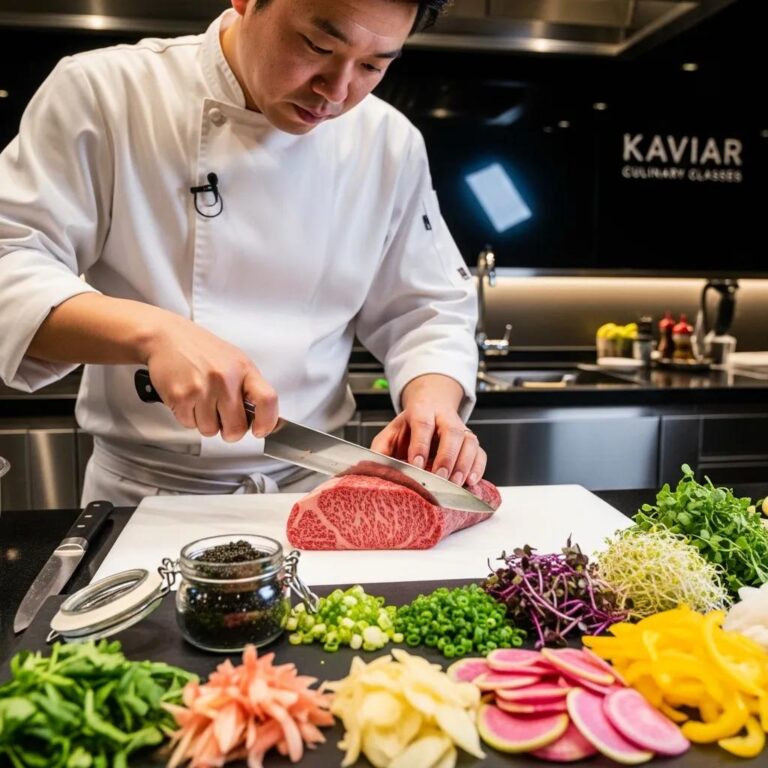
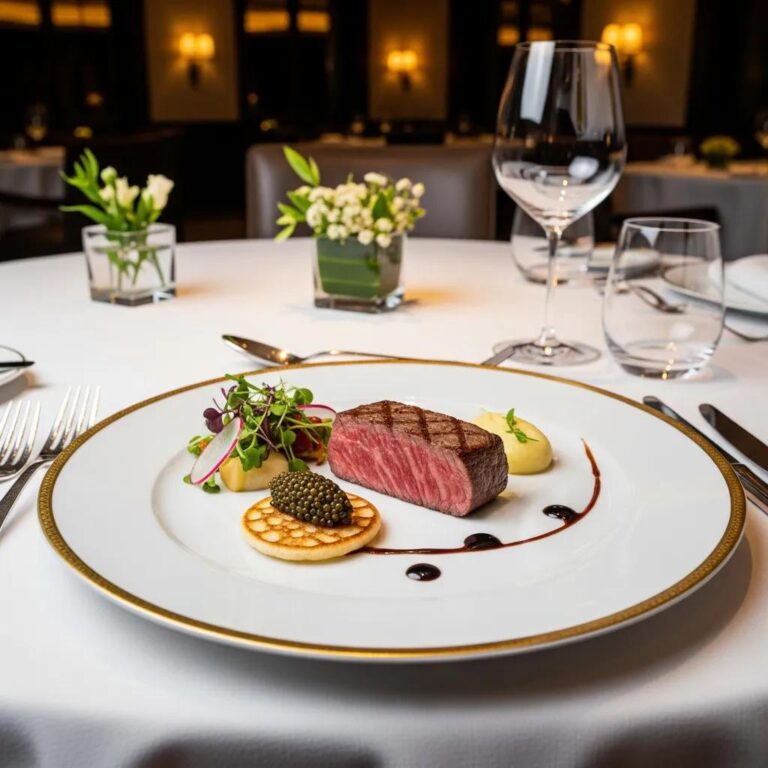
We approach A5 Wagyu with restraint and precision to preserve fat quality and achieve an ideal crust. First, the cut is gently patted and trimmed to keep the surface intact. A light, coarse sprinkle of a clean flake salt goes on shortly before searing to encourage caramelization. During a very hot sear we aim for exact Maillard development while avoiding over‑rendering the fat; a brief rest lets juices and flavor redistribute. At service we add a measured finishing touch — a single Maldon flake or a faint whisper of citrus‑sansho — to lift aroma and sharpen contrast.
How do we pair spices with caviar to enhance without masking?
Pairing with caviar is about micro‑precision. Tiny gratings of citrus zest, a barely there pinch of flaked sea salt for texture, or a couple of micro‑herbs can add a supporting note while leaving brine and mouthfeel intact. Presentation is intentional: spices are often applied to the carrier (blini, crème fraîche or a chilled spoon) rather than directly on the roe, preserving the roe’s integrity while offering a complementary flavor. Portion control and placement keep the caviar front and center.
Why is seasoning central to the Kaviar omakase?
Seasoning is how we pace the meal and shape emotional peaks. Small decisions — when a finishing salt appears, whether a citrus mist divides courses, or when sansho is dusted — steer perception and move the diner through build, climax and resolution. Proper modulation turns individual bites into a continuous sensory story where seasoning underscores terroir, technique and ingredient hierarchy. A chef‑led omakase gives you access to these curated moments, with seasoning choices tailored to the evening’s produce and the menu’s arc.
Reservations matter because limited seating and a timed tasting let us deliver those seasoning moments and make bespoke adjustments. Sharing dietary notes when you book allows the chef to adapt seasoning to your preferences. For guests seeking an immersive view of our seasoning rituals, reserving the tasting menu is the most direct way to experience the techniques as the chef intends.
How does fine seasoning shape a luxury dining experience in Pasadena?
Tiny finishing details signal care and elevate perception: a glint of salt on fish, a measured dusting of sansho, or a fragrant oil mist before a course all heighten anticipation and convey refinement. These micro‑moments align with Pasadena’s appetite for craft and precision, turning a meal into curated theater. When seasoning works in concert with plating and service rhythm, guests sense greater value and exclusivity.
Why is our reservation experience the gateway to Kaviar’s seasoning artistry?
An intimate reservation lets chefs sequence ingredients and seasoning arcs with exact timing so each course reaches its ideal texture and flavor moment. Limited seating creates space for personalized touches — adjusting seasoning levels, honoring dietary notes and presenting bespoke pairings — that are harder to deliver in larger, less curated settings. If you want to watch or ask about seasoning choices, booking opens access to the chef’s explanations and the deliberate timing behind each plate.
How can diners deepen their knowledge of gourmet seasoning at Kaviar?
There are three practical ways to build seasoning literacy: taste with the chef during an omakase, study a curated pairing guide that maps salts and blends to dishes, and watch short technique videos or photo series that show finishing methods up close. Each mode reinforces a different skill — experiential tasting, written reference and visual technique — together forming a rounded learning path. Ask the chef about seasoning decisions during service or request guidance on a course to better understand the rationale behind each choice.
- Tasting with the Chef: Join the omakase and ask focused questions about salt and spice choices for live, practical insight.
- Pairing Guides: Use a structured guide mapping salts and blends to menu items with concise tasting notes for deliberate sampling.
- Multimedia Demonstrations: Watch short technique videos or photo sequences that show finishing applications and timing in detail.
These steps equip diners to notice seasoning decisions more precisely and to recreate selected effects at home. A downloadable pairing guide or printed tasting notes can consolidate learning and encourage return visits to explore seasonal variations.
What multimedia best showcases our seasoning craft?
Close photography, short technique videos and brief chef commentaries are most effective. High‑resolution shots of salt crystals on fish, slow‑motion clips of finishing oil mists and short narrated segments of spice blend assembly help connect visual detail with tasting expectations. For accessibility and discovery, images should use descriptive ALT text naming the salt or spice and the dish it accents; captions and short transcripts improve learning and searchability. These formats make abstract seasoning ideas tangible and invite guests to experience them live.
How do pairing guides clarify salts and spices in signature dishes?
A concise pairing guide maps each seasoning to a dish, suggests portion and timing, and includes a short tasting note — a practical tool for systematic sensory training. Useful columns include seasoning name and origin, recommended portion (pinch, dust, flake), target dish and tasting objective, plus a cue for service timing. Diners can follow the guide table‑side to compare and note how small changes shift perception. In‑restaurant guides support guided tasting; downloadable versions extend the learning at home.
Suggested pairing guide outline:
- Seasoning name and origin
- Application method and portion
- Target dish and tasting objective
- Sensory note for guided comparison
Using a guide encourages deliberate tasting and helps guests internalize how salts and spices interact with texture and fat, deepening appreciation for the craft behind each plate.
- Practical Tasting Tips: Start with small samples of each seasoning on a neutral carrier before trying them with the main ingredient.
- Contrast Training: Taste two salts or blends side‑by‑side to notice differences in texture and mineral character.
- Sequence Awareness: Follow the service order to understand the chef’s intended narrative pacing.
If you’re ready to explore these seasoning rituals in person, reserve a tasting menu at Kaviar and review our menu and reservation details beforehand to ensure the best possible encounter with the chef’s seasoning craft.
Frequently Asked Questions
What is the role of umami in gourmet seasoning?
Umami — the savory backbone of taste — deepens a dish without overwhelming it. At Kaviar we use konbu, dashi powders and concentrated fish elements as subtle scaffolding to enhance complexity and roundness, allowing the primary ingredient to remain front and center while the overall bite feels richer and more satisfying.
How can diners reproduce Kaviar’s techniques at home?
Begin with ingredient quality and small, intentional applications. Use high‑quality salts and fresh blends, practice timing (for example, finishing with a flake after cooking), and respect restraint. Watch short technique clips, follow a pairing guide, and experiment with portion size on a neutral carrier before applying to a main ingredient.
What are best practices for storing gourmet salts and spices?
Store salts and spices in airtight containers away from light, heat and moisture. Glass or opaque jars work well. Label purchases with dates and refresh blends periodically — volatile aromatics fade over time, and replacing them preserves the intended flavor impact.
How do seasonal ingredients change our seasoning choices?
Seasonal produce guides our seasoning decisions: lighter, brighter accents for spring seafood; richer, warming elements for winter offerings. Adapting salts and blends to what’s at peak ensures each dish highlights the best seasonal expression.
How important is presentation to the seasoning experience?
Presentation matters. How a salt or spice is applied — a delicate sprinkle, a neat dusting, a single flake — signals the intended tasting and heightens anticipation. Thoughtful finishing complements the visual composition and prepares the diner for the flavor to come.
Can guests request seasoning adjustments during service?
Yes. Our omakase is intimate and flexible. Guests are encouraged to share preferences or allergies at booking or during service so the chef can tailor seasoning choices for comfort and enjoyment. Personalization is part of what makes the tasting special.
Conclusion
Seasoning at Kaviar is both craft and conversation — a way to reveal ingredient character and shape a tasting’s arc. By recognizing how salts and blends perform, diners gain a richer understanding of each bite. To experience these techniques firsthand, consider reserving our tasting menu; the chef’s table is where these small, deliberate moments come together into an unforgettable meal.