



Understanding Michelin Stars: What They Mean for Fine Dining Excellence
A Michelin star is a quiet but powerful endorsement from one of the world’s oldest dining guides: a signal that a restaurant consistently delivers outstanding food. Knowing what that signal stands for helps guests set expectations—and helps chefs and restaurateurs focus improvements where they matter most. This article explains what a Michelin star actually measures, why the Guide’s criteria matter for fine dining, and how those standards translate into daily kitchen practice. Diners want to know what a star promises—consistency, ingredient integrity, technique, personality, and balanced flavors—and operators want clarity on how inspectors evaluate those qualities. Below we outline the Guide’s five core criteria, describe the inspection process, examine business impacts, and show how an upscale Japanese kitchen in Pasadena aligns its service and sourcing with Michelin-level standards. Read on for clear definitions, practical examples, and actionable steps to enjoy a Michelin-quality omakase in Pasadena.
What Does a Michelin Star Mean for Fine Dining?
A Michelin star signals that a restaurant’s cooking consistently rises above local norms, creating dishes where ingredient quality, technique, and flavor harmony combine into memorable moments. For diners it’s an efficient shorthand for reliable excellence; for operators it’s a benchmark that compresses complex judgment into a single, influential mark. A star raises expectations around provenance, execution, and menu intent, and it places pressure on teams to reproduce those standards service after service. Understanding this helps explain why inspectors focus on the plate first and why kitchens design menus and systems around repeatable, distinctive experiences.
The Michelin designation carries five practical consequences for fine-dining operations:
- Guest expectations rise for ingredient quality and technical execution—every service must deliver.
- Media attention and word-of-mouth typically increase, expanding reservation demand.
- Supply chains come under greater scrutiny to provide consistent, high-grade ingredients.
- Operational systems must be precise so signature dishes can be reproduced across staff and shifts.
- Pricing and reservation strategy often shift to balance demand with the kitchen’s capacity to sustain excellence.
Together, these implications connect the star’s symbolic value to the everyday work of running a kitchen and dining room.
How Does the Michelin Guide Define Culinary Excellence?
The Guide assesses excellence with five consistent criteria: ingredient quality, mastery of technique, harmony of flavors, the chef’s personality, and consistency across visits. Inspectors trace ingredient provenance and grade, observe technical execution and timing, taste for balance and synergy, read a chef’s creative signature, and verify that the experience repeats reliably over multiple anonymous visits. This framework turns abstract ideas of “quality” into repeatable checkpoints, allowing inspectors to compare restaurants both locally and globally. By valuing repeatability and an identifiable culinary voice, the Guide makes excellence both reproducible and distinctive—so diners can form accurate expectations for a starred meal.
These five focus areas also serve as practical roadmaps: better sourcing sharpens ingredient quality, refined technique improves control, tuned flavor balance raises satisfaction, clearly expressed culinary identity builds reputation, and documented processes secure consistency for future guests and inspections.
What Are the Levels of Michelin Star Ratings?
Stars come in three tiers that communicate degrees of distinction: one star marks a very good restaurant in its category; two stars indicate excellent cooking worth a detour; three stars denote exceptional cuisine worth a special journey. Each level implies operational differences: one-star kitchens must nail fundamentals and repeatability; two-star operations extend innovation, refinement, and cohesion across courses; three-star establishments sustain near-perfect execution, creativity, and depth across a full tasting. As levels rise, scrutiny tightens on micro details—seasoning, temperature, plating—and macro consistency—menu cohesion and repeat-visit parity. For diners, tiers help set expectations for price, booking lead time, and the scale of culinary theater they’ll encounter.
The tiered system nudges kitchens from mastering basics toward building an unmistakable culinary identity, raising the bar for service, sourcing, and creative investment at each step.
What Are the Michelin Star Criteria for Awarding Stars?
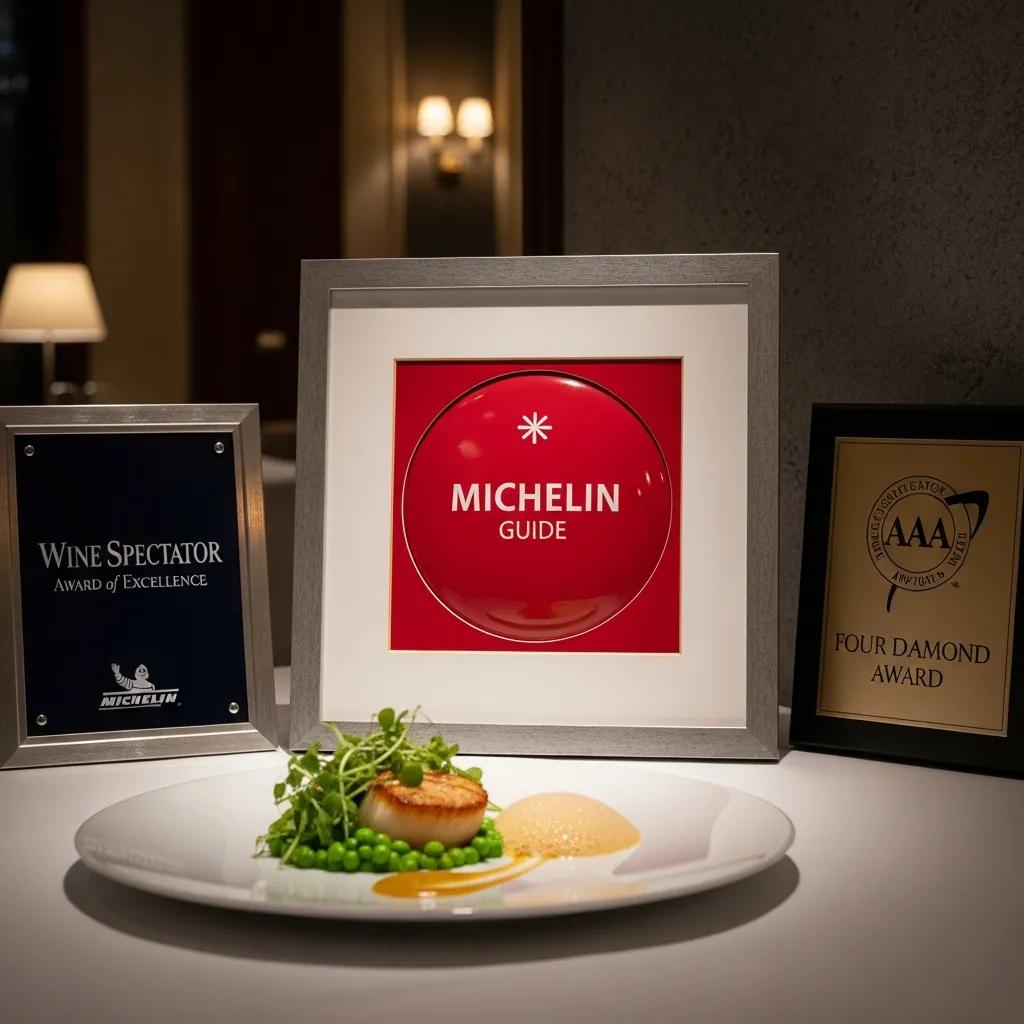
The Guide’s five core criteria each focus on a different part of the guest experience. Inspectors evaluate ingredient quality, technical mastery, flavor harmony, the chef’s personality as expressed on the plate, and consistency across services. These measures mix sensory judgment with operational observation, so the Guide reads both the food and the systems behind it. Below is a concise list with short explanations of how inspectors translate each idea into an assessment.
- Ingredient Quality: Freshness, grade, provenance, and suitability for each dish.
- Mastery of Technique: Execution, timing, and control of methods—grilling, aging, seasoning—judged for precision.
- Harmony of Flavors: Balance, contrast, and how components support a coherent taste narrative.
- Chef’s Personality: A clear culinary voice—distinctive choices that shape the menu.
- Consistency: Repeated visits confirm whether high standards hold up service after service.
Intro to the assessment mapping table: The table below pairs each Michelin criterion with how an inspector might assess it, plus concrete examples drawn from premium Japanese fine-dining practice.
How Is Ingredient Quality Evaluated in Michelin Ratings?
Inspectors judge ingredient quality by origin, grade, freshness, and how the kitchen honors those inputs through handling and preparation—because great raw materials are the foundation of elevated cuisine. They look for traceable sourcing, seasonal appropriateness, and evidence that items were chosen for flavor and provenance rather than convenience. In premium Japanese kitchens this might mean carefully aged fish, precise rice selection and treatment, and premium cuts where grade and trim affect texture and taste. The kitchen’s handling—simple seasoning, correct temperatures, and minimal overworking—signals respect for the ingredient and shapes the inspector’s view. Naturally, assessing ingredient quality leads inspectors to evaluate the techniques that let those ingredients shine.
Practically, kitchens that document suppliers, maintain cold-chain standards, and use finishing techniques that highlight rather than mask ingredients tend to score well on this criterion.
Why Is the Chef’s Personality Important in Michelin Assessments?
Michelin values a chef’s personality because it turns technical skill into a memorable, identifiable narrative. Personality shows up in menu sequencing, recurring flavor signatures, plating decisions, and the courage to take creative risks while preserving balance and technique. Inspectors look for a voice—whether a fresh take on tradition, a tasteful fusion, or restrained minimalism—that recurs across the meal without becoming repetitive. A clear culinary stamp helps a restaurant stand out and makes it easier for diners and critics to remember the experience. Chefs who consistently articulate and reinforce their vision create stronger impressions during evaluations.
When a chef’s voice is coherent and well executed, it strengthens the restaurant’s reputation and supports other criteria like harmony and consistency.
How Do Restaurants Earn Michelin Stars?
Stars are earned through a deliberate, repeatable process: anonymous, trained inspectors visit multiple times to verify quality rather than deciding on a single meal. Inspectors dine anonymously, apply standardized rubrics tied to the five criteria, and compare notes across visits to ensure reliability. Reports go through internal review—discussed by seasoned inspectors and editors—before a star recommendation is made, which prevents momentary highs or lows from determining the outcome. For restaurants this means investing in reproducible systems: documented recipes and timings, thorough staff training, and supplier relationships that hold up under pressure. Understanding the process helps teams prioritize consistency—the core driver of recognition.
What Is the Role of Michelin Inspectors and Their Evaluation Process?
Michelin inspectors are seasoned culinary professionals who evaluate restaurants anonymously, using internal checklists that translate the Guide’s five criteria into consistent observations. They record tasting notes, service timing, temperature control, and menu coherence, then revisit to test repeatability across different days and shifts. Anonymity preserves impartiality, and collective review helps offset individual bias. Inspectors evaluate each restaurant in its regional context and against broader standards, which is why documented, sustained performance matters for venues aspiring to a star. Understanding this process helps operators focus on repeatable excellence that endures scrutiny.
This careful, methodical approach ensures stars reflect a dependable guest experience, not a single standout night.
Do Michelin Stars Recognize the Restaurant or the Chef?
Officially, Michelin stars are awarded to the restaurant, not to an individual chef. The distinction means the recognition remains with the establishment as long as it continues to meet the Guide’s standards—even if staff turnover occurs. In practice, when a chef who strongly shaped the kitchen’s identity departs, inspectors reassess to confirm standards persist. That reality encourages restaurants to build institutional systems—documented recipes, rigorous training, and reliable supplier partnerships—that protect quality beyond any single person. For chefs, the most durable legacy is one that translates personal vision into reproducible practices the team can maintain.
Knowing stars attach to the restaurant motivates investment in documentation and training, which improves daily service and safeguards recognition over time.
What Are the Benefits and Impacts of Michelin Stars on Fine Dining?
Michelin recognition often brings measurable gains—stronger reputation, higher demand, and greater pricing power—but it also introduces operational pressures and higher expectations that must be managed thoughtfully. A star draws media attention and destination diners, which can increase reservation volume and justify premium pricing when the kitchen delivers consistently. Stars help recruit talent and open doors for collaborations or special events that build brand equity. At the same time, increased visibility can stretch supply chains, expose service gaps, and create tension between creative freedom and the need for consistency. Understanding both sides of the ledger lets owners plan capacity, supplier agreements, and training so they can monetize recognition without sacrificing the guest experience.
Common business impacts and considerations that follow Michelin recognition include:
- Higher Demand and Reservations: Stars typically boost covers and require longer lead times.
- Pricing Leverage: Restaurants often adjust prices to reflect elevated perception and increased costs.
- Reputational Lift: Media coverage and culinary prestige broaden the restaurant’s reach.
- Operational Strain: Procurement and staffing must scale to meet higher expectations.
- Creative Constraints: The need for reproducibility can limit rapid menu experimentation.
Local example tie-in paragraph: Pasadena restaurants aiming for Michelin-level outcomes concentrate on sourcing, rigorous training, and a signature guest experience that supports both reputation and sustainable pricing. Kaviar shows how an upscale Japanese kitchen can pursue those benefits—pairing premium ingredients with omakase pacing and disciplined service to convert recognition into long-term value.
How Do Michelin Stars Influence Restaurant Reputation and Business Growth?
A Michelin star is a powerful endorsement that raises a restaurant’s profile among travelers and locals, often translating to fuller dining rooms and heightened press interest. That reputational boost can increase average checks, attract partnerships, and create new revenue channels like private events. Stars also make marketing simpler: earned coverage amplifies the restaurant’s story without paid media. But the resulting demand requires operational adjustments—if a team cannot scale service or sourcing, reputation can suffer. Responsible growth—through reservation controls and solid supplier agreements—helps preserve the long-term benefits of recognition.
What Challenges and Pressures Come with Michelin Recognition?
Along with prestige, stars increase the stakes for consistency, supplier reliability, and staff retention, which can strain creativity and morale if not managed. Maintaining high-grade suppliers raises procurement costs and logistical complexity, especially for perishable premium items. Guests expect near-perfect timing, plating, and interaction, which ups training demands for front- and back-of-house teams. Chefs may feel pressure to lock in signature dishes, slowing experimentation. Anticipating these stresses—with diversified suppliers, cross-training, and scheduled innovation windows—helps teams balance the demands of recognition with ongoing evolution.
Addressing these pressures through operational safeguards and clear leadership turns Michelin recognition into a platform for sustainable excellence rather than a source of burnout.
How Does Kaviar Restaurant Embody Michelin-Level Fine Dining?
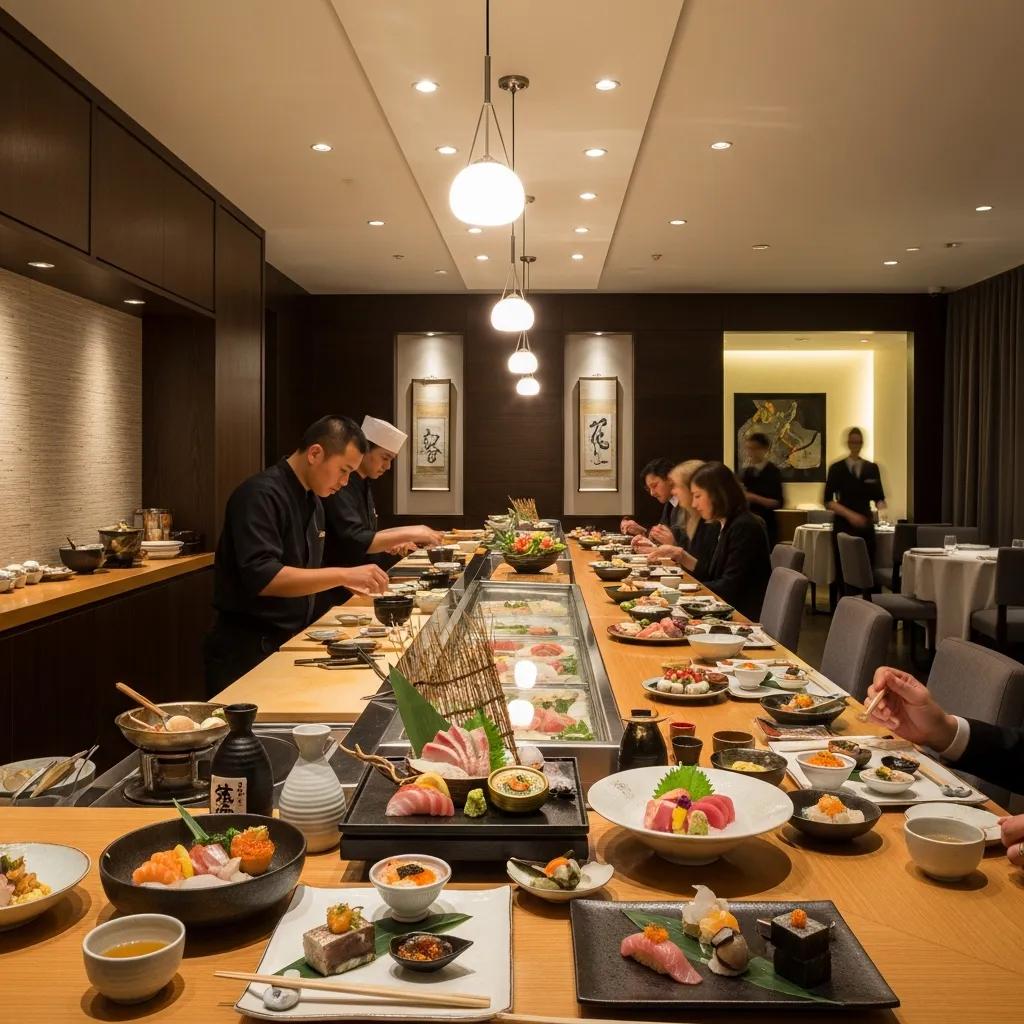
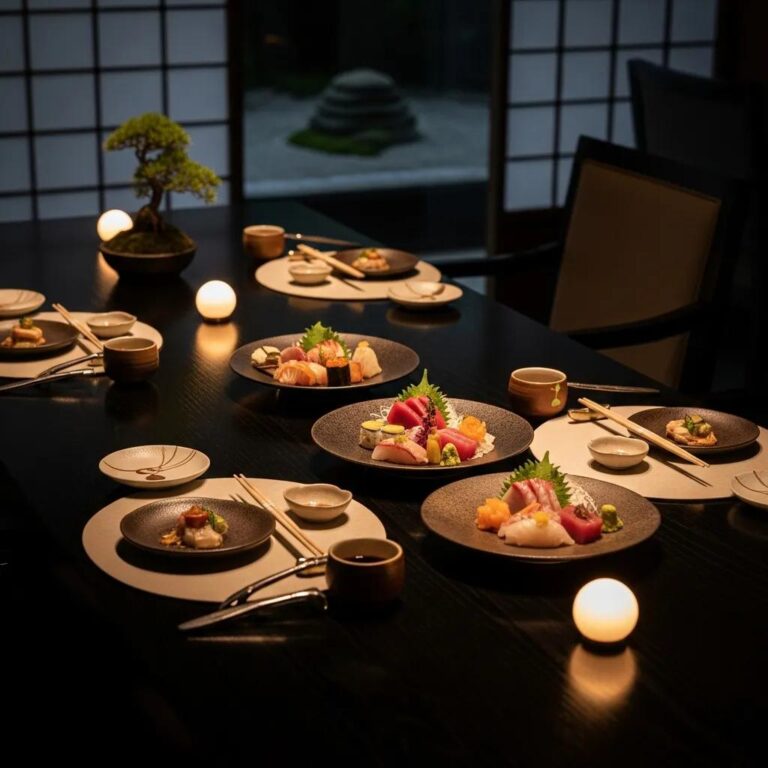
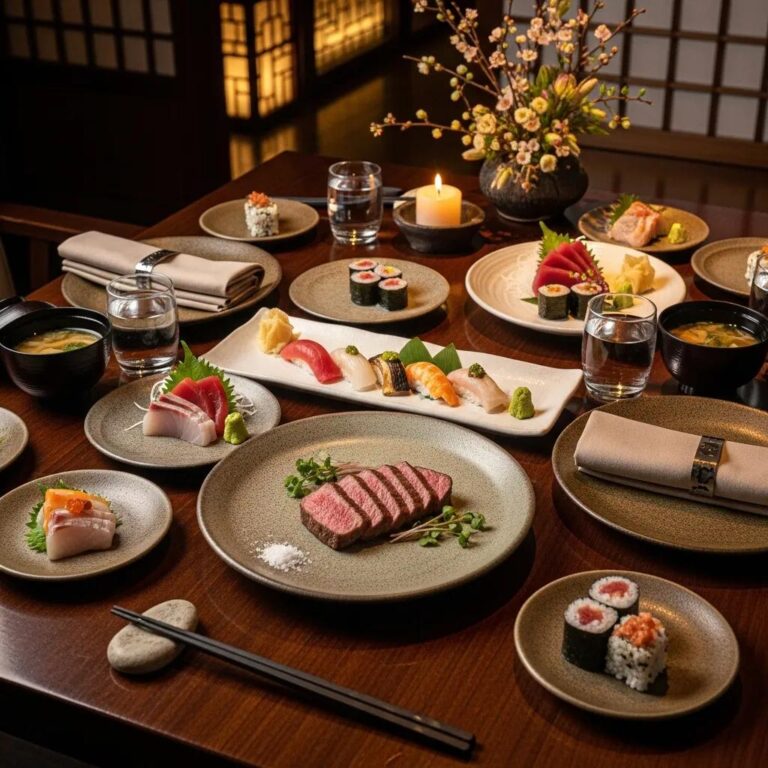
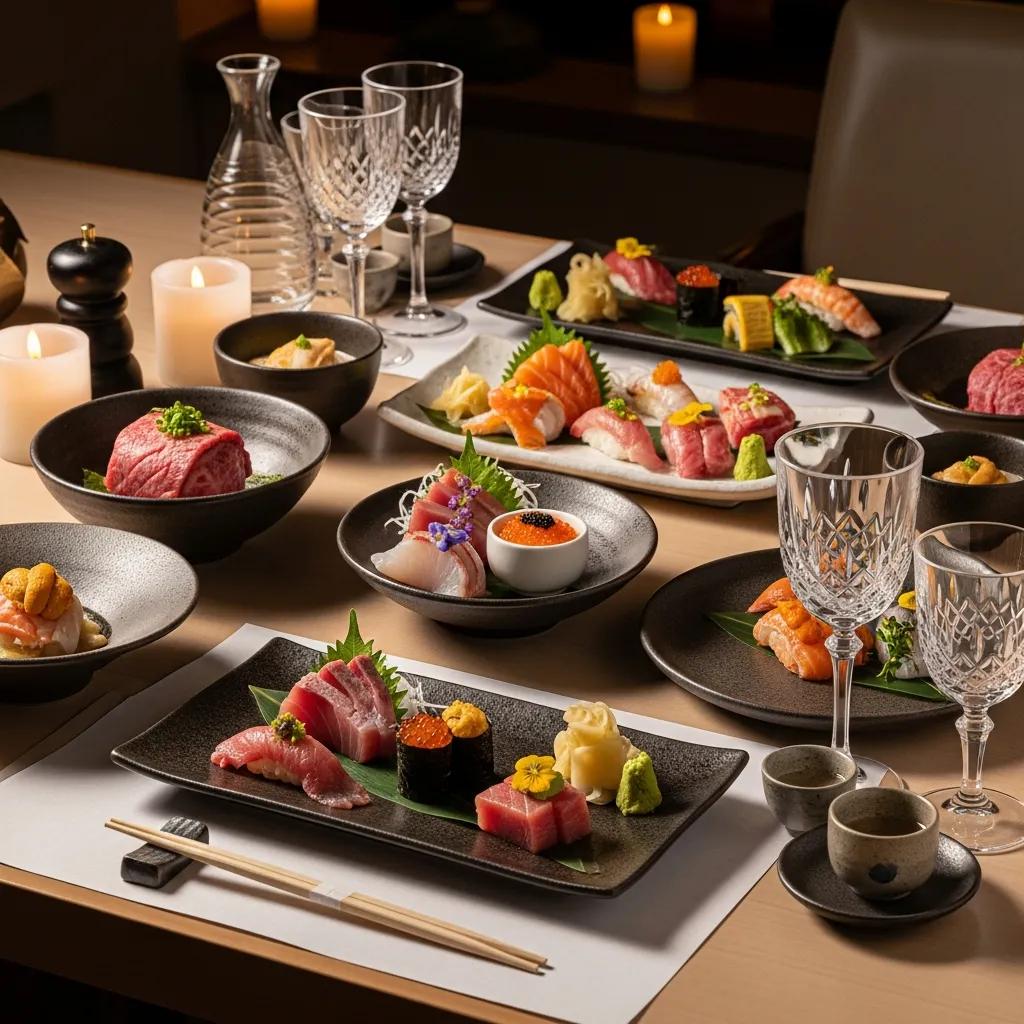
Kaviar positions itself as an upscale Japanese kitchen in Pasadena that prioritizes responsibly sourced seafood, exceptional caviar, seasonal truffles, and A5 Wagyu to craft luxurious tasting sequences and elevated sushi. Our omakase offerings place ingredient quality and technical precision at the center—aligning with Michelin criteria like harmony, mastery, and chef personality. Service design—intimate seating, careful plating, and chef-curated pacing—creates a repeatable guest journey the Guide looks for. By pairing premium inputs with disciplined technique and a considered atmosphere, Kaviar demonstrates how local fine-dining operators can structure menus and operations to meet Michelin-level expectations.
Intro to the dish/technique table: The table below pairs signature items and service styles with the premium ingredients or techniques we use and explains the guest value each choice delivers.
Short CTA/transition paragraph: For diners seeking a Michelin-quality tasting sequence in Pasadena, Kaviar’s commitment to premium ingredients and purposeful omakase pacing offers a direct way to experience those standards—reservations are available through our website and major booking platforms. Our focus on consistent technique, ingredient respect, and a defined culinary voice shows how local fine-dining teams can pursue the outcomes Michelin rewards.
How Does Kaviar Use Premium Ingredients Like A5 Wagyu and Caviar?
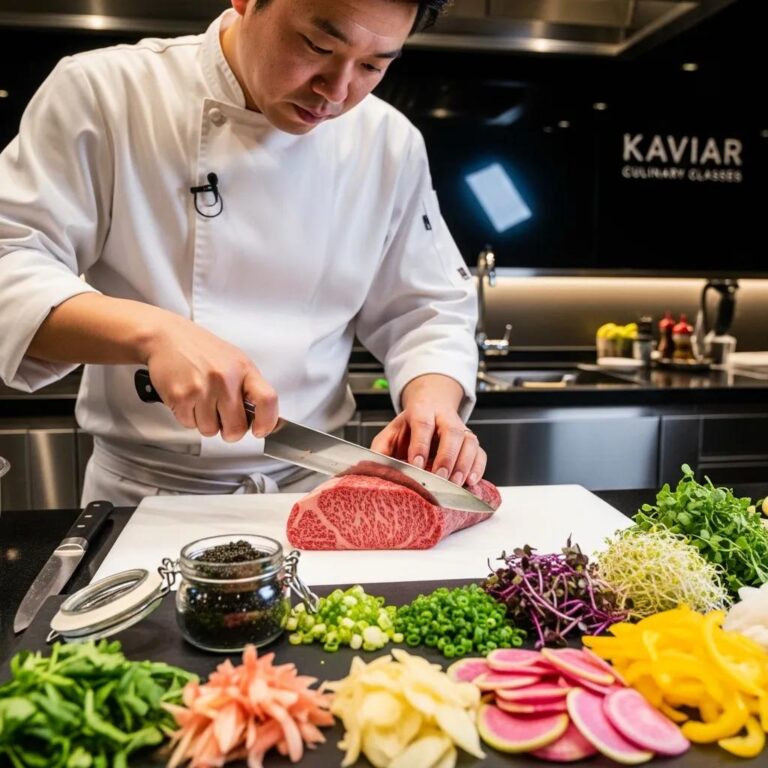
At Kaviar we use A5 Wagyu and carefully chosen caviar as anchors for courses that highlight texture, umami depth, and refined balance—supporting Michelin criteria for ingredient quality and harmony. A5 Wagyu is treated with minimal seasoning and exacting temperature control so its marbling and mouthfeel take center stage; caviar is served in small, complementary portions to elevate adjacent flavors rather than overwhelm them. These choices show restraint and respect, allowing technique—searing, torching, rice care—to accentuate natural qualities. Focusing on provenance and treatment demonstrates how high-grade inputs, used thoughtfully, deliver sensory excellence and reproducibility.
Deliberate plating and portioning keep the sequence coherent and reinforce the chef’s voice, helping inspectors recognize a consistent, curated identity across visits.
What Is Chef John Hans Yeo’s Vision and Its Role in Culinary Excellence?
Chef John Hans Yeo’s vision centers on an omakase narrative that blends classical Japanese technique with selective fusion touches to express a clear culinary personality in every course. That vision guides ingredient choices, course progression, and the balance between tradition and innovation—resulting in a menu that reflects technical mastery and a distinct point of view. His leadership shows in rigorous team training, strict timing protocols, and a focus on repeatability so guests reliably receive the intended sequence. By embedding philosophy into operations and menu design, the chef ensures creativity and consistency coexist—key factors inspectors evaluate for Michelin recognition.
This alignment between creative intention and disciplined execution helps translate an individual voice into a reproducible, guest-facing identity that supports lasting acclaim.
How Can Diners Experience Michelin-Quality Dining at Kaviar in Pasadena?
The most direct way to experience Michelin-quality dining is to choose a chef-led omakase, where technical control, ingredient quality, and culinary personality reveal themselves across a paced tasting. Booking an omakase means trusting the chef’s selections and arriving ready for a multi-course journey that highlights seasonality and balance. Practical guest tips: reserve early, note dietary restrictions when booking, arrive on time to preserve pacing, and let the chef guide the tasting to appreciate intended contrasts and textures. These steps increase the chance each guest encounters the consistency and narrative Michelin inspectors prize.
Below are actionable steps to prepare for a Michelin-caliber omakase at a high-end Japanese restaurant like Kaviar.
- Reserve early: Tasting-seat restaurants often require advance bookings for peak nights.
- Choose omakase: The chef-curated menu reveals signature progression and technique.
- Communicate dietary needs: Tell us allergies or preferences at booking so the kitchen can adapt thoughtfully.
- Arrive punctually: Timely arrival preserves service pacing and course integrity.
- Engage with the chef: Polite questions deepen appreciation of technique and ingredients.
What Is the Omakase Experience and Its Significance in Fine Dining?
Omakase—literally “I leave it to you”—is a chef-directed tasting format that elevates fine dining by centering the meal on expert selection, refined technique, and deliberate pacing. It lets the kitchen build a coherent narrative across courses, spotlighting ingredient quality and the chef’s personality as dishes unfold. From an inspection perspective, omakase reveals mastery of technique, flavor harmony, and consistency because the chef controls sequencing and execution. For diners, it’s an intimate journey of discovery and the clearest way to experience whether a restaurant meets Michelin-level standards.
Because omakase compresses the kitchen’s intentions into a single, curated sequence, it becomes a practical vehicle for both creative expression and dependable execution.
How to Make Reservations for a Luxury Dining Experience at Kaviar?
To secure an omakase seat or curated tasting at Kaviar, plan ahead and use our primary reservation page or major booking platforms. Lead times vary with demand and special dates, so booking several weeks in advance for popular evenings is wise; parties and private events benefit from early direct inquiries. When reserving, specify dietary restrictions and any celebratory requests so the kitchen and service team can prepare appropriate accommodations. Clear communication at booking and punctual arrival help ensure the smooth, elevated experience that defines Michelin-caliber dining.
Frequently Asked Questions
What is the history of the Michelin Guide?
The Michelin Guide began in France in 1900, created by the Michelin tire company to encourage travel and promote motoring. It originally offered maps, repair tips, and hotel and restaurant listings. Over decades the guide shifted its focus toward dining, introducing star ratings in 1926. Today it’s a globally recognized benchmark for culinary excellence and a major influence on dining culture worldwide.
How often are Michelin stars reassessed?
Stars are reassessed every year. Inspectors make multiple anonymous visits across the review cycle to confirm consistency and quality. Because the Guide values sustained performance, restaurants can gain or lose stars based on how well they maintain standards over time.
Can a restaurant lose its Michelin star?
Yes. A restaurant can lose its star if it no longer meets the standards that earned it recognition—due to inconsistent food quality, significant staff changes, or a decline in service. Michelin evaluates consistency over multiple visits, so a sustained drop in performance can lead to removal of a star.
What is the significance of a Michelin star for chefs?
A Michelin star raises a chef’s profile, often leading to increased media attention, career opportunities, and invitations to collaborate. It validates technical skill and creative vision, but it also brings pressure to maintain high standards. Many chefs view a star as both an honor and a responsibility.
How do diners typically prepare for a Michelin-starred dining experience?
Guests preparing for a Michelin-level meal should book early, choose the chef’s tasting where possible, and communicate dietary needs in advance. Arriving on time preserves the flow of service, and polite engagement with staff or the chef can deepen appreciation of the techniques and ingredients on display.
What are some common misconceptions about Michelin stars?
Common myths include the idea that stars are about price—when the Guide focuses on food quality and execution regardless of cost—and that only French cuisine can earn stars, which isn’t true. Another misconception is that a single poor meal will cost a restaurant its star: the Guide looks at consistency over several visits, so isolated incidents rarely determine a rating.
Conclusion
Recognizing what Michelin stars measure helps diners choose experiences that match their expectations and helps restaurateurs prioritize the practical steps that lead to lasting excellence. By understanding the balance of technique, ingredient quality, and a clear culinary voice, both guests and operators can better appreciate what a star represents. If you’re curious to experience Michelin-level omakase locally, consider reserving a tasting at a restaurant that prioritizes these standards—like Kaviar—and discover the difference thoughtful sourcing and disciplined execution make.