




Fine Dining Glossary: Essential Terms for Gourmet Menus and Chef‑Led Experiences
Menus at the highest level use a specialized vocabulary. This glossary translates that language so diners and cooks alike can read tasting menus and chef-driven lists with confidence. Here we clarify the core terms you’ll encounter in luxury and contemporary Japanese fine dining—everything from omakase and kaiseki to sashimi and A5 Wagyu. You’ll find clear definitions, comparisons between premium ingredients like caviar and uni, and practical reservation and etiquette cues to help you choose the right tasting or a la carte experience. We also link terms to real dishes, show how signature plates reveal technique and provenance, and give step‑by‑step guidance for booking omakase. Short reference boxes, comparison tables, and actionable checklists make this an easy resource whether you’re a curious diner or preparing for a seat at the chef’s counter.
Key Japanese Culinary Terms You’ll See on Fine Dining Menus
In Japanese fine dining, single words often carry a lot of meaning—technique, origin, and the intended sequence of a meal. Learning these terms improves how you order and what you expect from each course. Below are concise definitions with pronunciation notes and practical context so you can spot these words on menus and speak comfortably with servers or chefs. Each entry explains the term, why it matters in a luxury setting, and a quick example of how it might appear in a tasting or on the a la carte menu.
Omakase: What It Means — and What to Expect
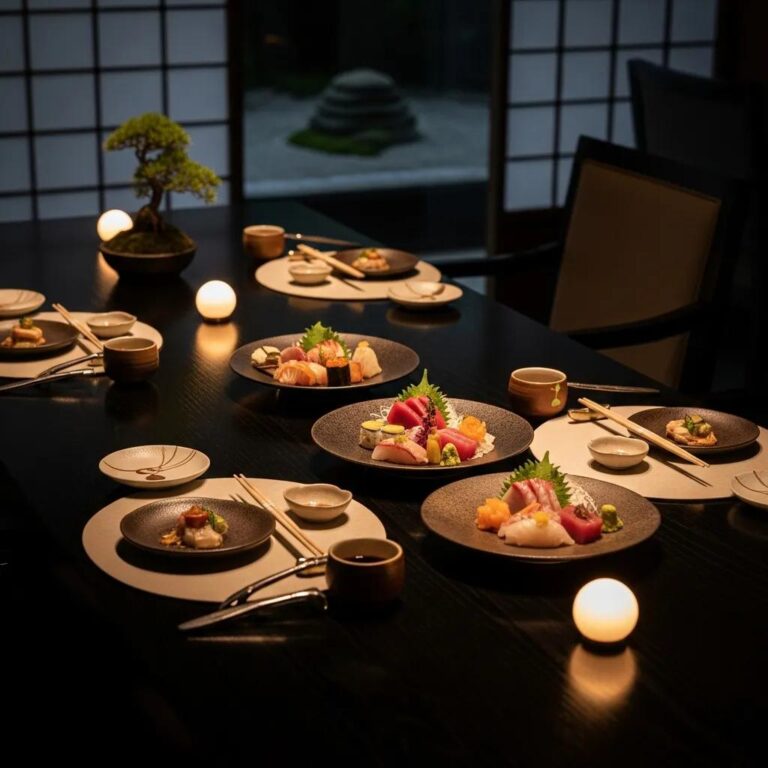
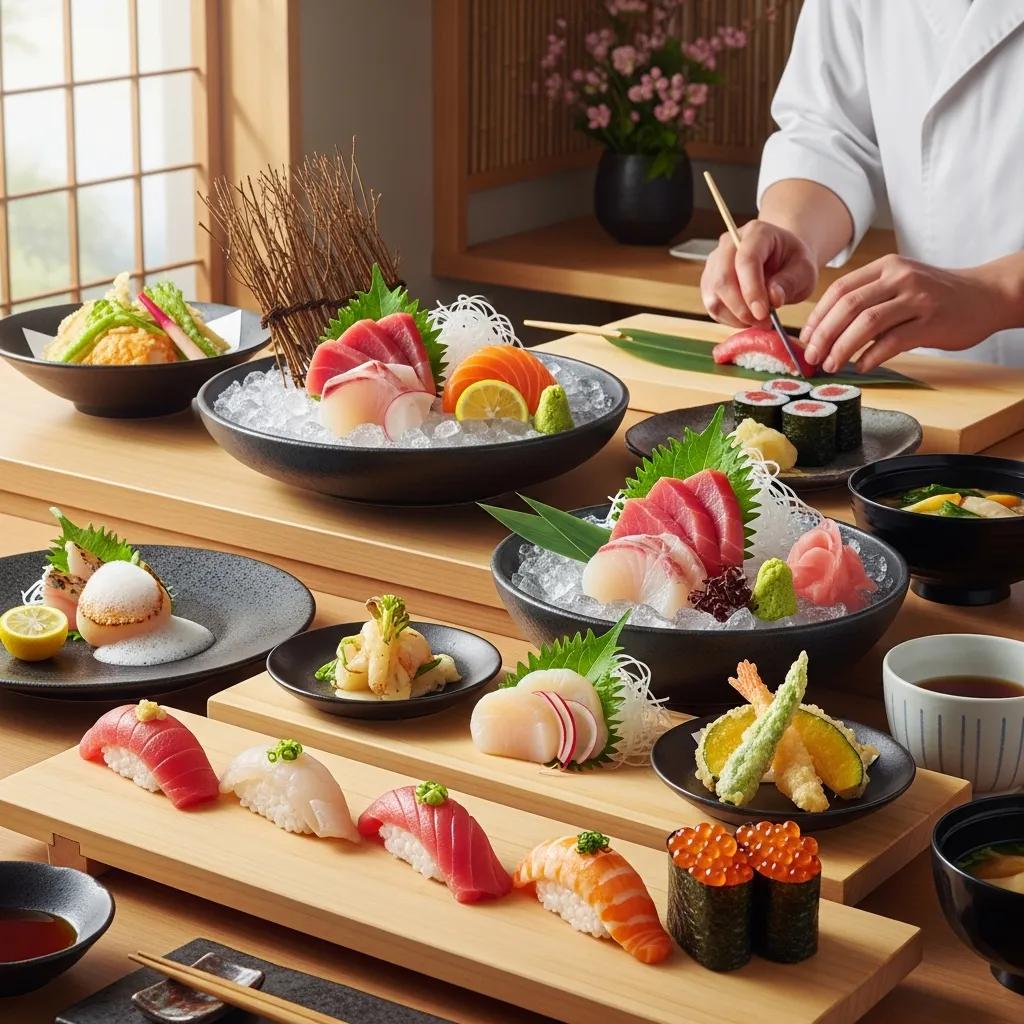
Omakase (oh‑mah‑KAH‑seh) literally means “I’ll leave it to you.” Practically, it’s a chef‑curated, multi‑course tasting where the kitchen chooses dishes around seasonality and technique. The chef sequences courses for contrast and rhythm, creating a cohesive narrative across small plates. Omakase offers curated pacing, peak‑freshness ingredients, and often direct interaction at the chef’s counter—an ideal setting to appreciate technique and provenance. Typical expectations include continuous service, changing course counts, and daily menu adjustments based on market availability. The short list below highlights common omakase features so you arrive prepared and get the most from the experience.
- Chef‑driven sequencing: Courses are ordered to build contrast and tell a culinary story.
- Seasonal ingredients: Dishes shift with the market to showcase the freshest seafood and produce.
- Counter seating: Many guests sit at the chef’s counter for direct presentation and conversation.
- Pacing and portioning: Small, timed courses combine into a complete tasting arc.
These elements explain why omakase centers on interaction and seasonality—and why premium items like A5 Wagyu are presented with restraint to highlight texture and fat rendering.
Why A5 Wagyu Is Considered the Pinnacle
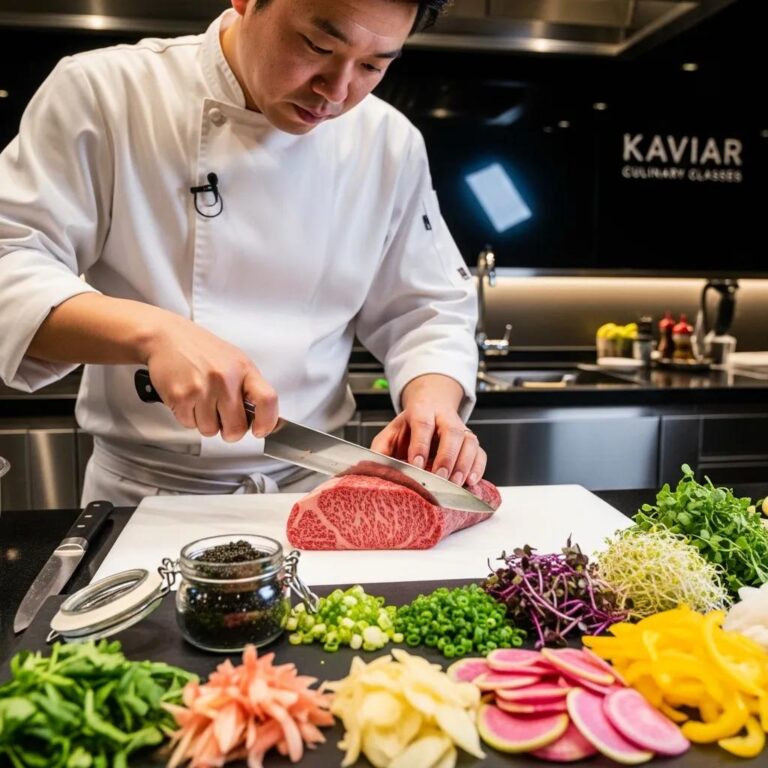
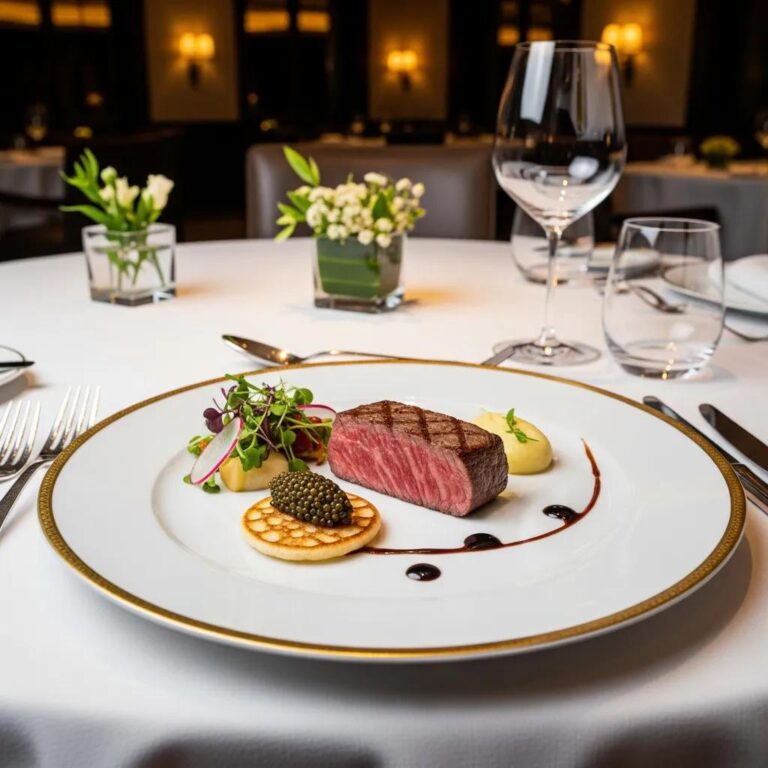
A5 Wagyu represents Japan’s top beef grade: the letter (A) reflects yield class, and the number (5) the highest marbling score on the scale. Graders evaluate yield, marbling (BMS), meat color and firmness, and fat quality—factors that determine texture, mouthfeel, and flavor intensity. Chefs prepare A5 to showcase its fat and tenderness—minimal seasoning, brief sears, or thin slices let the fat render and the beef “melt.” The compact table below explains each grading component so you can read menu claims with clarity.
Knowing these grading elements helps you spot authentic A5 listings and set realistic expectations for texture and cooking style. From there, it’s natural to compare how restaurants treat other luxury ingredients like caviar and uni.
Which Premium Ingredients Define Luxury Fine Dining?
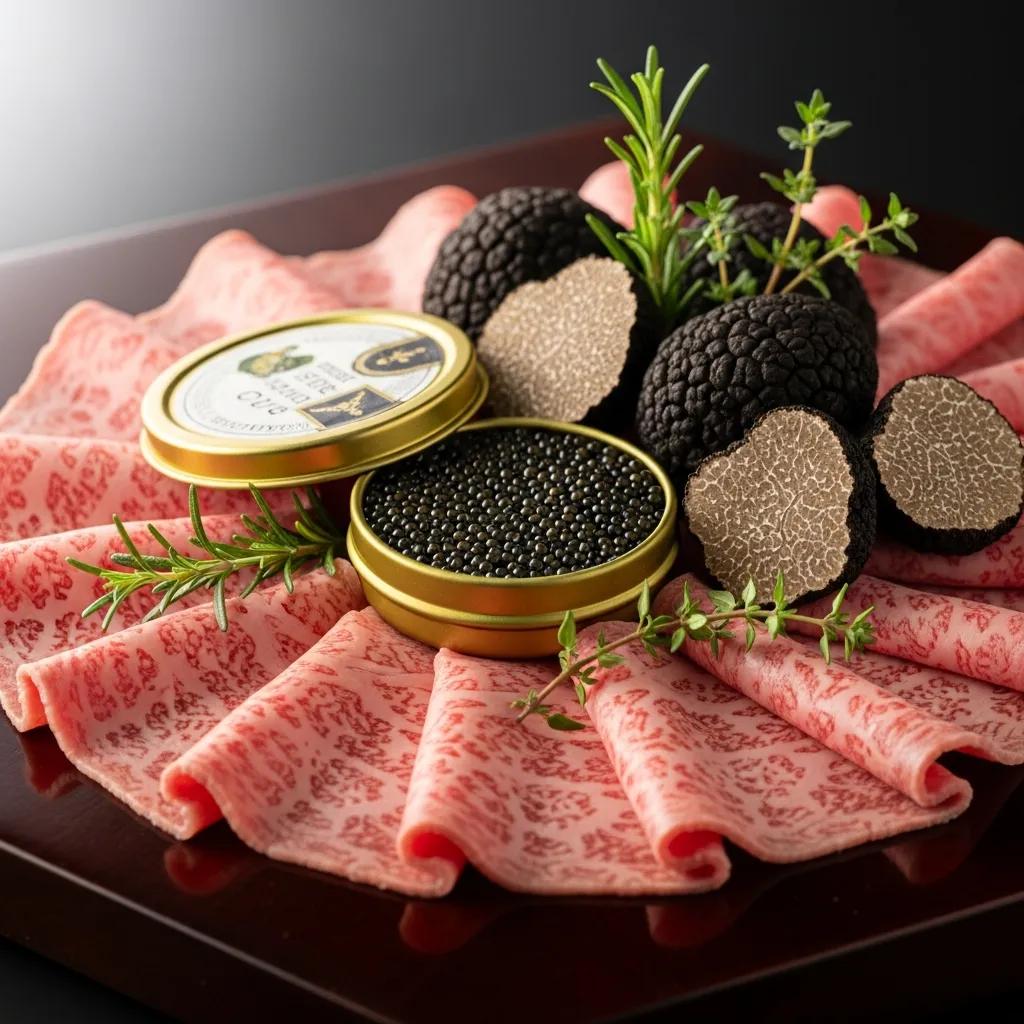
Luxury tasting menus often revolve around a short list of ingredients—caviar, A5 Wagyu, uni, truffles—each valued for sensory impact and provenance. These items serve as focal points whose handling, portion, and origin shape price and the dining moment. Their status comes from both scarcity and sensory concentration: texture, salt, fat, and aroma. Use the caviar comparison below to distinguish origin, roe size, and flavor notes when you see a listing on a menu.
This comparison clarifies how types differ in mouthfeel and taste—and why origin and roe size influence price. Next, consider how chefs use these and other premium items to highlight technique in signature preparations.
Kaviar Restaurant sources select premium ingredients to foreground provenance and technique across tasting sequences and a la carte highlights. Our plates often let A5 and caviar speak for themselves—light seasoning, precise heat, and restrained accents to showcase fat rendering and roe texture. That sourcing and discipline turn a single ingredient into a signature moment on the tasting menu.
How Signature Dishes Bring Culinary Terms to Life
Signature dishes translate vocabulary into a sensory snapshot: technique, provenance, and plating converge to express a single idea. When a menu lists “sashimi,” “tataki,” or “seared A5,” each term signals method and expected tasting notes—raw texture for sashimi, a quick char for tataki, or silky fat for seared A5. Mapping dish names to technique helps diners decode portioning, pacing, and ideal pairings. The table below links representative dishes to their core ingredients, techniques, and pairing suggestions.
These pairings and descriptions show the link between culinary terms and the sensory outcomes you should expect, preparing guests to fully appreciate a tasting arc. Below we list Kaviar’s own signatures to make these ideas tangible.
Kaviar’s Signature Dishes—What to Order
At Kaviar, signature courses demonstrate glossary terms through preparation and pairing—turning definitions into moments at the chef’s counter. A seared A5 Wagyu highlights marbling and swift heat; caviar‑accented small plates use roe as a bright, saline foil. Our omakase sequences emphasize seasonal sashimi flights and deliberate pairing choices so guests move through a kaiseki‑inspired progression within a contemporary setting. The brief mapping below pairs representative dishes with what they teach about technique and pairing.
- Seared A5 Wagyu: Minimal seasoning, high‑heat sear to showcase marbling; pairs well with delicate sake.
- Caviar‑topped Uni: Layered oceanic textures from uni and roe; best with crisp sparkling or clean chilled sake.
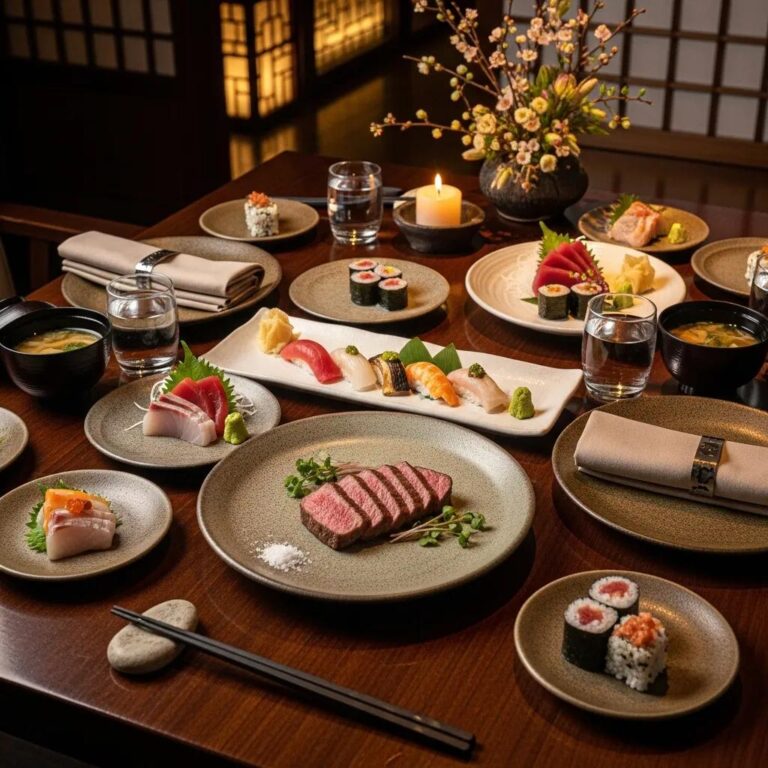
- Omakase Sashimi Flight: Seasonal fish and refined knife work; ideal for counter seating and guided service.
These examples show how vocabulary appears on the menu and how preparation reflects terminology—useful when booking or deciding where to sit.
Essential Etiquette and Reservation Terms for Fine Dining
Words like cover, amuse‑bouche, chef’s counter, seat allocation, and cancellation policy shape expectations around timing, portions, and pacing. Understanding these terms explains why arriving on time and sharing dietary restrictions matter: they influence plating order, ingredient sourcing, and the kitchen’s ability to run a seamless service. Below are common etiquette and reservation terms with quick behavioral notes to help you prepare for a tasting‑service environment.
- Cover: The per‑person allocation or fixed charge that often applies to tasting menus.
- Amuse‑bouche: A complimentary bite meant to wake the palate before the first official course.
- Chef’s counter: Seating directly facing the kitchen or chef for presentation and conversation.
- Seat allocation: How counter seats are organized to keep service flowing smoothly.
Knowing these terms helps you anticipate pricing, course flow, and interaction level—and it leads directly into practical steps for securing an omakase reservation.
How to Reserve Your Omakase, Step by Step
- Pick date and party size: Confirm your guest count and whether counter or table seating is available.
- Share dietary restrictions: Tell us allergies, strong preferences, or aversions when booking so the kitchen can adapt.
- Ask about pacing and duration: Confirm expected timing to plan arrival and transit accordingly.
- Confirm deposit and cancellation terms: Know any deposit or cancellation policy to avoid surprises and respect the booking system.
Following these steps preserves the service rhythm and limits last‑minute disruptions that affect sourcing and course sequencing. For guests in Pasadena, Kaviar’s reservation process is designed for diners who want a focused, chef‑led tasting—counter seating and dietary accommodations available on request.
Luxury Dining Etiquette: The Basics
Etiquette preserves the intended sequence and sensory flow of a tasting menu; observing it enhances your meal and the kitchen’s control of pacing. Common expectations—jacket suggestions, silencing phones, respecting course order, and limiting plate sharing—reduce distractions and protect the chef’s narrative. The short dos and don’ts below reflect typical behavior in upscale dining rooms and at chef’s counters.
- Do arrive on time: Timeliness keeps course pacing and kitchen timing intact.
- Do notify dietary needs in advance: Advance notice lets the kitchen make thoughtful adjustments.
- Don’t use your phone at the counter: Light and noise distract chefs and fellow diners.
- Do follow server guidance on tasting order: Courses are sequenced for contrast and palate reset.
Observing these norms maintains the tasting arc and supports respectful interaction at the chef’s counter. These behavioral expectations connect directly to how menu language shapes your choices, which we cover next.
How Culinary Vocabulary Improves Your Dining
Knowing culinary terminology gives you tools to order smarter, appreciate technique, and communicate clearly with staff—so you extract more from every course. Terms signal provenance, reveal texture expectations, and indicate service style (omakase, kaiseki) so you can anticipate pacing and interaction. Combine this glossary with a few menu‑decoding strategies and you’ll order with confidence and optimize pairings. Below are three concrete benefits and a short checklist for reading menus.
- Smarter ordering: Terminology clarifies portion, intensity, and how bold a dish will taste.
- Richer appreciation: Recognizing technique lets you focus on intended textures and contrasts.
- Clearer communication: Shared vocabulary makes conversations with the chef or staff more productive.
These advantages lead to smoother reservations, more satisfying tastings, and clearer pairing decisions—especially for diners seeking curated, chef‑led experiences.
Why a Gastronomy Glossary Matters for Enthusiasts
Familiarity with kitchen vocabulary deepens your ability to judge provenance, technique, and ingredient interplay—opening the door to better conversation with chefs and more intentional tasting choices. This knowledge reduces uncertainty when menu language is unfamiliar and helps you prioritize courses that match your appetite. Below are three concise benefits plus a short example of how a single term can shift your expectations.
- Deeper appreciation: Knowing technique names highlights the craft behind a dish.
- Confident ordering: Recognizing portion cues helps you avoid over‑ordering on tasting menus.
- More engaged conversation: Shared terms let you ask focused questions about sourcing and preparation.
For example, seeing “tataki” signals a quick‑seared, cool‑centered preparation—so you’ll expect and enjoy the contrast between char and raw texture. That kind of decoding directly informs the checklist that follows.
Menu‑Reading Checklist: Choose with Confidence
Menu language carries three key signals: origin, technique, and portion. Focus on these cues to decide what suits your appetite. First, scan for provenance markers—place names or grades like “A5.” Second, note preparation verbs—“seared,” “cured,” “tataki”—to predict texture. Third, watch for service‑style words—“omakase,” “tasting,” “chef’s selection”—that indicate commitment and pacing. Use the checklist below to decode a line and decide if a dish fits your plan.
- Provenance: Does the dish list origin or grade (e.g., A5, Hokkaido)?
- Technique: What cooking or finishing method is specified (e.g., seared, cured, smoked)?
- Portion cues: Are words like “small,” “flight,” or “tasting” used to indicate size?
Apply this checklist and menu language becomes actionable—helping you match portions, pairings, and pacing to your appetite and curiosity. With clearer terminology and decoding skills, booking and enjoying chef‑led services becomes more rewarding.
Frequently Asked Questions
What’s the difference between omakase and kaiseki?
Both are multi‑course Japanese formats, but they serve different purposes. Omakase—“I leave it to you”—is chef‑led and often more spontaneous, letting the kitchen showcase seasonal items and personal creativity. Kaiseki is a formalized, balanced progression that follows traditional principles of sequence, harmony, and presentation. In short: omakase highlights the chef’s choices in the moment; kaiseki emphasizes a ritualized order and seasonal balance.
How can I get the most from a chef’s counter?
Engage politely with the chef and staff—ask brief, focused questions about a dish or ingredient. Arrive on time to honor the pacing, and share dietary needs ahead of time. Be open to the chef’s selections; embracing the sequence often yields the most memorable moments. Pairings recommended by staff will also enhance how each course reads on your palate.
What should I know about dress codes?
Dress codes vary. Many upscale restaurants favor business casual; some expect more formal attire. Check the restaurant’s website or call ahead if you’re unsure. Dressing appropriately shows respect for the room and complements the overall experience.
Common mistakes to avoid in fine dining?
A few missteps can interrupt service: arriving late, not disclosing allergies or strong preferences in advance, and using phones at the counter. Over‑ordering on tasting menus or ignoring the server’s guidance on course order can also undercut the intended experience. Simple awareness keeps the focus on the food and the chef’s craft.
How do I choose the right wine for my meal?
Match the wine’s weight to the dish—lighter wines for delicate courses, fuller wines for richer plates. Consider flavor alignment: acidic foods often pair well with wines that have brightness; richer, fatty dishes can stand up to more textured reds or fuller whites. When in doubt, ask the sommelier for a suggestion tailored to the tasting sequence.
Why are tasting menus important?
Tasting menus let chefs present a curated narrative through multiple small courses—showcasing seasonality, technique, and creativity. They offer a broad view of a chef’s philosophy and allow diners to experience contrasts, pacing, and deliberate pairings that a la carte orders can’t always provide.
How should I prepare for a fine dining visit?
Do a bit of homework: review the menu and familiarize yourself with key culinary terms. Reserve ahead, note any dietary restrictions, and plan attire and timing. Being prepared helps you relax and fully enjoy the nuances of a chef‑led meal.
Conclusion
Learning fine dining terminology transforms how you taste and order: it gives you the language to appreciate technique, provenance, and pacing. With a few key definitions and a simple menu‑reading checklist, you’ll navigate tasting menus and chef’s counters with confidence. Ready to explore? Reserve your next omakase and experience how vocabulary and craftsmanship turn ingredients into moments.