




The Science of Taste: How Flavor Comes Together in Gourmet Dishes to Elevate the Experience
Flavor emerges when taste, aroma and mouthfeel converge into a single sensory moment. Understanding that science explains why a carefully composed course can feel transformative. In this piece we outline the biological and chemical pathways behind flavor perception, show how contemporary kitchens use time and texture to shape aroma release, and explain why umami-forward ingredients such as A5 Wagyu and caviar are staples of tasting menus. You’ll learn how taste receptors and the olfactory system translate molecules into sensation, which culinary techniques concentrate or time flavor, and how Japanese sensory evaluation balances seasonality and restraint. We also connect specific methods to their sensory outcomes, profile signature umami preparations, and finish with clear steps to reserve a tailored omakase experience at a luxury Japanese restaurant so you know what to expect from a purpose-built tasting menu.
What Are the Key Flavor Perception Mechanisms in Gourmet Dining?
In fine dining, flavor perception is the product of three complementary systems: the gustatory system (taste buds), the olfactory system (smell), and the trigeminal nerve (temperature, texture and chemesthetic cues). The tongue samples salts, acids and glutamates; the nose detects volatile compounds; and trigeminal inputs register heat, coolness, pungency and mouthfeel. Those signals are integrated in the brain into a single, nuanced impression chefs learn to steer. Temperature, texture and the timing of aroma release shift perceived intensity — slow, sustained release deepens lingering umami, while abrupt releases create bright aromatic contrast. Grasping these mechanisms helps chefs choose ingredients and techniques that deliver the intended sensory outcome, and it explains why precision methods are often deployed in high-end kitchens.
How Do Taste Receptors Detect Different Flavors?
Taste receptors clustered on fungiform, foliate and circumvallate papillae convert chemical stimuli into neural signals by binding specific molecules: sugars, salts, acids, bitter compounds and glutamates (umami). Sweet and umami are sensed by G‑protein–coupled receptors that respond to complex ligands like sugars and glutamate; salts and acids use ion channels that alter membrane potential; bitter receptors detect a broad array of plant-derived compounds across multiple subtypes as a protective mechanism. These receptor-level differences help explain why a broth rich in free amino acids yields a steady savory presence while fatty, amino-acid–dense cuts produce a different, longer-lasting impression — and why volatile aromatics from cooking often finish the flavor story.
What Role Does the Olfactory System Play in Flavor Perception?
Smell supplies identity and nuance through orthonasal (inhaled) and retronasal (from the mouth) routes. Volatile sulfur compounds, lipid oxidation products and Maillard-derived aromatics contribute distinct notes — roasted, buttery, floral, briny — that combine with basic tastes to form a dish’s signature. In tasting contexts, retronasal smell frequently dominates because aromas released during chewing travel to the olfactory epithelium and amplify umami or salt perception. Chefs exploit this link by controlling temperature and texture to modulate when and how aromas are released, which is why techniques that time aroma delivery play a central role in modern fine dining.
- Taste Receptor Activation: Specialized receptors on the tongue transduce sugars, salts, acids, bitter compounds and glutamates into neural signals.
- Olfactory Contribution: Volatile organic compounds inhaled orthonasally and retronasally provide specific aromatic identity beyond basic tastes.
- Trigeminal & Texture Signals: Temperature, pungency and mouthfeel deliver chemesthetic context that alters perceived intensity.
- Temporal Sequencing: The order and timing of flavor release shape salience and aftertaste persistence.
This concise list explains why course sequencing and deliberate texture choices are essential tools for shaping the cumulative flavor experience.
How Does Molecular Gastronomy Enhance Flavor Profiles in Gourmet Dishes?
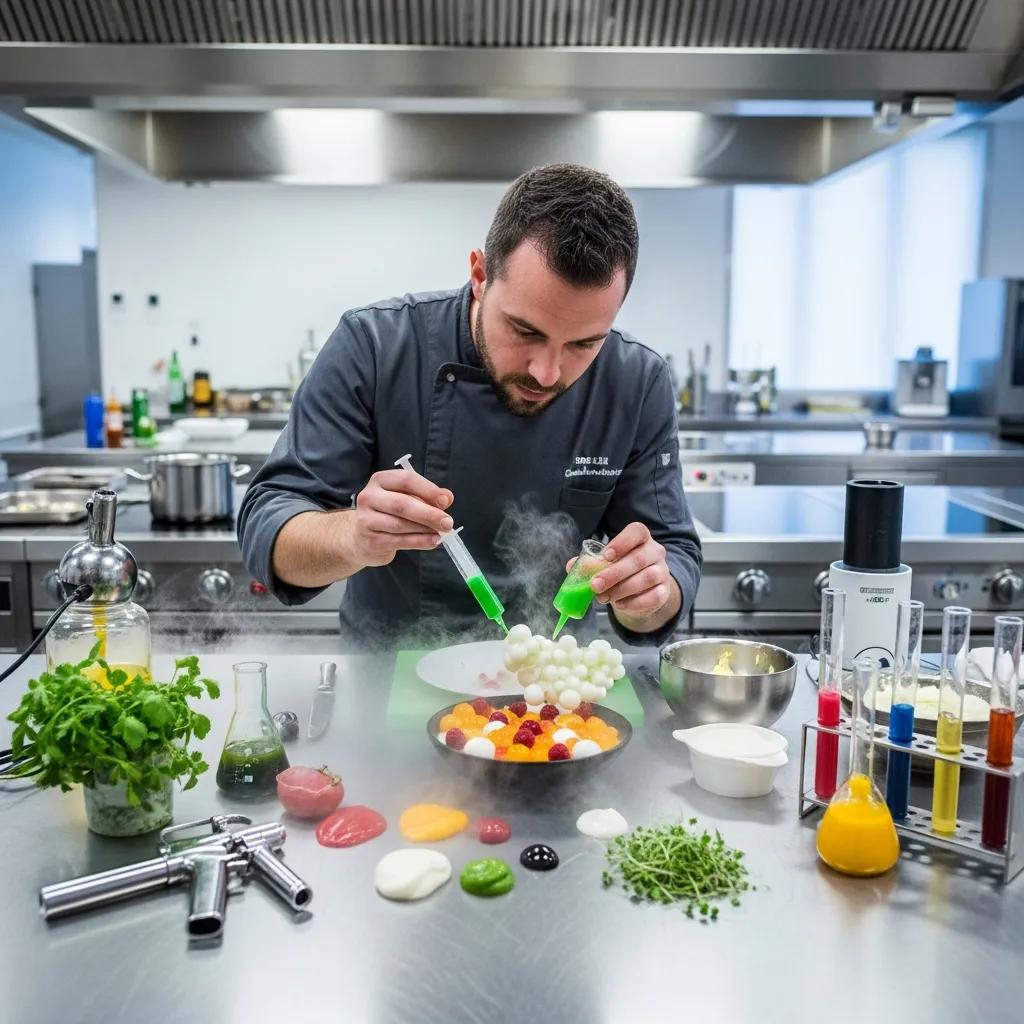
Molecular gastronomy gives chefs practical levers to change a food’s physical state, concentrate flavor compounds and control when aromatics reach the nose. Methods such as spherification, emulsification, sous‑vide, foams and gels let kitchens encapsulate volatiles, manage lipid dispersion and protect fragile aromatics so flavors emerge at the intended moments. The sensory objectives are clear: deepen umami where needed, introduce fleeting aromatic highlights for contrast, or soften textures to prolong pleasurable release.
Below is a compact mapping of common techniques to their mechanism and perceptual purpose, showing how scientific tools translate into culinary results.
That mapping shows how technique selection targets specific perceptual goals and prepares a chef for practical kitchen application.
Which Molecular Gastronomy Techniques Are Used at Kaviar Restaurant?
At Kaviar, we apply select molecular techniques inside our Japanese omakase framework to refine timing and texture while keeping ingredients front and center. Controlled emulsifications help marry caviar’s fats with bright acids; sous‑vide ensures precise, temperature‑stable tenderness; and restrained foams or gels deliver volatile aromatics in measured amounts without masking the primary flavors. These interventions are always measured and ingredient‑forward — used to enhance, not to dominate, prized elements like A5 Wagyu and premium roe. The result is a tasting sequence that feels both contemporary and true to the ingredient.
How Do These Techniques Affect Taste and Texture?
Each technique changes how flavor compounds interact with saliva and the oral mucosa, shifting perceived intensity and duration. Spherification gives a sudden, localized release that contrasts a slow, diffuse umami from marbled fat; emulsifications spread lipid‑soluble aromatics across the palate to amplify richness; gels and foams alter mouthfeel — gels sustain texture and flavor, foams create ephemeral aromatic peaks between bites. These interventions also affect Maillard chemistry by adjusting heat exposure and surface contact during searing or low‑temperature finishing. Understanding these effects lets chefs predict how a course will unfold on the palate and helps diners anticipate progression.
What Are the Signature Dishes Featuring Umami-Rich Ingredients Like A5 Wagyu and Caviar?
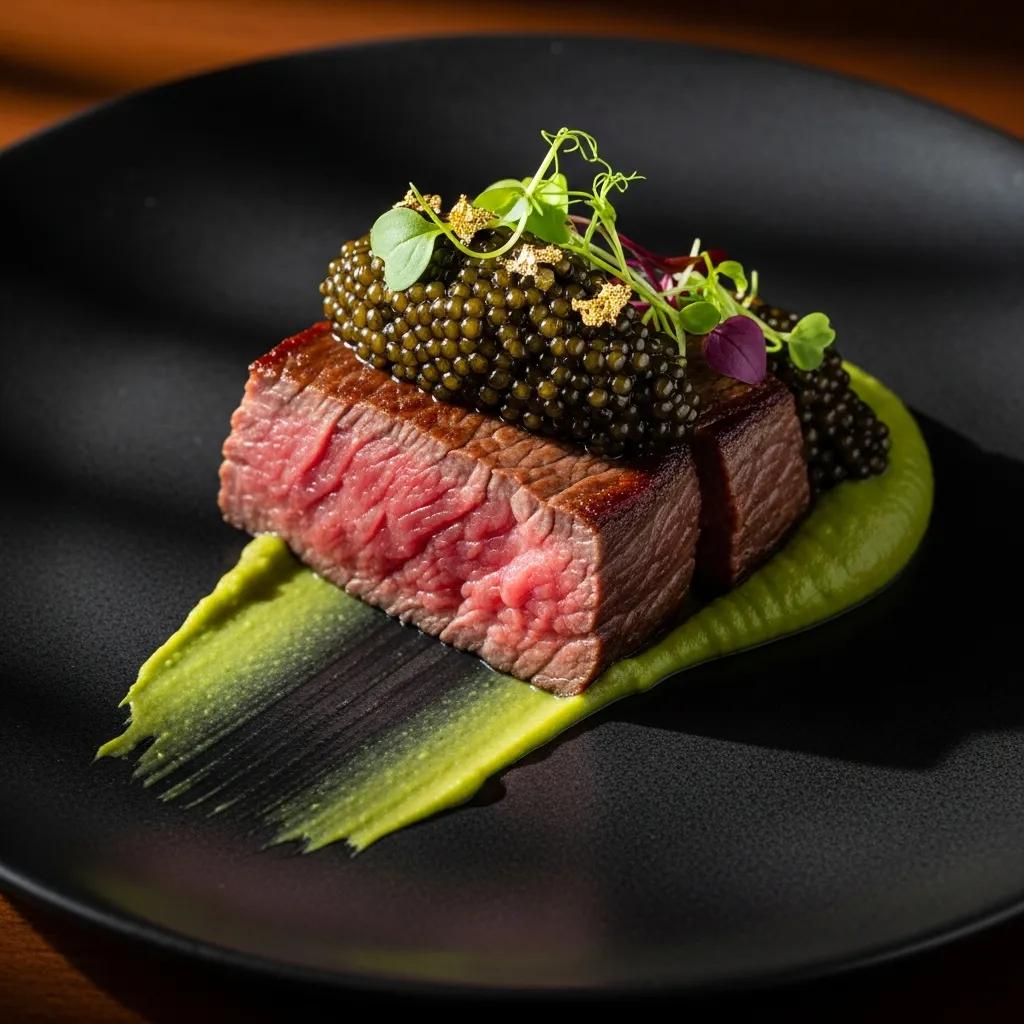
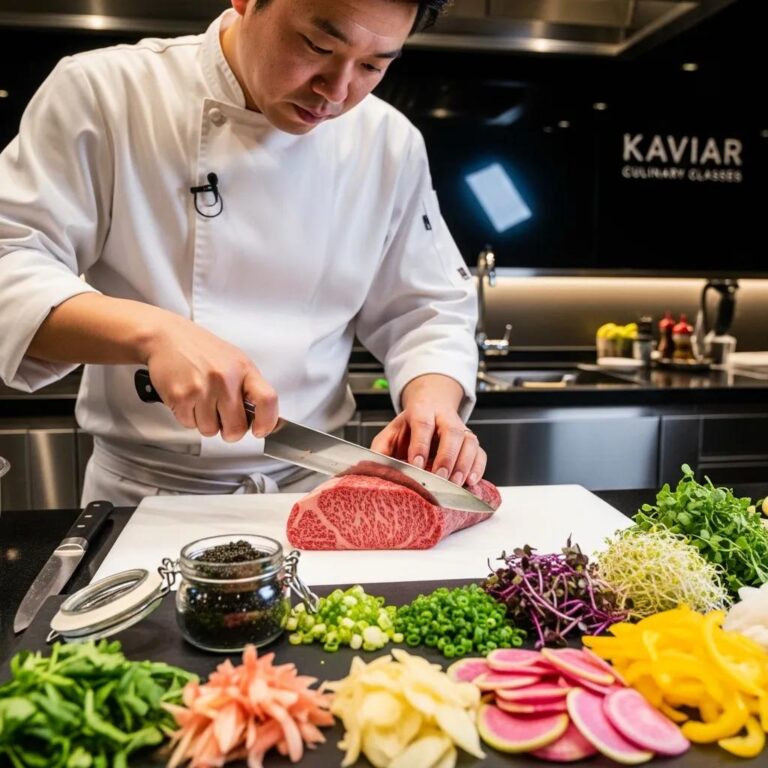
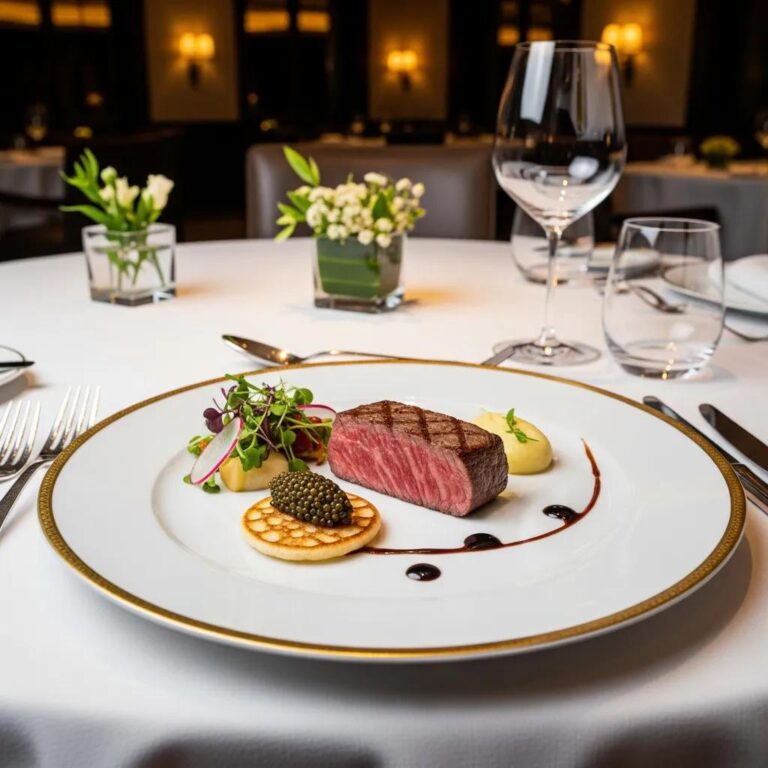
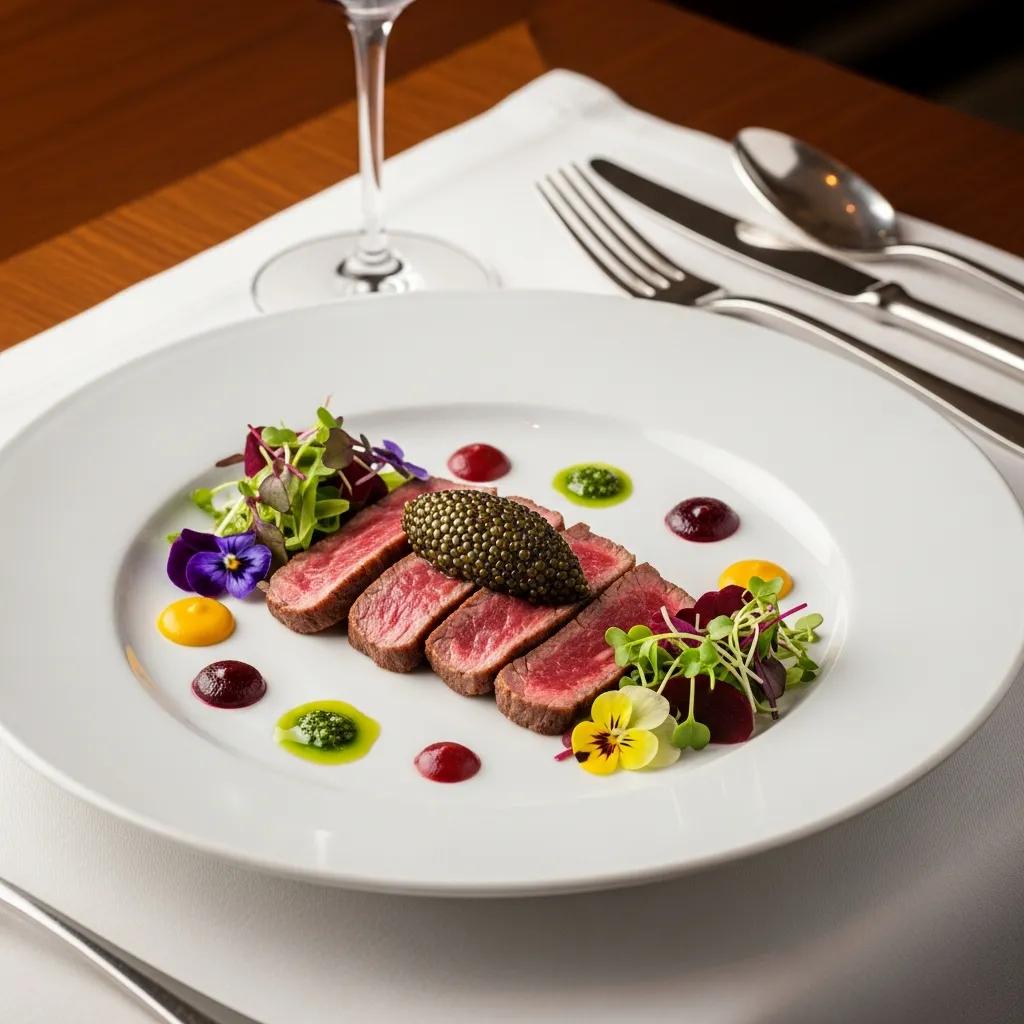
Umami — the savory taste driven by free glutamates and nucleotides — provides depth and mouthwatering richness. Signature plates use umami deliberately: A5 Wagyu brings high intramuscular fat that carries heat‑released aroma compounds, while caviar supplies concentrated briny amino acids and delicate aldehydes that add saline contrast. When these elements are combined with controlled cooking, acid and textural counterpoints, they produce layered sensations where fat‑soluble aromas and water‑soluble glutamates play complementary roles.
How Does A5 Wagyu’s Marbling Influence Its Umami Flavor Chemistry?
Marbling — intramuscular fat — acts both as a solvent for lipophilic aroma compounds and as a matrix that concentrates water‑soluble amino acids contributing to umami. During gentle searing or low‑temperature cooking, rendered fat spreads Maillard products across the surface, producing roasted and caramelized aromatics that interact retronasally with glutamate‑driven umami signals. The texture is silkier and the aftertaste longer, which is why A5 Wagyu benefits from subtle seasoning and minimal interference; fat’s role in flavor delivery also informs pairing and course sequencing on a tasting menu.
What Flavor Profiles Does Caviar Add to Gourmet Dishes?
Caviar brings a compact cluster of saline, briny and umami notes — chiefly free amino acids and nucleotides — alongside delicate fatty aromatics that evoke a sea‑spray nuance and a small, pleasing textural “pop.” Chefs use restrained portions to tweak salinity and add an aromatic accent that elevates neutral or fatty bases like crème, chilled seafood or tender beef. The contrast between caviar’s crisp salinity and a dish’s richer elements increases perceived complexity without dominating subtler flavors, and its texture gives the bite a punctuated, layered mouthfeel. That economy of use is central to caviar’s high‑impact role in fine dining.
- Balance richness with acidity: Acid cuts through fat and brightens umami, preventing palate fatigue.
- Control temperature: Cold caviar preserves delicate volatiles; warm proteins release Maillard notes.
- Use texture for contrast: A crisp or creamy counterpoint clarifies flavors and sustains interest.
These pairing principles lead directly into the formal sensory assessment methods used in Japanese gourmet practice.
How Is Sensory Evaluation Conducted in Japanese Gourmet Cuisine?
Japanese sensory evaluation emphasizes balance, seasonality and the measured interplay of taste, aroma and texture to form a cohesive dining narrative. Assessment ranges from informal chef critiques to structured tasting protocols that score aroma clarity, taste intensity (with special attention to umami), textural harmony and aftertaste length. The approach prizes subtlety: small adjustments in salt, acid or temperature can shift equilibrium, and seasonal ingredients are judged for how well they contribute to overall balance. The following section outlines the specific evaluative elements and the criteria used to judge them.
What Is the Importance of Umami in Japanese Flavor Perception?
Umami occupies a central place in Japanese cuisine as a key axis of taste that signals savory satisfaction and supports harmony across components. Ingredients such as kombu, dashi, fermented soy, A5 Wagyu and select seafood concentrate glutamates and nucleotides that synergize to create a robust savory baseline; chefs then balance that base with acid, bitterness and texture. Umami also stimulates salivation and heightens perception of other flavors, which is why it is deliberately engineered into tasting menus and why expert evaluation measures its contribution carefully. Recognizing umami’s role helps when assessing overall complexity.
How Do Experts Assess Flavor Complexity and Balance?
Experts use ordered checklists and side‑by‑side tastings to evaluate aroma clarity, the ratio of taste components (sweet, salty, sour, bitter, umami), textural layering and aftertaste progression, often referencing standards for calibration. A typical protocol includes orthonasal smelling to identify primary aromatic families, a sample to note initial taste and mouthfeel, retronasal assessment for continuity, and recording aftertaste persistence — each axis scored against objectives. Iterative trials let chefs refine seasoning, timing and plating to create coherent course progression. This disciplined method naturally leads to practical considerations for experiencing these designs in a curated dining setting and why reservations matter for preserving the intended sequence.
- Odor assessment: Orthonasal sniffing to identify a dish’s aromatic family.
- Taste mapping: Note intensity and balance across the five taste modalities, placing emphasis on umami.
- Texture evaluation: Judge cohesion, contrast and mouthfeel for each bite.
These evaluation steps directly inform how tasting menus are composed and paced for maximum sensory impact.
How Can Diners Reserve an Exclusive Sensory Dining Experience at Kaviar?
Reserving an exclusive sensory experience at Kaviar secures a curated omakase tasting menu shaped by sequencing, seasonal sourcing and guest preferences. We recommend booking well in advance for our high‑intent seatings and sharing party size, dietary restrictions and any occasion notes so the kitchen can personalize pacing and progression. Our reservation workflow includes confirmed seating cadence, pre‑arrival communication about menu flow, and options for special requests so your sensory journey is optimized from the first course to the last. Below are practical steps to prepare and what to expect.
- Decide on date and party size: Select your preferred date and confirm the number of guests so pacing can be arranged.
- Provide dietary notes: List allergies or preferences so the kitchen can plan substitutions without compromising balance.
- Request special occasions or preferences: Tell us about celebrations or textural dislikes to enable subtle personalization.
What Is the Process for Booking Omakase Tasting Menus?
Booking an omakase at Kaviar follows a straightforward set of steps designed to protect the tasting architecture: choose a date and party size, communicate dietary needs and any special requests, and confirm the reservation details. For high‑demand seatings we suggest allowing lead time so the kitchen can source seasonal, umami‑rich ingredients and assemble the intended sequence. Your confirmation will include practical notes — course timing and any pre‑arrival guidance — so you arrive ready for the planned flavor progression. For convenience, use our reservation page and reference the menu when making requests to align expectations with available sequences.
How Does the Reservation System Enhance the Luxury Experience?
A curated reservation process reinforces the luxury experience by coordinating seating cadence, recording special requests, and enabling pre‑arrival communication that primes guests for the tasting menu. This logistical control helps the kitchen time temperature‑sensitive elements, distribute umami peaks across courses, and ensure staff attention for personalized plating and explanations that deepen appreciation. Implementing clear reservation schema on the booking interface improves clarity and speeds confirmations so guests receive timely details that heighten anticipation. These operational choices turn technical flavor design into a seamless, memorable meal.
- Pre-arrival communication: Confirms dietary and pacing preferences so we can personalize your menu.
- Seating cadence management: Ensures courses arrive at intended intervals to preserve sensory sequencing.
- Personalization options: Allows subtle menu adjustments that respect balance while honoring guest needs.
These steps complete the loop between scientific flavor design and the guest experience at a refined omakase venue — from molecule to memory.
Frequently Asked Questions
What is the significance of umami in gourmet cuisine?
Umami — often called the fifth taste — is central to gourmet cooking because it deepens flavor and enhances satisfaction. It comes from glutamates and nucleotides found in ingredients such as A5 Wagyu and fermented products. Chefs use umami as a savory foundation that harmonizes with sweetness and acidity, elevating a dish’s perceived richness and complexity and making it a keystone of tasting‑menu design.
How do chefs use seasonal ingredients in flavor development?
Seasonal ingredients supply peak freshness and the most expressive flavor profiles. Chefs choose produce and seafood for their seasonal character and how they contribute to a dish’s overall balance. Using what’s in season not only supports sustainability but also allows chefs to highlight distinct flavors and textures that reflect the time of year, enriching both taste and narrative.
What are some common misconceptions about molecular gastronomy?
A common misconception is that molecular gastronomy is all about gadgets and spectacle. In truth, it’s the applied science of cooking — techniques used to control texture, timing and aroma in service of flavor. Many methods, like emulsification and spherification, can be executed with simple tools, and the goal is to elevate high‑quality ingredients rather than overshadow them.
How does texture influence flavor perception in gourmet dishes?
Texture shapes how flavors are released and experienced in the mouth. Creamy textures can amplify perceived richness, while crisp or chewy elements create contrast and excitement. Chefs manipulate texture through techniques like sous‑vide, foams and controlled searing to build multi‑layered sensory experiences; texture and flavor together define the pleasure of a fine dish.
What role does temperature play in flavor perception?
Temperature affects the volatility of aromatic compounds and the mouthfeel of a dish. Warmer temperatures promote aroma release and highlight Maillard‑derived notes, while cooler temperatures preserve delicate volatiles. For example, chilled caviar keeps its fresh briny qualities, while warm, seared meat emphasizes roasted aromas. Careful temperature control is therefore essential to delivering the intended sensory effect.
How can diners enhance their sensory dining experience?
Diners can heighten their experience by staying curious and present: ask about ingredients and techniques, notice how flavors evolve from course to course, and share preferences or restrictions when booking so the kitchen can tailor pacing and composition. Engaging with the chef’s narrative and paying attention to sequencing will deepen appreciation and make the meal more memorable.
Conclusion
Knowing how taste, smell and texture interact gives you a sharper appreciation for what happens on the plate. Molecular techniques and careful sequencing allow chefs to sculpt those interactions, especially when working with umami‑rich ingredients like A5 Wagyu and caviar. If you want to experience these principles firsthand, consider reserving an omakase tasting — a purposefully designed path through flavor that showcases how chemistry becomes craft. Explore our curated dining options and elevate your next meal with a deliberately composed sensory journey.