



Global Influences on Japanese Fine Dining: How World Cuisines Inform Luxury Omakase and Premium Ingredient Moments
At Kaviar, we see Japanese fine dining as both a guardian of exacting technique and a living, adaptable language. Chefs bring global elements into that language through ingredient provenance, borrowed techniques, and intentional plating — choices that broaden the palate while honoring core Japanese ideas like seasonality and umami. In the pages ahead you’ll discover how cross-cultural exchange reshapes omakase menus, why A5 Wagyu and caviar signal luxury, and how restaurants in places like Pasadena translate world trends into memorable multi‑course narratives. We map the mechanisms of integration, trace omakase’s evolution, compare premium ingredient traits, explain our culinary stance, and outline how to book and enjoy these innovations. First, let’s define the practical ways Japanese fine dining absorbs international influence — and why those methods matter for taste and technique.
How Does Japanese Fine Dining Integrate Global Culinary Influences?
Japanese fine dining absorbs global influences selectively: chefs choose ingredients, techniques, and presentation styles that support the cuisine’s values of balance, seasonality, and restraint. Often the process starts with ingredient exchange — an imported citrus or an aged protein — then moves to technique adaptation like searing, confit, or sous‑vide to create new textures while preserving umami harmony. For diners, this approach expands flavor contrast, introduces fresh textural pairings, and builds narrative tasting sequences that feel both familiar and inventive. Seen this way, fusion is not a novelty; it’s a disciplined translation of complementary culinary logics. Below are common pathways by which international elements enter Japanese haute cuisine, setting up our look at the traditional principles that anchor these choices.
Common pathways for global integration in Japanese fine dining:
- Ingredient exchange: introducing non‑Japanese citrus, herbs, or cured proteins to add new aromatics and acidity.
- Technique hybridization: applying methods like sous‑vide, confit, or char‑searing to fish, vegetables, or root produce.
- Cross‑cultural pairing: combining Japanese textures (rice, delicate raw fish) with international garnishes and sauces to create considered contrast.
These pathways show that successful fusion depends on deliberate, complementary choices rather than random juxtaposition. Next, we’ll revisit the Japanese principles that guide how those choices are made.
What Are Traditional Japanese Culinary Principles in Fine Dining?

Japanese fine dining rests on a few consistent principles: umami balance, seasonality (shun), technical precision, and minimalist presentation that showcases ingredient integrity. Any foreign addition — a citrus vinaigrette or a herb oil — is judged by whether it enhances the savory backbone without drowning subtle fish or vegetable flavors. Seasonality governs course order and ingredient selection, so global touches are filtered through the local calendar. Precision in technique — knife work, temperature control, timing — lets chefs adopt foreign methods while preserving texture and mouthfeel. These principles create a steady baseline, making cross‑cultural experimentation coherent and respectful of tradition.
How Are International Flavors Incorporated into Japanese Haute Cuisine?
Chefs incorporate international flavors through targeted substitutions, blended condiments, and technique pairings that respect texture and balance. A citrus vinaigrette might brighten sashimi without masking umami; a Latin‑style marinade or a miso‑infused reduction can add aromatic depth to grilled fish. Technique compatibility — for example, an aburi finish on tuna or a beurre blanc tempered with dashi — ensures foreign elements sit at complementary temperatures and fat levels. Chefs test each addition against rice, seaweed, or delicate raw proteins, favoring small, high‑impact gestures that shift without erasing the dish’s Japanese identity. From here, chef‑led formats like omakase become the natural vehicle for applying these choices across a full tasting narrative.
What Defines the Omakase Fusion Dining Experience at Kaviar Restaurant?
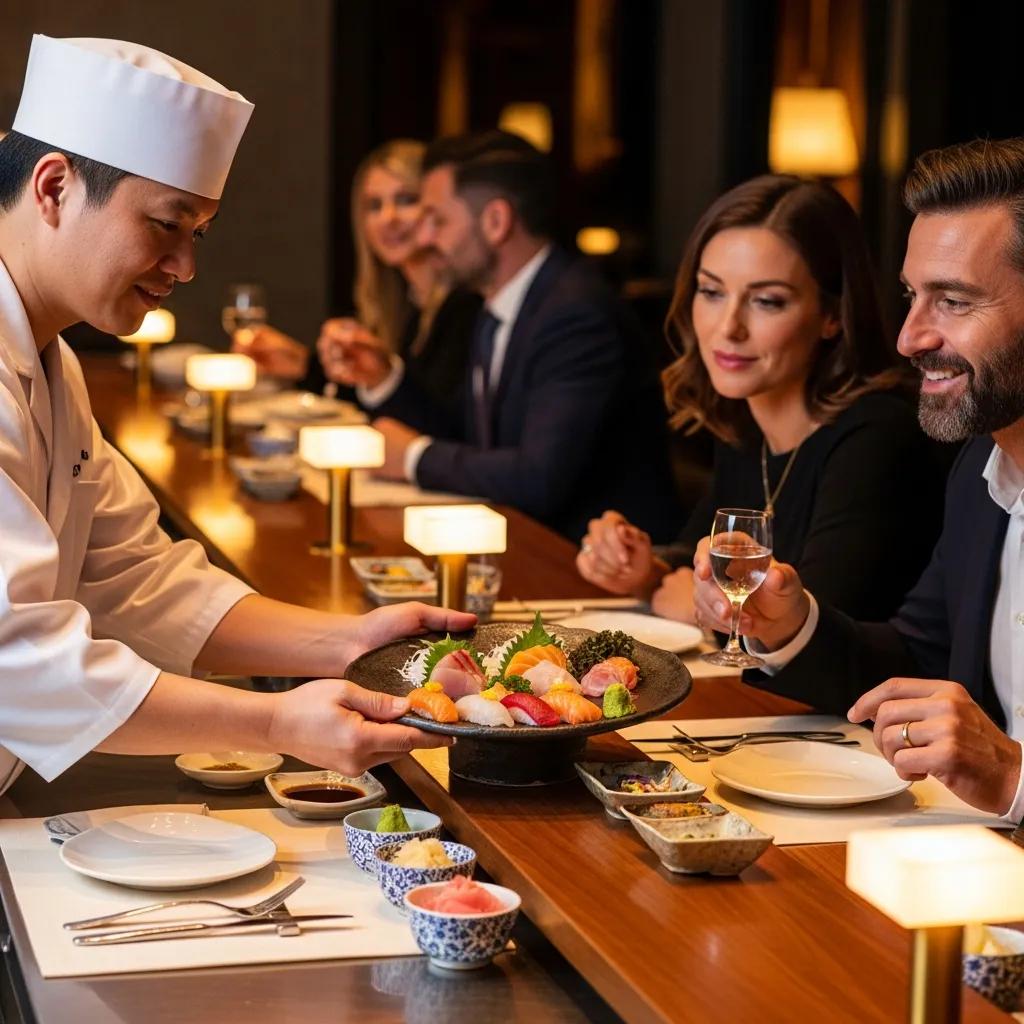
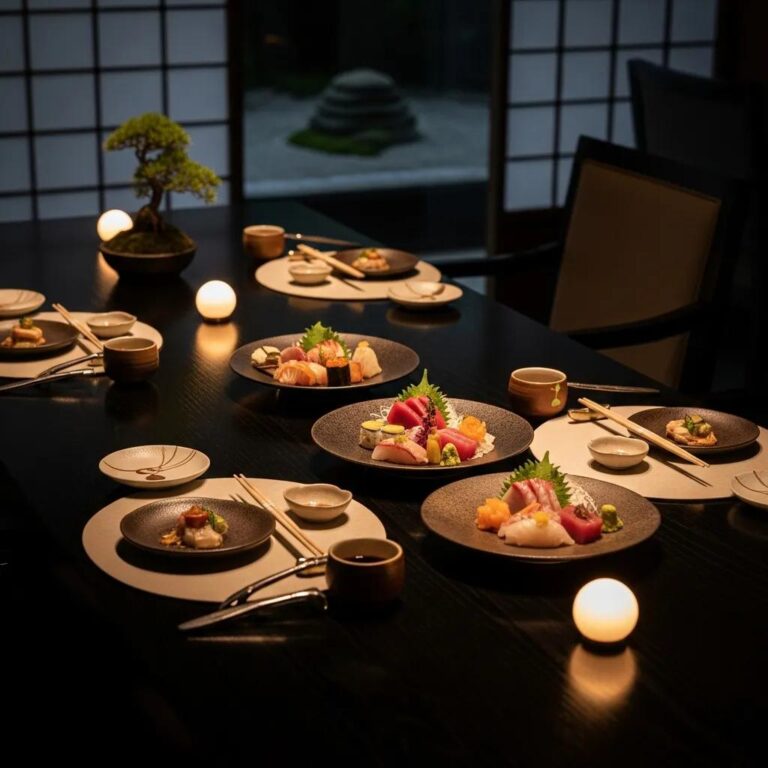
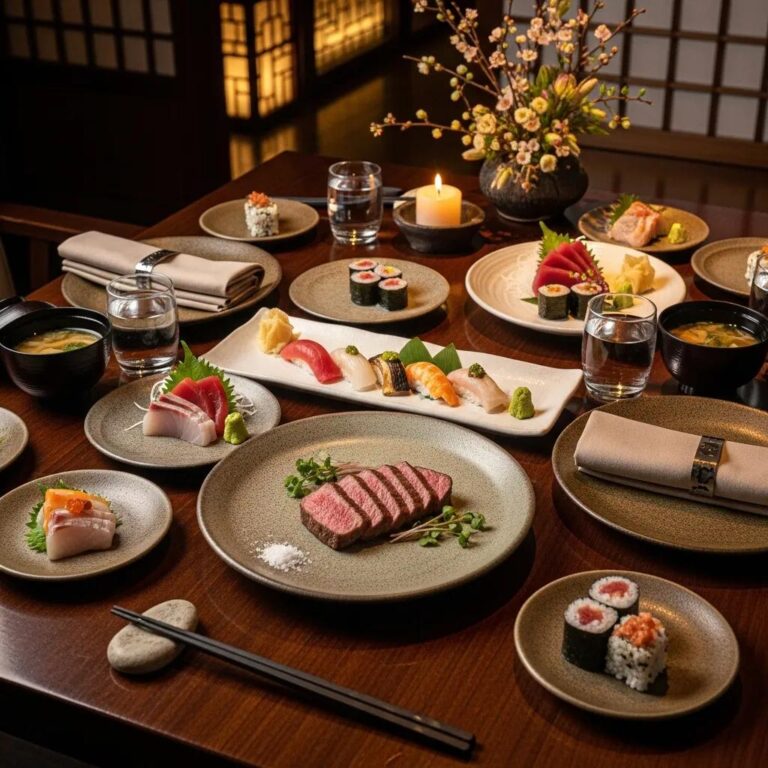
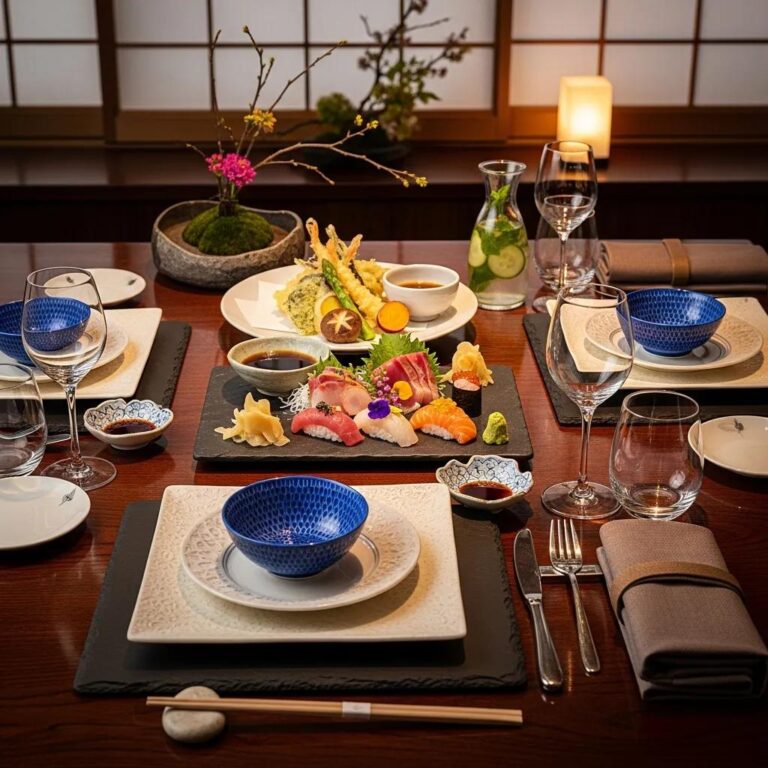
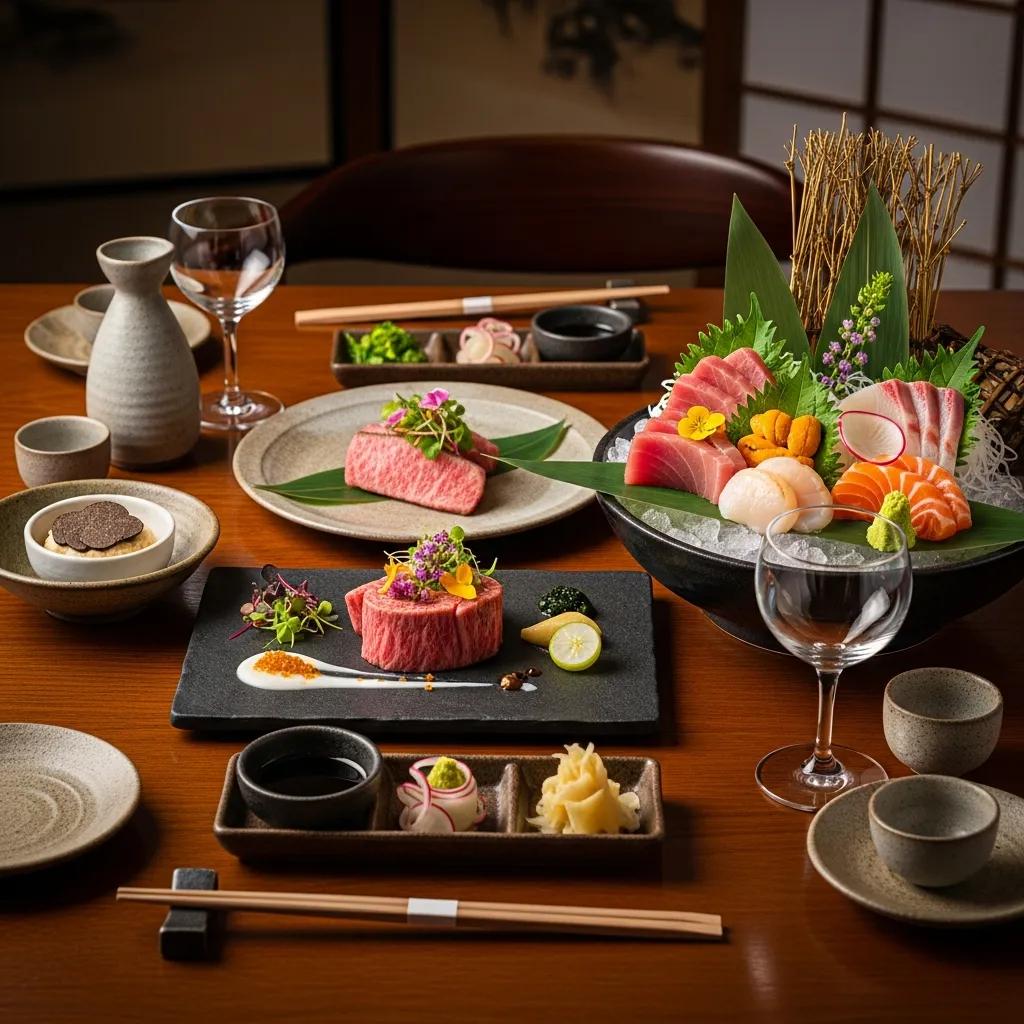
Omakase — “I leave it to you” — is a chef‑driven tasting format that tells a curated story of seasonal ingredients and techniques. In a fusion context, omakase becomes a guided journey where international flavors are woven into a Japanese framework. The chef acts as curator: sequencing, pacing, and finishing dishes so global elements arrive as intentional narrative beats rather than isolated experiments. For guests, this creates a coherent multi‑course progression that lifts traditional ingredients without diluting their identity. At Kaviar, we punctuate that arc with premium moments — A5 Wagyu, curated caviar — placed to create texture contrast and sensory peaks that illustrate how global ingredients integrate into a Japanese tasting menu.
To clarify how an omakase unfolds and where global touches appear, consider the following breakdown of course types and the chef’s responsibilities.
Omakase structure and chef role in fusion tasting experiences:
This layout shows how each course fits the omakase arc and how international techniques or ingredients enhance — never overpower — the Japanese core. Next, we trace omakase’s journey from Tokyo counters to global tasting rooms.
How Has Omakase Evolved from Traditional to Modern Global Interpretations?
Omakase began as a compact, purity‑focused service at Tokyo sushi counters and evolved as chefs traveled, ingredient access widened, and diners sought narrative, experiential meals. Drivers of change include global ingredient availability, chef collaborations across cuisines, and guests’ appetite for storytelling on the plate. Chefs began pairing searing, aging, and fermentation techniques from Western kitchens with Japanese knife work and rice craft, producing hybrid textures and new flavor dialogues. That arc explains why contemporary omakase can feel both rooted and adventurous — and why restaurants like Kaviar adapt these trends to local palates.
What Unique Elements Does Kaviar’s Omakase Offer in Pasadena?
In Pasadena, Kaviar’s omakase highlights premium ingredient moments and careful narrative pacing. We use luxury proteins and delicate garnishes to create sensory peaks inside the tasting journey. Signature moments — an A5 Wagyu course or a caviar service — are portioned and paired with acidic or vegetal contrasts and finished with small theatrical touches to showcase texture and fat. Service centers on chef explanation and timed presentation so each plate reads as part of the whole story rather than a disconnected course. Because these experiences are reservation‑driven, we recommend booking ahead and noting dietary preferences so we can preserve balance and pacing for every guest.
Why Are Premium Ingredients Like A5 Wagyu and Caviar Central to Global Fine Dining?
Ingredients such as A5 Wagyu and caviar function as sensory benchmarks and cultural signals in modern fine dining: they offer distinctive textures, intense flavors, and narrative weight that elevate a tasting menu. Practically, they bring rich fat, saline bursts, or silkiness that play against acids and subtle umami bases. Symbolically, they signal rarity and craft, helping justify price points and careful pairings. Chefs use these items to create contrast (fat versus acid, salt versus sweet) and to anchor menu highlights that linger with diners seeking luxury moments. The table below compares provenance, sensory traits, and sourcing considerations for A5 Wagyu and select caviars.
Comparing A5 Wagyu and Caviar attributes for fine dining pairing:
Provenance and texture shape culinary choices; chefs use these traits selectively to control course dynamics. The pairing frameworks below are common approaches when working with these luxury ingredients.
Pairing frameworks for premium ingredients:
- Texture contrast: Offset creamy Wagyu fat with crunchy or acidic elements to refresh the palate.
- Fat–acid balance: Bright citrus or vinegars cut through richness and keep the sequence lively.
- Temperature contrast: Serve chilled caviar alongside warm, fatty bites to emphasize textural interplay.
These frameworks let chefs craft courses where rarity and technique combine for maximum sensory effect. Next, we cover provenance and handling notes for these ingredients.
What Is the Origin and Quality of A5 Wagyu in International Cuisine?
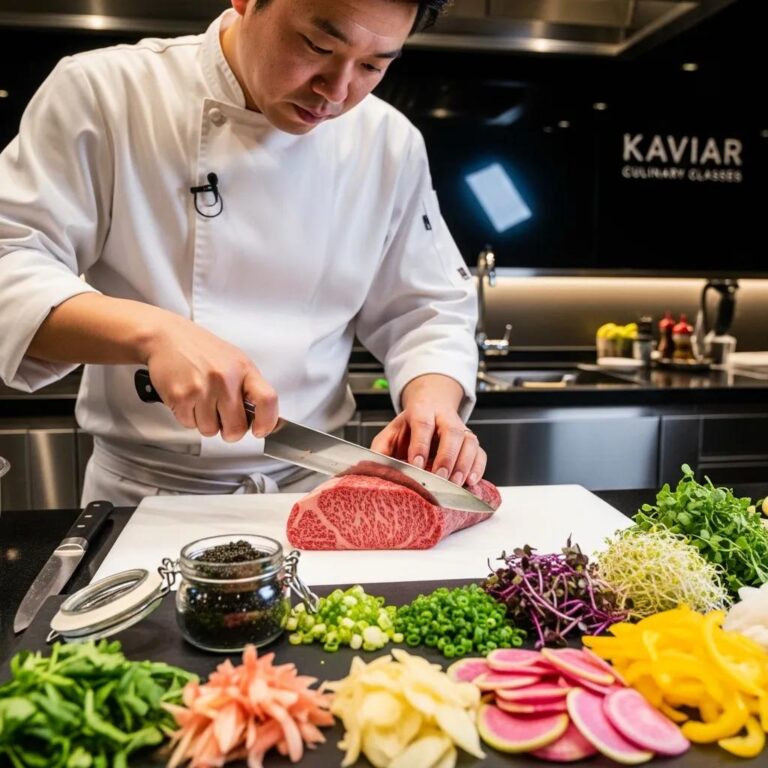
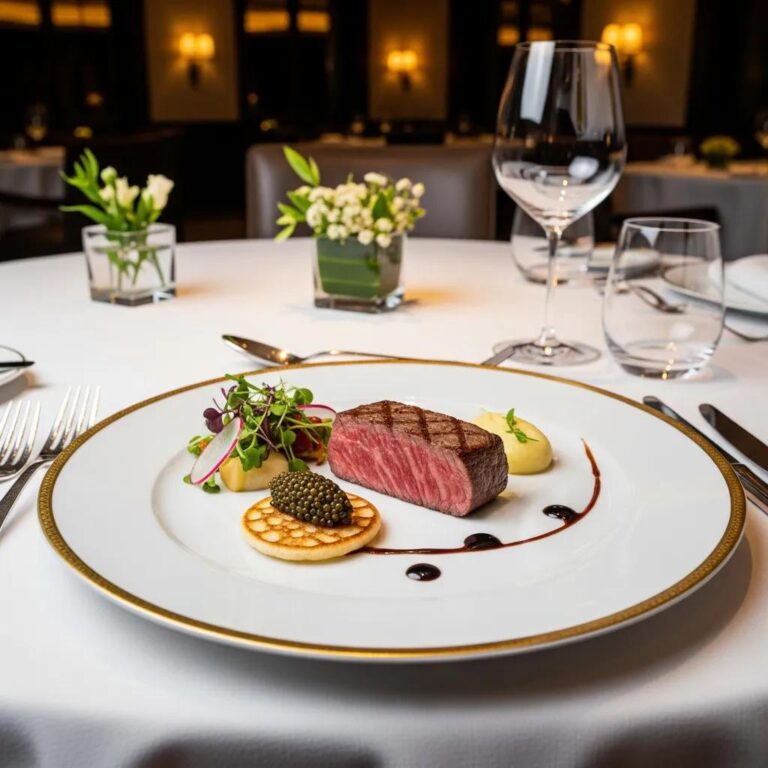
A5 Wagyu is the highest Japanese beef grade, prized for extreme marbling, silkiness, and a buttery flavor profile. Because the meat speaks for itself, chefs treat it with restraint: small portions, quick sears, and minimal seasoning. Importing and serving A5 Wagyu requires exact portioning and thermal control so the fat renders without losing silkiness — often finished tableside or with a brief aburi sear to introduce a smoky note. Those technical choices make A5 Wagyu a natural showpiece and a platform for subtle cross‑cultural finishes.
How Are Caviar Dishes Paired with World Flavors in Luxury Dining?
Caviar pairing relies on contrast — brine against creaminess or acid — and on the textural pop of each bead. Classic pairings like blinis and crème fraîche are frequently adapted with global accents, for example yuzu crème or shiso oil, to bridge Japanese and international flavors. Chefs might crown a fatty fish or a subtly sweet base with caviar so a single saline burst reshapes the bite. Because sustainability matters, many kitchens now choose responsibly farmed or certified caviars to preserve the luxury signal while aligning sourcing with ethical standards.
How Does Kaviar Restaurant’s Culinary Philosophy Reflect Global Fusion Trends?
Our philosophy blends Japanese technique with selective global influences to create experiential omakase and thoughtful signature dishes. The approach is anchored in disciplined sourcing and careful craftsmanship, with an operational focus on reservation‑led, high‑touch service. We prioritize traceability for ingredients like A5 Wagyu and curated caviar, and we frame each tasting sequence as a story that balances restraint and international accents. This philosophy mirrors wider trends toward experiential storytelling, ethical sourcing, and chef transparency — while giving Pasadena diners direct access to a modern, globalized expression of Japanese haute cuisine.
To clarify our public‑facing priorities around service and sourcing, the table below summarizes how we present those commitments without naming specific suppliers.
Kaviar Restaurant: service and sourcing attributes
This snapshot helps set expectations for how we integrate global influences and why our experience is reservation‑driven. Next, we look at the chef’s role and how sourcing and craftsmanship are executed in practice.
Who Is the Chef Behind Kaviar’s Global Japanese Fusion Menu?
The chef at Kaviar combines craft with storytelling: curating sequence, selecting premium ingredients, and blending techniques so the menu reads as a coherent arc. While we don’t list biographical details here, the chef’s role is clear — evaluate provenance, introduce global elements at deliberate moments, and adjust pacing for maximum sensory impact. You’ll see that leadership in the balance of raw and cooked, warm and cold, fat and acid — all choreographed to build tension and release across the tasting menu. Those choices shape both flavor and service choreography, which together define our sense of luxury and workmanship.
What Is Kaviar’s Commitment to Sourcing and Craftsmanship?
Kaviar prioritizes quality, traceability, and ethical considerations when selecting ingredients. We manage portioning and preparation to show each item at its best. Craftsmanship appears in manual techniques — careful slicing, controlled searing, and restrained seasoning — that preserve texture and let international finishes, like flavored oils or citrus reductions, sing without overwhelming. These sourcing and craft choices allow us to use global influences while preserving Japanese fundamentals, delivering a consistent, reservation‑oriented guest experience. The following section places these commitments within current industry trends.
What Are the Current Luxury International Restaurant Trends Influencing Fine Dining?
Contemporary luxury dining is shaped by three converging trends: experiential, narrative‑driven service; demand for traceable premium ingredients; and reservation‑first operations that prioritize sustainability and consistency. Experiential dining foregrounds chef interaction and storytelling, encouraging longer, multi‑course sequences. Traceability and ethical sourcing now guide supplier choices and menu design. Operationally, many high‑end venues manage flow with curated seatings and reservations to maintain service standards. These trends explain why restaurants invest in narrative menus and premium ingredients, and why diners seek immersive, responsibly sourced experiences.
Key trends influencing luxury fine dining:
- Experiential & narrative dining: Multi‑course storytelling with chef interaction and intentional pacing.
- Traceable premium ingredients: Demand for provenance, sustainability, and transparent sourcing.
- Reservation‑first operations: Curated seatings and booking systems to control flow and elevate service.
Understanding these trends helps diners choose experiences that match their values and prepares us to explore experiential tactics and sustainability imperatives in more depth.
How Does Experiential Dining Shape Modern Fine Dining Preferences?
Experiential dining reframes the meal as an immersive story: pacing, narration, and multi‑sensory details matter as much as taste. Tactics include chef explanations, timed course delivery, textured contrasts, and subtle theatrical elements that engage sight and smell as well as flavor. This model encourages longer reservations and higher per‑cover value because guests are paying for a curated moment, not just food. Restaurateurs respond by refining service choreography and designing ingredient moments that become lasting memories.
Why Is Sustainability and Ethical Sourcing Important in Premium Cuisine?
Sustainability and ethical sourcing matter for both principle and practicality. Diners expect transparency about provenance, and long‑term ingredient availability depends on responsible practices. For items like caviar and specialty beef, certifications and traceability shape supplier decisions and menu design. Restaurants address this by documenting provenance, reducing waste, and portioning thoughtfully — balancing luxury signaling with environmental stewardship. That alignment of ethics and gastronomy strengthens trust and supports the ecosystem that makes fine dining possible.
How Can Diners Experience Global Influences in Fine Dining at Kaviar in Pasadena?
At Kaviar, you can explore global influences by booking a chef‑led omakase or ordering curated signature courses that feature premium ingredients. Tell us your preferences when you reserve so we can tailor the narrative. Expect a paced sequence of raw and warm courses, highlight moments with A5 Wagyu or caviar, and palate cleansers that reset the arc between distinct flavor profiles. Menu highlights focus on texture contrast and international finishing techniques applied to Japanese foundations, creating a layered sensory journey. For busy guests, three simple steps help ensure the omakase unfolds as intended: reserve, note dietary needs, and arrive with curiosity.
To prepare for an omakase at Kaviar, we recommend:
- Reserve in advance: Book an omakase or signature tasting to secure a chef‑curated seat.
- Communicate preferences: Share dietary restrictions, allergies, or celebratory notes when booking.
- Arrive ready for pacing: Expect a deliberate, multi‑course sequence with chef interaction.
These simple steps help you get the most from a reservation‑driven luxury experience. The next section covers practical booking channels and Pasadena’s dining context.
What Are the Reservation Options for Kaviar’s Omakase and Signature Dishes?
You can reserve via our reservations page or through our public business profile. Omakase seatings and larger parties book up quickly, so we recommend planning ahead. Lead times vary with demand, but early booking ensures availability for chef‑led sequences and special ingredient requests. When you book, tell us about dietary restrictions, special occasions, or desired pacing — clear communication lets the kitchen plan premium ingredient moments and tailor the experience to your needs.
How Does Pasadena’s Luxury Dining Scene Support Global Culinary Exploration?
Pasadena diners are open to global fusion and experiential formats, drawing on Los Angeles’s broad culinary momentum while appreciating locally accessible, curated tasting experiences. That familiarity with diverse flavors encourages restaurants to propose bold cross‑cultural pairings and premium ingredient showcases. As a result, guests in Pasadena can enjoy intricate omakase programs featuring A5 Wagyu, caviar, and technique hybrids without traveling to larger metropolitan centers — bringing world‑class Japanese fine dining closer to home.
This closing note points you to action: reserve strategically, share preferences, and expect a narrative‑driven tasting that blends Japanese fundamentals with global innovation.
Frequently Asked Questions
What is the significance of umami in Japanese fine dining?
Umami — the savory “fifth taste” — is central to Japanese cooking. It provides depth and helps balance sweet, sour, bitter, and salty notes. When chefs add global ingredients, they consider how those additions affect umami so the dish’s core savoriness remains intact while new flavors add dimension.
How do chefs ensure the quality of premium ingredients like A5 Wagyu and caviar?
Chefs source from reputable suppliers and prioritize traceability. For A5 Wagyu, that means selecting specific breeds and regions known for marbling and flavor; for caviar, it means choosing certified, responsibly produced varieties. Direct supplier relationships and strict handling standards help maintain quality and integrity on the plate.
What role does plating play in the dining experience at Kaviar Restaurant?
Plating at Kaviar is both visual and narrative: careful presentation highlights texture and color while signaling how each bite fits the tasting arc. Thoughtful composition draws guests into the story of the course and prepares them for the next moment in the sequence.
How does Kaviar Restaurant accommodate dietary restrictions in its omakase experience?
We tailor omakase to guest needs when notified in advance. Tell us about allergies, dietary preferences, or restrictions at booking and the chef will adjust courses to preserve balance and pacing while keeping the experience intact.
What are some common misconceptions about fusion cuisine in fine dining?
A common misconception is that fusion is careless or inauthentic. In fine dining, successful fusion is thoughtful and disciplined — it blends techniques and flavors in ways that respect original ingredients and create coherent, elevated dishes.
How can diners enhance their experience during an omakase meal?
Come curious and open. Engage with the chef during the meal to learn about ingredients and techniques, follow the intended pacing, and share preferences or feedback. Those simple actions deepen appreciation and make the experience more memorable.
Conclusion
Global influences enrich Japanese fine dining when they’re applied with restraint, purpose, and respect for seasonal technique. At Kaviar, that balance lets premium ingredients like A5 Wagyu and caviar become narrative high points within a curated omakase. Reserve your seat, tell us your preferences, and let the chef guide you through a layered, sensory tasting that honors tradition while welcoming the world’s flavors.