




Champagne & Sparkling Wines — Kaviar’s Guide to Tasting, Pairing and Luxury Service
From bone‑dry bruts to lusciously sweet cuvées, sparkling wine offers a spectrum of styles. This guide is designed to help you choose, taste, and pair with confidence—whether you’re ordering a bottle for an omakase, planning a celebration, or building a cellar. You’ll find clear distinctions between Champagne and other bubblies, a concise walk‑through of méthode traditionnelle production (the source of brioche and citrus notes), practical tasting and service protocols, and pairing strategies that work especially well with Japanese fine dining. If selecting the right bottle for a multi‑course tasting or a special occasion feels daunting, consider this your playbook: selection criteria, tasting workflows, recommended bottles, sustainable trends, and how to reserve a curated champagne experience at Kaviar are all covered. Keywords like sparkling wine, champagne guide, brut champagne, vintage sparkling wine, méthode traditionnelle, and champagne pairing are present to support learning and discoverability.
How Champagne Differs from Other Sparkling Wines
“Champagne” is a legally protected name for wines made in the Champagne region of France under strict rules; “sparkling wine” is the broader global category. The key technical distinction is how the bubbles are created: Champagne is typically made by méthode traditionnelle—secondary fermentation in the bottle and extended lees aging—while many other sparklers use the Charmat (tank) method, ancestral techniques, or simple carbonation. That choice shapes texture, autolytic character, and aging potential: extended lees give Champagne its brioche and toast, while tank‑fermented wines often show fresher fruit and floral notes. Knowing this helps you choose the right bottle for service or for the cellar.
Beyond method, Champagne’s identity is shaped by grape selection and regulation. These factors together determine aroma, mouthfeel, and pairing potential. For a quick reference, the primary distinctions are summarized below.
Key differences between Champagne and other sparkling wines:
- Region and designation: Champagne is geographically protected and regulated; sparkling wine is a global category without a single legal boundary.
- Production method: Champagne commonly follows méthode traditionnelle with lees aging and disgorgement; many other sparklers rely on the Charmat (tank) method or alternative processes.
- Grape varieties: Champagne relies mainly on Chardonnay, Pinot Noir, and Pinot Meunier; other regions often use local varieties that change acidity and aromatics.
- Flavor and aging: Extended lees contact in Champagne produces autolytic notes (toast, brioche); many non‑Champagne sparklers emphasize primary fruit and floral tones.
Those contrasts lead naturally into a closer look at Champagne’s production stages and the regulatory framework that preserve its character.
How Champagne Is Made in the Champagne Region

Champagne production follows a precise sequence—from harvest through dosage and release—where every step affects texture and flavor. Grapes are picked, gently pressed to capture free‑run juice, and fermented into base wines. Winemakers blend those base wines (assemblage) for balance, then add liqueur de tirage to trigger the in‑bottle secondary fermentation that traps CO₂ and forms the bubbles. Months or years on the lees develop autolytic flavors; riddling concentrates the lees, disgorgement removes them, and a final dosage sets sweetness and balance.
Regional regulations control yields, permitted practices, and labeling—ensuring consistency and provenance. That regulated timeline explains Champagne’s integrated mousse, brioche character, and mineral length when compared with many tank‑fermented alternatives, and it sets expectations for tasting and pairing.
Which Sparkling Wines and Champagne Houses Matter for Luxury Dining?
Recognizing the markers of quality helps diners and collectors choose between brut, vintage and prestige cuvées. Luxury signals include vineyard sourcing, long lees aging, careful dosage, vintage declarations, and limited releases that reflect terroir and cellaring potential. Those attributes deliver practical benefits—depth, aging ability, and a refined mousse—that justify premium placement on fine‑dining lists. Below are curated recommendations by style with tasting cues and pairing prompts to guide selection.
- Brut (Non‑vintage): Bright acidity, green apple and citrus core—reliable aperitifs that pair beautifully with shellfish and sushi.
- Vintage releases: Year‑specific character with pronounced autolysis, honeyed notes and cellar potential—best with richer fish or poultry.
- Prestige cuvées: Long lees aging and exacting blends yield layered brioche, toasted nuts and a long finish—reserved for celebrations and aged proteins.
These styles translate directly to the dining room: a premium brut or vintage will elevate a multi‑course omakase and complement dishes like caviar and A5 Wagyu. When booking, request specific styles so the restaurant can prepare the appropriate bottles for service.
Introductory comparison table for recommended bottles and attributes:
That table highlights stylistic range and typical price positioning—handy when comparing options and planning a cohesive dinner. Next, we outline how to evaluate luxury brands using those bottle attributes.
What Makes a Champagne House “Luxury”?
Luxury is more than price: it shows up in vineyard sourcing, ageing policy, and release strategy. Ownership of prime sites or long‑term contracts secures top fruit; extended lees ageing and restrained dosage build autolytic complexity and a sustained finish. Limited production, vintage declarations and documented provenance increase collectibility and critical recognition, which affects availability and value. Reading these signals helps you tell everyday bubbles from investment‑grade bottles and choose pairings for high‑end cuisine.
Those traits produce tangible effects on the palate—richer brioche, creamier mousse and deeper texture—that make such wines ideal for headline moments in a tasting menu. Knowing how to evaluate labels will improve conversations with sommeliers when you’re booking or buying.
Top Brut and Vintage Sparkling Picks for Connoisseurs
Below are concise, style‑focused picks with tasting notes and pairing cues to guide selections across service contexts and budgets. Each suggestion prioritizes structure, acidity and food compatibility—key considerations for restaurant service and cellar planning.
- Brut NV — Crisp citrus and subtle brioche; excellent as an aperitif or with raw seafood.
- Vintage Champagne — Riper orchard fruit and honeyed autolysis; pairs well with richer fish and poultry.
- Blanc de Blancs — Bright lemon and chalky minerality; ideal companion for delicate sashimi and shellfish.
Mention these preferences when you reserve; restaurants often mirror these styles on their lists to align service with your tasting goals.
Side‑by‑side comparison table for bottle selection:
Use this comparison to match bottle attributes with menu items and the occasion—handy when confirming pairings with the sommelier.
How to Taste and Serve Champagne Like a Professional
Good tasting and service follow a clear sequence and the right tools: visual assessment, aroma evaluation, measured tasting, plus proper glassware and temperature. Start with a visual check—colour and bead—then explore aromas from primary fruit to autolytic brioche and any tertiary oxidative notes in older bottles. On the palate, note acidity, mousse texture and finish length; dosage and lees contact strongly influence balance. Service choices—temperature, glass shape and pour technique—preserve aromatics and mousse, and they make the pairing feel intentional.
In a luxury setting, staff training and consistent service standards matter: careful table‑side presentation or selective decanting for aged bottles underscores quality and keeps the tasting timeline on track. Below is a quick reference for essential techniques and tools, followed by stepwise tasting tips you can use in the dining room or at home.
Essential tasting and service techniques table:
Essential Tasting Tips and Techniques
Tasting sparkling wine follows a simple, repeatable routine: look, smell, taste, reflect. Color and bead reveal age and method—pale straw signals fresh fruit; deeper gold suggests age. On the nose, separate primary fruit (citrus, orchard) from secondary autolytic characters (brioche, toast) and any tertiary oxidative layers. On the palate, focus on acidity, effervescence and body—observe how mousse interacts with fat and texture in food pairings.
We recommend keeping a tasting notebook to capture concise notes—try short sensory formulas like “Chardonnay → citrus‑mineral backbone”—and run comparative flights (verticals and horizontals) to track how production and terroir shape style over time.
Ideal Serving Temperature and Glassware
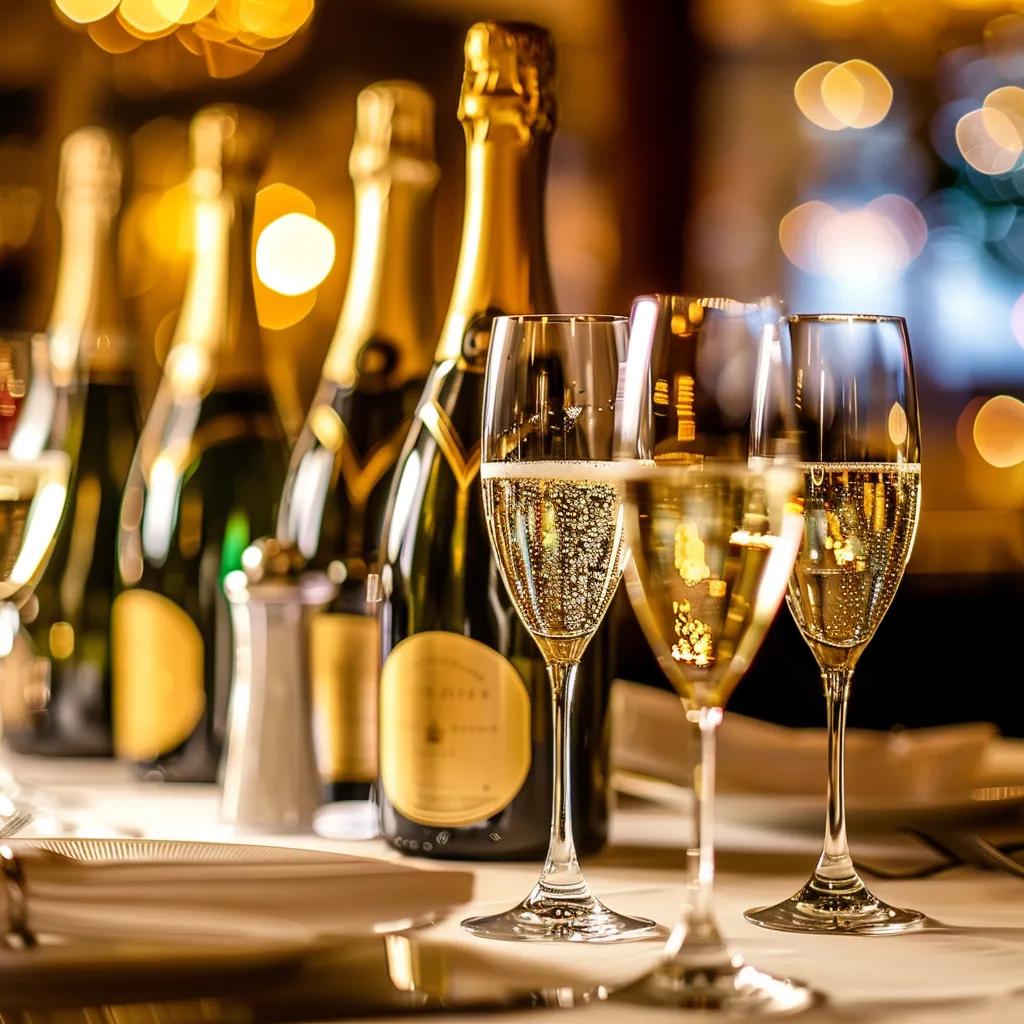
Temperature and glass shape control how a bottle expresses itself: cooler temps preserve freshness and bubbles, while the glass concentrates aroma and controls mousse. Recommended ranges: non‑vintage brut at 7–10°C to retain brightness; vintage Champagne slightly cooler at 6–9°C for nuance and length; sweeter styles can be served a touch warmer to lift aromatics. For glassware, prefer tulip or white‑wine shapes to balance effervescence with aroma—flutes highlight bead but limit aromatic development.
Service timing completes the presentation: chill bottles ahead of service but avoid over‑chilling, which mutes aromatics. Decant only in special cases for heavily aged bottles where tertiary notes need air. Trained staff following these rules deliver a consistent, elevated guest experience.
Pairing Champagne with Japanese Fine Dining
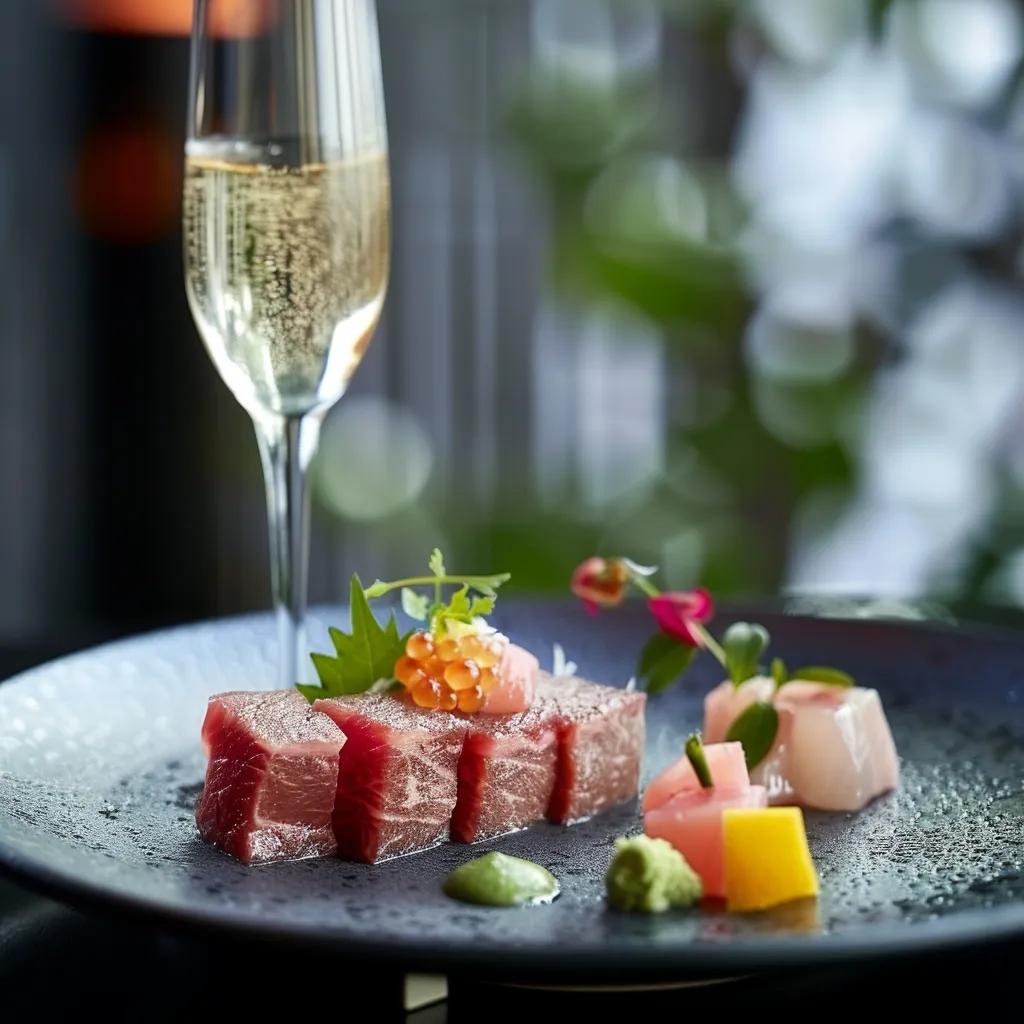
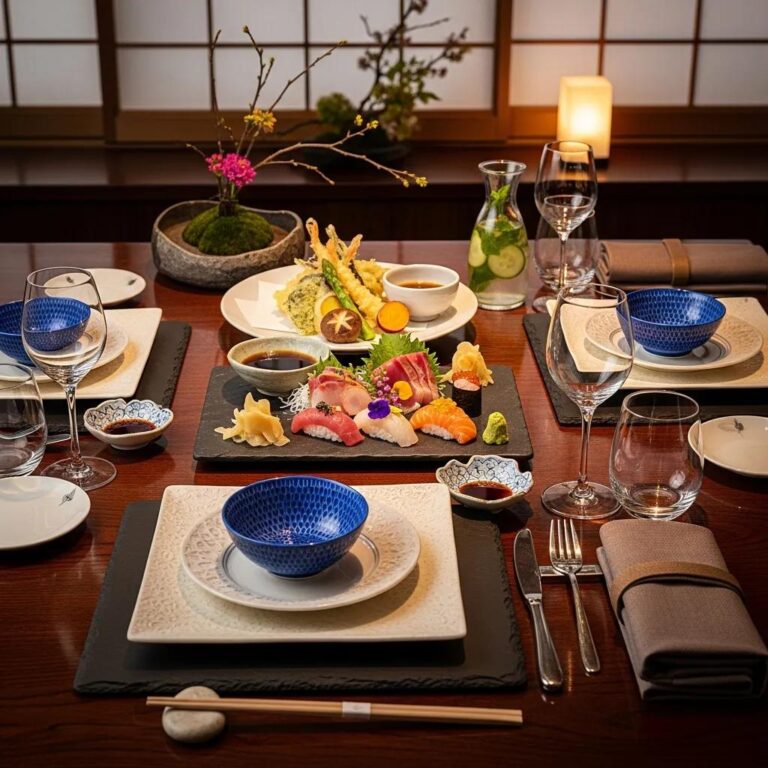
Pairing bubbles with Japanese cuisine is about umami, texture and fat. Acidity and effervescence cut richness and refresh the palate; yeast‑derived flavors and dosage can echo salty, savory notes. For delicate sashimi, a crisp blanc de blancs preserves nuance; for seared A5 Wagyu, a low‑dosage vintage or prestige cuvée with structure will stand up to fat. These principles work reliably across multi‑course omakase services.
Matching dishes to styles helps both guests and sommeliers plan pairings. Below is a practical mapping of Kaviar signature dishes to recommended champagne styles and service notes to simplify reservation requests and in‑service communication.
Dish mapping table: This EAV table links representative dishes with their texture and the champagne styles we recommend for each course.
Which Kaviar Dishes Pair Best with Champagne?
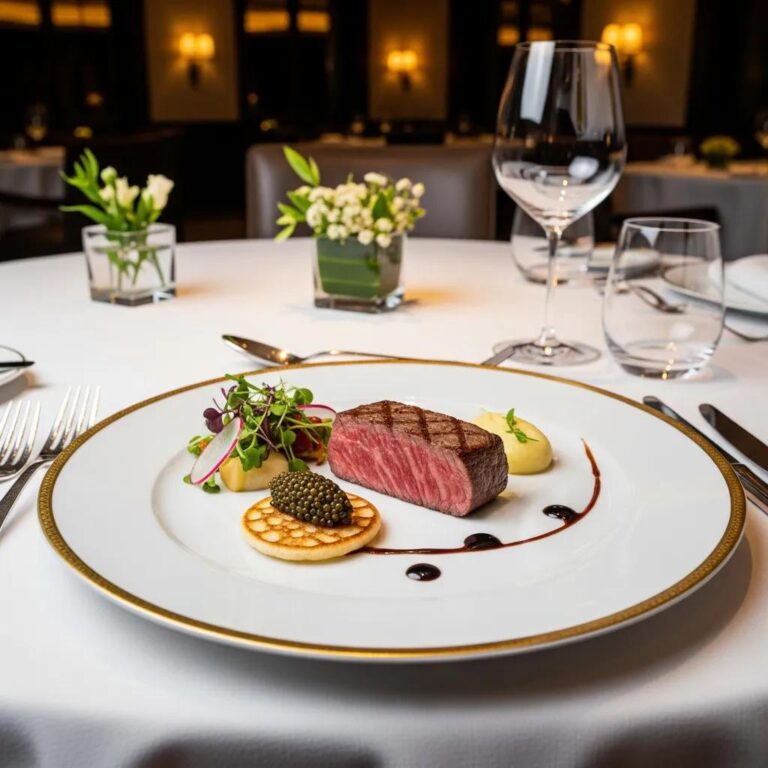
At Kaviar, our omakase—highlighting caviar and A5 Wagyu—pairs especially well with structured sparkling wines that either contrast or complement texture and umami. Caviar favors saline‑forward blanc de blancs or extra brut; delicate sashimi benefits from a pure, cool brut; and A5 Wagyu can either be cut by a high‑acidity vintage Champagne or complemented by a mature prestige cuvée whose autolytic richness mirrors the meat’s savory depth. When booking, request pairing guidance so our beverage team can align bottles with the tasting flow.
Specifying champagne pairing preferences in advance helps the restaurant put together an appropriate flight and time service so bubbles arrive at the ideal moments. That preparation improves availability and the overall experience.
Principles for Pairing Champagne with A5 Wagyu and Caviar
Pairing rich A5 Wagyu and saline caviar with sparkling wine follows two approaches: contrast and complement. Contrast uses bright acidity and a fine mousse to cut through fat—extra‑brut or low‑dosage vintage Champagnes excel here. Complement focuses on textural resonance: autolytic, yeasty notes and a creamier mousse can echo the meat’s umami and the caviar’s briny, nutty character. Dosage matters: drier styles preserve contrast; small dosage additions round texture for harmony.
Timing in an omakase is crucial: introduce brighter, higher‑acidity bottles early for raw fish, then bring in fuller, more autolytic Champagnes for richer cooked courses to maintain balance and build toward a satisfying finish.
Trends in Champagne and Sparkling Wine for Luxury Dining
Recent market shifts favor sustainability, organic and biodynamic practices, and experiential service formats that emphasize storytelling and multisensory engagement. Producers are adopting low‑intervention approaches, longer lees ageing with reduced dosage, and vineyard‑focused bottlings highlighting terroir. Restaurants respond with curated lists that spotlight sustainable growers and guided flights that explain method, vintage context and pairing rationale. These trends reflect growing guest interest in provenance, environmental stewardship, and memorable dining experiences.
Sustainable sourcing and narrative‑driven service offer practical benefits: organic and biodynamic wines often show distinctive terroir expression that sommeliers can thread through a tasting menu to create memorable pairings. Below are common ways these innovations appear in luxury dining.
Key trends shaping luxury sparkling programs:
- Growers emphasizing organic and biodynamic viticulture and reduced‑intervention cellar work.
- Curated champagne flights that showcase vintage evolution and production methods.
- Table‑side service theatre, pairing narratives and multisensory staging to elevate the tasting.
How Sustainable Sparkling Wines Are Changing the Market
Sustainable and organic sparkling wines are defined by vineyard practice and lower chemical inputs, and they increasingly shape sommelier lists and diner preferences. Stylistically they can differ—sometimes showing a more pronounced terroir voice or lighter extraction—while still offering the acidity and effervescence needed for pairing. Restaurants highlight certified or low‑intervention growers to signal stewardship and to create compelling tasting narratives that resonate with today’s diners.
When choosing sustainable options, look for clear certifications or producer statements about vineyard management; sommeliers use those cues to design flights that educate and elevate the guest experience.
Experiential Service Innovations That Enhance Champagne
Service innovations that spotlight champagne include curated flights with narrative tasting notes, table‑side opening rituals, palate‑cleansing interludes, and multisensory touches like tailored lighting or sound. Flights allow guests to compare verticals or horizontals that reveal differences in method, vintage or dosage. Table‑side theatre—careful uncorking, precise pouring and concise storytelling—creates memorable moments that anchor celebrations. Palate cleansers and narrative cues help guests follow progression and keep clarity across many courses.
These approaches increase engagement, justify premium pricing, and strengthen the bond between wine and cuisine in a luxury context.
How to Reserve a Champagne‑Led Dining Experience at Kaviar
Booking a champagne‑forward dining experience begins with choosing your format (omakase or private seating), noting dietary needs, and specifying pairing preferences—then allowing time for bottle sourcing. Tell us if you prefer brut‑focused flights, vintage sequences, or a prestige cuvée for a celebration; for rare bottles, give several weeks’ notice so our cellar team can confirm availability and handling. Clear seating and celebration notes allow us to prepare service pacing and presentation so champagne complements the tasting at the right moments.
A simple, step‑by‑step reservation process reduces friction for high‑intent bookings and helps us deliver the pairing you expect.
Reservation Process for Omakase and Champagne Pairings
To reserve a curated omakase with champagne pairings at Kaviar, provide your date, party size, dietary restrictions and a note requesting champagne pairings with your booking. Indicate whether you prefer brut flights, vintage‑led sequences, or a prestige cuvée for special occasions so our sommeliers can source and confirm bottles. For rare requests, allow additional lead time and share any celebration details so the service team can prepare presentation. Clear communication at booking increases the chance we can deliver your preferred pairings and a seamless tasting progression.
Our reservations team will confirm details and advise on recommended pairings and lead times to align bottles with the omakase flow and your expectations.
What to Expect from the Kaviar Dining Atmosphere
Expect attentive, narrative‑driven service where timing supports the tasting and champagne is introduced with intention. Our experience emphasizes precise pacing, curated pairings and sommelier explanations that link bottle attributes to each dish. Ambience is designed to focus the senses—lighting, pacing and palate cleansers are used deliberately—while table‑side service and careful pouring elevate the ritual of champagne enjoyment. That attention ensures your pairing requests are honored and the tasting proceeds with thoughtful hospitality.
Knowing these expectations before booking helps you plan arrival time, dress and any celebratory details that enhance the evening.
Frequently Asked Questions
What is the best way to store Champagne and sparkling wines?
Store bottles in a cool, dark place with stable temperature—ideally 10–15°C (50–59°F). Keep them on their side to preserve cork moisture and avoid strong odors that the wine can absorb. A wine fridge is ideal; for long‑term storage, a dedicated cellar is best. Once opened, consume sparkling wines within a few days and use a proper stopper to retain carbonation.
How long can Champagne and sparkling wines be aged?
Aging potential depends on style and quality. Non‑vintage Champagnes are generally best within 3–5 years of release; vintage Champagnes can develop beautifully for 10–20 years or more. Méthode traditionnelle sparklers can also age well; Charmat‑method wines are usually intended for earlier drinking. Always check the producer’s guidance for specific recommendations.
What are the signs of a spoiled Champagne or sparkling wine?
Signs of spoilage include a flat texture, unpleasant odors (vinegar, mustiness), or off color. Loss of effervescence often indicates poor storage or that the wine is past its peak. A pushed cork or leaking bottle suggests a fault. When in doubt, taste a small amount before serving and err on the side of caution if the wine seems off.
Can you pair Champagne with desserts, and if so, which types work best?
Yes—sweet and off‑dry sparkling wines pair well with many desserts. Demi‑sec or doux styles suit fruit tarts, chocolate mousse or panna cotta; the acidity balances sweetness and the bubbles refresh the palate. For lighter desserts, a brut can work nicely with citrus‑based dishes or sorbets. Try different combinations to discover what you prefer.
What is the significance of dosage in Champagne?
Dosage is the small amount of sugar added after disgorgement that balances acidity and defines style—from brut nature (no added sugar) through extra brut, brut, extra dry and demi‑sec. Lower dosage emphasizes dryness and mineral drive; higher dosage adds roundness and amplifies fruit. Understanding dosage helps you select a Champagne that matches your taste and food pairing.
How do I choose the right glassware for serving Champagne?
Glassware matters. While flutes show off the bead, tulip or white‑wine glasses concentrate aromatics while still preserving effervescence—helpful for tasting and pairing. Make sure glasses are spotless; residues can mute flavors. The right glass will make each sip more expressive and enjoyable.
Conclusion
Knowing how sparkling wines are made, how to taste and serve them, and how to pair them—especially with Japanese fine dining—lets you make confident, memorable choices. Use this guide to refine selections, plan pairings for special menus, or prepare a cellar for future celebrations. Explore our curated selection of premium sparkling wines and reserve a luxury champagne dining experience at Kaviar to enjoy bubbles that truly elevate the moment.