




Elevate Your Next Dinner Party: Easy DIY Gourmet Appetizers with Luxe Ingredient Inspiration
Hosting an elevated dinner doesn’t require a restaurant kitchen. With a few deliberate choices and simple techniques, you can assemble gourmet appetizers that look polished and taste exceptional. This guide shows practical, home-friendly methods for building starters, explains where luxury ingredients like caviar and A5 Wagyu make the biggest impression, and shares plating and pairing strategies that give small plates professional polish. We know balancing flavor, texture, and presentation while keeping prep manageable is the real challenge—that’s why these recipes and shortcuts focus on high impact with minimal fuss. Read on for curated recipes, chef-style plating tips, seafood-handling best practices, pairing suggestions, and ways Kaviar Restaurant’s menu can inspire your at-home service. By the end you’ll have concrete ideas, a quick ingredient reference, and ready-to-use menu templates for a memorable, refined evening.
What Are the Best Easy Gourmet Appetizer Recipes for Dinner Parties?
Great dinner-party appetizers are compact, bold in flavor, and visually deliberate. They work by pairing a clear dominant note—saline, umami, or bright acid—with a contrasting texture: crisp, silky, or jelly-like. The most practical recipes combine assembly-only bites, quick sears, and one- or two-step tartares that let premium ingredients shine without complex technique. Below you’ll find concise concepts and actionable tips to build a balanced appetizer lineup. Each idea includes prep time cues, difficulty, and a plating suggestion so you can execute with confidence.
Which Simple Elegant Party Snacks Can You Make at Home?
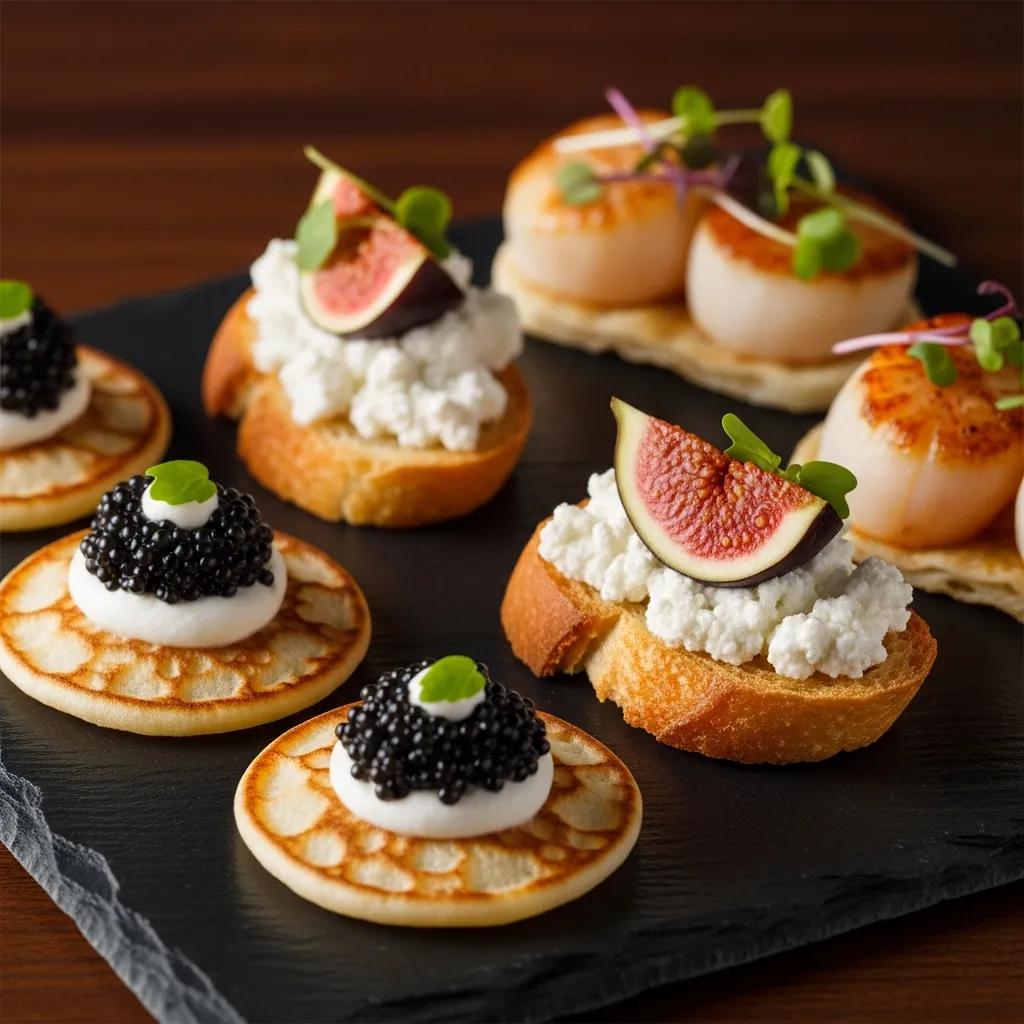
Elegance often comes from restraint. Start with small bases—petite toasts, ready-made blinis, cucumber rounds, or thin crackers—and layer one rich element (soft cheese, tartare, or crème fraîche) with a bright counterpoint (lemon zest, pickled shallot, or chive). A blini smeared with crème fraîche and finished with a modest spoon of caviar delivers instant luxury in under ten minutes; whipped goat cheese with preserved fig on crostini offers that irresistible sweet‑salty contrast. For portioning, plan one to two bites per guest per appetizer type during a multi-course reception to keep the menu balanced. Assembly-forward snacks free you to focus on timing and plating for larger dishes later in the evening.
How Do You Prepare Quick Upscale Starters with Minimal Effort?
Quick upscale starters depend on excellent ready components and a few chef touches. Use high-quality, semi-prepared items—smoked salmon, pre-seared scallops, or curated charcuterie—and finish them with a brush of flavored oil, a scatter of flaky salt, and a micro-herb. Save time by prepping elements a day ahead, using ring molds for consistent portions, and applying warm sauces at the last moment to preserve texture. A short make‑ahead checklist and clear assembly steps keep service flowing and ensure each starter arrives fresh and composed.
Before the recipe list, here’s a compact comparison of three luxury ingredients to help you prioritize purchases and estimate portions for your party.
This side‑by‑side helps you see which ingredients carry the most flavor in small portions and how best to present them so texture and taste are front and center. Use these serving notes when you sketch your menu.
How Can You Use Luxury Ingredients Like Caviar and A5 Wagyu in DIY Appetizers?
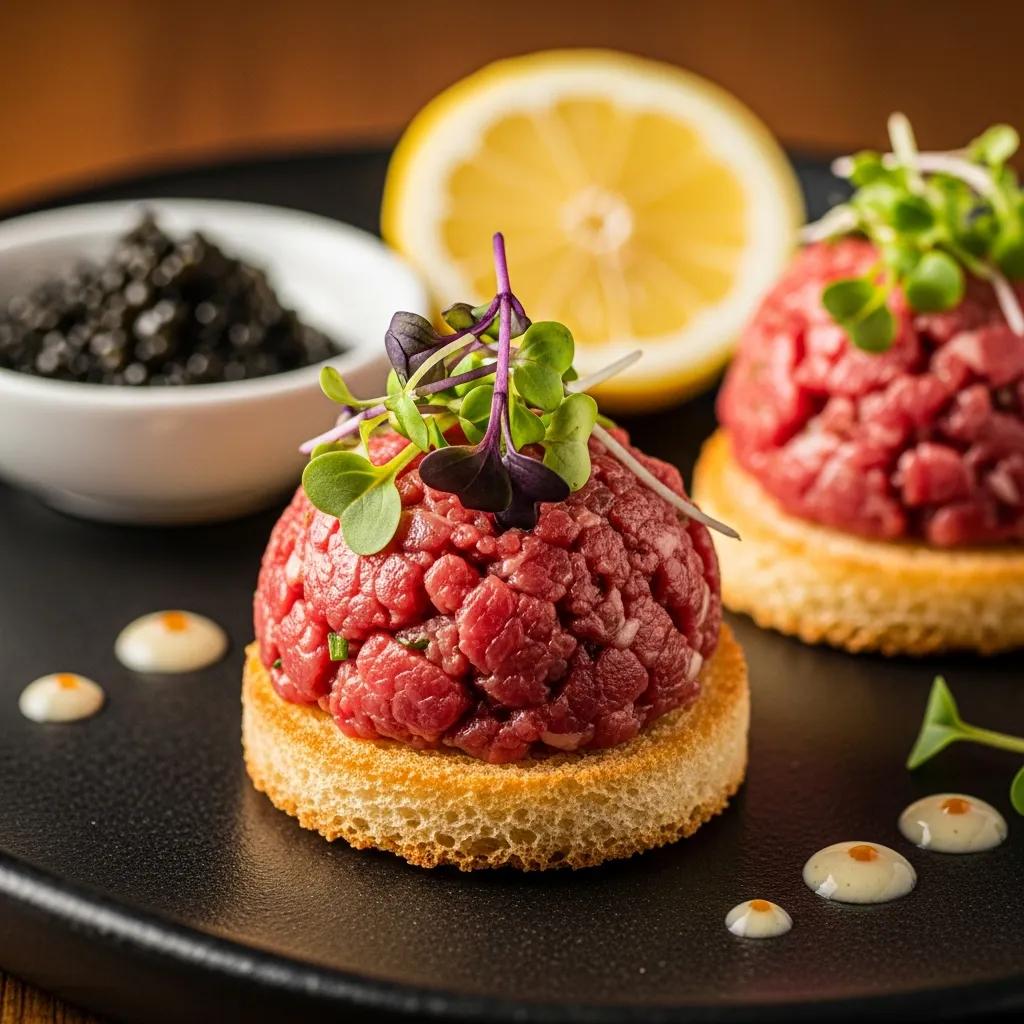
Luxury ingredients deliver drama in small doses: they concentrate umami and textural contrast, so a little goes a long way. Caviar adds saline pops that play beautifully against creamy bases; A5 Wagyu contributes a silky, buttery mouthfeel best appreciated in thin slices or tartare. Use these items as finishing accents rather than the bulk of a bite. Home-friendly techniques include portioning caviar on chilled blinis or cucumber discs and seasoning A5 Wagyu tartare very lightly so the beef’s fat remains the star. Below are three practical, cook-at-home examples that translate premium ingredients into attainable appetizers.
What Are Easy Recipes Featuring Caviar for Elegant Entertaining?
Caviar is one of the easiest ways to signal luxury. A classic option: chilled blini with a smear of crème fraîche, a small quenelle of caviar, and snipped chive—assemble in under ten minutes and serve immediately. Cucumber rounds topped with cultured butter, a tiny spoonful of caviar, and micro-dill keep the bite bright and texturally crisp. When budgeting, plan roughly 5–10 grams of caviar per guest spread across a few bites. Buy from trusted purveyors and keep the roe cold until service to preserve texture and flavor.
How to Make Simple A5 Wagyu Appetizers at Home?
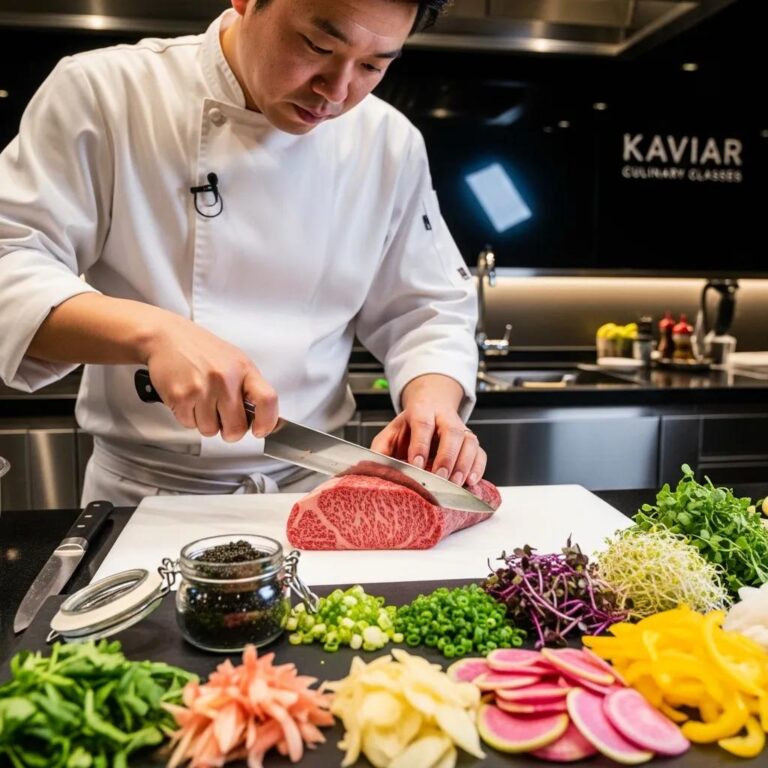
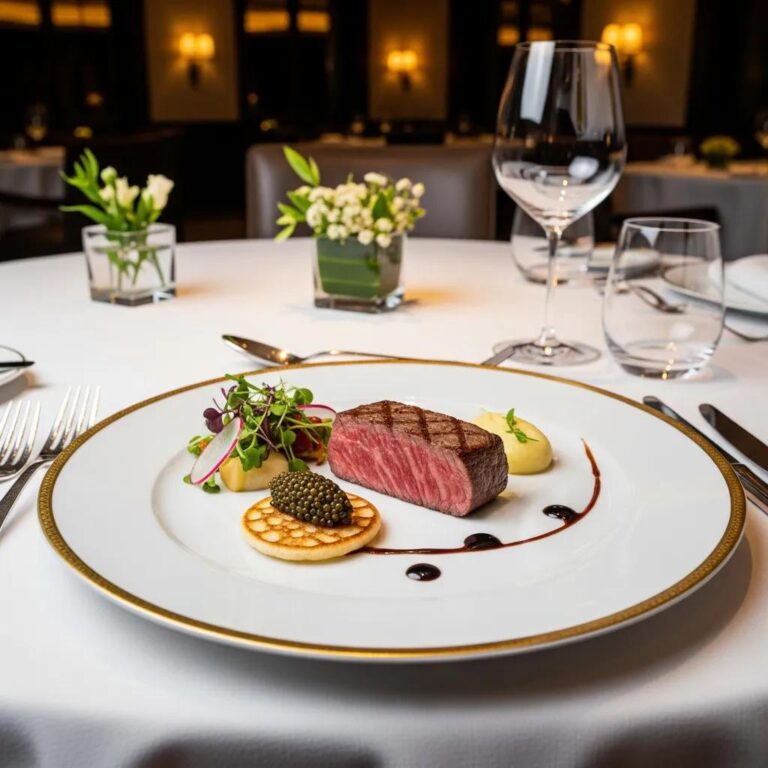
A5 Wagyu performs best with minimal treatment. Consider paper-thin carpaccio dressed with a whisper of yuzu or ponzu and a scatter of microgreens, or a finely chopped tartare finished with sesame oil, a touch of soy, and scallion on petite toast. Keep portions modest—about 15–20 grams per serving—and avoid heavy garnishes so the beef remains the focus. Handle gently and serve promptly; cool temperatures and quick plating let the Wagyu’s texture register most clearly.
These simplified preparations draw directly from Kaviar Restaurant’s menu-level approach. Kaviar’s emphasis on omakase-style restraint—quality sourcing, minimal seasoning, and meticulous plating, as seen in presentations like Toro Tartare with caviar and 24k gold—illustrates how small, precise touches create maximum impact. If you’d like to taste professional executions of these flavors before attempting your own, consider reserving a table at Kaviar Restaurant to see these techniques in action.
What Fine Dining Techniques Can Elevate Your Homemade Appetizer Presentation?
Fine-dining plating is about composition: contrast, balance, precision, and restraint. Use negative space to frame the bite, build subtle height with layered components, and balance textures—crispy, silky, and gel-like—in each mouthful. Small tools—plating tweezers, ring molds, and squeeze bottles—make precise dots, lines, and stacks achievable at home and instantly elevate presentation.
How Do You Plate DIY Appetizers to Look Fancy and Professional?
Plating that reads professional starts with a focal point and intentional space. Choose contrasting dishware—dark plates for pale ingredients, light plates for colorful elements—and place the main component slightly off‑center. Use height thoughtfully by stacking or inserting a crisp element upright, then finish with a controlled sauce stroke or a small brush of emulsion. Consistent portions, achieved with ring molds or measured scoops, give every bite a cared-for, restaurant-quality look.
What Flavor Pairings Create Gourmet Appetizer Combinations?
Successful pairings balance acid, fat, salt, and texture so each bite resolves cleanly. Try caviar with crème fraîche and a squeeze of lemon (acid + fat + saline); A5 Wagyu with a light citrus-ponzu or fermented soy for an umami lift; seared scallops with herb oil and bright microgreens for freshness. Use these pairing ideas as a template when building plates so starters complement, rather than compete with, the courses that follow.
- Keep portion sizes consistent for uniform presentation.
- Use microgreens and edible flowers sparingly to add color.
- Introduce a textural crunch—crisp toast or toasted nut crumbs—for contrast.
- Apply sauces with a squeeze bottle or small brush for controlled lines.
Which Seafood Starters Are Easy and Impressive for Dinner Parties?
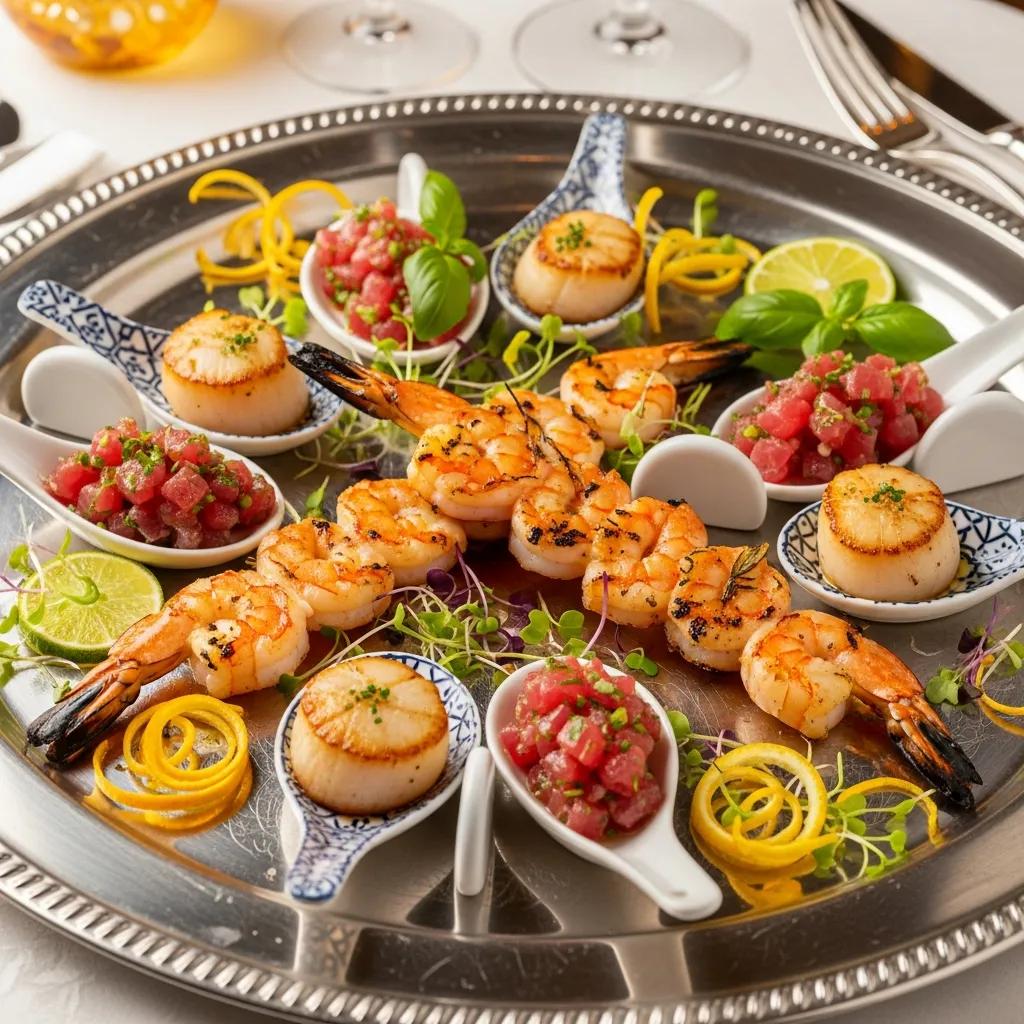
Seafood starters are ideal: they feel luxurious and often require short cook times or simple assembly that preserves freshness. Success comes down to sourcing, correct doneness, and light seasoning that highlights natural sweetness—scallops, shrimp, and tuna shine on small plates. Quick techniques like searing and citrus-cure yield big flavor with low complexity; thoughtful garnish and plating finish the dish. Below are practical preparations and handling tips to make seafood starters approachable in a home kitchen.
How to Prepare Simple Shrimp and Scallop Starters at Home?
Shrimp and scallops benefit from quick, high-heat cooking—overcooking is their enemy. For shrimp skewers, marinate briefly in citrus and garlic, then grill or sear 1–2 minutes per side until opaque with slight char. For scallops, dry them thoroughly and sear in very hot oil 45–60 seconds per side to form a golden crust; finish with a dot of herb butter or a citrus emulsion. Watch for visual cues: shrimp should be opaque throughout; scallops should spring back slightly. Plate with a small smear of sauce and a hint of citrus zest to brighten the flavor.
What Are Quick DIY Seafood Bites That Impress Guests?
Small, finger-food seafood bites let guests sample varied flavors without committing to large portions. Try tuna tartare spoons dressed with sesame oil and scallion, citrus-cured scallop rounds on cucumber discs, or grilled shrimp skewers with citrus aioli. Prep components—tartare, cured seafood, and emulsions—ahead and combine at service to protect texture. Portion cured items onto chilled servingware; warm seared bites just before plating to preserve temperature contrast. These bites showcase technique with minimal last‑minute work.
Before pairings, here’s a quick table comparing seafood starters and their fastest prep methods to guide your choices.
How Does Kaviar Restaurant Inspire Your DIY Gourmet Appetizers?
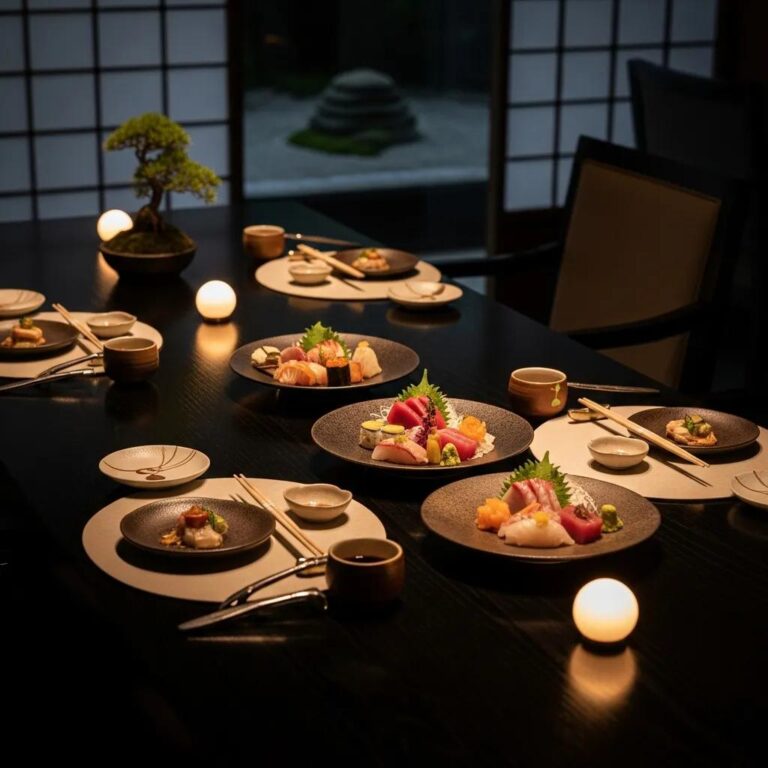
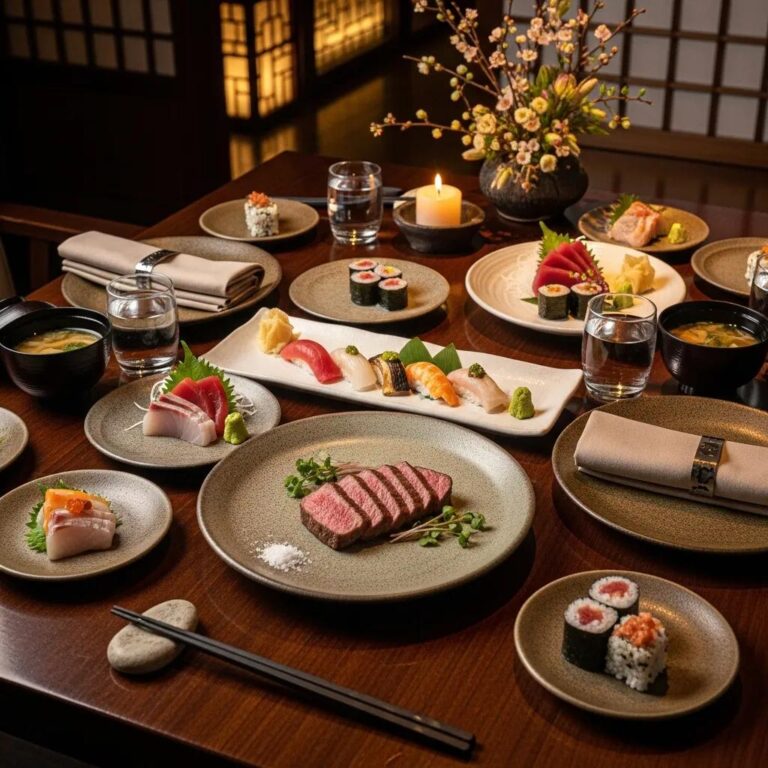
Kaviar Restaurant’s focus on refined Japanese fine dining and premium ingredients offers a clear source of inspiration for home cooks aiming for restaurant-caliber flavor and presentation. The menu highlights items like Caviar Service, A5 Wagyu, and a range of tartares and sashimi—presentations that emphasize careful sourcing, minimal seasoning, and meticulous plating. Use Kaviar’s approach as a blueprint: prioritize ingredient quality, let clean flavors lead, and finish plates with small, intentional embellishments that read as luxurious.
What Signature Dishes from Kaviar Can You Recreate at Home?
Several of Kaviar’s concepts translate cleanly into practical home versions. A Caviar Service–inspired bite can be chilled blini with a touch of crème fraîche and a modest spoon of good roe. Toro Tartare dressed simply with citrus or soy becomes approachable when finely diced, lightly seasoned, and plated with microgreens in a small ring. An A5 Wagyu–inspired tartare works as a minimalist canapé—finely chopped, gently dressed, and served on petite toast. These are inspirations, not reproductions, and let home cooks echo restaurant technique without specialized equipment.
Why Choose Kaviar for Your Next Luxury Dining Experience in Pasadena?
Kaviar positions itself as a destination for authentic omakase experiences and skillful presentations of premium ingredients like A5 Wagyu and caviar. If you want to taste professional executions of these preparations and learn how chefs balance seasoning, texture, and plating, reserve a table to experience Kaviar’s full context—pairings, timing, and the care that goes into each course. For reservations, visit the link below to secure your seat.
Make a reservation at Kaviar Restaurant
What Are the Best Drink and Food Pairings for Your Gourmet Appetizers?
Thoughtful pairings highlight appetizer flavors and set the stage for the meal ahead. Consider acidity, body, and aromatics: brut sparkling wine pairs beautifully with briny caviar and fried crisps; light, dry whites or high-acid Rieslings lift seafood; restrained medium-bodied reds suit fat-forward beef bites like Wagyu tartare. Non-alcoholic choices—sparkling yuzu sodas or vinegar-based shrubs—offer similar acidity and effervescence. The short recommendations below are practical, easy-to-execute matches for the appetizers in this guide.
Which Wines and Cocktails Complement Luxury Small Bites?
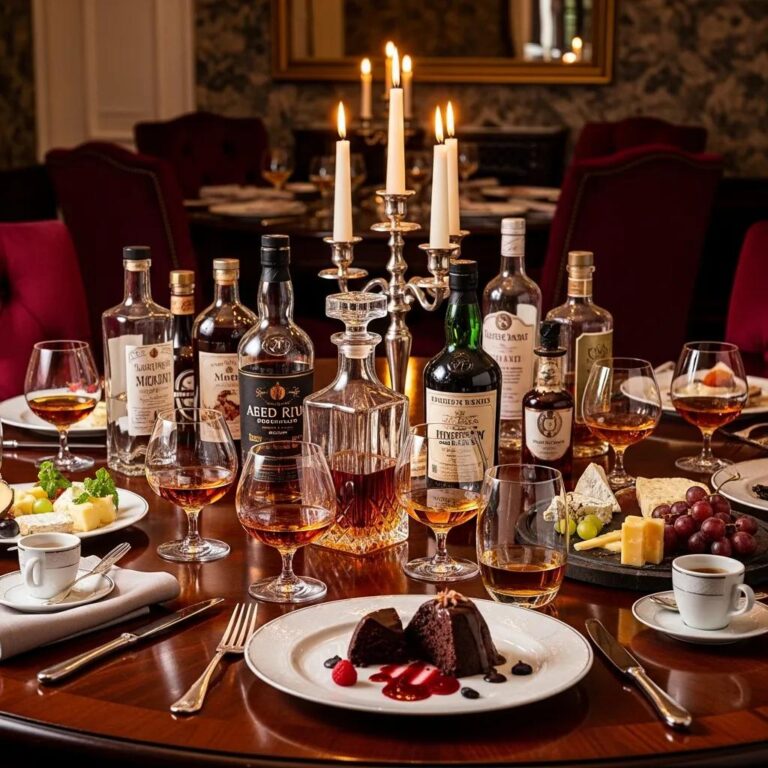
Match beverages to the appetizer’s dominant quality—use acidity to cut richness, soft tannins to balance fat, and bubbles to refresh the palate. Try Champagne or a high-acidity sparkling wine with caviar, a chilled dry Riesling or Sauvignon Blanc with seared scallops, and a light Pinot Noir or cool Beaujolais with A5 Wagyu tartare. For cocktails, a grapefruit-forward gin fizz or a yuzu gimlet offers citrus lift that pairs well with rich starters. Serve whites and sparklings chilled and lighter reds at a cool cellar temperature to preserve delicacy.
How to Match Main Courses with Your DIY Gourmet Starters?
When building a full menu, let starters lead gently into mains—match weight and intensity so the appetizer prepares the palate rather than competing. For a seafood-forward start, choose lighter mains—steamed fish with citrus and herbs or a delicate noodle course. If your starters highlight Wagyu, follow with a slightly heartier main such as a simply sauced grilled protein or a starch-forward dish to ground the meal. Keep intensity progression gradual, pair regionally aligned flavors, and avoid stacking strong umami dishes back-to-back to preserve the dining arc.
Book Your Luxury Dining Experience: For professionally executed examples of these ingredients and pairings in an omakase setting, consider reserving a table at Kaviar Restaurant to taste dishes like the Caviar Service, Toro Tartare, and A5 Wagyu presentations and observe how chefs balance these luxury components.
With these recipes, plating techniques, and pairing templates you can assemble an elevated appetizer program that feels luxurious yet achievable at home. Prioritize quality ingredients, restrained seasoning, and thoughtful presentation; use the make-ahead and assembly tactics to keep service smooth. Small refinements—consistent portions, controlled garnishes, and precise temperatures—deliver the most perceptible upgrades to your entertaining.
Frequently Asked Questions
What are some tips for sourcing high-quality ingredients for gourmet appetizers?
Prioritize freshness and trusted suppliers. Buy seafood from reputable fishmongers and, when possible, purchase the same day you plan to serve it. For luxury items like caviar and A5 Wagyu, work with certified purveyors who guarantee origin and proper storage. Seasonal produce will offer better flavor and texture—seek it out to enhance your starters. When in doubt, ask your seller for handling and storage recommendations.
How can I ensure my appetizers are safe to eat, especially seafood?
Follow strict handling and temperature guidelines. Purchase seafood from reliable sources, check for freshness (clean scent, firm texture), and refrigerate until just prior to prep. Use separate boards and utensils for raw seafood to prevent cross-contamination. Cook shrimp and scallops to their visual doneness—shrimp opaque; scallops with a golden crust—or use sushi-grade product and trusted handling practices for raw preparations.
What are some creative ways to present appetizers for a visually appealing display?
Use varied heights, clustered arrangements, and contrasting plates to create interest. Stack components or use small stands to add dimension, and finish with small pops of color—microgreens or edible flowers—sparingly. Dark plates make pale ingredients stand out; light plates highlight vibrant elements. Consider slate tiles, wooden boards, or individual spoons for unique presentation and textural contrast.
How can I adapt these gourmet appetizer recipes for dietary restrictions?
Substitute thoughtfully while preserving flavor and texture. For gluten-free options, use rice crackers or vegetable rounds instead of bread; for dairy-free, try nut-based cheeses or avocado purées; for vegetarian or vegan guests, use plant-based proteins and concentrated flavorings like roasted mushrooms or fermented condiments. Always confirm guests’ needs in advance so you can craft inclusive, elegant bites.
What are some time-saving tips for preparing appetizers before a dinner party?
Prep components ahead wherever possible—dips, spreads, cured proteins, and emulsions can often be made a day or two in advance. Choose assembly-forward recipes or items that can be served chilled. Use pre-cooked or high-quality ready ingredients, like smoked salmon or pre-seared scallops, to reduce active cooking time. Finally, mise en place and clear plating stations streamline service and reduce last-minute stress.
How can I incorporate seasonal ingredients into my gourmet appetizers?
Let local seasonality guide your ingredient choices. Use summer tomatoes and fresh basil for bright bruschetta, or roasted root vegetables and warm nuts for fall canapés. Pair seasonal produce with complementary textures and flavors—citrus with seafood, roasted nuts with soft cheeses—and consider a seasonal themed selection to showcase peak flavors and support local growers.
Conclusion
Elevated appetizers are within reach when you combine quality ingredients, simple techniques, and thoughtful presentation. Focus on clean flavors, modest portions, and a few chef-style finishes to make every bite feel considered. Use the recipes, plating tips, and pairing ideas here as a starting point, and let practice and small refinements—consistent portions, restrained garnishes, and temperature control—transform your entertaining. For more ideas and premium ingredients, explore our full selection and consider experiencing Kaviar’s service in person for further inspiration.