





Fine Dining & Allergies: Gracefully Communicating Dietary Restrictions
A visit to an upscale restaurant should be remembered for the food and company—not by a preventable allergy or a misstep in communication. “Fine dining allergy communication” is the clear, proactive exchange between guest and restaurant that keeps people safe, preserves the tasting narrative, and allows the kitchen to adapt without compromising quality. This guide explains why timely, specific notice matters; how to phrase requests with courtesy; what front-of-house and kitchen teams do to limit cross-contact; and when events require extra planning. You’ll find step-by-step actions for before arrival, what to say during service, how chefs adapt signature elements like omakase or A5 Wagyu, and realistic expectations for vegetarian, vegan, and gluten-free diners. Advice is oriented to Japanese fine-dining contexts—where ingredients such as caviar, soy-based seasonings, and shellfish are common—and highlights how Kaviar in Pasadena documents and manages requests while keeping guest safety and the tasting experience front and center. Practical templates, checklists, and concise policy and menu tables are included so you can arrive prepared and enjoy the meal.
How can guests clearly communicate dietary restrictions at fine dining restaurants?

Good communication starts with clarity and timing: tell the restaurant what you need, why it matters, and when you’ll arrive so the team can plan. Clear requests reduce cross-contact risk and give the chef time to propose thoughtful substitutes instead of improvised fixes. At this level of service, staff expect specificity—name the allergen, describe the typical reaction (for example, anaphylaxis versus a mild intolerance), and note any required avoidance measures—so servers can flag the ticket and the kitchen can stage preparations. A polite, collaborative tone invites follow-up questions and makes it easier for the manager or chef to get involved when needed. The sections that follow offer exact timing guidance and a copy-ready template you can use when reserving or arriving.
When and how should you inform the restaurant about your dietary needs?
Notify the restaurant as early as you can. For multi-course adaptations, allow 48–72 hours; for simple allergen flags, same-day notice may work but could limit options. When booking online, use the reservation system’s “Special Message” or allergy field and include concise details: allergen, severity, and any handling needs. If the booking form lacks a field or you prefer a direct conversation, call (626) 605-0330 and ask that your note be added to the reservation and the kitchen ticket. On arrival, remind your server and request to speak with the manager or chef if the allergy is life-threatening—this lets the team confirm procedures and document the table. Advance notice gives the chef time to source substitutes and reduces the need for last-minute changes that raise cross-contact risk.
What specific information should guests provide about allergies and restrictions?
Provide three clear data points: the exact allergen(s), the medical severity of reactions, and any required handling or equipment concerns. A practical template to copy: “Peanut — anaphylaxis; requires complete avoidance of peanuts and shared utensils; carries EpiPen.” Mention secondary risks such as shared fryers, soy-based sauces, or fish stock used in broths. If you carry emergency medication, note that so staff understand the seriousness—while recognizing they are not medical responders; this helps management decide whether separate plating or prep separation is necessary. Confirm these details on arrival and ask the server to restate your needs so everyone shares the same understanding before service begins.
Three essential reservation details to provide:
- Allergen name(s): The exact ingredients you must avoid.
- Severity: Describe the typical reaction and whether epinephrine is required.
- Handling requests: Note cross-contact concerns and any utensil or prep restrictions.
Confirming these points on arrival closes the loop and primes staff to coordinate safely with the kitchen.
What is Kaviar Restaurant’s policy for accommodating food allergies and dietary restrictions?
Kaviar is committed to accommodating dietary restrictions while being transparent about the operational limits that come with fine Japanese dining. Staff training, reservation documentation, and kitchen protocols work together to reduce cross-contact and, when feasible, to offer adapted tasting experiences; signature elements like omakase sequencing, A5 Wagyu, or caviar accents are considered case-by-case. We ask for advance notice for complex adaptations so chefs can source suitable substitutes and stage safe prep. Guests are encouraged to use the reservation system’s special request field or to call to add allergy notes; upon arrival your server will reconfirm and escalate as needed. Below is a compact policy summary outlining how the restaurant operationalizes safety and guest communication.
Kaviar policy components and quick reference:
This summary describes what guests can expect; the restaurant balances full disclosure with realistic limits in a busy kitchen.
How does Kaviar train staff to manage allergy and dietary requests?
Kaviar trains hosts and servers to document dietary requests at booking, use standard scripts to clarify severity, and escalate concerns to the manager and chef before seating. Training covers allergen identification, safe phrasing, and procedural steps—flagging tickets and annotating prep lists so cooks can isolate ingredients when possible. Servers are coached to explain substitutions and ask informed follow-ups so the kitchen can assess cross-contact risk. Documentation includes noting the reservation, placing visible flags on the order, and confirming the guest’s needs on arrival so the kitchen has a second verification point before service.
Servers follow a clear escalation path—host/server → manager → chef—so any uncertainty reaches culinary leadership quickly. That redundancy reduces miscommunication and supports safer plate execution.
What kitchen protocols prevent cross-contamination risks?
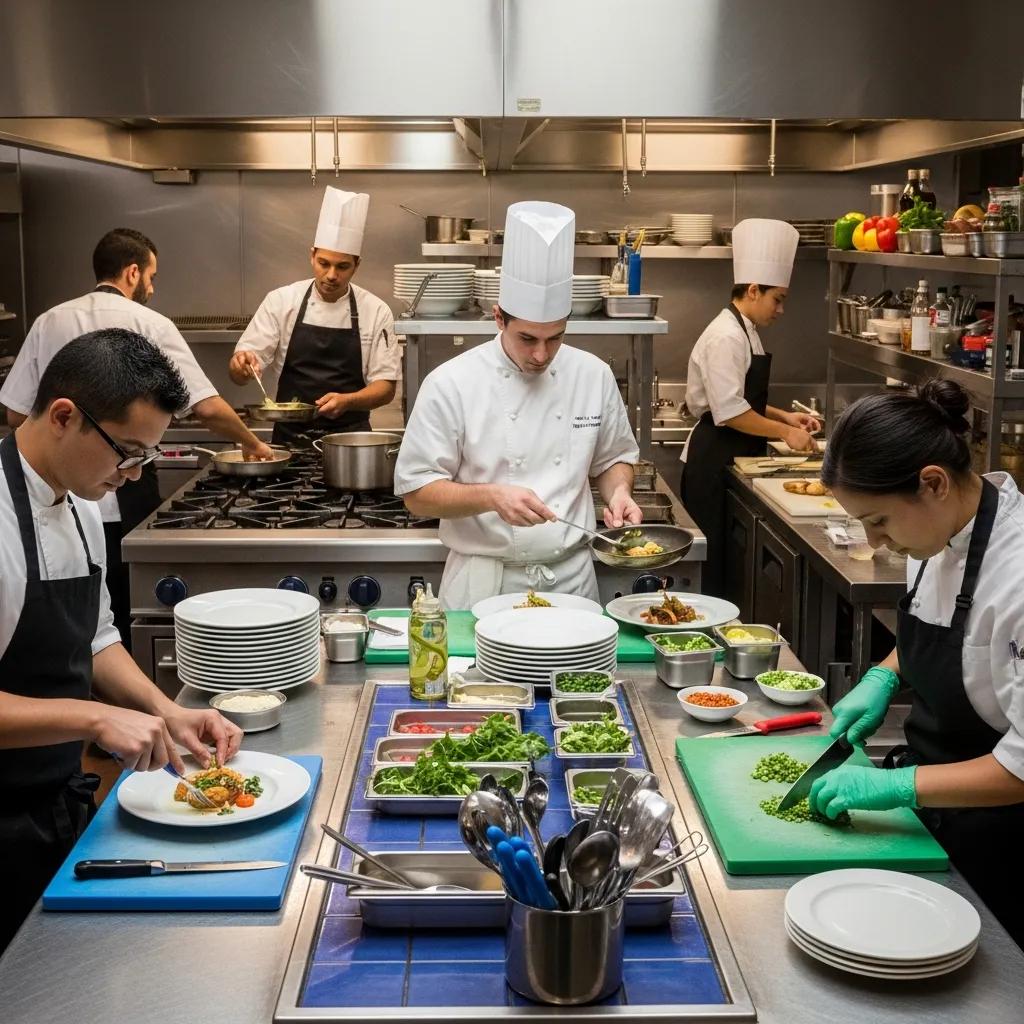
Kitchens limit cross-contact through physical separation, dedicated tools, and strict cleaning: separate prep stations for allergen-free components, color-coded boards and utensils, and scheduled deep cleans for shared equipment. Where feasible, teams use dedicated oils or fryer lines and prepare allergen-free elements on separate pans to reduce airborne or surface transfer. Order tickets are labeled with allergen flags and plating notes so line cooks apply mitigations consistently. Ingredient sourcing is tracked so staff can confirm whether suppliers use shared lines for items like miso, soy sauce, or shellfish concentrates.
We also communicate realistic limitations: some flavor elements central to Japanese cooking—such as dashi made from fish—are pervasive and may prevent full elimination of certain allergens without a bespoke menu. In those cases the chef will explain alternatives and associated risks so you can make an informed choice.
How does the chef at Kaviar approach special diets in fine dining?
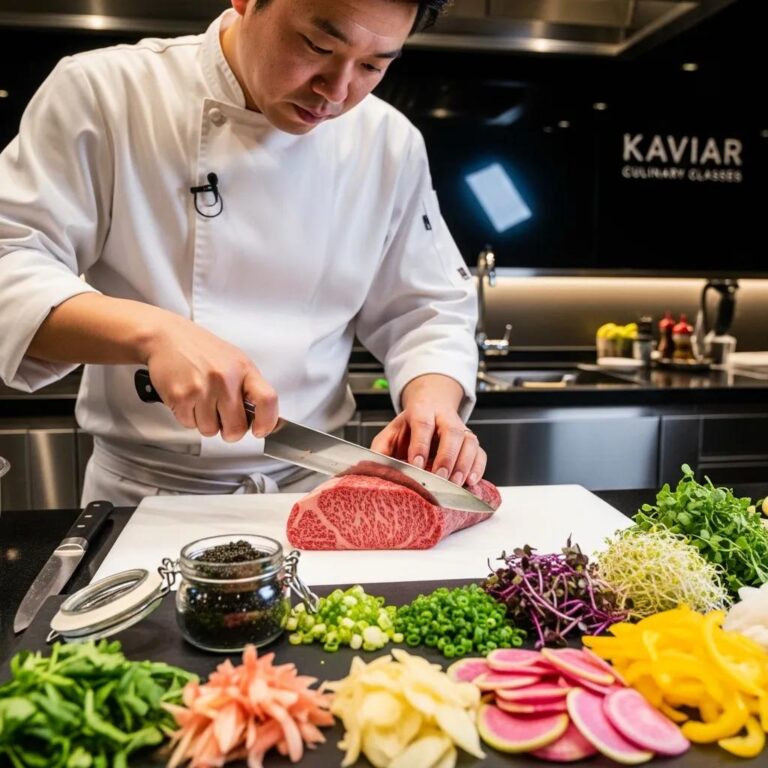
Our chef balances respect for a dish’s original composition with thoughtful problem solving to preserve texture and flavor when accommodating diets. Rather than merely removing an ingredient, the kitchen substitutes premium alternatives—gluten-free soy or thoughtfully sourced plant-based umami—to maintain the tasting sequence and Kaviar’s culinary identity. Safety is non-negotiable: adaptations that create unacceptable cross-contact risk or fundamentally change a chef-defining dish are discussed openly with the guest so expectations are clear. This chef-led approach aims to keep the tasting authentic while safeguarding guest well-being.
The sections below outline the chef’s guiding principles and offer concrete adaptation examples for signature preparations.
What is the culinary philosophy behind inclusive fine dining?
Inclusive fine dining at Kaviar rests on three principles: preserve sensory intent, prioritize safety, and use premium substitutes to maintain luxury. Preserving sensory intent means recreating a dish’s balance—salt, acidity, fat, texture—using alternative ingredients when needed rather than simply omitting components. Safety is enforced through kitchen protocols and ingredient transparency so substitutions do not introduce hidden risk. Premium substitutes—house-made gluten-free sauces or umami-rich seaweed reductions—help the tasting feel complete and considered without the original allergen.
We share these principles at booking and on arrival so adaptations deliver an elevated experience while keeping service predictable and safe.
How are signature dishes adapted for dietary restrictions?
Signature preparations—omakase sequences, A5 Wagyu presentations, caviar-accented plates—can often be adapted through technique swaps and ingredient replacements while preserving the tasting’s narrative. Examples: swap wheat-based tare for tamari or gluten-free soy for a gluten-free guest; offer plant-forward protein alternatives in a vegetable-led tasting; or replace caviar accents with delicate citrus pearls or uni when roe is contraindicated. Some dishes are defined by a single ingredient—such as a plate centered on caviar—and may require an alternative course rather than a direct swap; in those cases the chef will propose an equivalent course that honors both safety and culinary intent.
Typical adaptation approaches:
- Gluten-free swap: Wheat soy → Tamari or certified gluten-free soy for sauces.
- Protein replacement: Meat/protein → seasonal plant or alternative protein prepared with comparable technique.
- Finish substitution: Allergen garnish → textural or umami alternative that preserves balance.
Each adaptation is reviewed in advance when possible so guests understand which elements can be preserved and which may require a new composition.
Which menu options and adaptations are available for special diets at Kaviar?
Kaviar offers representative gluten-free, vegetarian, and vegan choices and can create plant-forward or allergen-aware tasting menus with adequate notice. Common options include a bespoke vegetarian omakase, courses centered on seasonal vegetables and shiitake or kombu umami, and gluten-free sauces made with tamari. Expect the server to confirm ingredient lists and to note any cross-contact advisories. For the most current dish availability and ingredient specifics, ask when booking or on arrival so the kitchen can confirm which substitutions are feasible that evening.
What gluten-free, vegan, and vegetarian choices does Kaviar offer?
Representative offerings include custom vegetarian or plant-forward tasting sequences that highlight seasonal produce with classic Japanese technique, gluten-free preparations using tamari and rice-based sauces instead of wheat soy, and vegan alternatives that replace dashi with kombu and shiitake reductions. Cross-contact is a consideration in a shared kitchen, so guests requiring strict gluten-free or vegan service should request dedicated prep and plating when possible. Servers will confirm availability and escalation pathways; advance notice improves the chance of a fully separate prep workflow.
Dietary category highlights:
- Gluten-free: Tamari-based sauces and rice-flour batters as alternatives.
- Vegetarian: Seasonal vegetable-forward courses and tofu or egg-based preparations.
- Vegan: Kombu/shiitake dashi substitutes and plant-based finishing oils.
These options reflect typical adaptations and the chef’s capacity to create complete tasting experiences without primary animal or wheat components.
How can guests make special requests for dietary accommodations?
Make requests when booking by using the reservation system’s special message field or by calling (626) 605-0330 to add detailed allergy notes. Please specify allergen names, severity, and whether any utensils or shared equipment must be avoided. A sample reservation note: “Guest has shellfish allergy — anaphylaxis; requires no shellfish in any course and separate prep surface.” Expect staff to reconfirm as part of normal booking operations and again on arrival. For multiple adaptations or group needs, request a manager or event coordinator call to finalize menu options and timing.
- Reservation: Add a detailed special request or call to document the allergy.
- Confirmation: Staff will reconfirm before seating.
- Arrival: Remind the server and request manager/chef confirmation as needed.
A clear request and a collaborative tone help the restaurant deliver a safe, satisfying service.
How can guests plan private dining or events with dietary restrictions at Kaviar?
Planning a private event with varied dietary needs requires lead time, a centralized list of restrictions, and a review cycle with the chef to finalize a safe, cohesive menu. Start with an inquiry that lists guest counts and known restrictions; the restaurant will then propose timelines and tasting options. For groups, Kaviar recommends a consolidated allergy list rather than ad-hoc notes—this allows the culinary team to design substitutions that work across courses rather than on a per-plate basis. Operational checks—pre-event kitchen briefings and labeled service—help ensure consistent execution on the day.
The checklist below outlines event types, planning steps, and recommended lead times to streamline coordination between host and restaurant.
What is the process for custom menu development for groups?
Custom menu development begins with a discovery call or message that captures guest numbers, dietary restrictions, and the desired format (served tasting, plated family-style, etc.). The kitchen drafts a proposed menu that addresses the consolidated restrictions and suggests equivalent courses; the host reviews and approves, often with a tasting if time allows. Lead times of two to six weeks give the chef room to source specialty ingredients and plan separate prep flows; shorter timelines may limit substitution options. Final guest lists and allergy summaries should be submitted before tasting sign-off so the kitchen has accurate, verifiable information.
This structured workflow reduces last-minute changes and gives the kitchen time to guarantee safe preparation.
How does Kaviar ensure a seamless experience for guests with allergies?
For events, Kaviar conducts pre-service briefings where manager and chef review labeled place settings, order flags, and plating timelines; servers receive scripts to confirm each guest’s restrictions as courses are presented. During service, the chef or manager remains available to resolve discrepancies and supervise transitions where cross-contact risk is highest. Backup dishes and contingency plans are prepared for high-risk allergies so a safe alternative can be served immediately if needed. Post-event feedback is collected to refine processes and confirm that communication and safety protocols met expectations.
Event day safety checklist:
- Pre-service briefing: Review allergy list and plating instructions.
- Labeling: Mark plates/orders clearly for kitchen and service.
- Manager oversight: Supervisor available to resolve issues.
These steps build redundancy that protects guests and preserves the flow of the event while prioritizing safety.
This second event table reiterates planning stages and emphasizes the need for lead time when multiple or severe allergies are present.
For reservations, special requests, or to discuss private dining menus including allergy accommodations, please note dietary needs in the reservation system or call (626) 605-0330 to speak with staff who will record details and coordinate with the chef.
Frequently asked questions
What should I do if I have a severe allergy and cannot communicate directly with the restaurant staff?
If you cannot communicate directly, bring a trusted companion who can relay your needs or prepare a written note that outlines your allergies, reaction severity, and necessary precautions. Present that note on arrival. Adding the same information to the reservation system’s special request field helps ensure the kitchen is prepared in advance.
Are there any specific cuisines that are more accommodating to dietary restrictions?
Many cuisines can accommodate restrictions, but fine Japanese dining often emphasizes fresh, simple ingredients and can be adaptable. Dishes can frequently be modified while retaining flavor integrity. Restaurants like Kaviar take care to balance safety and creativity when adapting traditional dishes; still, some ingredients are fundamental to particular plates and may not be easily substituted—clear communication remains essential.
How can I ensure that my dietary needs are met during a large event or private dining experience?
To ensure needs are met at a large event, communicate restrictions well in advance and provide a consolidated list to the planner or restaurant—ideally two to six weeks before the event. This gives the kitchen time to prepare a cohesive menu that accommodates everyone. On the day, confirm with your server and request manager or chef oversight to ensure precautions are followed.
What should I do if I notice a potential cross-contamination issue during my meal?
If you notice a potential cross-contact issue, inform your server immediately and ask how the dish was prepared. If needed, request to speak with the manager or chef. Most fine dining teams prioritize guest safety and will either clarify preparation or provide an alternative dish if there is a risk.
Can I request a completely allergen-free meal at a fine dining restaurant?
Many fine dining restaurants aim to accommodate restrictions, but asking for a completely allergen-free meal can be challenging in a shared kitchen. Communicate early and clearly so the kitchen can prepare. Some restaurants will create a bespoke allergen-free menu, but complete elimination of certain allergens may not always be feasible—discuss options with staff to find the safest solution.
What are the best practices for making dietary requests when dining out?
Best practices: inform the restaurant as early as possible (ideally at reservation), state your allergens and reaction severity, and describe any required avoidance measures. Use polite, collaborative language. On arrival, remind your server and confirm with the manager or chef if necessary. This proactive approach helps ensure your needs are understood and met throughout the meal.
Conclusion
Clear, timely communication about dietary restrictions improves the fine dining experience for everyone—keeping guests safe while preserving memorable flavors. By following the protocols outlined here and working with restaurants like Kaviar, diners can approach their meal with confidence. Use our templates and checklists to prepare, and reach out if you’d like personalized assistance or to make a reservation.