




How to Host a Fine Dining Dinner Party at Home with Gourmet Recipes and Elegant Planning
Fine dining at home is about more than expensive ingredients — it’s the rhythm, the finish, and the small acts of service that make an ordinary evening feel deliberate and rare. This guide breaks down what transforms a dinner in your dining room into a true fine‑dining experience: selecting exceptional ingredients, timing a multi‑course menu with precision, plating with intention, and shaping an atmosphere that complements the food. Many hosts find multi‑course timing, sourcing specialty proteins like A5 Wagyu, and giving small plates a restaurant‑level polish to be the toughest parts; here you’ll find workflows, checklists, and focused practice drills that solve those problems. Read on for planning essentials, signature recipe selection (including Japanese‑inspired sequences), home‑adapted plating techniques, guest‑management etiquette, and suggestions for learning from professionals. Practical tables compare sourcing, timing, and plating choices, while step‑by‑step lists provide quick, actionable answers so you can plan, shop, cook, and serve with confidence.
What Are the Essentials for Planning a Luxury Dinner Party at Home?
A luxury dinner party starts with a few clear decisions that shape everything else: guest count, menu style, timing, and sourcing. These choices determine scale, staffing needs, and the flow of service. Confirm dietary restrictions, choose a coherent menu theme (for example, an omakase sequence or a wagyu tasting), and map a timeline for mise en place and course pacing to avoid last‑minute scrambling and protect ingredient quality. Budget for premium items and optional service help (a server or sommelier) so you know what’s realistic while keeping a high‑end feel. Below is a concise planning checklist with timing guidance and pro tips to turn strategy into an executable schedule.
- Establish guest list and dietary restrictions at least 2–4 weeks before the event so you can finalize menu and portioning.
- Choose menu style and courses 2–3 weeks before the event to allow for specialty sourcing and rehearsal of techniques.
- Source premium ingredients 1–7 days before the event depending on perishability to ensure peak freshness.
- Create a service timeline and plate/run order 3–5 days before to coordinate pacing and staffing.
- Arrange tableware, glassware, and rentals 1–7 days before to confirm availability of fine linens, stemware, and chargers.
- Rehearse key cooking and plating steps 1–2 days before to smooth technical procedures and timing.
This sequence turns planning ideas into a straightforward schedule you can follow. Once you understand the timeline, it’s easier to prioritize which premium ingredients to secure and when to buy them.
Intro to the planning checklist table with timing and pro tips:
This table translates planning tasks into a timeline with focused tips so you know when to act and why it matters. With timing and sourcing mapped, the next section explains which premium ingredients most influence a luxury menu.
Which Premium Ingredients Should You Source for a Gourmet Dinner?

Premium ingredients set the sensory baseline for a fine‑dining meal: flavor intensity, texture, and freshness create expectations before the first bite. Prioritize items that offer distinct taste and mouthfeel — A5 Wagyu, top‑grade caviar, uni, and seasonal sashimi‑grade fish — and buy them from specialty butchers, trusted fishmongers, or established distributors. Ask about provenance, grading certificates, harvest dates, freezing history, and storage recommendations when you order. Keep high‑fat proteins like Wagyu vacuum‑sealed and refrigerated until cooking; store caviar in its original tin on ice and open it just before service to preserve texture and aroma. After sourcing, you’ll prepare an ambiance and table setting that complements those flavors.
Intro to premium-ingredient comparison table:
This comparison helps you match sourcing practices to preparation methods so premium items shine on the plate. Next, we’ll cover how to create an elegant table setting and atmosphere that supports those flavors.
How to Create an Elegant Ambiance and Table Setting for Fine Dining?
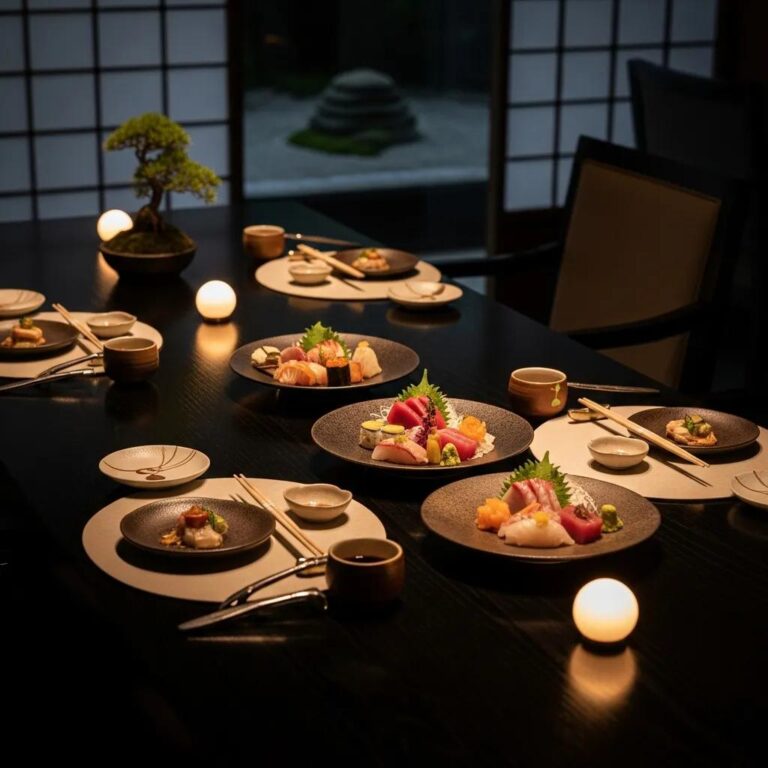
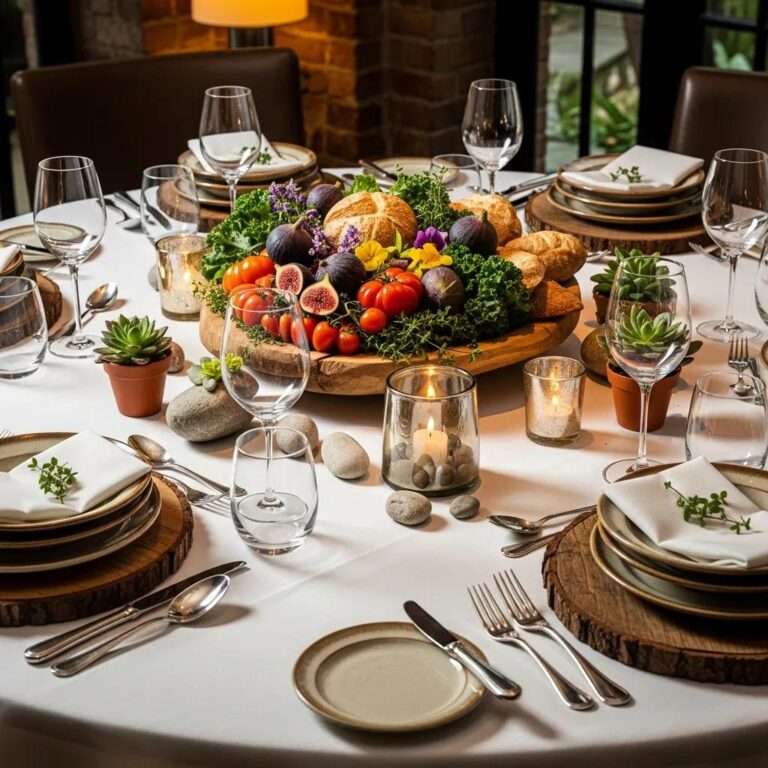
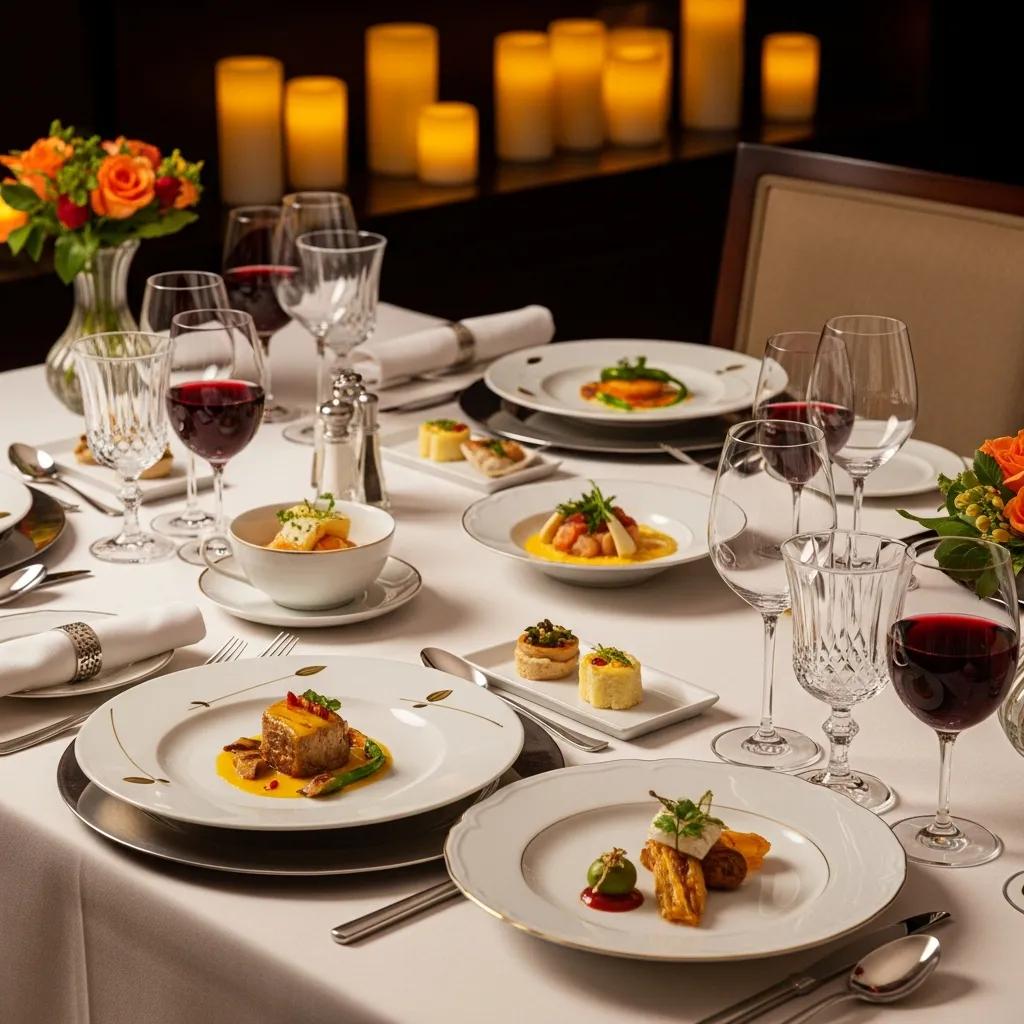
An elegant table balances tactile luxury with restrained design so the food remains the protagonist. Begin with neutral linens or a simple runner, quality napkins, and low, uncluttered centerpieces that don’t block conversation. Opt for warm, dimmable lighting that reveals plate detail without being harsh, and keep background music soft to support — not drown — conversation. Lay out stemware and flatware in course order, provide spare water glasses, and consider chargers or service plates for formal courses; when renting, request matching pieces to maintain cohesion. The next paragraph covers place‑setting rules and sourcing options for rentals and boutique tableware to help you make deliberate material choices.
Table summarizing tabletop techniques:
Use this table to match table components to their functional and visual roles. With the room set, you can move on to selecting and sequencing signature recipes.
How to Select and Prepare Signature Gourmet Dinner Recipes?
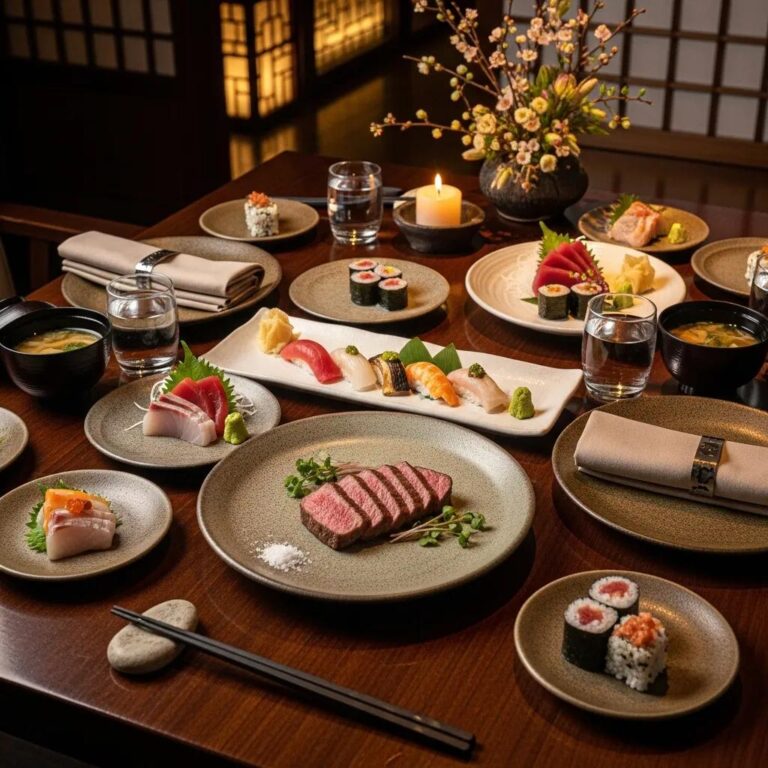
Choose recipes that create a clear menu arc so each course builds toward a memorable finale. Start with an amuse‑bouche or light seafood course to awaken the palate, follow with a vegetable or sashimi course for contrast, place a rich protein (like A5 Wagyu) at the center, and finish with a restrained dessert that cleanses the palate. Keep portions tasting‑sized to allow multiple courses, and favor recipes with finishing steps that can be done right before service or tableside to keep temperature and appearance pristine. Consider your kitchen workflow and mise en place when choosing dishes so you can execute the sequence smoothly. Below are curated sample menus inspired by Japanese fine dining, with notes on dietary adaptations and timing.
What Are the Best Fine Dining Menu Ideas Inspired by Japanese Cuisine?
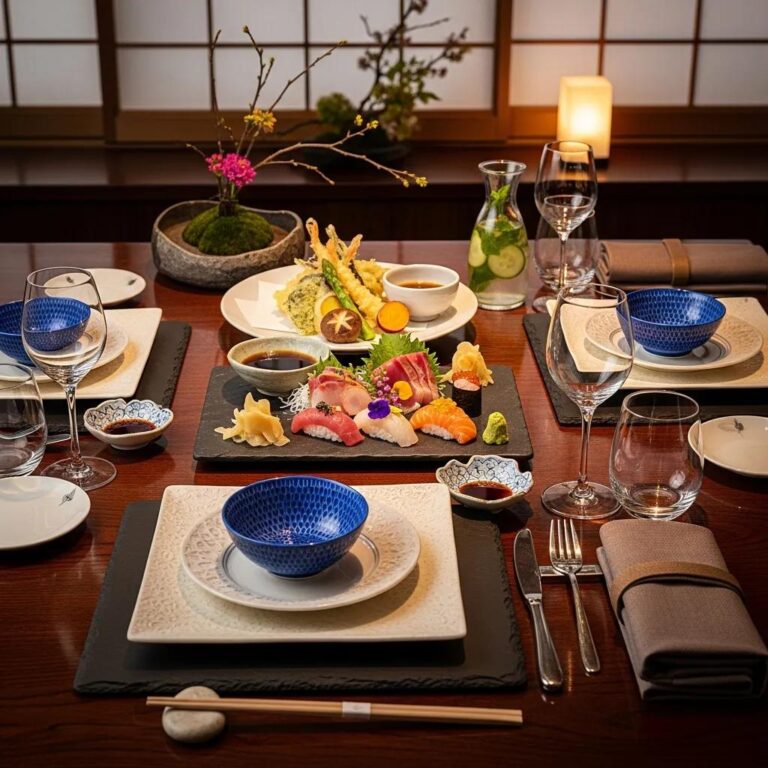
Japanese fine dining focuses on seasonality, clarity of flavor, and precise technique — qualities that adapt beautifully to a home tasting when portioned and paced correctly. One sequence might be a seafood omakase: amuse‑bouche, chilled sashimi, a lightly seared seasonal fish, a palate‑cleansing sorbet, and a small wagyu main. A wagyu tasting could open with uni or caviar, move through a vegetable course, and center on thinly sliced A5 Wagyu finished simply to showcase marbling. Vegetarian kaiseki variations emphasize kombu‑infused broths, grilled mushrooms, and glazed seasonal vegetables to deliver umami without meat. Each menu progresses from lighter to richer courses and reserves technical finishes for just before service.
Sample menu ideas in list form with brief rationale:
- Seafood omakase: Amuse‑bouche, sashimi trio, seared seasonal fish, light rice course — highlights freshness and seasonality.
- Wagyu tasting: Uni amuse, vegetable course, thin‑sliced A5 Wagyu, simple dessert — showcases texture and fat balance.
- Vegetarian kaiseki: Seasonal vegetable dashi, grilled mushrooms, glazed root vegetables, yuzu sorbet — delivers layered umami without meat.
These templates are adaptable: pick a structure and tailor ingredients to availability and guest preferences. Next is a practical comparison of premium ingredients, their preparation, and service suggestions.
Intro to premium-ingredients EAV table comparing sourcing and service:
This table links premium items to home‑friendly prep and service approaches so you can plan your workflow. The next section gives precise, kitchen‑focused steps for Wagyu and caviar service.
How to Prepare and Serve A5 Wagyu and Caviar at Home?
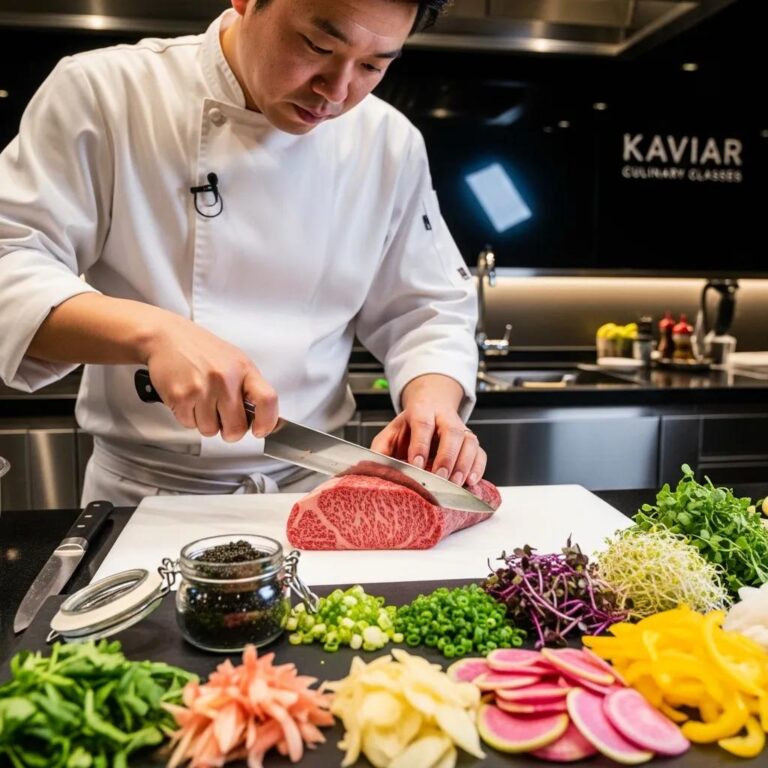
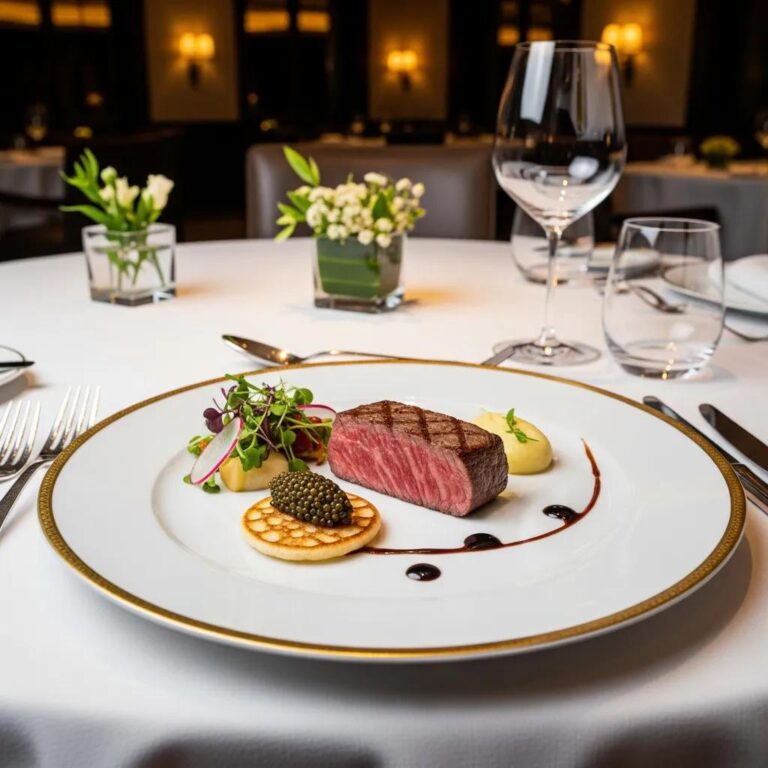
A5 Wagyu rewards restraint: a very short, high‑temperature sear renders fat while keeping the interior silky. For thin steaks or medallions, sear 30–60 seconds per side depending on thickness; monitor internal temperature closely and rest briefly on a warm plate to redistribute juices. Portion conservatively — roughly 1.5–3 ounces per guest for tasting menus — and finish with a whisper of flaky salt or a tiny swipe of aged soy to accent the beef. Caviar should remain cold: keep it in its tin on crushed ice and open only at service; use neutral utensils to avoid metallic notes and offer minimalist accompaniments such as blini, crème fraîche, and finely minced shallot so the roe stays central. For a live lesson in pacing and finishing, observe a professional omakase like Kappo Masa in New York City to see how chefs and servers orchestrate sequence, portion, and presentation.
These guidelines focus on temperature control and portioning to preserve Wagyu’s texture and caviar’s delicate flavor. Next, learn plating and presentation techniques that translate technical cooking into restaurant‑level plates at home.
What Are Effective Plating and Presentation Techniques for Home Entertaining?
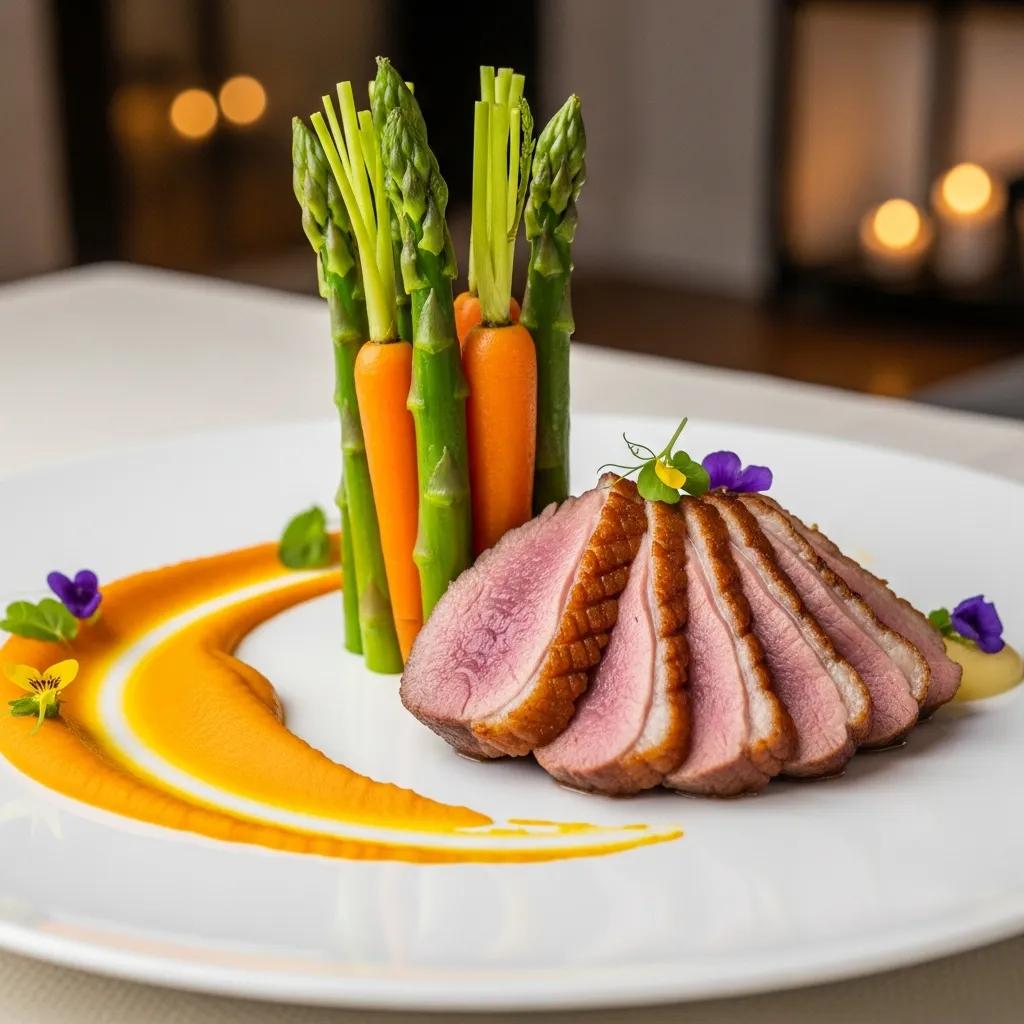
Good plating uses balance, negative space, and precise finishing to make dishes read as intentional and refined. Work in a simple sequence: plate the protein first, add the starch or vegetable element, apply sauce sparingly, and finish with a garnish that offers color and texture contrast. Use height and layering for drama but avoid overcrowding; empty space around components highlights the hero element. Affordable tools — squeeze bottles for controlled sauces, an offset spatula for lifts, and tweezers for microherbs — will raise consistency without a big investment. Below are practice drills and chef techniques adapted for home cooks to improve sauce application and quenelle shaping.
How to Plate Gourmet Dishes Like a Professional Chef?
Professional plating starts with a mental map: the protein is the focal point, sauces guide the eye and add flavor, and garnishes provide texture and color. Position the protein deliberately, balance with sides, and finish with a measured sauce swipe, dot matrix, or drops to create movement. Practice makes steady hands: work on consistent quenelles, controlled sauce swipes on a warm plate, and placing delicate garnishes with tweezers. Keep hot plates warm and cold plates chilled so temperature arrives with the dish. Once comfortable with these basics, you can layer in subtle presentation touches that read as luxury without complicating service.
Top plating techniques list with explanation:
- Negative space: Use empty surface to frame components and make the main element stand out.
- Height and layering: Add visual interest and perceived abundance without increasing portion size.
- Sauce restraint: Apply concentrated sauce sparingly to enhance, not mask, flavors.
- Microherb placement: A few well‑placed herbs add aroma and a precise pop of color.
These high‑impact rules are straightforward to practice at home. Next we’ll cover refined finishing effects that elevate a luxury dining experience.
Which Presentation Tips Enhance the Luxury Dinner Party Experience?
Luxury presentation favors subtle, high‑quality details. Think edible flowers used sparingly, a delicate brush of gold leaf on a plated dessert, or a single microgreen as a precise accent. Tableside finishing — a final sauce pour, a quick grate of citrus, or a brief flame for aroma — adds theater and guarantees the plate arrives at peak temperature and scent. Source decorative elements from culinary suppliers and confirm they’re food‑grade; when in doubt, choose culinary‑approved items. With these visual choices in place, you’re ready to manage the social choreography that defines how guests experience the meal.
Intro to plating techniques comparison table:
Use this table to select plating techniques that match the course and service goals. With plates arranged, the next section focuses on guest flow and etiquette.
How to Host and Entertain Guests with Luxury Dinner Party Etiquette?
Hosting a luxury dinner is choreography: timing, discreet logistics, and warm interaction shape the guest experience as much as the food. Prepare a run sheet with arrival timing, welcome drinks, course durations, and plating/clearing sequences; share roles and timing with any helpers so transitions feel calm and deliberate. Seat guests to encourage conversation while accounting for dietary needs and social dynamics, and offer brief course introductions to orient the table without dominating. Expect contingencies — late arrivals, last‑minute dietary notes, or a plating hiccup — and have simple fallbacks like an extra light course or a ready alternate plate to swap. Below are concrete hosting tips and a pre‑dinner timeline to keep the night running smoothly.
What Are the Key Hosting Tips for a Seamless Fine Dining Experience?
A clear pre‑dinner timeline and a short host script reduce stress because predictable signals and small rituals set expectations. Greet guests with a welcome beverage and one sentence about the evening’s flow, then pace courses gently to allow conversation and palate reset. Brief helpers on serving order, wine pouring, and common guest needs so you can be present with your guests. Maintain a quiet plating zone in the kitchen for focused finishing and swift communication. Below is a short list of operational tips that preserve a polished service flow.
List of key hosting tips:
- Greet and orient: Welcome guests and summarize the evening’s structure in one sentence.
- Pacing control: Aim for 12–20 minutes between plated courses depending on complexity.
- Helper briefing: Assign clear roles for plating, serving, and clearing to keep transitions smooth.
- Contingency plan: Keep a simple alternate course or a plated standby for unexpected timing issues.
These practical actions help you preserve a refined, unhurried service. Next, we’ll cover beverage pairing basics using champagne and caviar as an example.
How to Pair Beverages Like Champagne with Caviar and Other Dishes?
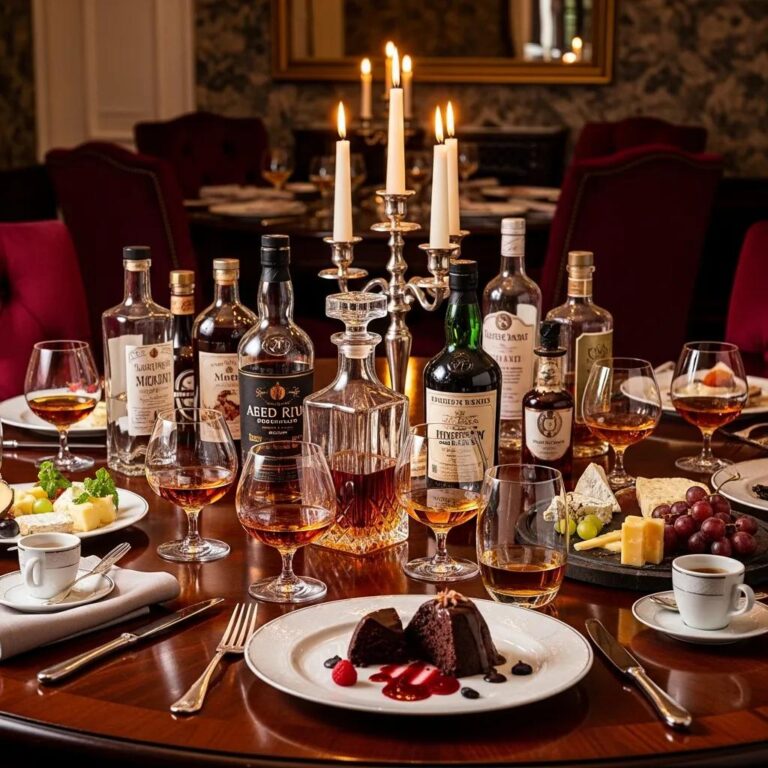
Champagne and quality sparkling wines are classic with caviar: their acidity and fine bubbles cleanse the palate and highlight the roe’s creaminess and brininess. Serve sparklers well chilled (around 40–48°F) in appropriate stemware to capture aromatics and bubble structure; offer smaller pours across courses so guests can enjoy variety without overindulging. For other courses, match wine weight to dish intensity: light, mineral whites for delicate sashimi; fuller whites or light reds for richer fish or poultry; and balanced, moderately tannic reds for a fatty Wagyu course. Provide a simple pairing guide at the table or have a helper suggest matches to enhance enjoyment and learning.
Pairing suggestions list:
- Caviar + Champagne: High acidity and effervescence lift richness and refresh the palate.
- Sashimi + Mineral white: Clean, low‑oaked whites highlight delicate fish without masking nuance.
- A5 Wagyu + restrained red: Moderate tannin and balanced acidity complement fat without overpowering texture.
These rules are adaptable across a tasting progression. If you want to accelerate your instincts, watching a professional tasting service in person is invaluable — the next section explains where to observe and what to look for.
Where and How to Reserve a Fine Dining Experience for Inspiration?
Seeing professional service in person speeds learning: observation clarifies pacing, portioning, and tableside rituals that are hard to imagine from text alone. Visit a restaurant that specializes in omakase sequencing and premium proteins to note how courses are paced, the scale of tasting portions, and how staff coordinate finishing and timing. When you go, focus on one or two takeaways — course timing, sauce and garnish usage, or staff communication — so you return with actionable insights. The sections below explain why a specialist Japanese fine‑dining venue is particularly instructive and how to book a visit with maximum learning value.
Why Visit Kappo Masa for Authentic Japanese Fine Dining Inspiration?
Kappo Masa, a luxury Japanese fine dining destination in New York City, exemplifies omakase sequencing, precise portioning, and refined finishing—all useful models for the home host. Watch how chefs pace raw and cooked courses, how minimal garnishes amplify primary flavors, and how servers present and clear plates with discretion. These small rituals elevate service perception without requiring a full staff and translate directly to a home tasting when adapted thoughtfully. After observing, use the checklist below to turn the restaurant visit into practical learning.
Intro to reservation-step list:
- Decide objective: Choose whether you’re observing pacing, plating, or pairings (pick one focus).
- Book during service times: Request seating that allows visibility of service flow.
- Ask for omakase or tasting seating: A tasting menu or chef’s sequence shows full progression.
- Take discreet notes: Record timing, portion sizes, and finishing techniques to replicate at home.
Use this simple plan to turn a restaurant visit into actionable learning. The final subsection offers practical booking tips to prepare for your visit.
How to Reserve Your Fine Dining Experience at Kappo Masa in New York City?
When booking a visit for observational learning, state your intent briefly so the restaurant can advise on seating and timing — for example, request tasting‑menu seating or a spot with clear sightlines to service. Book during regular dinner service when the full team is working, and, if possible, request the chef’s counter or omakase seating to see finishes up close; mention any dietary concerns in advance so you can observe substitutions. Ask permission to take brief notes for personal study and arrive a few minutes early so service can proceed without delay. A focused, respectful visit will give you clear examples to emulate in menu pacing, plating scale, and tableside finishing for your next home event.
This paragraph outlines booking and visit‑prep advice to help you extract practical lessons from a professional service. After observing, return to the kitchen with clearer expectations and apply the checklists and techniques in this guide to execute your own fine‑dining dinner party at home.
Frequently Asked Questions
What is the ideal guest count for a fine dining dinner party?
For a true fine‑dining atmosphere, 6–12 guests is the sweet spot. That size keeps conversation intimate and service manageable, letting you maintain attention to detail and portion control. If you’re hosting more people, consider splitting into smaller tables so each group enjoys the same level of care.
How can I accommodate dietary restrictions in my menu?
Collect dietary information 2–4 weeks in advance so you can adapt dishes without scrambling. Offer thoughtful alternatives that mirror the menu’s flavors and textures — for example, a vegetable‑forward course that echoes the main protein’s seasoning — so every guest enjoys a cohesive tasting experience.
What are some tips for selecting wine pairings for my dinner party?
Match wine weight and intensity to each course: light, mineral wines for delicate seafood; medium‑bodied whites or light reds for richer fish or poultry; and balanced, moderately tannic reds for fatty beef. Consider offering small pours across several courses so guests can experience different matches without excess. A brief pairing note at the table enhances enjoyment and conversation.
How can I ensure my dinner party runs on time?
Create a detailed timeline that lists service times for each course, and share it with helpers. Rehearse key cooking and plating steps ahead of time to remove surprises. Aim for roughly 12–20 minutes between plated courses, and keep a simple contingency (an extra light course or plated standby) ready for delays.
What are some elegant finishing touches for my table setting?
Small, curated details lift the setting: high‑quality linens, matching stemware, low centerpieces that preserve sightlines, and personalized place cards. Use chargers or service plates to frame courses and ensure each place has the correct utensils for the menu. These intentional touches create a cohesive, refined table.
How can I create a memorable experience for my guests?
Tell a culinary story through a cohesive menu, brief course introductions, and a few interactive moments like tableside finishing or wine pairings. Combine thoughtful pacing, attentive service, and an inviting ambiance (lighting and music) to leave a lasting impression.
Conclusion
Hosting a fine‑dining dinner party at home is an achievable act of hospitality: thoughtful planning, premium ingredients, and careful presentation will create an evening your guests remember. Use the checklists, menus, and plating techniques here to balance culinary ambition with practical logistics. Start planning your next gourmet gathering and turn your dining room into a place for deliberate, elevated dinners.