




Kaviar Culinary Classes & Workshops — Chef‑Led Japanese Cooking Experiences in Pasadena
At Kaviar, our chef‑led Japanese culinary classes blend hands‑on practice with tasting and plating so you leave with useful skills and a richer appreciation for omakase. We teach precise knife work, temperature control for delicate proteins, and how to handle premium ingredients such as A5 Wagyu and caviar. This guide explains the core techniques we cover, our teaching approach, how to book— including private events—what to expect on class day, and the practical benefits past participants report. Along the way we highlight signature dishes, reservation steps, and the ways our fine‑dining ethos shapes each workshop. Keywords like chef instruction, culinary workshops, Japanese cooking workshops, A5 Wagyu preparation class, and omakase dining experience are woven organically for clarity and discoverability.
What Makes Kaviar’s Culinary Classes Unique in Luxury Japanese Dining?
Our classes are built around focused chef instruction, exceptional ingredients, and an omakase mindset. Each session is intentionally compact and immersive: chefs demonstrate techniques, then guide you through hands‑on repetition that builds muscle memory for slicing, searing, and delicate plating. Small groups and carefully sourced ingredients let students work directly with A5 Wagyu and caviar, revealing texture, marbling, and finishing details you won’t get in a standard cooking class. The result feels like a piece of the omakase experience—educational, sensory, and true to Japanese fine‑dining standards.
Kaviar frames these workshops as an extension of our dining program and encourages reservations for scheduled classes or an omakase seat afterward. Our chef‑led format, paired with premium components, supports continued skill growth and a natural progression from classroom learning to tasting. Key distinctions include:
- Chef‑led, hands‑on instruction: Direct demos and real‑time feedback from our chefs speed learning and correct technique.
- Premium ingredient focus: Practical work with A5 Wagyu and fine caviar teaches handling that preserves flavor and presentation.
- Omakase context: Lessons in sequencing and portioning mirror the pacing and balance of a fine‑dining omakase.
These elements set the stage for the specific techniques and dishes covered below, showing how ingredient quality and method translate into practical skills.
How Do Premium Ingredients Like A5 Wagyu and Caviar Enhance the Experience?
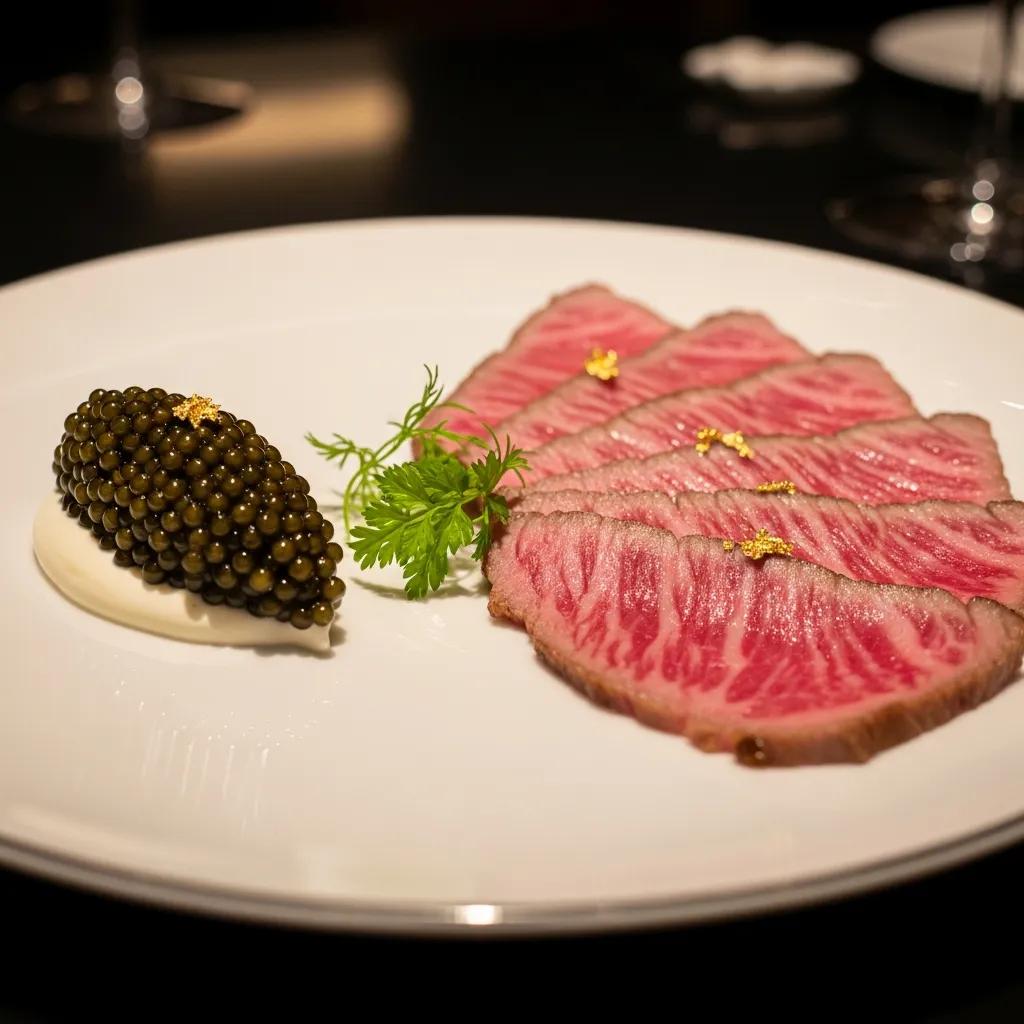
Working with high‑grade ingredients changes both the technical demands and the tasting lessons. A5 Wagyu requires precise temperature control and short, high‑heat searing to render fat while keeping marbling intact—an ideal way to teach doneness and texture. Caviar is a finishing element that calls for restraint: correct portioning and temperature awareness preserve its briny pop and mouthfeel. Learning on these ingredients ties sourcing and grade to concrete technique—from knife angle to resting time—and sharpens tasting vocabulary by connecting tactile cues to preparation choices. We also cover responsible sourcing and handling protocols so ingredients arrive at the plate with integrity.
Mastering these materials naturally leads into the core techniques we teach—knife work, searing, and temperature control—which follow in the next section.
Which Chef Cooking Techniques Are Taught in Kaviar’s Workshops?
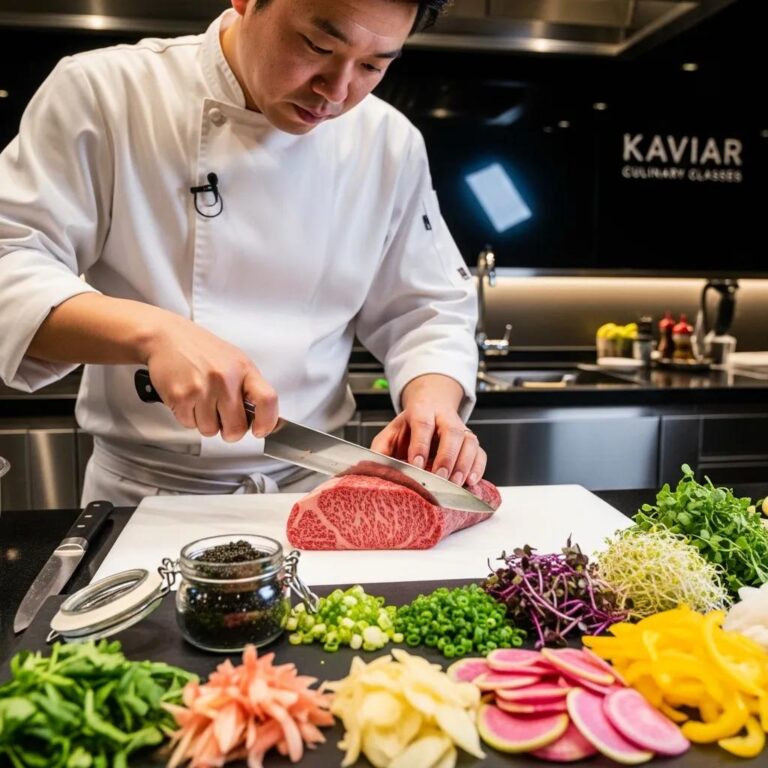
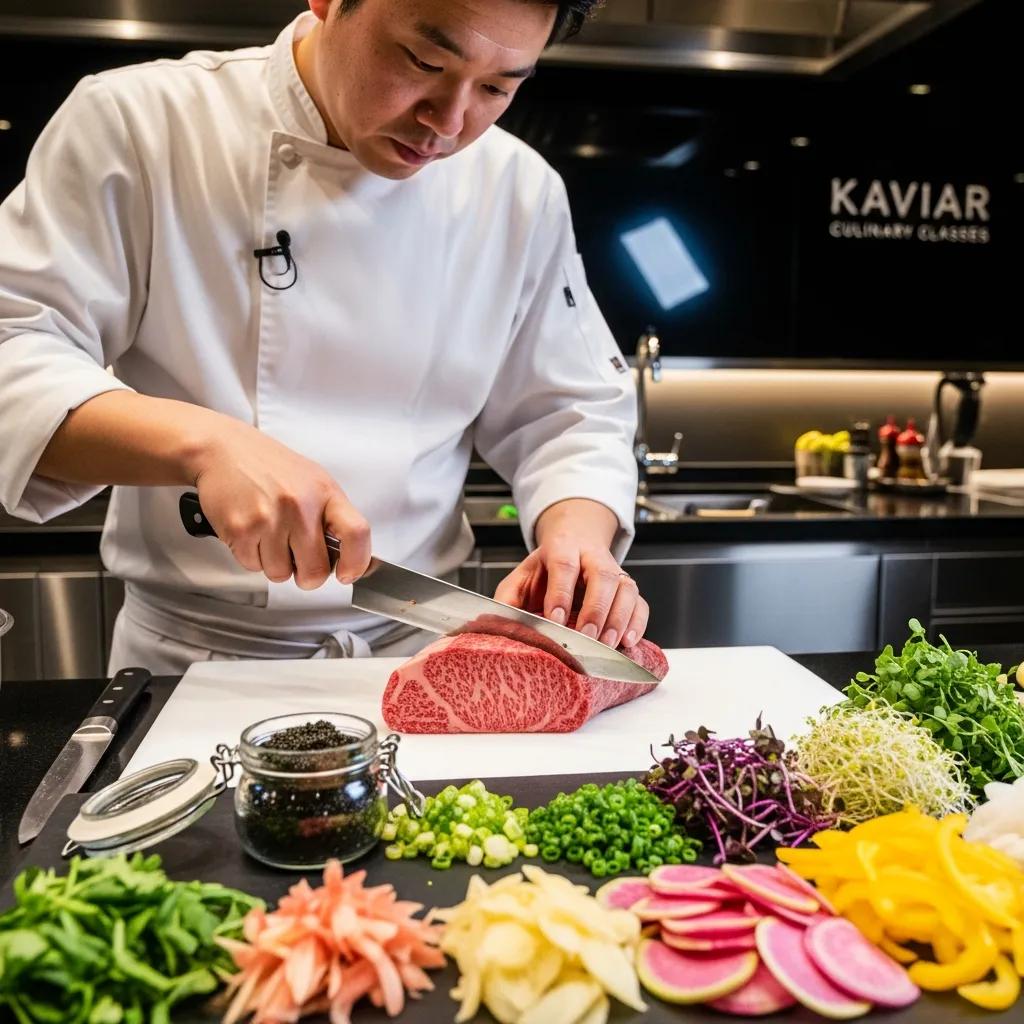
Our curriculum focuses on a compact set of high‑impact techniques: knife skills, searing and temperature control, plating composition, and omakase sequencing. Each skill is introduced by demonstration, practiced under chef supervision, and reinforced with tasting checkpoints so students see and feel the differences small adjustments make. The emphasis is on transferable skills—safe and precise cutting, the science of searing versus gentle cooking, and balancing sauces, acids, and textures in small plates—so you can reproduce fine‑dining elements at home or in a professional setting.
- Knife skills (slicing, filleting): Clean, consistent cuts improve texture and presentation.
- Searing and temperature control: Heat management preserves marbling and tenderness, especially with premium beef.
- Plating and portioning for omakase: Small‑format plating prioritizes balance and sequence.
- Ingredient pairing and finishing: Subtle accents—caviar, microherbs—enhance without overpowering.
The table below maps each technique to expected skill levels and practical outcomes so you can pick the right class for your goals.
This mapping helps prospective students choose a class that aligns with their experience and learning objectives.
What Signature Omakase Preparation Methods Are Featured?
Our omakase methods center on sequencing, portion control, and the logic behind small‑plate progression. We teach how to order a tasting so it moves from light, clean flavors to richer, more complex bites—using portion sizes that invite tasting rather than filling. Exercises include composing three‑ to five‑bite sequences, timing between plates, and calibrating seasoning to sustain continuity across courses. These practices teach you to think like a chef about narrative and palate pacing.
From there, students move into the value of chef‑led coaching and how direct instruction speeds skill uptake, which we describe next.
How Does Expert Chef Instruction Elevate Culinary Skills?
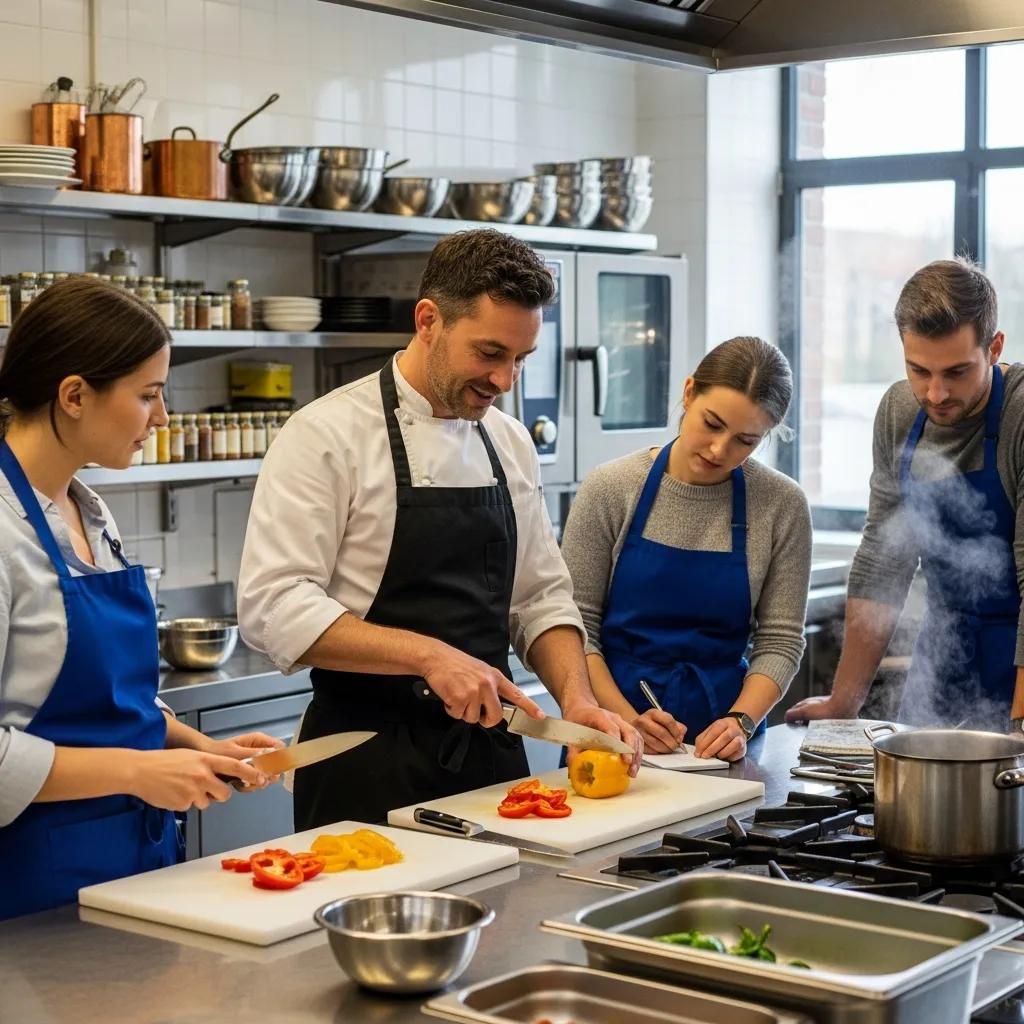
Chef instruction accelerates learning through short demonstrations, immediate corrective feedback, and focused tasting checkpoints. Our chefs model precise motions—knife angles, the wrist motion for a sear, or the spoon placement for a caviar finish—then watch students replicate those moves and offer micro‑adjustments. That cycle of demo, practice, feedback, and tasting creates durable skills: sensory confirmation anchors motor patterns and builds confident judgment.
Students depart with procedural know‑how and sharper sensory discrimination—tools that improve ingredient selection and culinary decisions beyond the classroom.
What Signature Dishes and Premium Ingredients Are Covered in Classes?
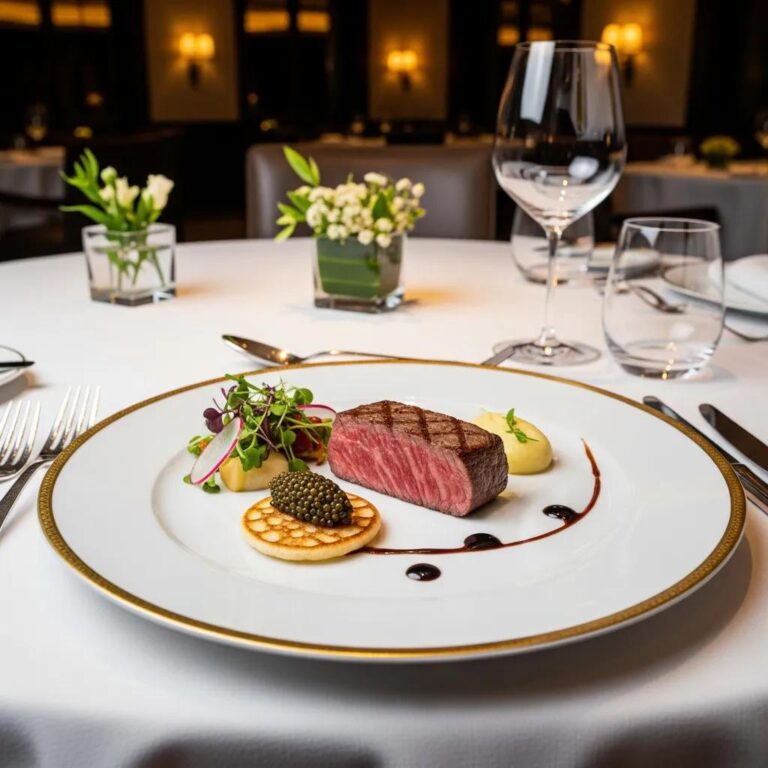
Classes center on signature small plates and a protein‑focused masterclass that showcase technique, pairing, and omakase presentation. We use each dish as a teaching vehicle—how to treat A5 Wagyu, when to finish with caviar, and how to assemble cohesive tasting bites. The emphasis is always learning by doing.
The table below lists representative dishes, the ingredient focus, and the learning outcomes you can expect.
How Is A5 Wagyu Prepared in Kaviar’s Culinary Lessons?
Our Wagyu sessions emphasize careful handling, minimalist seasoning, quick high‑heat searing, controlled resting, and delicate slicing to highlight marbling and mouthfeel. Instruction starts with safe portioning and tactile evaluation, then moves to heat management—using intense direct heat to form a light crust while preserving a tender interior. We cover salt timing and resting rationale—salting too early can draw moisture, while proper rest allows juices to redistribute. Repeated practice with chef feedback helps students internalize timing cues and visual doneness markers for highly marbled beef.
These Wagyu techniques naturally segue into finishing exercises—like adding subtle caviar accents—which we explain below.
What Role Does Caviar Play in Workshop Recipes?
We introduce caviar as a precision finishing element that adds concentrated brine and textural contrast. Classes teach portion restraint, temperature control, and pairing logic so the pearls enhance—rather than overpower—a bite. Students practice measuring pearl‑sized portions, placing caviar with care, and pairing it with neutral bases that showcase its complexity. Instruction also covers how cold temperature and gentle handling preserve caviar’s pop, and how acid, fat, or starch can balance brininess in a composed bite. The goal is to treat caviar as a deliberate seasoning tool.
Mastering caviar finishing reinforces lessons in restraint and balance that apply across omakase plating and sequencing.
How Can You Book and Participate in Kaviar’s Culinary Workshops?
Booking is straightforward: check class dates, reserve a seat, note any dietary needs, and arrive ready to participate. Reservations and class logistics are handled through our booking channels—identify the class type and preferred dates early to secure limited seats. On class day you’ll receive an orientation, watch a demonstration, and practice under chef guidance with tasting checkpoints. Please share dietary restrictions at booking so instructors can adapt where feasible. The table below outlines common formats, durations, and capacities to help you plan.
What Are the Reservation and Event Booking Procedures?
To reserve, select a scheduled class and provide guest details and any dietary information; deposit or payment terms are shown during booking to secure premium ingredient commitments. Because our classes use high‑grade ingredients and limited seating, plan ahead—private or group bookings typically require longer lead times for menu customization and sourcing. When booking, confirm arrival time, parking or transit details, and whether aprons or materials are provided. On class day we recommend comfortable clothing, closed‑toe shoes, and a readiness to taste and take notes. Clear communication helps us match the workshop to your expectations.
If you’re considering a private or bespoke option, the next section explains typical offerings and how to inquire.
Are There Special Culinary Classes or Private Workshops Available?
Yes—private and bespoke workshops are available for celebrations, team‑building, or deeper skill sessions that need tailored menus and ingredient sourcing. Common private formats include an A5 Wagyu masterclass, a caviar pairing workshop, or a multi‑course omakase sequencing session customized for your group. When inquiring, tell us your goals—skill focus, number of participants, and dietary needs—so we can propose an appropriate format, timeline, and pricing. Advance planning is recommended to secure premium ingredients and chef availability.
Private options offer a focused learning path that aligns with specific group objectives and often produces a richer experiential outcome.
What Do Past Participants Say About Kaviar’s Culinary Classes?
Guests consistently praise the educational value, access to premium ingredients, and the immediacy of chef feedback. Reviews note that hands‑on practice combined with tasting checkpoints deepens understanding of texture and temperature cues, and many participants say a single class clarified omakase sequencing and high‑end ingredient handling. The small‑group format receives frequent mention for enabling direct interaction and personalized corrections that accelerate progress. In short, feedback points to clear educational returns: improved technique, a more refined palate, and greater confidence working with premium ingredients at home or professionally.
These review themes lead into how classes enhance the omakase dining experience, described next.
Which Reviews Highlight the Luxury and Educational Value?
Recurring comments praise the balance between luxury ingredient exposure and rigorous technique training. Many guests report noticeable skill gains after one session—recognizing doneness by sight and touch or understanding when a finishing touch like caviar is appropriate. Reviewers often single out the chef’s role in offering precise corrections and framing dishes as narrative sequences, which deepens appreciation for omakase beyond pure tasting. Those patterns help prospective students decide whether they want an experiential luxury class or a skills‑focused workshop.
These outcomes inform the ways our classes enrich omakase dining, addressed in the next subsection.
How Do Culinary Classes Enhance the Omakase Dining Experience?
Our classes make omakase more rewarding by teaching diners to read technique, balance, and chef intention—sharpening tasting acuity and narrative appreciation. Students learn to notice subtle cues—temperature, texture, and seasoning—that reveal a chef’s choices, enabling more engaged conversation and preference communication during a meal. That knowledge turns passive tasting into an active, informed experience where technique and ingredient quality become part of the enjoyment.
With participant outcomes reviewed, the next section summarizes the practical benefits and ideal audience for these workshops.
What Are the Benefits of Joining Japanese Cooking Workshops at Kaviar?
Joining Kaviar’s workshops delivers concrete benefits: steadier knife and searing skills, confident handling of premium ingredients, sharper plating and sequencing instincts, and a deeper understanding of omakase structure. Our demonstration‑plus‑guided‑practice format builds muscle memory and sensory discrimination, which translates to better home cooking or stronger professional technique. Access to high‑grade ingredients and chef insight provides learning opportunities uncommon in conventional classes—valuable for serious home cooks and culinary professionals alike. Key participant benefits include:
- Skill development and confidence: Repetition and direct feedback yield reliable improvements.
- Access to premium ingredients: Hands‑on work with A5 Wagyu and caviar teaches grade‑specific handling.
- Insider chef knowledge: Direct instruction reveals the decision‑making behind omakase plating and sequencing.
- Experiential networking: Small groups foster shared learning and culinary conversation.
Those benefits converge into measurable skill gains described in the next subsection about hands‑on learning.
How Do Hands-On Classes Improve Chef Cooking Techniques?
Hands‑on classes accelerate improvement by emphasizing repetition, sensory checkpoints, and immediate instructor feedback. Students drill specific motions—slicing angles, pan movement, precise plating gestures—then taste and compare the results so sensory evidence reinforces correct technique. Chefs offer targeted corrections that fix common errors and suggest small adjustments with big impact. With practice, participants develop muscle memory and judgment, enabling them to reproduce techniques reliably outside the classroom.
This practical growth explains why Kaviar is recommended for learners seeking a substantive technical upgrade as well as a memorable tasting experience.
Why Choose Kaviar for Luxury Culinary Lessons in Pasadena?
Kaviar brings together location, ingredient quality, and chef expertise to offer compelling luxury culinary lessons in Pasadena. Our omakase framework and premium components create an environment where technique and taste education reinforce each other, and small, chef‑led groups provide the personalized coaching that speeds skill acquisition. For those who want to work with rare ingredients and turn tasting insights into technical competence, Kaviar delivers structured, sensory‑based instruction that elevates home cooking and dining alike.
Choosing Kaviar connects you to a continuing path of learning, tasting, and refined culinary appreciation—perfect for students focused on skill and experience.
Frequently Asked Questions
What should I wear to a culinary class at Kaviar?
Wear comfortable clothes that let you move freely and closed‑toe shoes for safety. We provide aprons, but you’re welcome to bring your own. Avoid loose sleeves or jewelry that could catch on equipment so you can focus on learning and tasting.
Are there age restrictions for participants in the workshops?
Most workshops require participants to be at least 16 years old to safely use kitchen tools and follow instruction. Younger guests may be accommodated for certain classes if accompanied by an adult—please check with us for specific class policies.
Can dietary restrictions be accommodated during the workshops?
We aim to accommodate allergies and dietary preferences whenever possible. Please disclose any restrictions when you book so our team can plan ingredients and adaptations in advance. Some limitations may affect certain menu items due to sourcing constraints, but we will work with you whenever feasible.
What is the typical class size for Kaviar’s workshops?
We keep classes intimate—typically 6 to 12 participants—to ensure direct chef interaction and meaningful hands‑on time. Smaller groups allow for personalized feedback and a better learning environment.
How can I prepare for my culinary class at Kaviar?
Review any pre‑class materials we send, bring any questions you have, and come ready to participate. Comfortable shoes and a notepad can be helpful. An open mindset and curiosity will help you get the most from the hands‑on practice.
What types of payment are accepted for class reservations?
We accept major credit cards and standard digital payment options for class bookings. Specific payment and deposit policies are provided during the reservation process—please review them when you book or contact our team for details.
Is there a cancellation policy for the workshops?
Yes—our workshops have a cancellation policy to protect ingredient commitments. We require advance notice for refunds or rescheduling; exact terms are shared at booking. If you have questions about timing or exceptions, reach out to our reservations team.
Conclusion
Joining a Kaviar culinary workshop is a chance to sharpen technique and deepen your understanding of Japanese fine dining while working with premium ingredients like A5 Wagyu and caviar. Our chef‑led, hands‑on format builds practical skills and sensory awareness you can use at home or in the kitchen. Ready to level up? Reserve your spot and begin a focused, flavorful journey into omakase technique and tasting.