




Mastering Garnishing Techniques for Culinary Art: Elevate Fine Dining Plating and Gourmet Food Presentation
Garnishing is the intentional addition of visual and flavor accents that turns a plated composition into a memorable dining moment. This guide helps chefs—and ambitious home cooks—think like fine‑dining artists by outlining core Japanese garnishing methods, practical approaches for luxury ingredients such as A5 Wagyu and caviar, and universal principles of color, texture, and negative space. Many cooks wrestle with making plates both beautiful and edible; here you’ll learn why every garnish should contribute flavor, aroma, or texture and how it supports the dish’s story. We map essential Japanese techniques, advanced Wagyu presentation, pragmatic plating rules, seasonal omakase strategies, and six simple rules every kitchen can apply, with clear lists and comparison tables for quick use during service and for shareable presentation.
What Are the Essential Garnishing Techniques in Japanese Fine Dining?
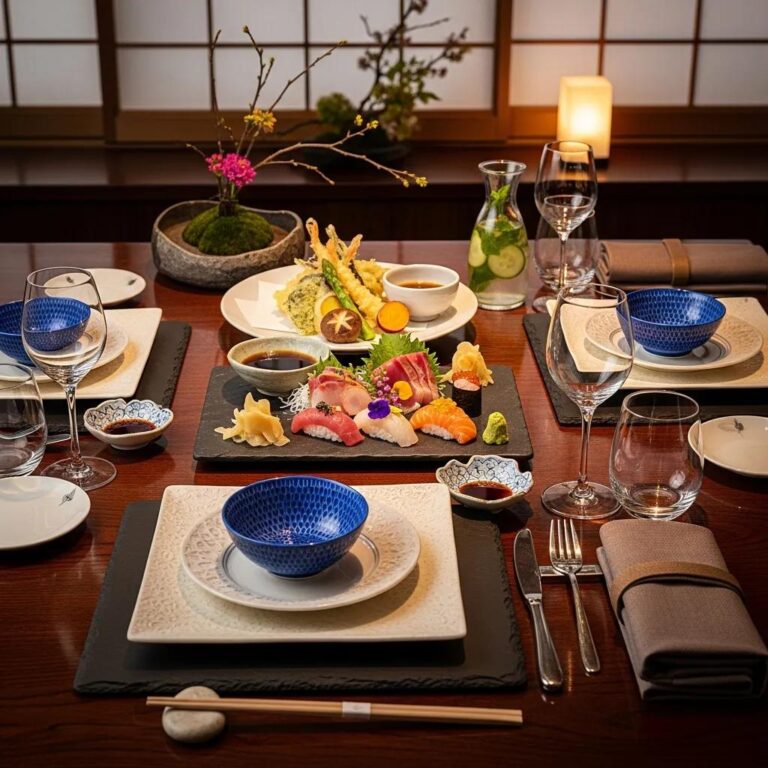
Japanese garnishing favors restraint and precision: small, intentional touches that enhance flavor, texture, or aroma without overshadowing the main ingredient. Think finely grated yuzu for brightness, shiso for herbal lift, or carved daikon for texture—each element chosen for purpose. Execution depends on practiced knife work and the right tools—paring knives, tweezers, squeeze bottles, and a microplane—so presentations are consistent and reliable. Regular practice sharpens a chef’s sense of balance and elevates an omakase sequence so each course arrives complete and considered.
Below are signature Japanese techniques commonly used in omakase and sushi plating, with brief notes you can apply in service.
- Mukimono (vegetable carving): Decorative carving that introduces texture and seasonal motifs to the plate.
- Grated and zested citrus (yuzu or sudachi): Fine acid to cut fat and brighten sashimi or grilled items.
- Shiso leaf placement: Whole or julienned, shiso adds a minty, basil‑like aromatic lift.
- Katsuobushi shavings: Light umami smoke that finishes texture and scent.
Use these techniques as both aesthetic tools and flavor modulators—evaluate every small element for taste and visual harmony before it reaches the plate.
How Does Mukimono Enhance Japanese Culinary Presentation?
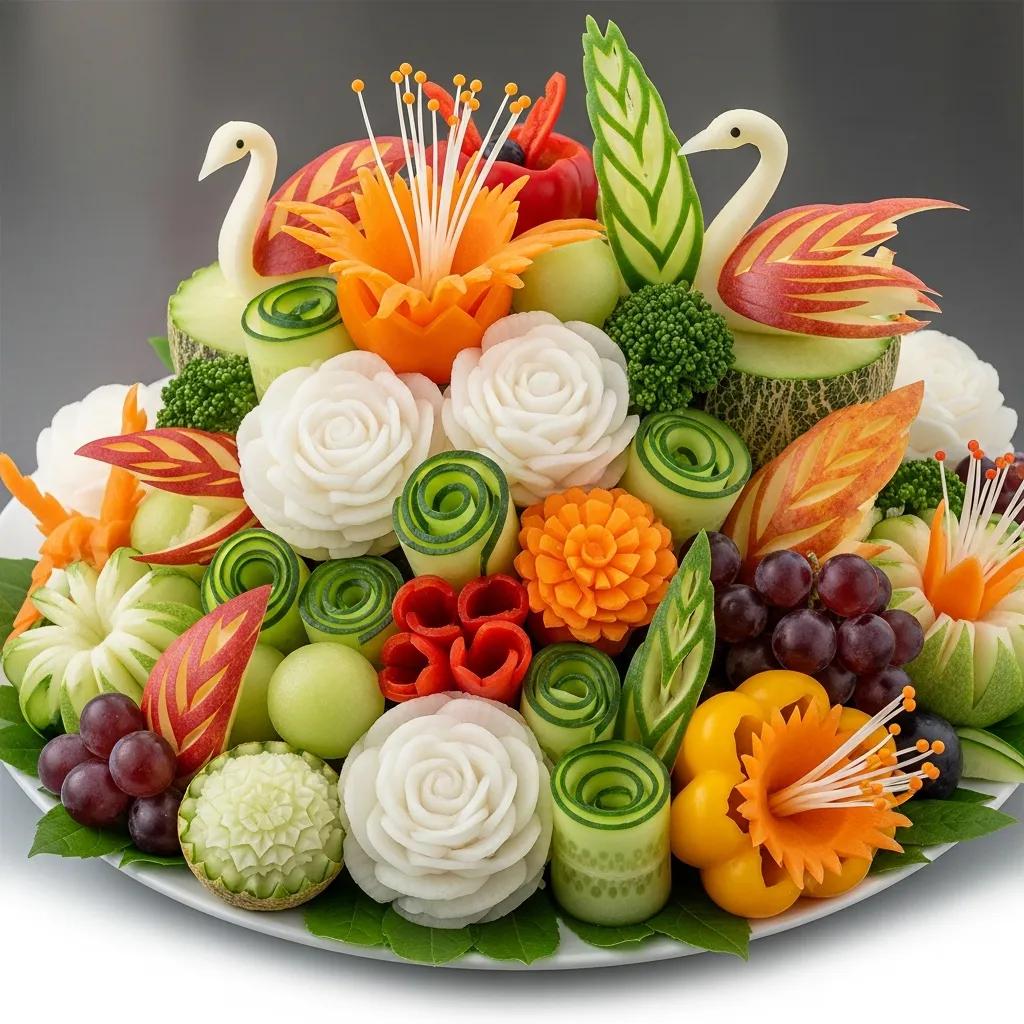
Mukimono is the practiced art of carving vegetables and fruit into shapes that reflect the season and the dish’s narrative. It adds delicate texture and creates visual focal points—daikon rosettes that lift sashimi or cucumber curls that serve as tiny edible vessels, for example. The craft requires a sharp paring knife, steady hands, and knowledge of vegetable fiber so pieces hold their form during service. Simple preservation—brief acidulated soaks or gentle chilling—keeps carved elements crisp and colorful. Mastering basic patterns and consistent cuts speeds prep and establishes repeatable presentation standards that communicate refinement to the guest.
Good mukimono balances utility and beauty: it can refresh the palate, add mouthfeel, and reinforce seasonality without competing with the main ingredient.
Which Traditional Japanese Garnishes Define Omakase Plating?
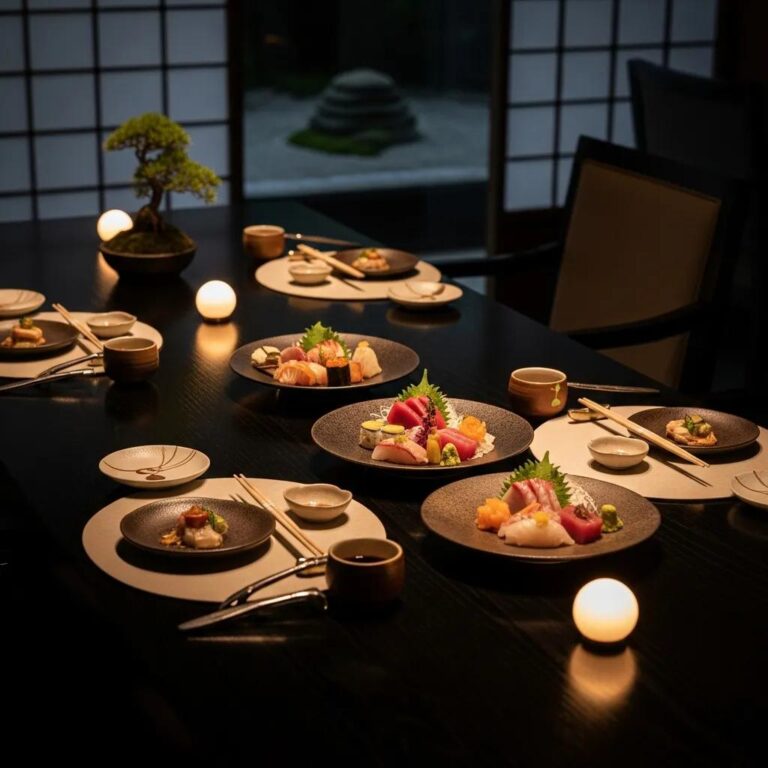
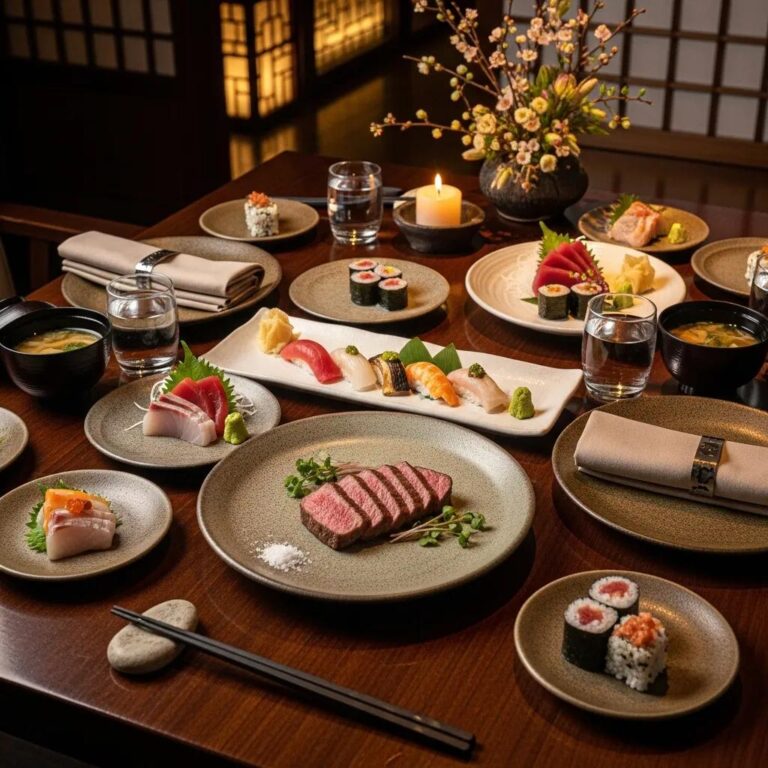
Omakase garnishes are chosen for sensory function—aroma, acidity, texture—rather than ornament. Typical selections include shiso, grated daikon, yuzu zest, pickled ginger, and katsuobushi, each with a clear pairing logic: grated daikon cools and adds moisture to sashimi; yuzu zest brightens fatty bites; shiso lifts rice and raw fish; pickled ginger refreshes the palate between courses. Chefs deploy garnishes to accent the primary ingredient and to manage pacing across the tasting menu so each course prepares the diner for the next.
- Sashimi pairing: Grated daikon with shiso adds humidity and aromatic clarity to highlight fish purity.
- Grilled item pairing: A micro‑zest or ponzu dot brightens char and balances oil.
- Fried course pairing: Pickled vegetables introduce acidity and cut heavier textures.
This selective approach reinforces seasonality and subtle theater in omakase, guiding the diner through a curated sensory arc.
How to Master Advanced Food Presentation with A5 Wagyu and Luxury Ingredients?
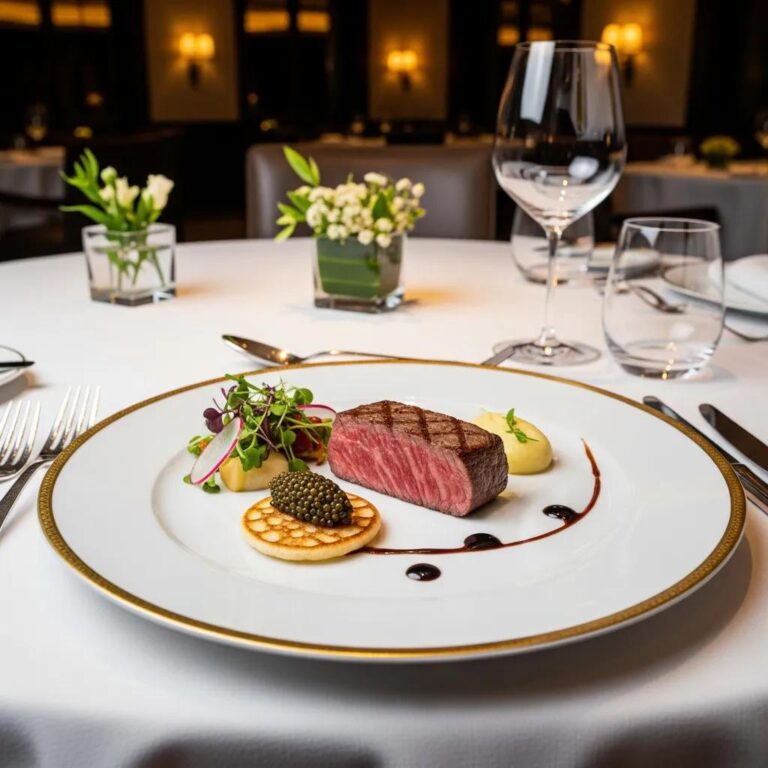
Plating A5 Wagyu and caviar requires respect for intense flavors and prized textures. The guiding principle is contrast: acid to cut fat, microherbs for bite, and crisp elements to offset silkiness—each garnish should address one sensory need. Knife skill, precise portioning, and timing (rest after sear versus quick flash slicing) shape how the meat reads on the plate. For caviar, temperature control, serving spoons, and neutral carriers like blini preserve the pearls’ saline pop. Keep accents minimal and purposeful so the luxury ingredient remains the star.
Practical steps for disciplined A5 Wagyu plating:
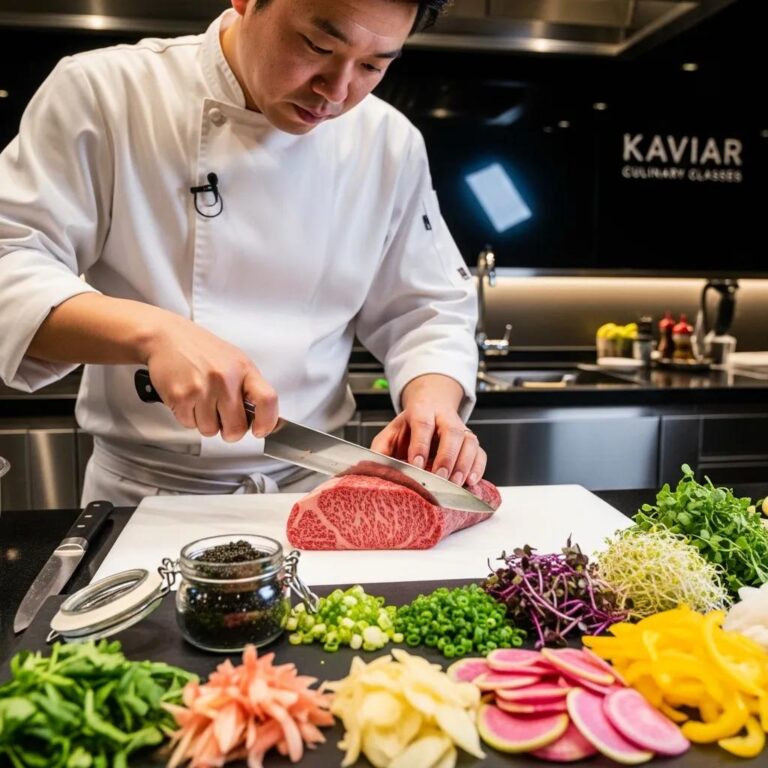
- Slice to reveal marbling: Use a long, very sharp knife and even, controlled cuts that showcase fat distribution.
- Sear and rest with care: Create a thin crust with high heat, then rest briefly to redistribute juices while preserving texture.
- Choose complementary accents: One acid (yuzu or pickled radish), a tiny herb (micro shiso), and a single textural counterpoint (crispy rice or a wafer).
Pairing logic matters: garnishes should cut richness, echo umami, or provide texture so each Wagyu bite reads clean and resolved.
Use these pairings to design plates that emphasize the luxury ingredient’s strengths without overcomplicating the presentation.
What Are the Best Practices for Slicing and Plating A5 Wagyu?
Slicing A5 Wagyu calls for a long, razor‑sharp blade and single‑stroke cuts to preserve marbling and present clean edges. Thicker slices suit seared presentations with a warm center; very thin slices work for tataki or raw courses to emphasize marbling and mouthfeel. Rest briefly after searing to balance juices without fully rendering intramuscular fat. Arrange slices fanned or slightly overlapped so marbling becomes the visual focal point. Use tweezers for precise microherb placement and add acid elements at the last moment to prevent wilting.
Plating geometry also cues tasting order—place garnishes so the diner meets the acid or textural contrast on their first bite, balancing richness immediately. Consistent technique and timing make each portion deliver the intended sensory sequence.
How Do Complementary Garnishes Elevate Wagyu and Caviar Dishes?
Complementary garnishes elevate Wagyu and caviar by counterbalancing fat with acidity, introducing texture contrasts, and signaling tasting order through placement and scale. For caviar, neutral carriers—blini or potato rounds—and a small dollop of crème fraîche isolate the pearls’ saline burst; a microherb or fine citrus zest adds aromatics without masking flavor. For Wagyu, bright acids like yuzu or pickles cut silkiness, while crisp elements add satisfying bite. Strategic placement—such as a tiny acid dot at the meat’s edge—cues diners to combine elements for a balanced mouthful.
- Yuzu + Wagyu: Citrus aroma refreshes the palate and lifts richness.
- Blini + Crème Fraîche + Caviar: A neutral base that showcases the caviar’s saline intensity.
- Pickled slaw + Seared Wagyu: Crunch and brightness to cut long, fatty bites.
What Are the Key Principles of Gourmet Food Garnishes and Edible Decorations?
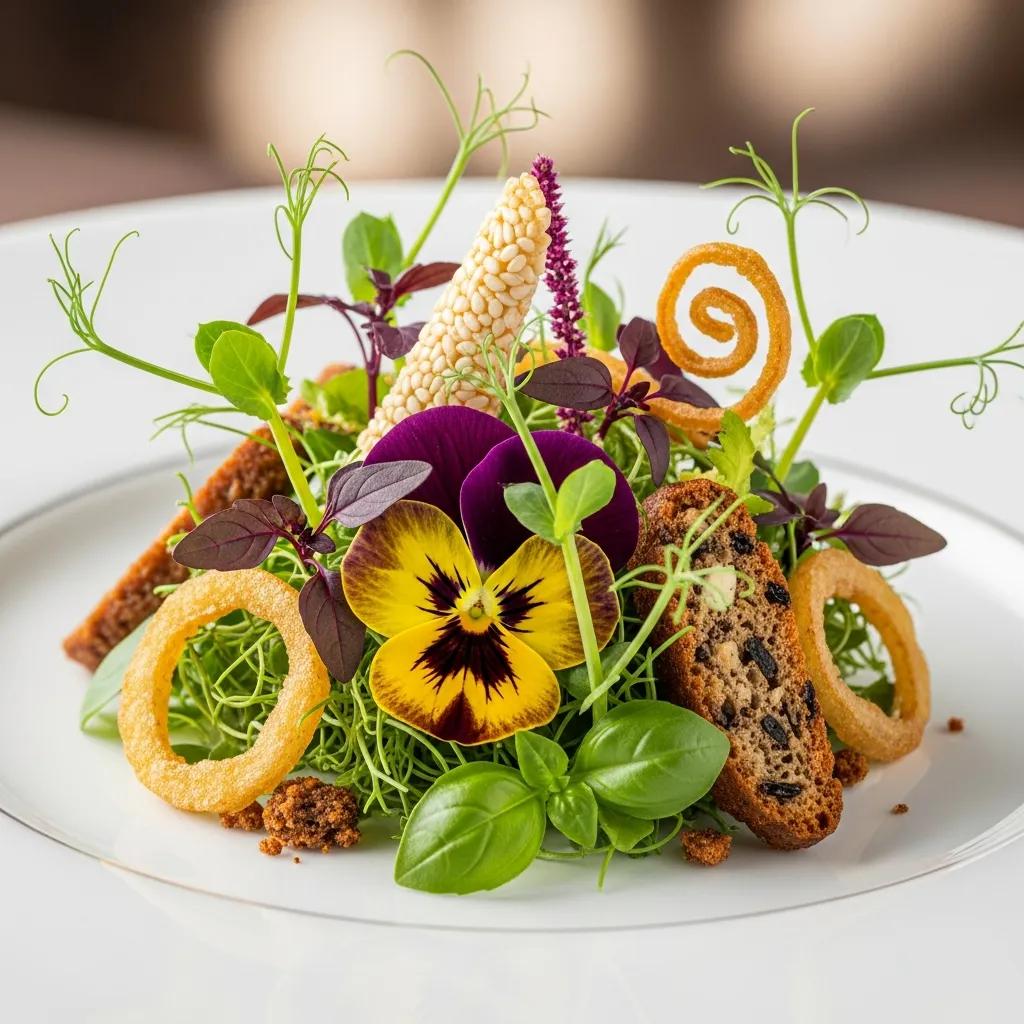
Effective garnishes follow five guiding principles: color contrast, texture layering, considered height and negative space, edibility, and flavor complementarity. Color guides the eye and suggests freshness; texture keeps each bite interesting; height and empty space create drama without clutter. Every garnish must be edible and support the dish’s flavor profile. Apply these fundamentals consistently and your plates will be both palate‑ready and photographable.
Use the quick reference below to decide garnish categories during service.
Which Edible Flowers, Microgreens, and Herbs Are Ideal for Fine Dining?
Choose garnishes with predictable flavors, good shelf life, and clear allergen labeling. Reliable picks include nasturtium (peppery), pansy (mild), micro basil (sweet, clove‑like), and micro shiso (minty, aromatic). Microgreens deliver concentrated flavor and color in a small footprint—perfect for precise accents. Source from reputable suppliers and store at cool, humid conditions to preserve appearance. Always flag potential allergens and avoid overly floral or bitter petals that distract from the main course.
Let garnishes amplify the dish’s voice: use herbs for aromatic lift, microgreens for texture and color, and petals sparingly to punctuate seasonality. With consistent sourcing and handling, these elements become dependable tools for refinement.
How Do Color, Texture, and Height Influence Food Plating Artistry?
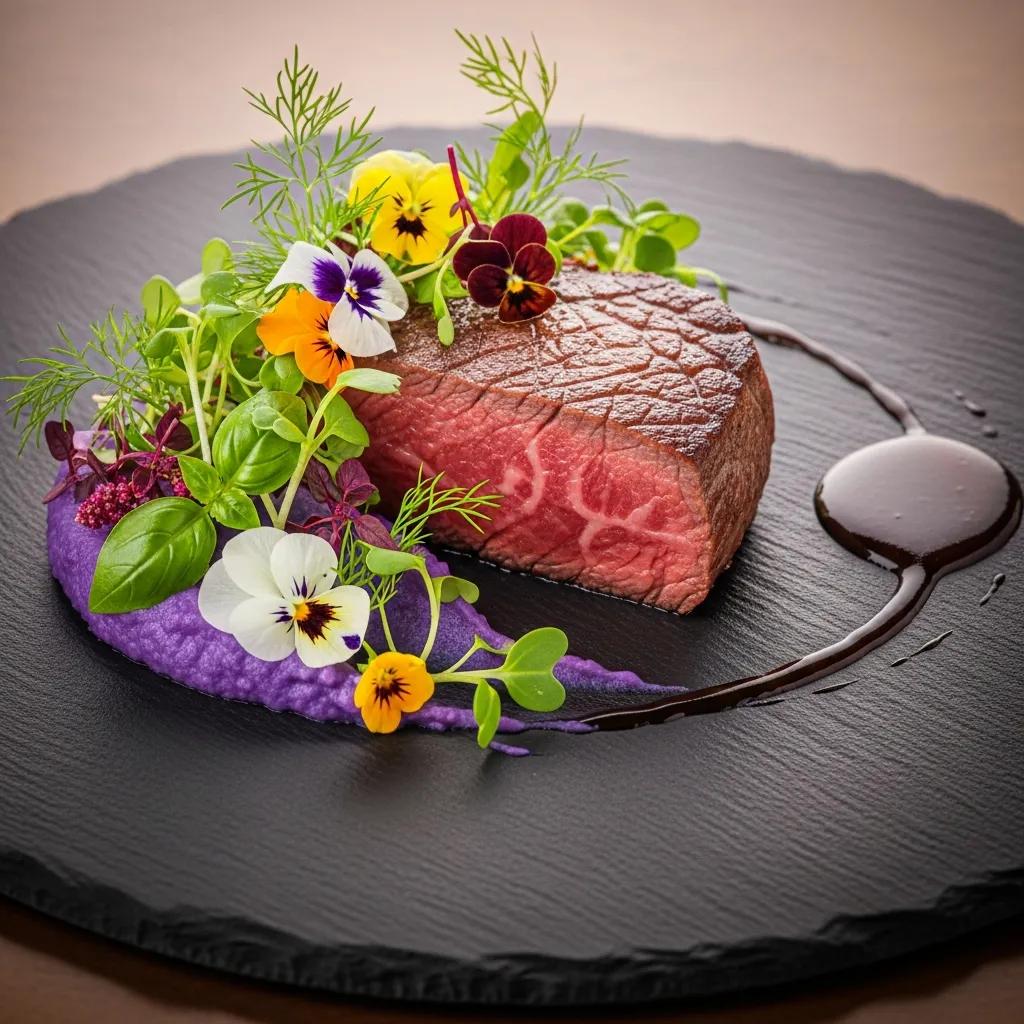
Color, texture, and height are the visual grammar of plating. Color contrast draws the eye; texture creates mouthfeel dynamics; height establishes focal points and organizes the plate. Effective palettes pair dark proteins with bright acids and pale starches so elements remain readable. Texture layering—soft then crisp—keeps each bite engaging. Use height sparingly: a single vertical element or stacked component creates drama without blocking access. Negative space frames the composition and prevents visual fatigue.
Apply the rule of thirds and limit dominant hues to two or three for clarity. Small height accents—microgreens or a crisp shard—add dimensionality, photograph well, and guide the diner’s eye. Together, these choices form a coherent visual sentence that communicates the dish’s intent.
How Can Chef Plating Secrets Enhance the Omakase Experience at Kaviar Restaurant?
Chef plating choices—thoughtful sequencing, table‑side finishing, and purposeful minimalism—turn technique into theatrical, sensory moments that highlight ingredient quality and seasonal storytelling. Sequencing manages flavor momentum across multiple small courses so garnishes act as transitions, not distractions. Table‑side finishes—final zest or a spooned sauce—create intimacy and underscore craft. Minimal garnishing directs attention to the primary ingredient, using a single accent to underscore rather than obscure the course. These decisions shape pacing, anticipation, and the emotional arc of an omakase service.
Kaviar Restaurant in Pasadena centers on precision, premium ingredients, and artful presentation. Our offerings include omakase, A5 Wagyu, and signature caviar dishes; guests seeking an elevated plating philosophy can reserve a seat or preview the menu as they plan their visit. Thoughtful curation—ingredient sourcing, timing, and finishing touches—turns plating theory into memorable dining sequences that encourage repeat visits.
What Is the Role of Seasonal Ingredients in Omakase Presentation?
Seasonality guides garnish choice and plate composition by aligning color, aroma, and texture with the time of year, reinforcing freshness and narrative coherence. Winter citrus and root produce bring bright acidity and sturdy texture to pair with rich proteins; spring herbs and delicate flowers add green, vegetal notes ideal for sashimi. Chefs select garnishes that echo seasonal colors and flavors, anchoring each course in time and place. Seasonally driven decisions also streamline logistics—limited, fresh choices yield focused garnishing and cleaner presentation.
When garnishes reflect the season, they do more than decorate: they signal provenance and intent, heightening the guest’s appreciation of the course.
How Does Sauce Artistry and Minimalist Garnishing Create Visual Impact?
Sauce work—brushes, dots, swooshes, and controlled pools—frames the main ingredient and guides tasting without overpowering it. Technique depends on viscosity and desired effect: thin emulsions spread for sheen, reductions form glossy beads. Minimalist garnishing adds one or two purposeful elements with tweezers to create a focal point and direct the first bite. Combined, refined sauce application and sparse garnishing produce plates that read as intentional compositions rather than crowded collages.
Restraint also improves service and reduces waste: when every garnish has a clear flavor role, plates look sophisticated, taste balanced, and service runs cleaner—benefiting guest perception and kitchen efficiency.
What Are the Six Rules of Garnishing for Advanced Culinary Art?
Advanced garnishing follows six clear rules so every accent is edible, complementary, balanced, intentional, scaled, and seasonally appropriate. Use this checklist during plating: confirm edibility and flavor fit, maintain textural balance, place elements with purpose, respect scale and proportion, allow negative space, and align with seasonal context. These rules provide quick, practical guidance for training line cooks and refining a head chef’s final presentation choices.
- Keep garnishes edible and flavor‑complementary: Never use decoration that doesn’t support taste.
- Respect balance of flavor, texture, and aroma: Each garnish should solve a sensory need.
- Place garnishes intentionally using the rule of thirds: Position accents to guide the eye and tasting order.
- Scale garnishes to portion size: Small plates need small accents; larger proteins need proportionate elements.
- Use negative space to frame the dish: Empty plate area creates focus and clarity.
- Align garnishes with seasonality and provenance: Seasonally appropriate accents reinforce authenticity and freshness.
How to Keep Garnishes Edible, Fresh, and Flavor-Complementary?
Consistency starts with sourcing and cold‑chain storage. Buy microgreens and petals from reliable suppliers and hold them in humidity‑controlled refrigeration. Prep with care—micro‑washing, gentle spin‑drying, and storage on damp cloths preserve texture without waterlogging. Always taste garnish‑plus‑main to confirm complementarity and avoid aromatics that overpower subtle proteins. Quick freshness checks—snap, scent, and color—catch wilting elements before they reach the pass.
When staff follow disciplined routines and sensory verification, garnishes reliably support the plate and elevate each course.
Why Is Intentional Placement and the Rule of Thirds Crucial in Plating?
Intentional placement and the rule of thirds create compositional balance, direct the diner’s eye, and establish a logical tasting path. Dividing the plate visually into thirds helps locate focal elements and negative space to maximize impact. A simple three‑step workflow—anchor the protein, add secondary components, finish with small accents—keeps plating efficient and consistent during service. This arrangement establishes a focal point and places supporting garnishes to guide texture and flavor transitions.
Practical mapping—main ingredient at one third and sauce or garnish at the opposing third—creates pleasing tension and reinforces the plate’s narrative for the diner.
How Does Mastering Garnishing Techniques Improve the Fine Dining Experience?
Mastering garnishing raises perceived tastiness and quality, encourages social sharing, and improves operational outcomes like guest satisfaction and repeat reservations. Visual appeal shapes taste expectations and willingness to pay; well‑balanced garnishes can make dishes appear fresher and more flavorful. Beautiful, consistent plating also creates shareable moments that extend reach on social platforms while reducing variability and guest complaints. Together, these effects strengthen a restaurant’s reputation and its capacity to command premium pricing.
Restaurants that invest in plating training often see measurable gains in guest engagement and perceived value—plating becomes part of the product that convinces diners to choose an omakase or a signature Wagyu course.
What Is the Impact of Visual Appeal on Perceived Food Tastiness and Healthiness?
Visual cues shape perceptions of taste and health: colorful, well‑composed plates signal freshness, balance, and care, and they typically score higher in taste tests. Balanced color palettes and deliberate garnishes lead diners to expect better flavor and greater nutritional quality. Practical takes: use color contrast to suggest freshness, add green microherbs to imply vegetal balance, and avoid over‑saucing that hides ingredient quality. These visual strategies help chefs frame perception before the first bite and can be employed strategically in menu design.
Applied thoughtfully, these techniques enhance the guest narrative around each dish and increase perceived value without raising base ingredient costs.
How Does Artistic Garnishing Influence Social Media and Customer Engagement?
Artful plating increases social shares and word‑of‑mouth by producing plates guests want to photograph. Small decisions—height, negative space, a single bright accent—boost shareability without sacrificing flavor. Design plates with one photographic focal point and ensure garnishes remain stable for a few minutes to accommodate photos; favor angles that highlight texture and sheen. Track engagement—shares, mentions, reservation lift—to measure the marketing return on plating investments. When presentation is consistent, guest posts become a steady source of discovery.
Thoughtful plating that balances aesthetics and taste turns diners into ambassadors, amplifying the restaurant’s presence and supporting long‑term demand.
Mastering Garnishing Techniques for Culinary Art: Elevate Fine Dining Plating and Gourmet Food Presentation
Frequently Asked Questions
What are some common mistakes to avoid when garnishing dishes?
Common mistakes include overcrowding the plate, using non‑edible decorations, and adding garnishes that clash with the dish’s flavor or season. Avoid items that serve only visual purpose; every accent should support taste or texture. Keep garnishes simple, purposeful, and complementary to preserve clarity and refinement.
How can I incorporate seasonal ingredients into my garnishing?
Choose garnishes that reflect the current harvest and the dish’s flavor profile: fresh herbs in spring, robust roots in winter, or ripe fruits in summer. Consider color, texture, and aroma so garnishes reinforce the season and the plate’s narrative. Seasonal selections simplify choices and strengthen authenticity.
What tools are essential for mastering garnishing techniques?
Key tools include a sharp paring knife for precision cuts, plating tweezers for delicate placement, and squeeze bottles for controlled sauces. A microplane is essential for zest, while a mandoline yields uniform vegetable slices. Plating rings and molds help shape components and add height. Quality tools improve accuracy and creative results.
How do I ensure my garnishes remain fresh during service?
Store garnishes in humidity‑controlled refrigeration and prep them close to service. Use micro‑washing and gentle drying methods to protect texture. For some vegetables, brief acidulated baths preserve color. Perform quick freshness checks—snap, aroma, color—before plating to avoid wilted or discolored items.
What role does plating geometry play in the overall dining experience?
Plating geometry guides the diner’s eye and sets the tasting order. Techniques like the rule of thirds create balance and focus, making the plate more inviting. Thoughtful arrangement also shapes how flavors are encountered, enhancing anticipation and the overall enjoyment of the meal.
How can I use negative space effectively in plating?
Negative space frames the food and elevates visual impact. Leaving breathing room prevents clutter, highlights focal elements, and creates elegance. Arrange garnishes and the main component so empty areas serve as a visual border that enhances clarity and harmony.
Conclusion
Mastering garnishing techniques refines both appearance and taste. By applying principles of color, texture, and intentional placement, chefs can craft plates that are visually striking and deeply satisfying. Adopt these practices to elevate your presentations, delight guests, and make every bite count. Explore our resources and bring these techniques into your kitchen to sharpen your plating craft.
**