




Non‑Alcoholic Pairings for Fine Dining: Elevate Your Japanese Omakase at Kaviar Restaurant
Japanese fine dining rewards the same careful attention in its beverage program as it does on the plate. Thoughtfully composed non‑alcoholic pairings preserve delicate flavors, enhance umami, and maintain the intended progression of a tasting menu. This piece outlines what makes a zero‑proof program truly sophisticated, how mocktails and fermented elixirs work alongside Japanese technique, and concrete examples you’ll encounter with omakase, A5 Wagyu, and caviar. Where many assume alcohol is necessary for depth or progression, modern alcohol‑free drinks — sparkling mineral bases, tea infusions, and koji or kombucha elixirs — provide cleansing, contrast, and layered aromatics without ethanol. You’ll learn pairing principles, essential ingredients like yuzu and shiso, signature mocktail matches for sequence‑driven omakase, and how Kaviar translates Japanese precision into a curated alcohol‑free program. The article finishes with clear booking steps to request non‑alcoholic pairings for your Pasadena tasting experience.
What Makes a Non‑Alcoholic Pairing Program Sophisticated?
A sophisticated non‑alcoholic pairing supports the tasting menu’s architecture: balance, forward motion, and sensory contrast — all achieved without ethanol. The craft lies in choosing acidifiers, aromatic bitters, carbonation, and umami‑rich fermented elements to manage fat, salt, and aroma. For guests this means a coherent meal where flavors are clarified rather than obscured, and palate resets are intentional. High standards for sophistication include provenance of ingredients, refined preparation (infusions, reductions, steeping), and service that mirrors the staging of a wine program. Those criteria guide the design of mocktail pairings so they arrive as deliberate partners to the cuisine — not afterthoughts.
Well‑executed programs follow a concise set of best practices to guarantee consistency and impact.
- Ingredient‑forward sourcing: Premium citrus, small‑batch syrups, and carefully selected tea leaves.
- Technique parity: Infusion, gentle reduction, and precise steeping instead of simple mixing.
- Progression planning: Sequence drinks to echo the food’s crescendo and create purposeful palate resets.
- Service parity: Offer tasting pours and intermezzo‑style sparklers with considered presentation.
These fundamentals establish a reliable baseline for educational, memorable tasting experiences and naturally lead into how zero‑proof drinks complement Japanese cuisine.
How Do Non‑Alcoholic Drinks Complement Japanese Cuisine?
Non‑alcoholic beverages support Japanese cuisine by deploying acidity, aroma, texture, and umami to balance delicate proteins and rich, fatty courses. Bright acids like yuzu lift sashimi and nigiri by cutting slick textures; green tea and roasted barley teas contribute tannic or toasty notes to contrast oily fish. Carbonation acts mechanically as a palate cleanser between richer bites such as A5 Wagyu, while fermented bases — kombucha or koji reductions — add savory depth that resonates with soy and dashi. A lightly sparkling yuzu tonic, for example, will accentuate caviar’s saline clarity; a shiso‑forward spritz will lift wagyu’s fattiness without overwhelming its detail.
Recognizing these mechanics helps the kitchen and bar collaborate on zero‑proof sequences that follow an omakase‑style progression.
Which Ingredients Anchor Gourmet Mocktails for Fine Dining?
Gourmet mocktails rely on ingredient classes that serve clear functional roles: acidifiers to cleanse, aromatics for layering, bitters for contrast, and fermented elements to supply umami. Yuzu gives bright citrus acidity; shiso and shichimi contribute herbal and peppery aromatics; matcha and hojicha offer roasted, vegetal backbone for seafood and grilled items. Sparkling mineral bases add mouthfeel and lift; kombucha or koji reductions bring savory depth that complements soy and dashi. Understanding these roles lets chefs and mixologists compose pairings that are precise, complementary, and respectful of the food.
Below is a practical reference showing common ingredients, their function, and typical matches.
Different mocktail components perform specific roles and pair best with certain Japanese dishes.
Using ingredients for their functional purpose makes pairing decisions clearer and supports a cohesive tasting menu.
With ingredient roles defined, restaurants typically organize their beverage list into categories that simplify pairing choices.
How Kaviar Curates a Thoughtful Non‑Alcoholic Beverage Menu
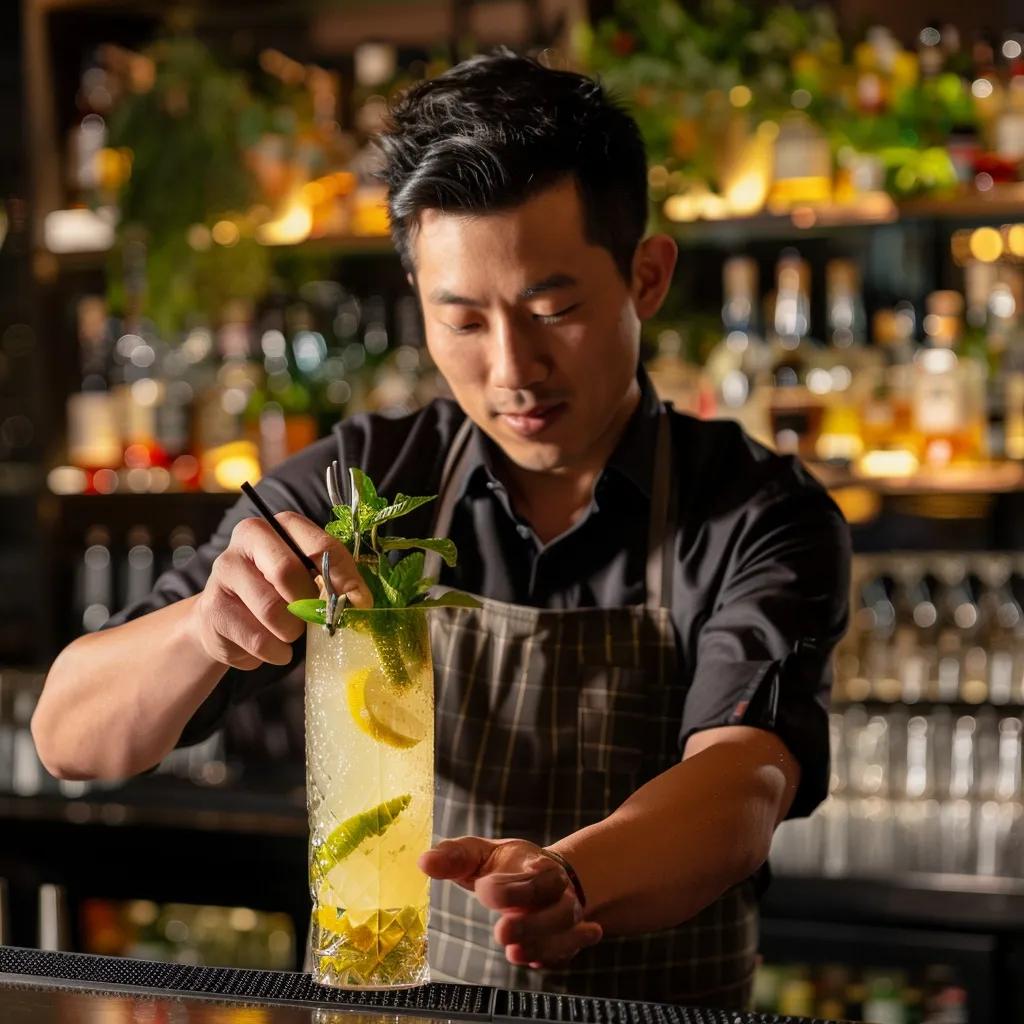
At Kaviar we build our zero‑proof menu through close chef–mixologist collaboration, careful sourcing, and a category‑driven structure that mirrors the tasting menu. Curation begins with mapping the omakase sequence and identifying moments that require cleansing, contrast, aroma, or umami reinforcement. From there we source Japanese botanicals and high‑grade citrus and choose mineral bases that ensure clarity and balance. Our service team stages non‑alcoholic options with the same care as wine — offering tasting pours and succinct explanations so the experience remains refined. This approach treats mocktails as intentional partners to the food, consistent with our work with A5 Wagyu, caviar, and precise Japanese technique.
Our menu architecture is organized into clear categories to help guide pairing decisions.
- Sparkling & Citrus Intermezzos: Light, effervescent choices to reset the palate.
- Tea‑Based Infusions: Roasted or green tea foundations for savory matches.
- Fermented / Umami Elixirs: Kombucha and koji‑influenced elements that echo dashi and soy.
- Smoky & Roasted Elixirs: Subtle smoke or roasted fruit notes for heavier courses like A5 Wagyu.
To illustrate how categories translate to food matches, here is how our bar links technique and ingredients to dishes.
Kaviar’s menu categories connect technique and ingredient choice with recommended food matches.
This logic helps our team recommend the right zero‑proof elixir for each stage of a tasting progression. From here we develop signature mocktails that reflect the kitchen’s intent and the seasonal menu.
Signature Mocktails That Pair with an Omakase Sequence
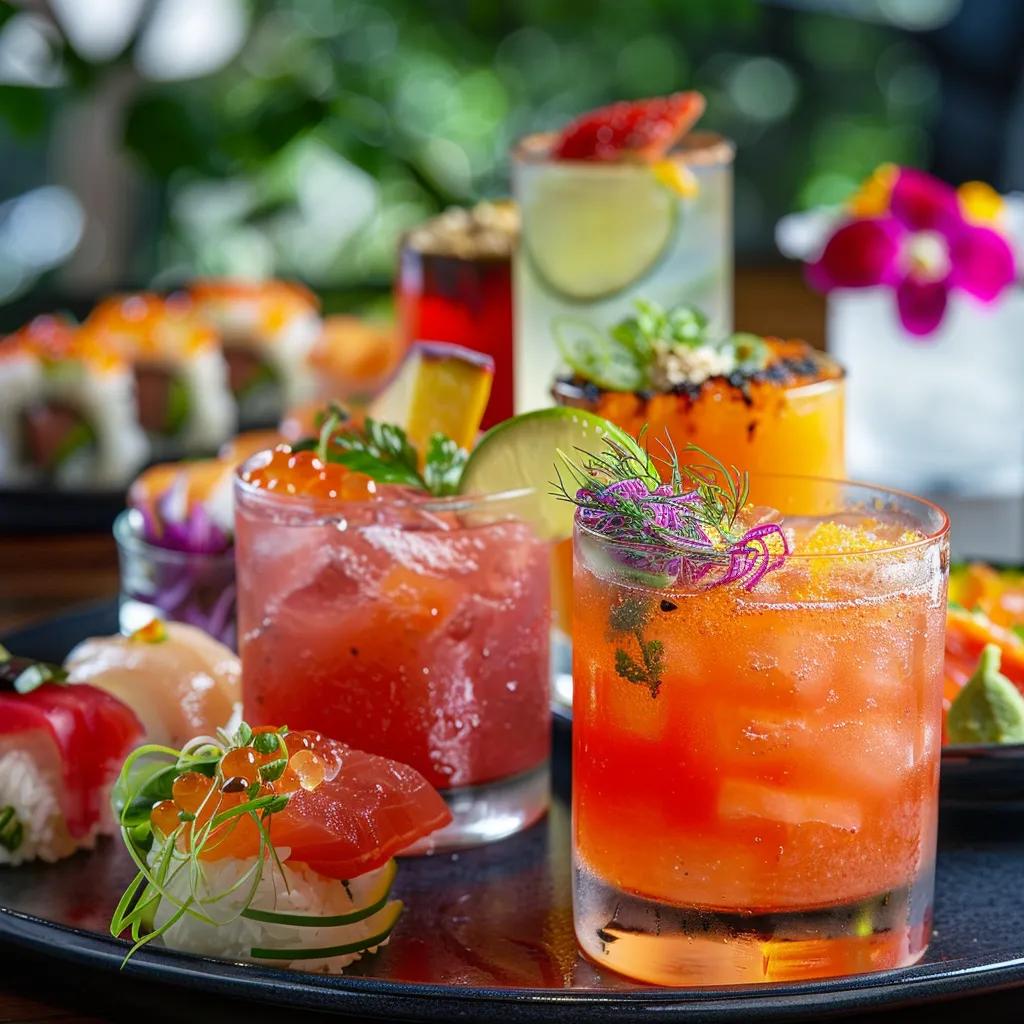
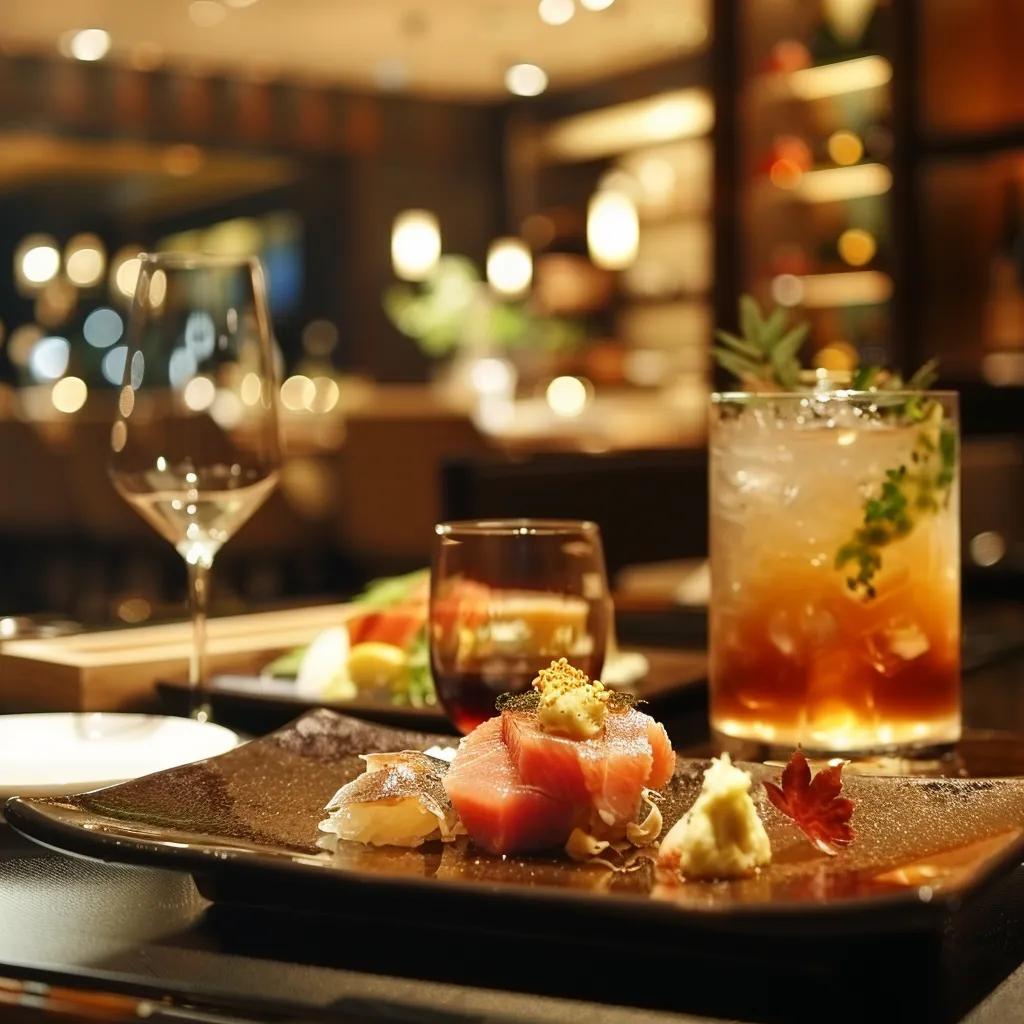
Signature mocktail pairings follow the arc of an omakase: light and aromatic early, spritz‑style intermezzi, and fuller‑bodied elixirs for later, richer courses. Early sashimi and nigiri benefit from a sparkling yuzu tonic that brightens without masking delicate fish; shiso‑forward drinks lift white fish and shellfish with herbal aromatics. Mid‑sequence, sencha or hojicha infusions bring roasted, tannic contrast for grilled and soy‑forward items. For heavier or charred bites toward the end, a restrained fermented umami elixir with subtle tannic structure echoes dashi and prepares the palate for a satisfying close.
Representative matches make the approach actionable:
- Sashimi → Sparkling Yuzu: Bright acidity cleans the palate and highlights saline nuances.
- Delicate Nigiri → Shiso & Citrus Spritz: Herbal aromatics lift subtle fish flavors.
- Grilled / Smoked → Hojicha Infusion: Roasted notes pair with char and smoke.
- Intermezzo → Mineral Sparkling: Resets the palate between umami‑rich courses.
These signature pairings show how a considered non‑alcoholic program can mirror an omakase sequence while preserving nuance and progression.
Zero‑Proof Elixirs for A5 Wagyu and Caviar
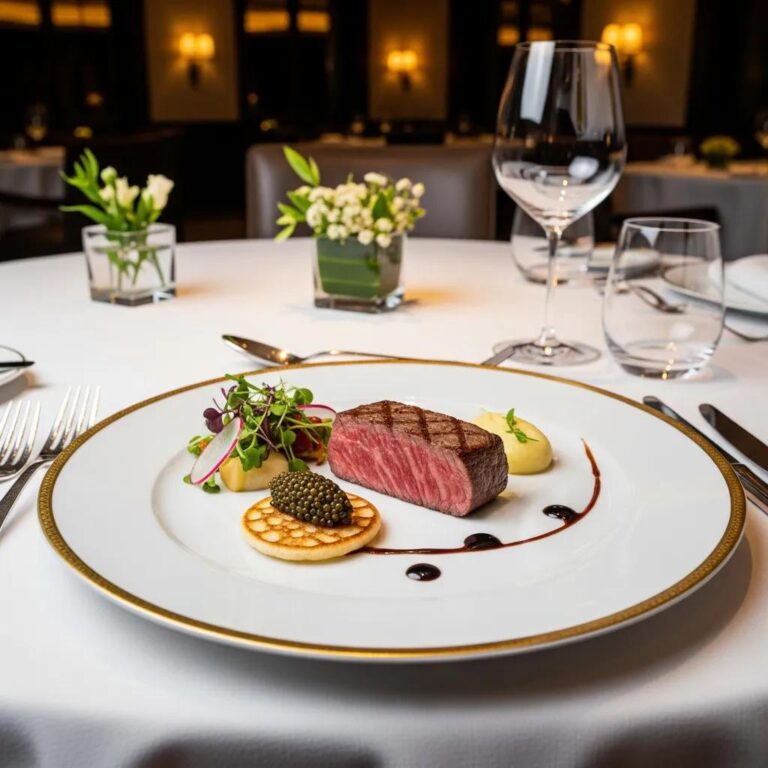
Pairing intensely rich A5 Wagyu or delicate caviar requires targeted zero‑proof strategies: maintain textural contrast with caviar and introduce acidity, bitterness, or tannic texture for wagyu to cut fat. For caviar we favor neutral mineral carriers with a whisper of yuzu or cucumber for mineral freshness that highlights brine without masking it. For A5 Wagyu, lightly bitter or tannic elements — a roasted tea or a smoky berry elixir with restrained sweetness — create contrast and lift the meat’s richness. Sparing use of koji or miso‑toned reductions can add savory complexity to both caviar accompaniments and aged beef preparations.
Here are practical pairing examples with tasting notes:
- Caviar → Mineral‑Yuzu Tonic: Mineral mouthfeel accentuates brine; yuzu adds clean lift without sweetness.
- A5 Wagyu → Roasted Tea with Bitter Citrus: Roasted backbone and bitter citrus cut richness and reset between bites.
- Aged / Marinated Wagyu → Koji Elixir: Umami‑driven depth amplifies savory notes and integrates with soy seasoning.
These choices demonstrate how texture and aroma in zero‑proof cocktails preserve the integrity of premium Japanese ingredients while delivering full‑bodied tasting moments.
Why Choose an Alcohol‑Free Tasting Menu at Kaviar in Pasadena?
An alcohol‑free tasting menu delivers inclusivity, supports wellness preferences, and preserves the full progression of a multi‑course meal — benefits that matter to discerning diners. For the sober curious or guests avoiding alcohol for health or personal reasons, a carefully crafted non‑alcoholic program gives equal attention to pacing, crescendo, and palate management. Kaviar in Pasadena integrates these offerings into its broader fine‑dining promise: refined technique, premium sourcing (including A5 Wagyu and curations around caviar), and seasonal dishes that guide pairing logic. Opting for an alcohol‑free tasting menu with a team committed to gastronomic detail ensures a luxurious, intentional experience.
Common reasons guests choose an alcohol‑free tasting menu include inclusivity, wellness, and a desire for complete sensory engagement.
- Inclusivity: Everyone at the table can follow parallel progressions.
- Wellness‑minded dining: Guests pursue mindful consumption without sacrificing depth.
- Consistent luxury: Service and presentation match the standards of our alcoholic program.
These motivations inform how we operationalize our approach for mindful diners.
How Kaviar Serves the Sober Curious and Mindful Diners
We support mindful diners with dedicated zero‑proof pairing sequences, staff training on non‑alcoholic options, and flexible tasting progressions tuned to guest preferences. Operationally, the team maps the tasting menu and identifies moments where a non‑alcoholic pairing enhances the course, then sequences sparkling intermezzi and umami elixirs to maintain flow. Staff are trained to describe ingredients and service cues so guests understand the purpose of each pour, and menus note non‑alcoholic options alongside wine suggestions. A typical guest journey might start with a citrus‑sparkling aperitif, move through tea‑based mid‑course pairings, and finish with a roasted or fermented elixir for richer final courses — preserving crescendo and resolution.
Intentional sequencing ensures mindful diners receive the same culinary arc as guests who choose wine.
What Sets Kaviar’s Alcohol‑Free Program Apart in Pasadena?
Our alcohol‑free program is rooted in Japanese technique and premium ingredient sourcing, so pairings feel culturally coherent rather than generic. Instead of recycling mocktail tropes, we prioritize ingredients intrinsic to the cuisine — yuzu, shiso, hojicha, koji — and apply infusion and reduction methods that mirror kitchen practices. That continuity between plate and glass means a kombucha‑like fermented elixir can echo dashi’s savory pull, while a sencha steep provides the roasted backbone that complements grilled fish. These decisions distinguish Kaviar in Pasadena’s fine‑dining scene by prioritizing authenticity and progression in every zero‑proof pour.
That distinctiveness proves alcohol‑free menus can reflect a restaurant’s culinary identity as strongly as any wine list.
Benefits of Pairing Non‑Alcoholic Drinks with Fine‑Dining Menus
Thoughtful non‑alcoholic pairings offer sensory, practical, and commercial benefits: clearer expression of umami, improved palate management, greater accessibility for diners, and alignment with modern wellness preferences. Sensory‑wise, alcohol‑free beverages can be crafted to highlight saline, herbal, or roasted notes without ethanol’s masking effects, letting subtle ingredients remain transparent. Practically, carbonation and acidity are powerful palate‑reset tools in multi‑course menus, and fermented elements can echo kitchen flavors to create cohesion. For restaurants, a sophisticated zero‑proof program broadens appeal and signals attention to contemporary guest needs.
Below is a practical comparison showing how pairing approaches affect dishes and perceived flavors.
This table compares pairing approaches and their impact across common fine‑dining dishes.
How Non‑Alcoholic Pairings Enhance Umami and Balance
Zero‑proof pairings enhance umami by introducing complementary savory elements (fermented syrups, koji reductions) and by using mineral carriers that reveal rather than mask glutamate‑driven flavors. Umami synergy depends on additive taste components — salt, acid, and amino‑rich elements — so pairing a fermented elixir with a soy‑dashi dish magnifies savory perception. Examples include a light kombucha base with simmered mackerel or a koji‑reduced shrub with mushroom dishes; both amplify umami while preserving texture. This approach lets chefs deepen perceived savoriness without the palate‑numbing effects of alcohol.
Can You Experience a Full Tasting Menu Without Alcohol?
Absolutely — a full tasting menu can be enjoyed without alcohol while preserving progression, crescendo, and dynamic contrast. Thoughtfully sequenced non‑alcoholic pours can replicate the structural roles wine would typically fill. Practically, we plan 8–10 tasting steps where sparkling intermezzi, tea infusions, and fermented elixirs alternate to manage richness and refresh the palate. For example: amuse with a light yuzu spritz, progress through sashimi with sencha, offer a sparkling intermezzo before grilled items, use a fermented elixir for simmered courses, and finish with a roasted‑tea dessert pairing. That progression preserves the dining arc and shows that depth and intensity are achievable with zero‑proof pairings.
We offer this assurance so guests know a non‑alcoholic path does not diminish the artistry of a tasting menu.
How to Reserve and Experience Kaviar’s Non‑Alcoholic Pairings
To reserve and experience our alcohol‑free pairing sequences, follow a few simple booking steps and note pairing preferences so the kitchen and service team can prepare an integrated progression. Because pairing sequences require deliberate staging, advance notice ensures the right ingredients and tasting sizes are available and allows staff to flag dietary considerations. Kaviar’s curated program mirrors our omakase and tasting offerings, so guests requesting non‑alcoholic pairings receive a parallel, fully developed experience. Reservations are the recommended way to secure a tasting menu and specify pairing requests.
Follow these steps to request a non‑alcoholic pairing when booking.
- Book a tasting menu reservation: Choose an omakase or tasting seating and indicate interest in non‑alcoholic pairings in the booking notes.
- Specify preferences: Share dietary restrictions, preferred flavor direction (e.g., tea‑forward, citrus‑focused), or ingredients to avoid.
- Confirm in advance: Allow reasonable lead time so the team can prepare tasting pours and seasonal ingredient rotations.
What to Expect During the Reservation Process
Reserving a non‑alcoholic pairing experience involves booking the tasting menu, indicating your pairing preference, and communicating any dietary needs so the team can plan pours and timing. Once you flag a zero‑proof preference, we sequence tasting pours to match the meal’s arc and prepare tasting sizes to mirror wine pairings. Advance notice helps secure seasonal ingredients and ensures staff are ready to offer clear beverage descriptions. This process guarantees your zero‑proof experience receives the same attention to progression and presentation as our alcoholic program.
Clear reservation guidance builds confidence and encourages guests to request tailored pairings.
Seasonal and Special Non‑Alcoholic Pairing Events
We run seasonal and special pairing events aligned with Japanese ingredient cycles and collaborative nights where mixologists and chefs explore limited elixirs tied to the produce calendar. Typical events include seasonal tasting menus with matching zero‑proof progressions, guest mixologist evenings highlighting fermentation techniques, and ingredient‑focused rotations when specific citrus or teas peak. Announcements for these specials appear through our usual channels; guests interested in seasonal pairing events should monitor updates and reserve early as ingredient‑driven menus run in limited numbers.
Seasonal programming demonstrates that non‑alcoholic pairings can be as dynamic and exciting as any wine‑led event, and remain a living part of our culinary calendar.
This article has shown how thoughtful mocktail pairings and zero‑proof elixirs can lift Japanese fine dining — preserving progression, texture, and umami. Kaviar’s approach, grounded in Japanese technique and premium sourcing, illustrates how a high‑end dining venue in Pasadena can offer alcohol‑free tasting sequences equal in refinement to our signature caviar, sushi, omakase, and A5 Wagyu menus.
Frequently Asked Questions
What types of non‑alcoholic beverages does Kaviar offer?
We offer a carefully curated range of non‑alcoholic beverages designed to complement each stage of the tasting menu: sparkling citrus intermezzi, tea‑based infusions, fermented umami elixirs, and smoky or roasted preparations. Each category is created to enhance specific dishes so the food remains the focus while the beverage adds purposeful contrast and clarity.
How can I ensure my dietary restrictions are accommodated?
Please share dietary restrictions and ingredient sensitivities when you make your reservation. Noting preferences or allergens in your booking allows our team to adjust pairings and the tasting sequence in advance so your meal proceeds seamlessly and safely.
Are there signature mocktails Kaviar is known for?
Yes. Our signature non‑alcoholic pours reflect Japanese flavors and technique: a sparkling yuzu tonic for delicate seafood, a shiso & citrus spritz to brighten nigiri, and a roasted tea infusion for grilled or smoked items. These drinks are made with high‑quality ingredients and prepared to mirror the kitchen’s approach.
Can I enjoy a full tasting menu without alcohol?
Absolutely. Our non‑alcoholic pairing sequences are designed to replicate the structural roles wine would normally play. Thoughtful sequencing and varied textures — sparkling intermezzi, tea steeps, and fermented elixirs — maintain progression, contrast, and crescendo across the full tasting menu.
Why use Japanese ingredients in the non‑alcoholic program?
Using Japanese ingredients — yuzu, shiso, hojicha, koji — creates continuity between plate and glass. These flavors are intrinsic to the cuisine and, when prepared with techniques like infusion and reduction, reinforce the dining narrative so the beverage program feels authentic and integrated.
How often does the non‑alcoholic beverage menu change?
We refresh the zero‑proof menu seasonally to reflect ingredient availability and peak freshness. Special events and guest collaborations may also introduce limited runs of unique elixirs — announcements are posted through our regular channels and popular rotations sell out, so early reservations are recommended.
Conclusion
Choosing sophisticated non‑alcoholic pairings at Kaviar enhances your fine‑dining experience by preserving delicate flavors, clarifying umami, and maintaining the menu’s intended progression. These thoughtfully crafted beverages deliver the same attention to pacing and presentation as an alcoholic program while supporting inclusivity and wellness. Reserve a tasting menu with tailored non‑alcoholic options and enjoy a luxurious, uncompromised culinary journey. Book your experience today.