



The History of Classic Fine Dining Dishes: Origins, Evolution, and Iconic Culinary Traditions
Classic fine dining follows a clear lineage—from medieval courtly banquets to today’s carefully paced tasting menus—centered on craftsmanship, presentation, and exceptional ingredients. This piece traces how haute cuisine took shape, profiles the chefs who formalized modern restaurant practice, and follows major movements—from Cuisine Classique to Nouvelle Cuisine—that reshaped service, plating, and sourcing. You’ll find the origins of signature dishes, why techniques such as clarification and refined pastry work became symbols of luxury, and how Japanese forms like kaiseki and omakase folded into the global gourmet vocabulary. We also track the histories of prized ingredients—A5 Wagyu, caviar—and how regional specialties became international markers of luxury. Concrete examples, side-by-side comparisons, and concise lists highlight turning points and principles that still guide chefs and diners. By the end, you’ll see how the past of classic fine dining continues to shape modern experiential, reservation-driven restaurants.
What Are the Origins of Haute Cuisine and Classic Fine Dining?
Haute cuisine began as a set of techniques and rituals in royal courts and aristocratic households, where spectacle, elaborate preparation, and rare ingredients signaled status. Over centuries, professional cooks translated banquet-scale showmanship into ordered courses; social shifts—urbanization and different patronage models—moved those skills into public restaurants, where menus and formal service became standardized. The result was a culinary category defined by multi-course progression, technical mastery, and careful presentation—concepts that satisfy both the palate and the social imagination. Understanding these early shifts explains why modern fine dining still privileges strict sequencing and seasonal, premium ingredients. The sections that follow unpack medieval banquet mechanics and the French culinary revolution in more detail.
How Did Medieval Feasts Influence Early Gourmet Food Traditions?
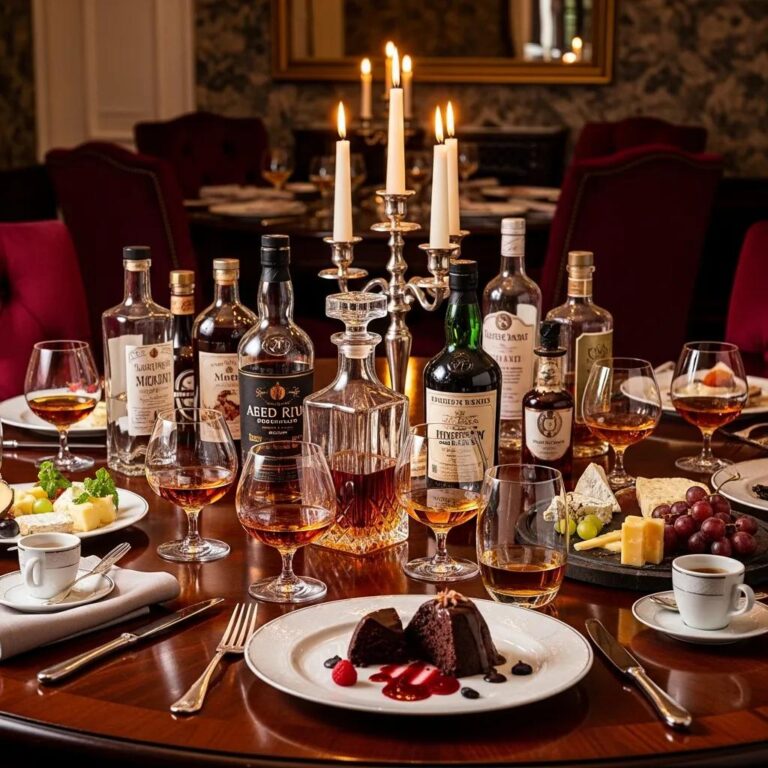
Medieval feasts established a language of luxury through dramatic presentation, layered courses, and costly spices and preserves used to display wealth. Cooks in noble houses developed intricate recipes and staged service that emphasized hierarchy and spectacle—practices that later evolved into plated courses and formal service rituals. Techniques such as clarifying broths, elaborate pastry construction, and decorative sugar work grew from that context and became associated with celebration and status. Those expectations—technical skill married to visual drama—live on in refined tasting menus where presentation remains part of the culinary statement.
What Role Did the French Culinary Revolution Play in Shaping Fine Dining?
The French culinary revolution loosened talented cooks from private service and opened a market for restaurants, allowing chefs to publish recipes, standardize methods, and build reputations. As household cooks opened establishments for paying patrons, menus were formalized, recipes codified, and service protocols standardized—forming the blueprint for modern restaurants and the brigade-style organization used in complex kitchens. This broader access to elite techniques accelerated culinary innovation as chefs competed for notice, feeding the rise of guidebooks and criticism. The move from private feasts to public restaurants anchored fine dining as both a cultural institution and a business.
Who Were the Most Influential Chefs in Classic French Culinary History?
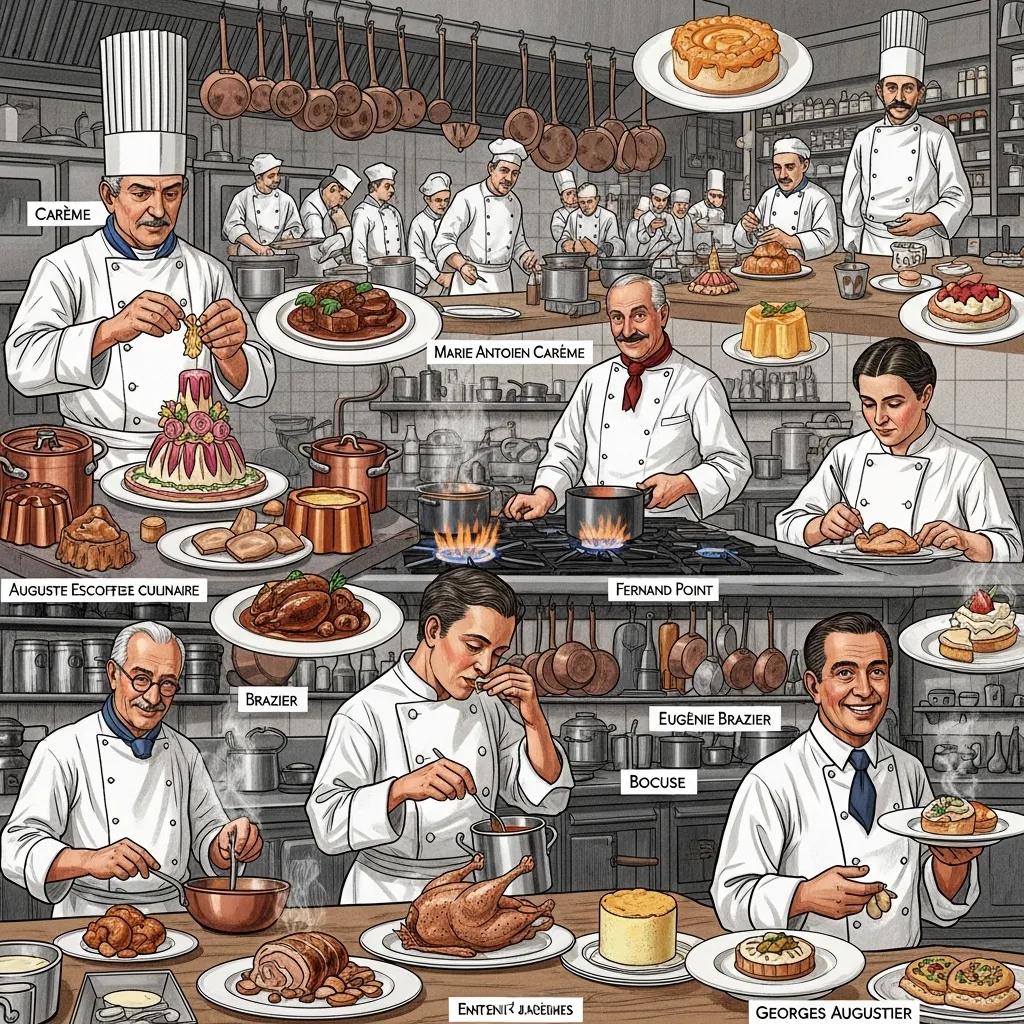
Figures like La Varenne, Marie-Antoine Carême, Auguste Escoffier, and later Paul Bocuse each introduced techniques, organizational models, or aesthetics that became foundations for professional cooking. Through manuals, menu design, and operational reform, they moved cooking from ephemeral household craft into reproducible restaurant art. Their legacies shape contemporary training, menu sequencing, and service expectations—helping explain why modern fine dining balances culinary artistry with scalable execution. Below are concise profiles of each chef’s core contributions and their enduring influence.
What Were Marie-Antoine Carême’s Contributions to Haute Cuisine?
Marie-Antoine Carême elevated presentation and pastry as central to cuisine, favoring ornate, architectural displays and complex sauces. He organized recipes and classifications that linked structure to flavor and codified plate aesthetics that influenced generations of European chefs. Carême proved that culinary technique could be taught and systematized, encouraging formal recipe texts and training methods that underpin modern fine dining. His blend of spectacle and discipline directly shaped expectations for refined presentation and multi-course service.
How Did Auguste Escoffier Codify Modern Fine Dining Practices?
Auguste Escoffier professionalized kitchen operations with the brigade system, clarified classical recipes, and simplified service protocols to ensure consistency at scale. By publishing guides and standard recipes, he converted household methods into professional techniques suitable for hotels and large restaurants—ensuring predictable execution across teams. His emphasis on timing, station-based responsibilities, and restrained menu design remains central to contemporary operations, enabling chefs to pursue creativity within reliable service frameworks.
Different chefs shaped technical, service, and professional standards in ways that still influence kitchens today:
This table shows how historical figures supplied technical, organizational, and aesthetic building blocks that modern restaurants continue to use. The next section looks at how restaurant culture evolved alongside these individuals.
How Has the Evolution of Fine Dining Reflected Changes in Restaurant Culture?
Fine dining progressed not only through technique but also through changing cultural contexts: the arrival of public restaurants, the power of critics and guides, and successive movements—Nouvelle Cuisine, molecular gastronomy—that reinterpreted classical forms. As restaurants became public institutions, standards for service, presentation, and sourcing turned into visible benchmarks open to critique. Guidebooks and critics created incentives for consistency and innovation, prompting chefs to develop signature styles and to highlight provenance. These forces explain why modern fine dining blends tradition, invention, and a performative style of service to meet aesthetic and experiential expectations. The following subsections explore when restaurants became central to gourmet dining and how movements contrasted with classical approaches.
When Did Public Restaurants Begin to Shape Gourmet Dining?
Public restaurants began to steer gourmet dining in the 18th and 19th centuries, when cooks released from aristocratic service opened establishments for an expanding urban clientele. These venues standardized menus, refined service etiquette, and built reputational economies where diners chose restaurants for quality and status. As dishes once confined to private tables became public, culinary innovation accelerated and specialization grew. The restaurant’s rise transformed culinary knowledge into a public commodity subject to review and recognition.
What Are the Key Differences Between Haute Cuisine and Nouvelle Cuisine?
Haute cuisine is rooted in rich sauces, formal multi-course structure, and classical technique; Nouvelle Cuisine emphasizes lighter sauces, ingredient-led simplicity, and artistic presentations that foreground freshness and seasonality. Where haute cuisine showcases technical virtuosity and elaborate preparation, Nouvelle Cuisine favors minimalism, shorter cook times, and highlighting an ingredient’s innate qualities. These philosophies affected plating, portioning, and pacing, and many contemporary chefs now blend the two to pair precision with ingredient transparency.
- Haute Cuisine Focus: Classical technique and layered sauces shape flavor and structure.
- Nouvelle Cuisine Focus: Simplicity, freshness, and lighter preparations highlight natural flavors.
- Service & Presentation: Haute Cuisine relies on formal sequencing; Nouvelle Cuisine experiments with presentation and pacing.
These contrasts help explain why today’s fine dining often marries classical rigor with contemporary restraint, influencing menu design and guest expectations.
How Did Japanese Fine Dining Influence the Global Evolution of Gourmet Food?
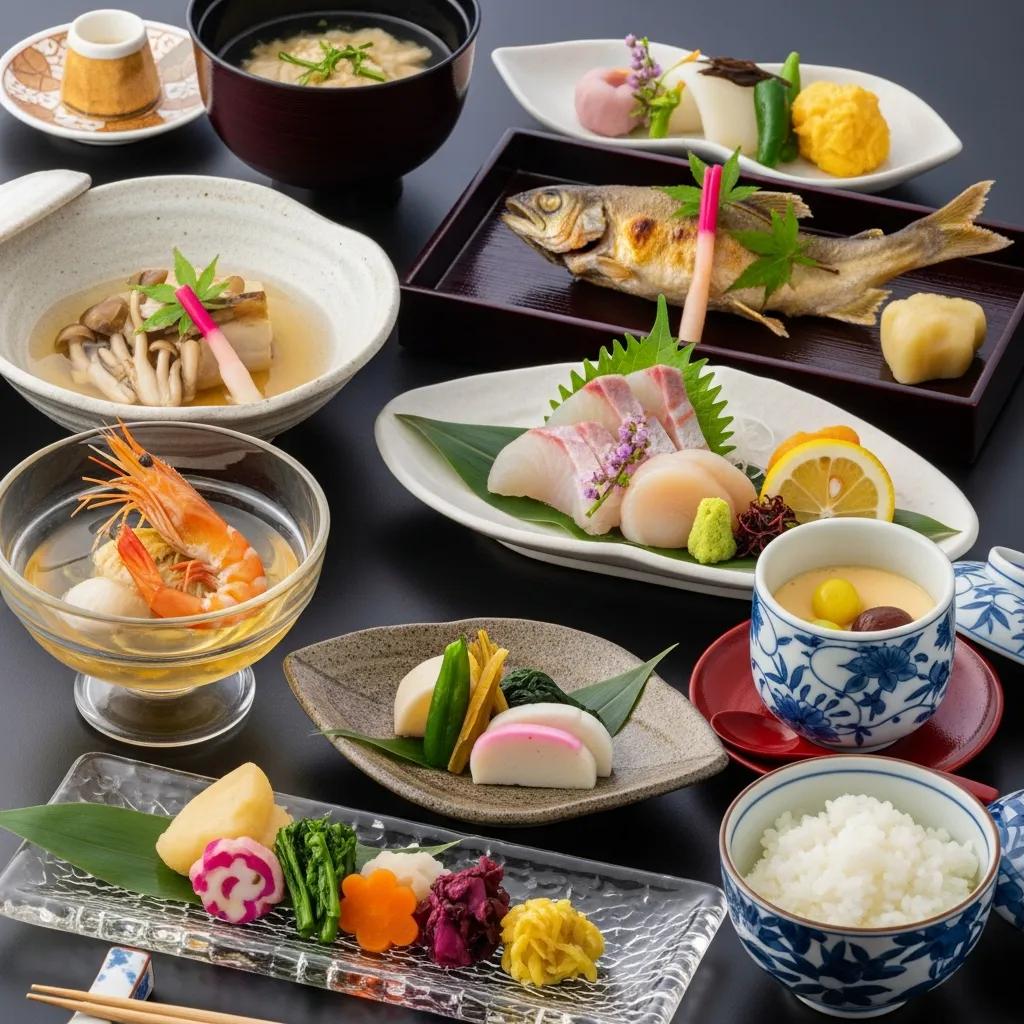
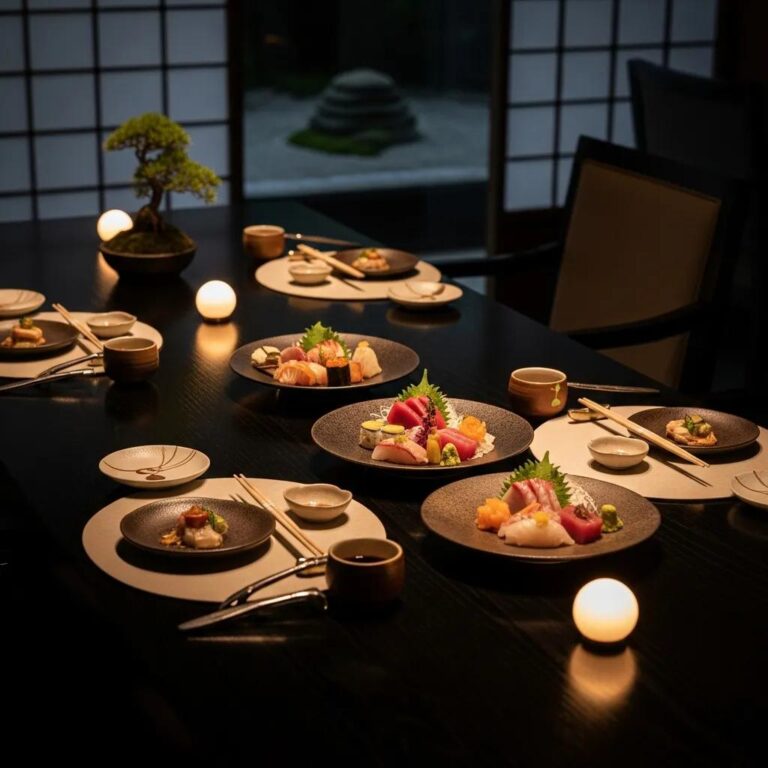
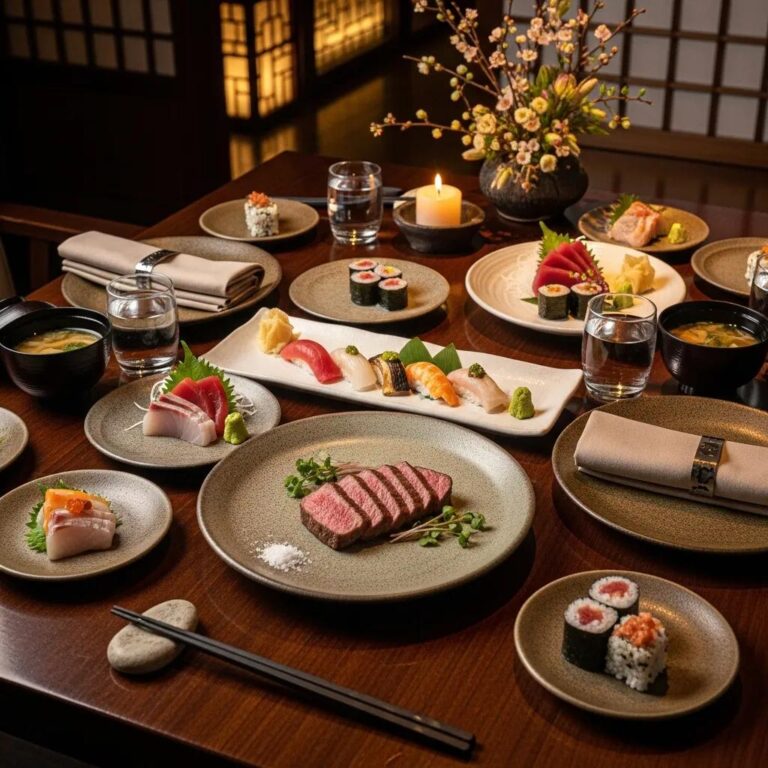
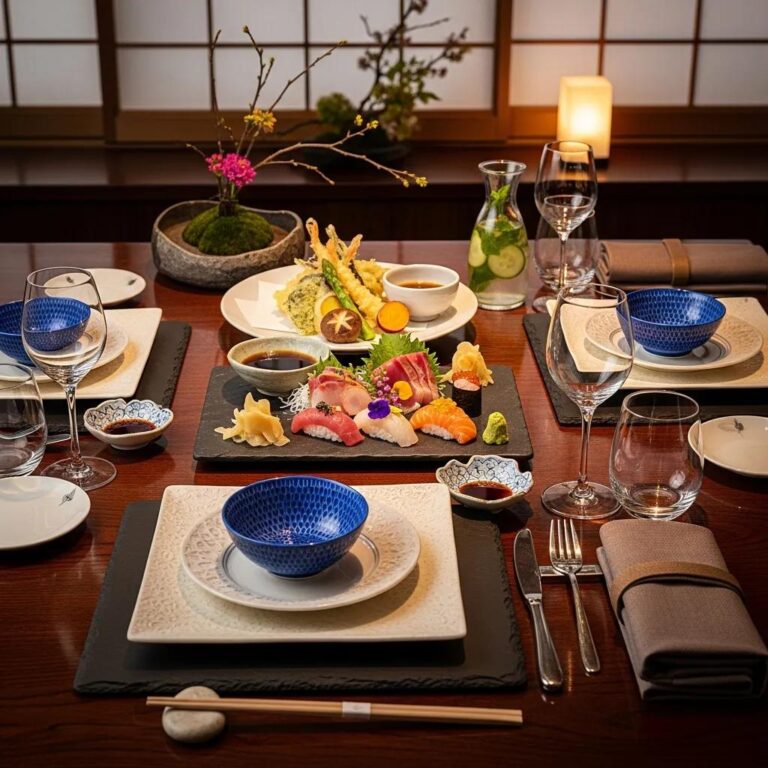
Japanese fine dining—especially kaiseki and omakase—introduced an emphasis on seasonality, restraint, and exacting technique that reshaped international plating and tasting-menu structure. Kaiseki’s seasonal progression and provenance-focused storytelling dovetailed with growing interest in terroir and ingredient narratives, while omakase’s chef-led, trust-based format inspired intimate, performance-driven tasting experiences worldwide. Luxuries like A5 Wagyu and premium caviar became markers of refinement when deployed within these Japanese frameworks, combining texture, subtle seasoning, and ritual. These contributions broadened fine dining’s vocabulary and encouraged chefs to adopt restraint, rhythm, and ingredient storytelling. The next sections explore omakase and the luxury status of A5 Wagyu and caviar in more detail.
What Is the History and Significance of Omakase in Fine Dining?
Omakase—literally “I leave it to you”—comes from sushi counter tradition as a chef-directed service prioritizing seasonality, the freshest seafood, and careful sequencing. The format builds trust between diner and chef and treats the meal as a curated narrative where pacing and progression reveal technique and provenance. Omakase’s wider adoption reflects diners’ appetite for personalized, educational experiences: chefs highlight sourcing and skill in real time. That model reshaped tasting menus by centering the chef’s discretion and turning the meal into a live, guided performance.
How Did A5 Wagyu and Caviar Become Symbols of Luxury Cuisine?
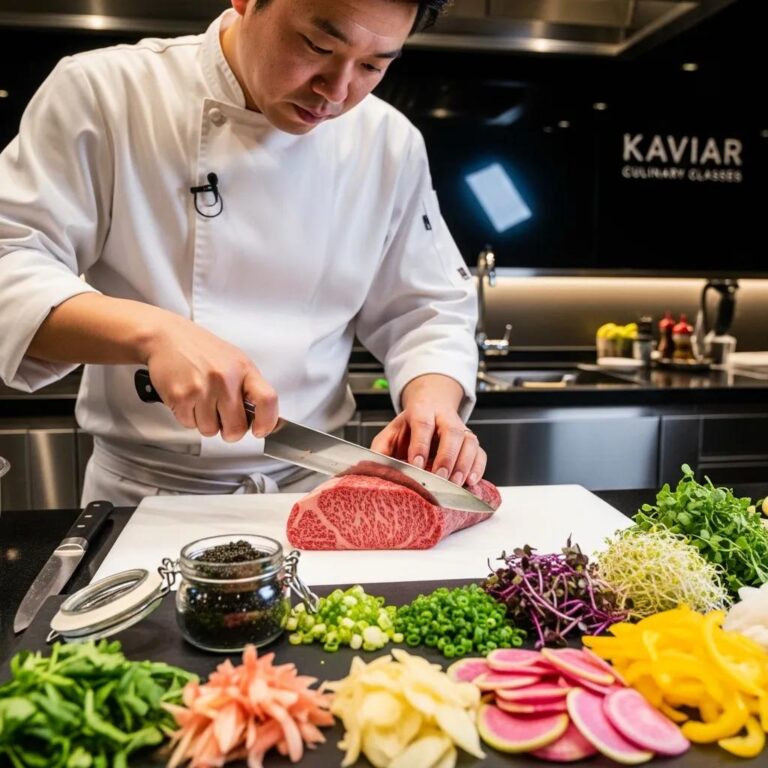
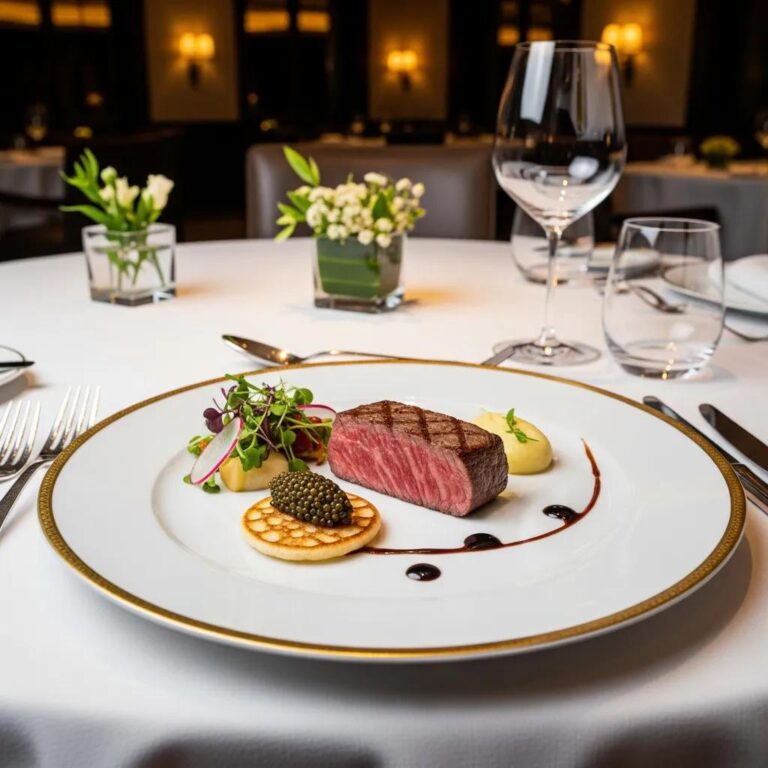
A5 Wagyu’s status comes from distinct genetics, attentive rearing, and a grading system that rewards intense marbling—producing extraordinary tenderness and umami. Caviar—from sturgeon varieties such as Beluga and Kaluga—became associated with aristocratic dining because of scarcity, texture, and concentrated flavor. Both ingredients entered international fine dining as visible markers of provenance and indulgence. When used in Japanese-style service, they emphasize texture contrasts and subtle seasoning, reinforcing their role as premium elements in contemporary tasting menus.
This comparison shows how regional practices evolved into global luxury dining standards and how premium ingredients and service models combine to create contemporary high-end experiences. Next, we examine signature classic dishes and their lasting influence.
What Are Some Iconic Fine Dining Dishes and Their Historical Legacies?
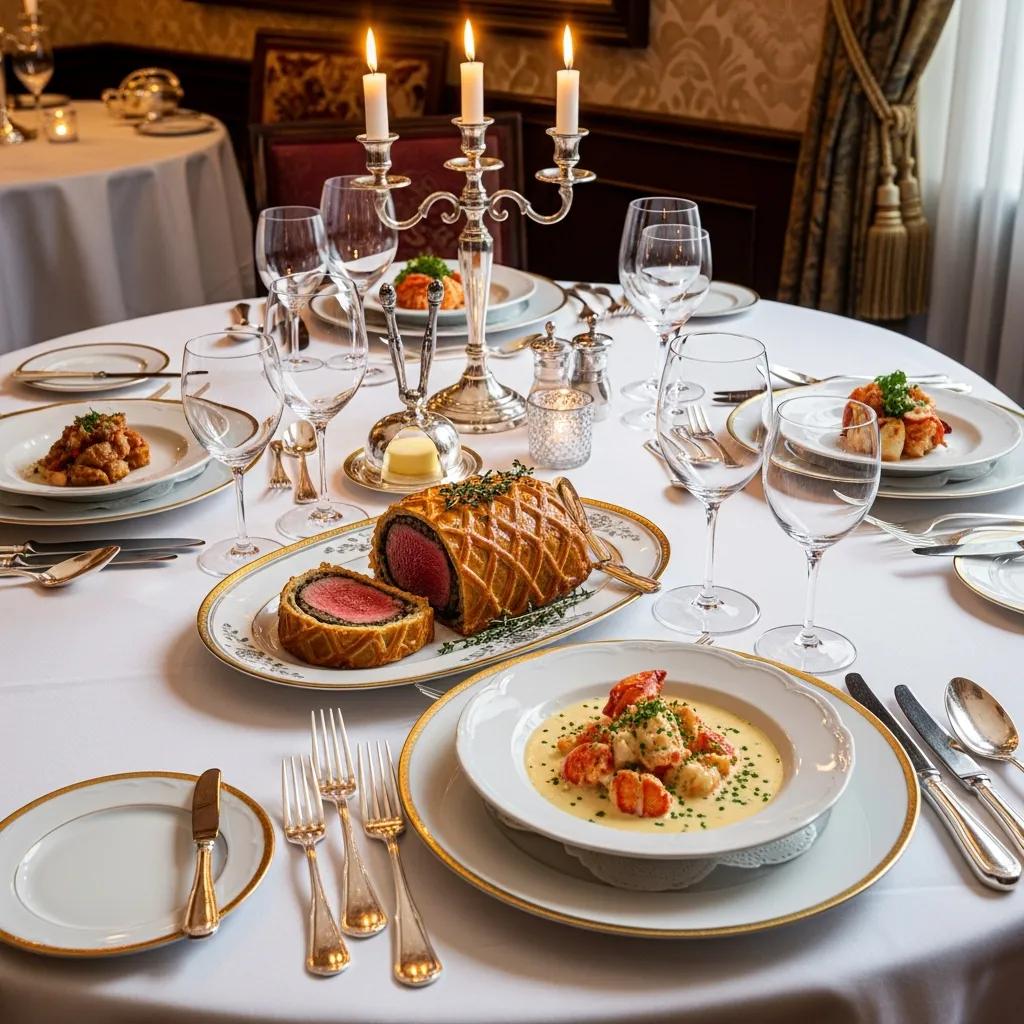
Dishes like Beef Wellington, consommé, and Lobster Newberg capture fine dining’s technical rigor, narrative history, and capacity for reinvention. Each emerged from a specific moment—Wellington from roast-and-pastry showmanship, consommé from advanced stock clarification, Lobster Newberg as a theatrical American showpiece—and became teaching templates and reputation markers. Today’s chefs deconstruct or update these classics to reflect local sourcing, sustainability, and modern textures—sometimes substituting Wagyu for traditional beef to change mouthfeel—keeping the conceptual identity while renewing execution. The following sections tell origin stories and outline contemporary reinterpretation trends.
What Is the History Behind Signature Dishes Like Beef Wellington and Consommé?
Beef Wellington combines roast technique and pastry work, historically tied to celebratory service and an English–French culinary nexus; consommé demonstrates refined clarification methods that yield a crystal-clear, intensely flavored broth. Both demanded high technical skill—precise roasting, pastry craft, and patient clarification—and served as benchmarks of a kitchen’s capability. As foundational training recipes, they taught temperature control, timing, and layered flavor construction—skills that remain central to culinary education even as chefs reimagine their forms.
Brillat-Savarin and the Codification of French Haute Cuisine
In the early nineteenth century, Jean Anthelme Brillat-Savarin and Alexandre‑Balthazar‑Laurent Grimod de La Reynière helped shape modern food writing. Brillat-Savarin’s La Physiologie Du Goût (1825) married literary prose with culinary reflection, elevating gastronomy as an intellectual pursuit. His writing influenced chefs such as Marie‑Antoine Carême, who simultaneously worked to simplify and codify French haute cuisine.
Exploring the Legacy of Brillat‑Savarin in the Written Works of Auguste Escoffier, 2025
How Are Modern Interpretations of Classic Dishes Shaping Today’s Fine Dining?
Modern reinterpretations emphasize deconstruction, provenance, and texture. Chefs may swap traditional beef for A5 Wagyu for richer fat and mouthfeel, or present consommé as a concentrated essence or gel within a tasting sequence. These approaches prioritize local sourcing, sustainability, and sensory contrast, often serving smaller, ingredient-forward portions that match tasting-menu pacing. Reinterpretation preserves a dish’s conceptual core while aligning execution with contemporary expectations for transparency and terroir. The table below pairs classics with their origins and modern examples to illustrate the evolution.
These examples show how chefs reference historical templates while advancing technique and flavor.
How Does the History of Fine Dining Connect to Modern Luxury Experiences?
The history of fine dining connects directly to modern luxury through a shared emphasis on provenance, storytelling, presentation, and service models that guide sensory progression. High-end restaurants construct narratives around ingredient sourcing, chef expertise, and technique to support premium pricing and create memorable experiences. Educational touches—explaining why a specific fish or A5 Wagyu cut was chosen—add perceived value and build a relationship between diner and kitchen that echoes historical patronage with contemporary transparency. These experiential elements often rely on reservation-driven operations to curate exclusivity and manage guest flow, allowing for carefully paced tasting sequences. The next sections explain why experiential dining matters and show how contemporary restaurants reflect classic values, including an example from Pasadena that embodies these principles.
Why Is Experiential and Educational Dining Important in Today’s Gourmet Scene?
Experiential dining answers diners’ desire for meaning, provenance, and narrative alongside taste. Educational moments—short explanations of ingredient origin, method, or season—create mental connections that deepen enjoyment and encourage return visits. This storytelling raises perceived value and supports premium pricing; direct chef–guest interaction builds trust and loyalty in a modern echo of historic patronage. Many luxury restaurants therefore design menus and service to be both pedagogical and gastronomic, crafting memorable moments that reflect history and innovation.
French Haute Cuisine’s Influence in Dublin: Escoffier to Nouvelle Cuisine
Haute cuisine appeared widely in Dublin hotels, clubs, and restaurants across the twentieth century, following similar trends seen in London and other European cities—moving from Escoffier orthodoxy toward the influence of nouvelle cuisine. Research shows French haute cuisine was a prominent presence in Dublin’s public dining scene from the late nineteenth century onward.
The emergence, development and influence of French haute cuisine on public dining in Dublin restaurants 1900‑2000: an oral history, M Mac Con Iomaire, 1900
How Does Kaviar Restaurant Reflect the Legacy of Classic Fine Dining?
Kaviar Restaurant in Pasadena channels classic fine dining values through precise Japanese technique, thoughtful sourcing, and chef-led formats. We offer omakase service and luxury touches—A5 Wagyu and curated caviar service—that honor provenance and ritual. Our approach privileges exacting presentation, seasonal sourcing, and refined tasting progressions that draw from kaiseki and omakase philosophies, connecting centuries-old practices to contemporary luxury dining.
To experience this lineage in Pasadena, reservations are available by phone, Resy, and OpenTable—allowing guests to secure a curated tasting that highlights culinary craft and premium ingredients.
- Premium Ingredients: Kaviar showcases luxury items such as A5 Wagyu and Kaluga caviar as focal points of refined dishes.
- Chef-Led Service: Omakase and curated tasting formats place the chef’s sequence and sourcing at the heart of the meal.
- Reservation Convenience: Booking via phone, Resy, or OpenTable helps guests access limited tasting experiences.
Kaviar’s model demonstrates how traditional practices—seasonality, chef authority, and premium sourcing—translate into contemporary fine dining that values both education and indulgence. This article has traced those threads from medieval spectacle to modern tasting menus, showing how classic dishes and techniques remain central to luxury culinary experiences.
Frequently Asked Questions
What are the key characteristics of modern fine dining?
Modern fine dining centers on exceptional ingredients, thoughtful presentation, and a multi-course structure that highlights flavor progression. Chefs prioritize seasonal and local produce, sustainability, and provenance. Service is more personalized: staff are prepared to explain dishes and sourcing, creating a narrative that connects diners to the meal and makes each visit both memorable and informative.
How do tasting menus differ from traditional dining experiences?
Tasting menus present a curated series of small, deliberate dishes that showcase a chef’s craft and point of view. Unlike à la carte meals where diners choose courses, tasting menus offer a cohesive, paced experience that emphasizes seasonal ingredients and intentional pairings—inviting exploration and delivering a clear culinary narrative.
What is the significance of ingredient provenance in fine dining?
Provenance matters because it anchors flavor, ethics, and story. Chefs cite origins to signal quality, sustainability, and unique characteristics of an ingredient. This transparency deepens appreciation for the food and builds trust between kitchen and guest, while underscoring responsible sourcing practices.
How has the role of culinary critics evolved in fine dining?
Culinary critics have shifted from sole arbiters of taste to one influential voice among many—joined by social media, bloggers, and diners. Critics now assess the whole experience—food, service, ambiance, and innovation—pushing chefs to refine every aspect of dining. That broader public discourse has made the scene more dynamic and competitive.
What impact has globalization had on fine dining?
Globalization expanded the palette and toolkit available to chefs, introducing techniques and ingredients from many cultures. This exchange fostered creative fusion and enriched presentation styles, giving diners access to a wider range of flavors and culinary stories, and making fine dining more inclusive and imaginative.
How do modern chefs balance tradition and innovation in their cooking?
Chefs balance respect for classical technique with contemporary experimentation—drawing on traditional methods while reworking formats, ingredients, or presentations. This approach honors culinary lineage while meeting modern expectations for sustainability, provenance, and sensory novelty, ensuring fine dining continues to evolve.
Conclusion
The history of classic fine dining reveals a continuous refinement of technique, presentation, and sourcing that informs today’s luxury dining. Knowing where iconic dishes and rituals come from enhances appreciation for the craft on the plate. We invite you to explore these culinary legacies and elevate your next dining experience—discover curated restaurants and reserve a table to taste the history behind each dish.