




Seasonal Risotto: Kaviar’s Fine‑Dining Journey Through the Seasons
At Kaviar, our seasonal risotto reimagines a beloved Italian technique through a Japanese fine‑dining lens. We pair rotating, peak‑season produce with premium seafood and careful technique to produce a creamy, layered bite that reads both comforting and precise. This piece explains what makes a risotto seasonal, how ingredient timing and Japanese methods shape texture and flavor, and which signature dishes showcase our craft. Many guests look for the familiar creaminess of Arborio rice alongside the restraint of omakase presentation; we blend those impulses, finishing Arborio‑based risottos with luxury touches like uni, caviar, and A5 Wagyu to create elevated seasonal courses. Below you’ll find our sourcing practices, chef techniques, wine and sake pairing suggestions, and practical reservation steps to help plan a risotto‑focused visit to Pasadena. Read on for season‑by‑season highlights, provenance notes, technical breakdowns, and booking tips to make your visit intentional and memorable.
What Defines Seasonal Risotto Creations at Kaviar Restaurant?
Our seasonal risottos rest on three pillars: peak‑season ingredients, exacting rice technique to create a silky emulsion, and a presentation that reflects omakase‑inspired restraint. The method pairs Arborio’s starch with carefully sourced broths and light seasoning so the featured ingredient leads the dish. Because we prioritize locally grown produce and responsibly sourced seafood when possible, each risotto follows the harvest calendar and highlights provenance. Seeing these defining elements makes clear why Kaviar’s risotto is a curated, reservation‑worthy course—not an ordinary menu item. Next, we explain how those seasonal elements make their way into each plate.
How Does Kaviar Incorporate Seasonal Ingredients into Risotto?
We work closely with local farms and specialty purveyors to capture ingredients at their peak and adapt the risotto base to let those flavors shine. Chefs alter stock composition, cooking times, and finishing fats to preserve delicate notes—lighter broths and restrained finishes for spring vegetables; richer bone or shellfish reductions for autumn and winter. Our menu rotates deliberately and often: when asparagus or scallops are at their best, the risotto leans bright and delicate; when truffle or A5 Wagyu arrives, the dish moves toward deeper umami. That sourcing‑and‑treatment loop ensures the ingredient is always the star, not the mask. Below we describe how this sourcing shapes the dining experience itself.
What Makes Kaviar’s Risotto a Unique Fine Dining Experience in Pasadena?
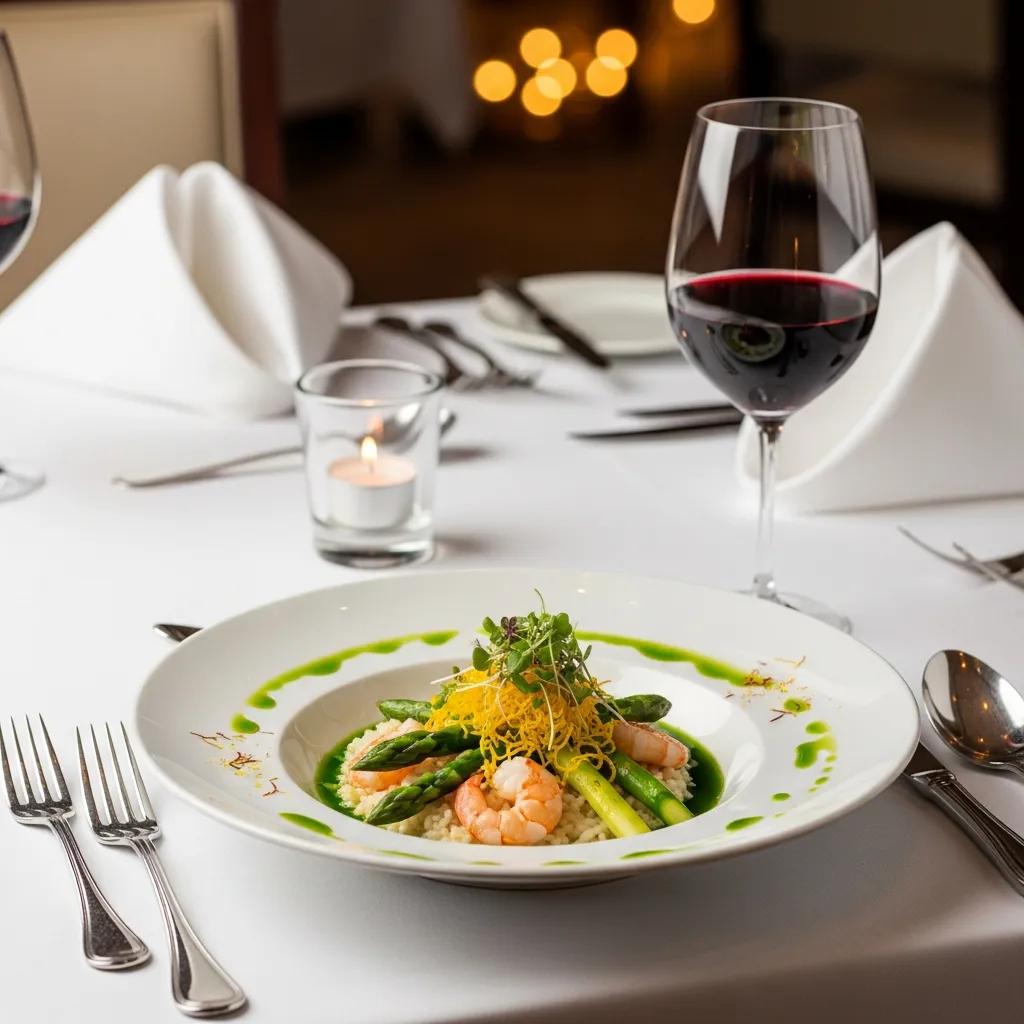
In Pasadena, our risotto stands apart by marrying omakase‑rooted curation with Western risotto technique. Courses evolve with the seasons and are plated with a Japanese eye for balance and restraint. Service focuses on timing, temperature, and subtle stagecraft so each risotto arrives at its ideal texture and visual harmony, experienced as part of a broader tasting sequence rather than a lone entrée. We use luxury ingredients like A5 Wagyu and caviar sparingly to create striking contrasts—creamy rice against concentrated garnishes—that linger in the memory. These experiential and ingredient‑driven choices define our approach and set expectations for diners seeking refined, seasonal flavors. Next, we highlight representative dishes by season that demonstrate these principles.
Which Seasonal Risotto Dishes Showcase Kaviar’s Culinary Expertise?
Our seasonal risotto lineup demonstrates how technique and premium ingredients combine to make distinct seasonal statements—from winter truffle and A5 Wagyu to spring asparagus with seared scallop. Each signature dish uses targeted rice handling, stock choice, and finishing touches so texture and flavor match the season’s produce and luxury accents. Below are representative concepts that illustrate our culinary range.
That side‑by‑side view shows how season, texture, and pairing inform our menu. The sections below unpack winter and spring exemplars with chef techniques and sensory detail.
What Are the Signature Winter Risotto Creations Featuring Truffle and A5 Wagyu?
Our winter risottos emphasize concentrated umami and aromatic lift, pairing thinly sliced A5 Wagyu with shaved winter truffle for a layered, indulgent course. The method uses a deeply reduced stock—often beef or bone‑forward—combined with precise rice timing so the grain keeps a slight bite while yielding a silk‑like sauce; we finish sparingly with butter or aged cheese for mouth‑coating richness. A5 Wagyu’s melting fat complements truffle’s volatile aromatics, producing an intense umami profile balanced by acidity in the pairing. We typically suggest fuller white wines or mature sakes to stand up to the dish’s weight. This winter approach shows how we calibrate texture and aroma for seasonal impact.
How Does Spring Inspire Asparagus and Scallop Risotto at Kaviar?
Spring risottos shift toward brightness and contrast, showcasing tender asparagus and perfectly seared scallops over a lighter shellfish or vegetable stock. Technique here is about restraint: minimal finishing fat, a clean aromatic stock, and exact timing so scallops are sweet and opaque with a golden sear while asparagus keeps a pleasant snap. Caramelized searing adds savory notes that play against creamy rice, and subtle acidity or fresh herbs lift the plate. Plating favors vertical elements and color contrasts so the season reads visually as well as on the palate. This spring approach provides a clear counterpoint to winter’s weight and leads into summer’s delicate seafood‑forward risottos.
How Does Kaviar Elevate Risotto with Luxury Ingredients Like Uni and Caviar?
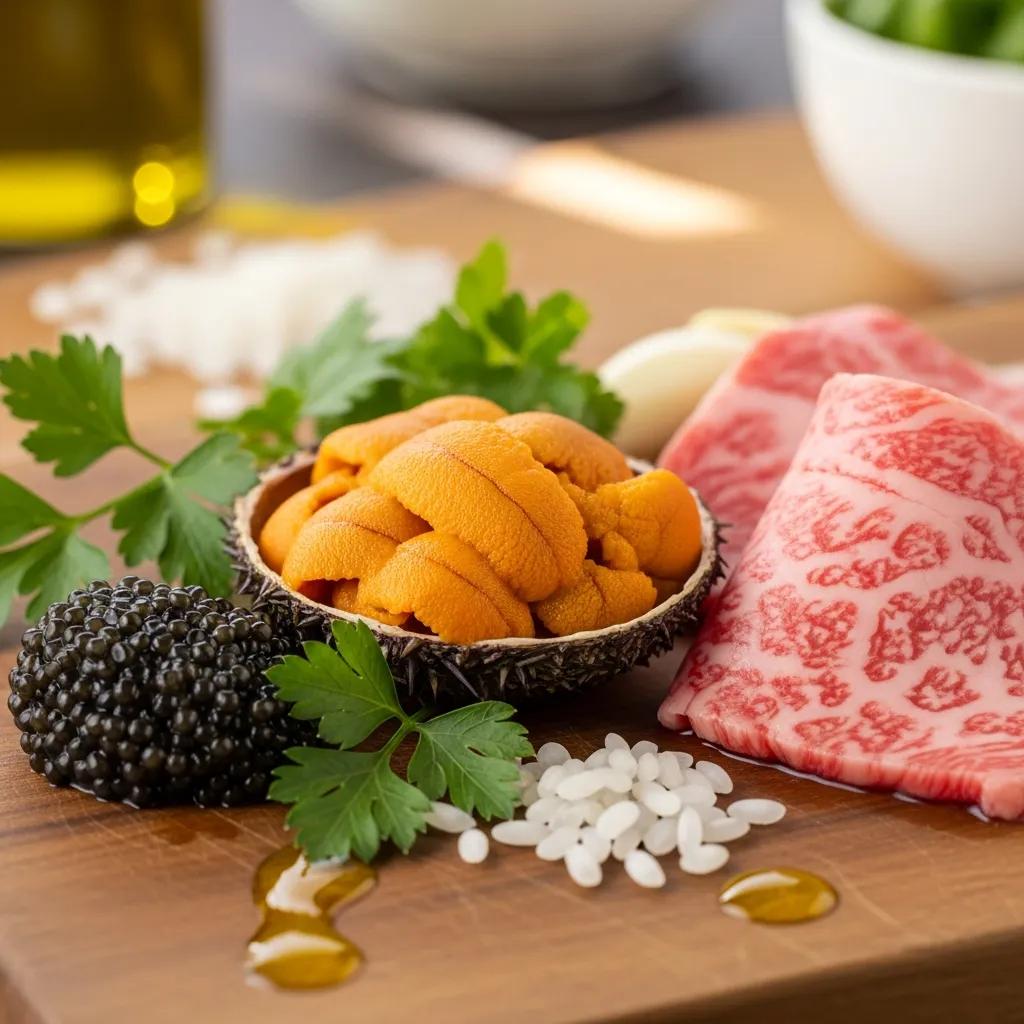
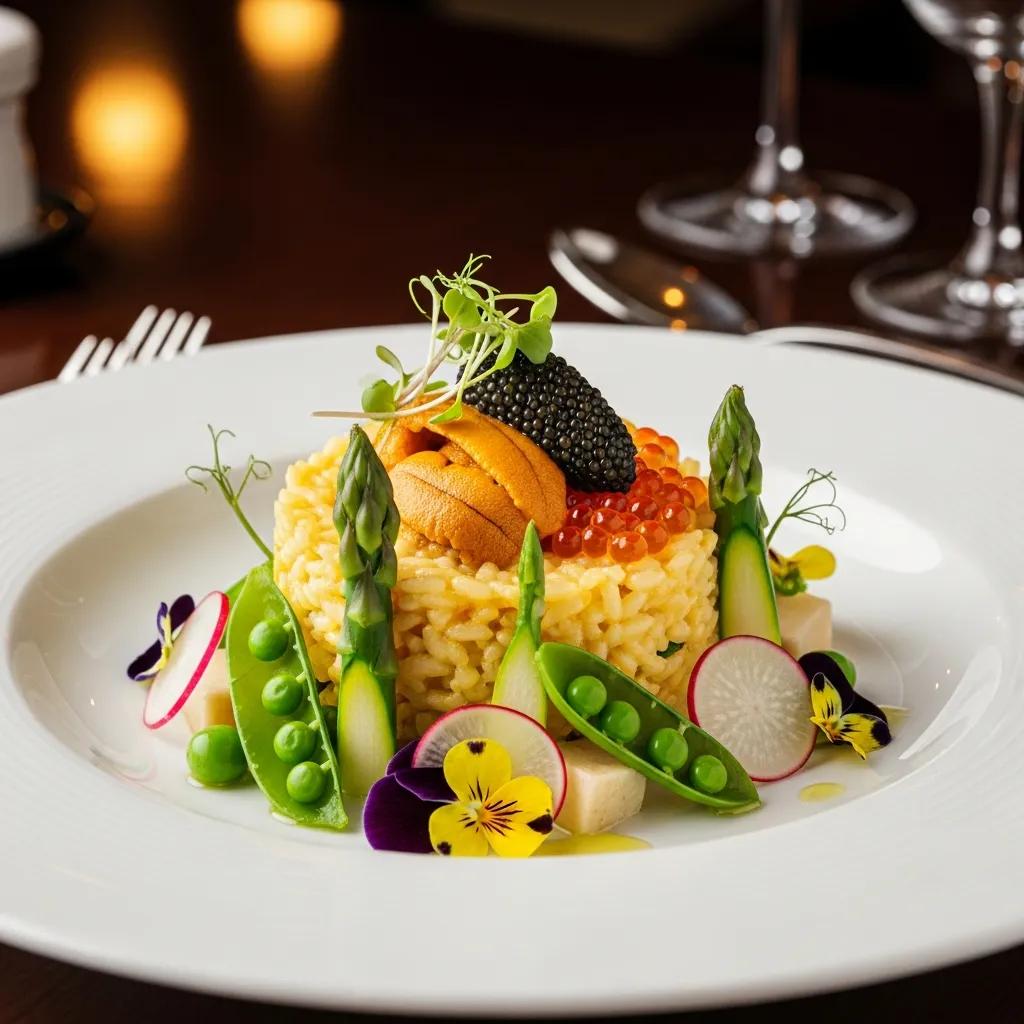
We elevate risotto by integrating ultra‑premium ingredients—uni and caviar among them—in ways that enhance texture and deliver focused flavor accents without overwhelming the base. Uni brings a creamy, oceanic umami that blends into the risotto; caviar offers saline pops and visual luster as a finishing garnish. Both are applied with restraint so their profiles remain distinct. Each ingredient has a deliberate role: uni deepens mouthfeel, caviar punctuates with briny contrast, and both rely on a restrained risotto foundation to be perceptible. The table below summarizes sources and culinary roles for these premium components in our seasonal risottos.
What Is the Flavor Profile of Summer Uni and Caviar Risotto?
Our summer uni and caviar risotto balances sweet, briny, and creamy notes: silky, sweet uni gives depth while caviar provides bright saline pops that affirm the dish’s sea‑forward identity. The risotto base stays intentionally light—often a delicate shellfish or dashi‑infused stock—so seafood flavors remain at the forefront and the rice supports rather than overpowers. Minimal citrus, microgreens, or a light herb oil introduce refreshing acidity and textural contrast between rich bites. We recommend mineral‑driven whites or chilled, delicate sakes that mirror the sea’s freshness. These flavor principles also guide our sourcing and supplier relationships to keep quality consistent.
The Japanese Influence on American Fine Dining
“The Japanese Turn” in Fine Dining in the United States, 1980–2020 traces how Japanese ingredients, techniques, and concepts reshaped American fine dining and highlights chefs who integrated those elements into their work.
The Japanese Turn in Fine Dining in the United States, 1980–2020, SH Yamashita, 1980
How Are Premium Ingredients Sourced and Featured in Seasonal Risotto?
We source premium components through specialty purveyors and curated supplier relationships, prioritizing traceability and seasonal availability so uni, caviar, and A5 Wagyu reach peak quality. For seafood we favor sushi‑grade suppliers and work within seasonal harvest windows to ensure sweetness and texture; for caviar and Wagyu we rely on trusted distributors to maintain grade and provenance. Our chefs plan menu windows around each ingredient’s prime moment and adjust portioning and plating to extend premium elements across a tasting. Quality control includes sensory checks and ongoing supplier communication so every seasonal risotto reflects the intended flavor identity. With sourcing covered, we turn to technique—how our methods create risotto’s hallmark creaminess.
What Is Kaviar’s Philosophy and Technique Behind Perfect Seasonal Risotto?
Our philosophy emphasizes ingredient‑first cooking, seasonal fidelity, and exacting technique to deliver risotto that is both creamy and restrained—aligned with fine‑dining standards and omakase‑adjacent curation. Technically, we favor Arborio for its starch profile, brief toasting and careful deglazing to build flavor, slow and warm stock additions to shape texture, and precise finishing to emulsify fats and cheese without heaviness. The desired result is a glossy, slightly al dente grain suspended in an emulsified sauce that clings to the spoon—our culinary objective for every seasonal iteration. The table below maps core techniques to their culinary purpose and expected sensory outcome.
Which Chef Techniques Create the Creamy Texture and Rich Flavors?
Our method combines the right rice (typically Arborio) with steady stock temperature and patient attention to coax starch from each grain while preserving structure. Rice is briefly toasted, deglazed—often with white wine or a light sake—then coaxed with hot stock, ladle by ladle, so starch releases gradually and an emulsified finish is achievable when we fold in butter or aged cheese off the heat. Timing is everything: finish too early and the texture is chalky; finish too late and the risotto becomes oversoft. We aim for a glossy emulsion that clings to each grain—an outcome of careful technique and restraint. These procedural details set the stage for pairing recommendations that complement the textures we create.
How Does Kaviar Pair Seasonal Risotto with Wine and Sake for a Complete Experience?
We pair risottos by balancing acidity, body, and umami weight with the dish: lighter shellfish or asparagus preparations pair with crisp, mineral whites or delicate sakes; truffle‑ or Wagyu‑forward courses call for fuller whites or aged sakes. Our pairing principles focus on contrast and enhancement—acidity to cut through creaminess, umami‑friendly beverages to amplify savory notes, and occasional effervescence to refresh the palate between rich bites. Examples include a citrusy, high‑acid white for spring scallop risotto and a medium‑bodied white or mature sake for autumn mushroom or winter Wagyu preparations. Glass service, temperature, and portioning are tailored to maximize aromatics and balance. Thoughtful pairing completes the tasting narrative and leads into practical reservation guidance.
How Can Diners Reserve Their Seasonal Risotto Experience at Kaviar Restaurant?
Because seasonal ingredients and our limited fine‑dining seating create demand, we recommend planning ahead to secure a spot for risotto‑forward services. Reservations are the best way to guarantee a seat and to note preferences or requests for seasonal items like A5 Wagyu, uni, or caviar. Tell us about desired seasonal components or allergies at booking so the kitchen can confirm availability and prepare appropriately. Early reservations also allow us to allocate premium ingredients across service and set the tasting flow so risotto can play its intended role. The next section breaks the booking process into simple steps you can follow.
What Are the Steps to Book a Table for Seasonal Risotto Fine Dining in Pasadena?
- Visit our reservations page to view available dates and service formats;
- Choose a date and time that aligns with the seasonal window for your desired dish;
- Add a note or special request indicating interest in seasonal risotto or premium ingredients so the kitchen can plan;
- Confirm guest count and any dietary restrictions to ensure we prepare accordingly.
Asking about upcoming seasonal highlights when you book helps confirm whether the risotto you want will be offered during your visit. Following these steps improves the chance of enjoying a specific seasonal risotto and helps our team deliver the intended experience. The section below explains why booking early matters for premium items.
Why Is Early Reservation Recommended for Kaviar’s Seasonal Risotto Creations?
Early booking matters because many premium items—A5 Wagyu, certain caviar varieties, peak‑season uni or wild mushrooms—are available in limited allocations and within tight sourcing windows. Our tasting format also allocates seats and ingredient portions strategically, so advance notice lets the kitchen plan courses and portion premiums across service. High demand for signature seasonal dishes and limited seating can make specific risottos unavailable on short notice. Reserving early also gives you the chance to share dietary needs or special requests so we can honor the seasonal intent of the dish.
What Are Common Questions About Seasonal Risotto and Fine Dining at Kaviar?
We often hear technical and seasonal questions about risotto texture, rice choice, and which ingredients work best at different times of year. Clear, direct answers help guests set expectations and better appreciate the dishes. Below we address core queries—what creates risotto’s creaminess and which seasonal ingredients perform best—so you can understand the kitchen’s technique and the seasonal logic behind our menu decisions.
What Makes Risotto Creamy and How Does Kaviar Achieve This?
Risotto’s creaminess comes from starch released by the rice—typically Arborio—combined with the emulsification of stock, fats, and cheese to make a cohesive, glossy sauce that coats each grain. We keep stock warm to maintain steady absorption, add liquid gradually to manage starch release, and finish off‑heat by whisking in butter or aged cheese to form an emulsion rather than relying on heavy cream. Gentle stirring encourages even release without breaking grains, and we season sparingly so the featured ingredient remains central. These consistent steps ensure each seasonal risotto hits a silky mouthfeel without collapsing into porridge.
Which Seasonal Ingredients Are Best for Gourmet Risotto?
Gourmet risotto benefits from seasonal choices that play specific flavor roles: winter favors truffle and richer proteins for depth; spring highlights asparagus and sweet scallops for brightness; summer showcases uni and delicate seafood for briny‑sweet notes; autumn leans on wild mushrooms and foraged vegetables for earthiness. Each ingredient is selected for how it complements rice’s starch and the desired texture—light broths for delicate seafood, reduced stocks for heartier proteins—so the risotto base supports and balances the seasonal component. Supplier relationships and harvest timing determine what’s feasible each season, and we design menu windows around those rhythms so diners can anticipate and plan.
- Seasonal Focus: We rotate dishes to showcase peak ingredients and honor provenance.
- Technique‑Driven: Controlled stock addition and finishing emulsification deliver the signature creaminess.
- Luxury Accents: Uni, caviar, and A5 Wagyu are used thoughtfully to elevate, not mask, flavors.
- Reserve early to secure seasonal items with limited sourcing windows and high demand.
- Ask about seasonal highlights when booking so we can confirm availability of your preferred risotto ingredients.
- Consider pairings—ask our sommelier or server for wine or sake suggestions that match the risotto’s weight.
These practical tips help you turn knowledge into a successful dining plan and ensure your risotto experience aligns with Kaviar’s curated approach.
This article has walked through the definition of seasonal risotto, representative dishes, the role of premium ingredients, key techniques, pairing logic, reservation guidance, and common questions—so you can see how seasonality, provenance, and technique come together in a refined risotto experience at Kaviar.
Frequently Asked Questions
What is the best time to visit Kaviar Restaurant for seasonal risotto?
The best time to visit depends on the ingredients you want to taste. Spring is ideal for asparagus and scallops; summer highlights uni and delicate seafood; autumn brings wild mushrooms; winter showcases truffle and A5 Wagyu. Each season offers distinct flavors and textures, so planning around those windows ensures you’ll taste produce at its peak. We also recommend booking early to secure seats and any preferred seasonal items.
How does Kaviar ensure the quality of its seasonal ingredients?
We maintain long‑standing relationships with local farms and specialty purveyors and prioritize sourcing ingredients at peak freshness. For seafood, we work with sushi‑grade suppliers and respect seasonal harvest windows to protect texture and flavor. Traceability and responsible sourcing are core to how we select ingredients for our seasonal risottos.
Can diners customize their risotto experience at Kaviar?
Yes. When you make a reservation, tell us about dietary restrictions, preferences for seasonal ingredients, or interest in premium items like A5 Wagyu or uni. We’ll do our best to accommodate requests so your tasting aligns with your tastes and any seasonal offerings.
What types of wines and sakes pair best with Kaviar’s risotto?
Pairings depend on the risotto’s weight and flavor. Lighter seafood or vegetable risottos suit crisp, mineral‑driven white wines or delicate sakes. Richer truffle or Wagyu courses benefit from fuller‑bodied whites or aged sakes that can stand up to umami intensity. Our staff can recommend pairings to match the dish you choose.
How often does Kaviar change its seasonal risotto menu?
We rotate our risotto offerings frequently to mirror ingredient availability and celebrate each season’s best. This deliberate rotation lets chefs highlight fresh produce and seafood, so visitors can expect new combinations throughout the year.
What is the significance of omakase-style plating in Kaviar’s risotto dishes?
Omakase‑style plating reflects our curated approach: each plate is thoughtfully composed to showcase ingredients and flavor. That visual narrative enhances the tasting experience and aligns with our philosophy of blending Japanese aesthetics with Italian technique, producing refined, memorable presentations.
Conclusion
Seasonal risotto at Kaviar is where careful sourcing, precise technique, and thoughtful plating meet. Each seasonal course showcases our commitment to the finest ingredients and deliberate execution so every bite reflects its moment. To experience these dishes, reserve a tasting seat and let us guide you through the season’s highlights. Visit our full menu and plan your reservation to taste these seasonal risottos firsthand.