





Mastering Emulsification: A Chef’s Guide to Stable Sauces and Refined Recipes
Emulsification is the deliberate dispersion of one liquid into another immiscible phase—most commonly oil into water—to produce a stable sauce that improves texture, aroma release, and mouthfeel. For chefs and serious home cooks, a working knowledge of the physical chemistry behind emulsions lets you control droplet size, stability, and flavor delivery whether you’re finishing a seared protein or brightening sashimi. This guide covers core principles, contrasts oil‑in‑water and water‑in‑oil systems, and catalogs the emulsifiers in regular use—from egg yolk phospholipids to contemporary hydrocolloids. You’ll find step‑by‑step techniques for making and rescuing emulsions, chef‑level troubleshooting for common failures, and a look at modernist applications such as foams and gels. Practical lists and targeted how‑to steps make these methods actionable in a professional or advanced home kitchen, with examples showing how emulsification elevates premium ingredients like A5 Wagyu and caviar without straying into speculation.
The Fundamentals of Emulsification in Gourmet Cooking
An emulsion is a fine dispersion of droplets of one liquid (the dispersed phase) within another continuous phase, stabilized by molecules that lower interfacial tension and form a protective layer. Emulsifiers adsorb at oil–water boundaries to prevent coalescence, while mechanical shear determines droplet size and distribution. The outcome is a more polished texture and predictable aroma delivery. Controlling the main variables—phase ratio, emulsifier choice, shear intensity, and temperature—lets cooks design sauces for stability, gloss, and mouthfeel. Below are the practical principles chefs rely on when planning emulsified elements for service.
Core emulsification principles used in gourmet kitchens:
- Control shear and droplet size: Finer droplets increase stability and create a silkier mouthfeel.
- Match emulsifier to phase ratio: Sufficient emulsifier prevents droplets from merging.
- Manage temperature: Viscosity and emulsifier performance shift with heat and cold.
- Add oil slowly: Gradual incorporation prevents overwhelming the continuous phase.
- Balance acid and salt: Seasoning alters electrostatic stabilization and flavor perception.
These principles guide practical decisions about agents and equipment, which follow for cooks seeking consistent stability and refined texture.
What Is an Emulsion and How Does It Work?
An emulsion forms when one liquid is dispersed as tiny droplets within another immiscible liquid and an emulsifier builds a stabilizing film at the interface to stop droplets from merging. In culinary examples—mayonnaise, hollandaise, vinaigrette—emulsifiers such as egg yolk phospholipids or proteins position at the oil‑water boundary, lowering interfacial tension and supplying steric or electrostatic barriers. The benefits are twofold: a uniform appearance and a medium that carries fat‑soluble aromas for amplified flavor. Because emulsions are dynamic—droplet collisions, Brownian motion, and gravity are always at play—understanding these forces helps a cook decide when to add stabilizers or change holding methods to preserve quality.
This molecular view sets up the next important decision: choosing the appropriate emulsion type for the dish.
Types of Culinary Emulsions: Oil‑in‑Water and Water‑in‑Oil
Culinary emulsions generally fall into two categories. Oil‑in‑water (O/W) emulsions disperse oil droplets in an aqueous matrix—think vinaigrettes and mayonnaise—offering lightness, pourability, and effective dispersion of acidic flavors, ideal for seafood and vegetables. Water‑in‑oil (W/O) systems—more akin to butter‑based sauces—are richer, coat proteins differently, and deliver extended sheen and mouth‑coating fat perception. The choice depends on desired texture, aroma delivery, and service temperature, and chefs adjust phase ratios and emulsifiers to steer a sauce toward brightness or weight.
Knowing these types clarifies which emulsifiers and process variables will best achieve the intended sensory profile.
Key Emulsifiers for Stable Gourmet Sauces
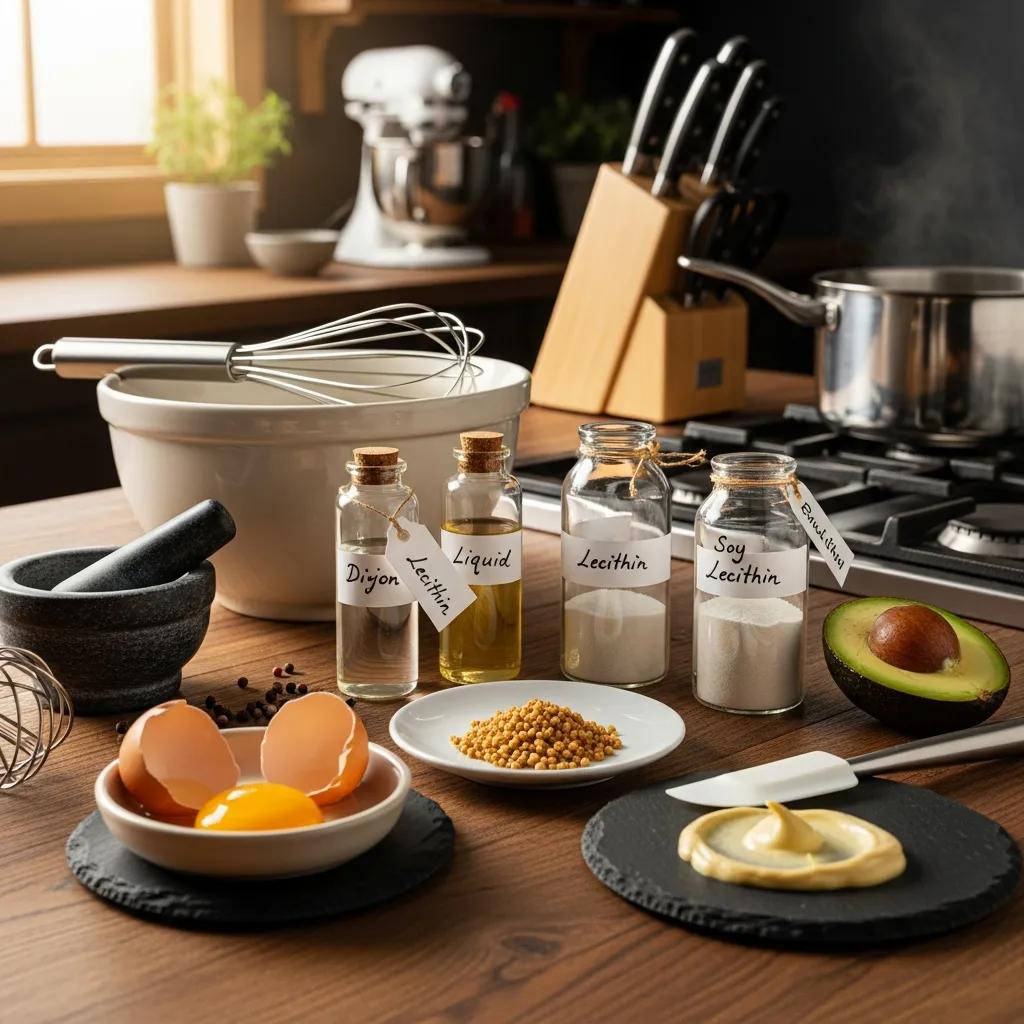
Choosing the right emulsifier is central to designing a stable, flavor‑appropriate sauce. Emulsifiers differ by mechanism, flavor impact, allergen status, and thermal tolerance. Natural options like egg yolk contribute phospholipids and proteins that combine structural stability with rich taste; mustard adds mucilage and acidity useful in vinaigrettes. Technical agents such as lecithin give neutral stabilization, while hydrocolloids (xanthan, agar, carrageenan) add viscosity or network support for vegan or modernist applications. The table below compares common emulsifiers and their typical professional uses so chefs can select the best fit for a dish.
Emulsifier comparison — practical uses and mechanisms:
This side‑by‑side helps decide when to use a flavor‑forward emulsifier or a technical/hydrocolloid approach; the next section lays out practical steps for implementation.
How Egg Yolks, Mustard, and Lecithin Stabilize Emulsions
Egg yolks stabilize emulsions through phospholipids—amphiphilic molecules that sit at the oil‑water interface—while yolk proteins form an additional protective layer. Mustard supplies mucilage to thicken the aqueous phase and acidity that can change protein charge for extra stability. Lecithin, from soy or sunflower, serves as a focused surfactant with little sensory impact, useful when ingredient clarity matters. Each agent involves tradeoffs—taste, allergen considerations, and heat sensitivity—that chefs weigh when pairing emulsifiers with delicate seafood or rich proteins.
These molecular behaviors inform dosing and process choices that are critical when producing stable sauces for service.
Plant‑Based Hydrocolloids in Modern Emulsification
Plant hydrocolloids like xanthan, agar, and carrageenan stabilize emulsions by increasing continuous‑phase viscosity or forming a gel network that limits droplet movement. In vegan and modernist kitchens they replace animal‑derived emulsifiers, delivering silkiness and body without egg and supporting foams or spherification. Practical notes: hydrate hydrocolloids correctly, dose carefully to avoid sliminess, and account for how salt and acid shift gelation thresholds. Chefs use these tools to extend hold times and stabilize components that must endure service or brief reheating.
Combining hydrocolloids with surfactants expands textural control for precise plating outcomes.
Mastering Stable Sauce Techniques for Gourmet Emulsions
Reliable emulsification is process driven: bring ingredients to target temperatures, pick equipment to achieve the desired shear, and measure ratios while adding oil slowly into the continuous phase. Good technique yields smaller droplets and greater stability; final adjustments—tweaking acidity or adding emulsifier—rescue borderline preparations and refine balance. A whisk gives gentle shear for small finishes; an immersion blender or commercial mixer produces finer droplets for longer holds. The table below is a compact reference chefs use to alter stability predictably during service.
Quick technique reference: adjust temperature, shear, and ratios when scaling or troubleshooting emulsions.
This quick guide supports real‑time decisions on a busy pass. Below is a straightforward workflow for executing and maintaining emulsions consistently.
- Prepare and measure phases: bring components to the target temperature and confirm oil‑to‑water ratios.
- Activate the emulsifier: whisk egg yolks or fully hydrate hydrocolloids before use.
- Begin slow oil addition: introduce oil dropwise or in a thin stream while maintaining constant shear.
- Increase flow as the emulsion forms: once stable, add oil more steadily and watch texture.
- Finish and season: balance acidity and salt, and add a touch more emulsifier if extra hold is required.
These steps are standard in professional and advanced home kitchens; practice yields repeatable results under service conditions. High‑end kitchens scale these same principles with consistency controls and trained staff to reproduce outcomes reliably.
At premium Japanese restaurants, chefs translate these techniques into delicate finishing emulsions that complement prized proteins and perform under the timing and heat of service.
Step‑by‑Step Methods to Create and Maintain Stable Emulsions
Start by defining the desired final texture and choose an emulsifier system that supports that goal—egg‑lecithin blends for creamy aiolis, xanthan‑ or lecithin‑based systems for vegan dressings. Measure oil‑to‑water ratios precisely—small changes have big effects—and bring phases to compatible temperatures to optimize viscosity. Apply steady shear while adding oil: a constant whisking motion or a controlled immersion blender reduces initial droplet size. Finish by adjusting acid, salt, and viscosity agents to lock texture and flavor, then test holding by briefly storing at service temperature to confirm no separation.
This workflow minimizes error and prepares sauces to withstand plating and service demands.
How Temperature and Mixing Shape Emulsion Stability
Temperature governs viscosity: warming the continuous phase lowers viscosity for easier dispersion and faster droplet formation; chilling increases viscosity to help suspend droplets but can impede initial mixing. Mixing method sets shear and droplet size—a whisk provides laminar shear ideal for small‑scale finishing, while high‑shear mixers or immersion blenders create very fine droplets for longer holds and larger volumes. Practical tips: gently warm egg‑based emulsions before adding butter for hollandaise, and chill vinaigrettes intended for extended hold; always tailor technique to the emulsifier’s thermal tolerance. These considerations lead directly into troubleshooting guidance below.
Common Causes of Emulsion Breaks and How to Prevent Them
Emulsions most often fail because of incorrect phase ratios, sudden temperature changes, insufficient emulsifier, or adding oil too quickly so the interfacial film can’t keep up. Rapid diagnosis points to targeted remedies—re‑emulsifying into a fresh base, adding a stabilizer, or adjusting temperature and shear. Preventive practices include mise en place with measured ingredients, training staff on holding times and gentle handling, and batching finishing quantities to minimize long holds. The list below summarizes causes and immediate fixes line cooks use during service to rescue sauces before they reach guests.
Common causes and immediate fixes:
- Incorrect ratios: Start a fresh egg or aqueous base and slowly whisk the broken sauce into it.
- Temperature shock: Bring components to compatible temperatures and re‑emulsify gently.
- Insufficient emulsifier: Add a small amount of lecithin, mustard, or an extra yolk and reblend slowly.
- Overloading oil: Slow the oil addition and rebuild the emulsion with increased shear.
These triage steps restore serviceable sauces quickly; embedding them in SOPs reduces waste and guest‑visible errors and supports consistent quality.
Signs of a Broken Emulsion and Practical Fixes
Visual cues of a broken emulsion include an obvious oily sheen, pooled oil, or a curdled, separated texture; a broken sauce will feel grainy or watery and lack cohesion. Immediate fixes: create a fresh stabilizing base—whisked egg yolk, mustard, or a little warm water—then slowly incorporate the broken sauce with steady shear until droplets re‑integrate. For stubborn cases, re‑blend at high speed into a new base or add a hydrocolloid to raise viscosity. After repair, assess aroma, mouthfeel, and sheen to confirm the emulsion’s flavor‑carrying ability has been recovered.
These repair techniques are practical for service and help maintain consistent plate quality under pressure.
Best Practices to Maintain Emulsion Stability in the Kitchen
Standardize ratios and target temperatures in recipe cards to ensure reproducibility, and finish in small batches at the pass to limit time at holding temperatures that encourage separation. Train line cooks to spot early destabilization and give them clear remedial steps—creating a rescue base or adjusting viscosity—so sauces are fixed before plating. Match equipment to production needs: whisking for delicate finishes, controlled high shear for volume. Monitor ingredient freshness and storage—oxidized oils or degraded emulsifiers perform poorly—and schedule brief calibration checks for blenders and mixers to keep shear consistent across shifts.
These routines reduce service failures and preserve the textures chefs intend, now applied to how emulsification is used within a fine‑dining Japanese context.
Emulsification in Gourmet Japanese Cuisine at Kaviar Restaurant
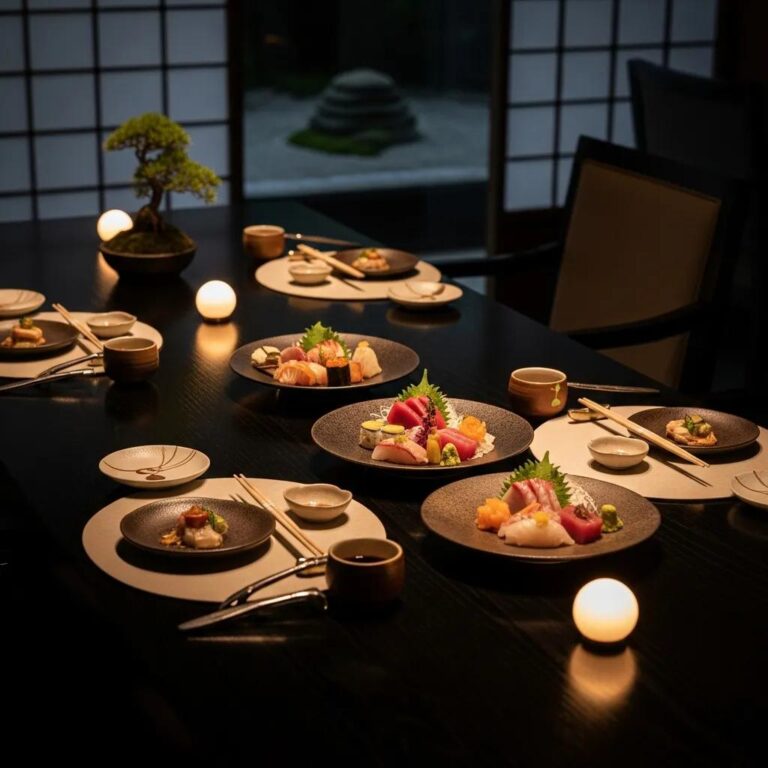
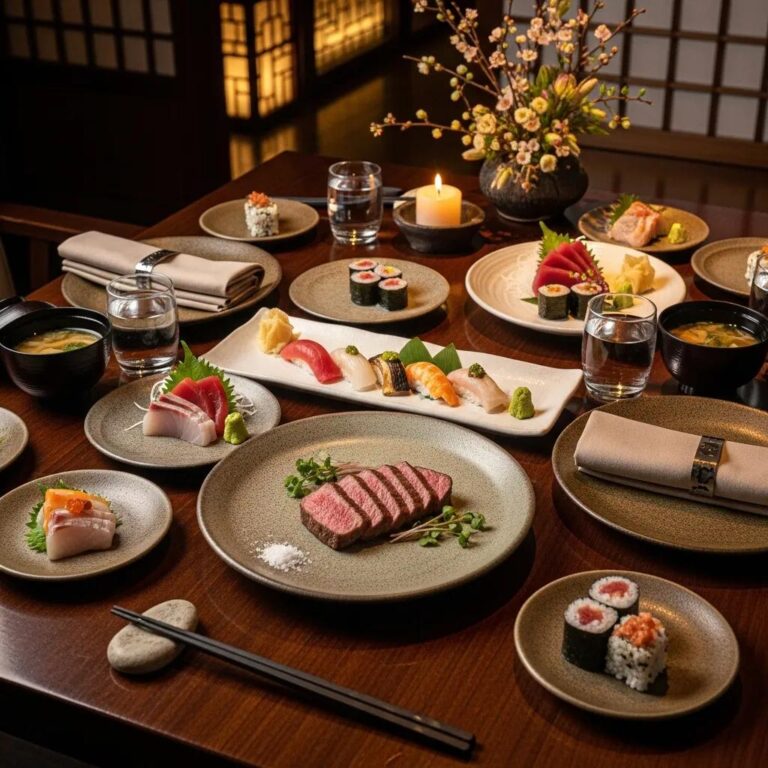
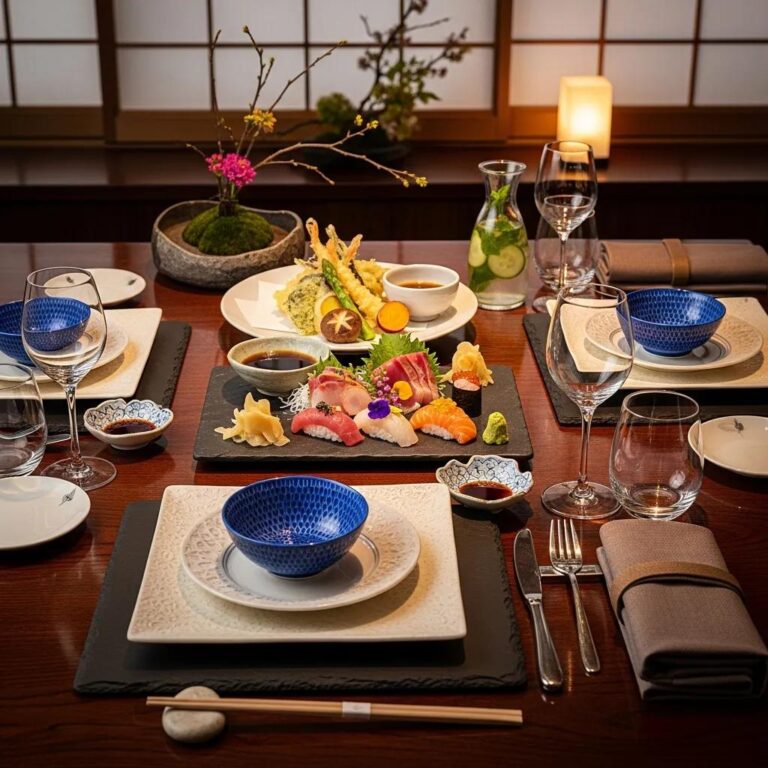
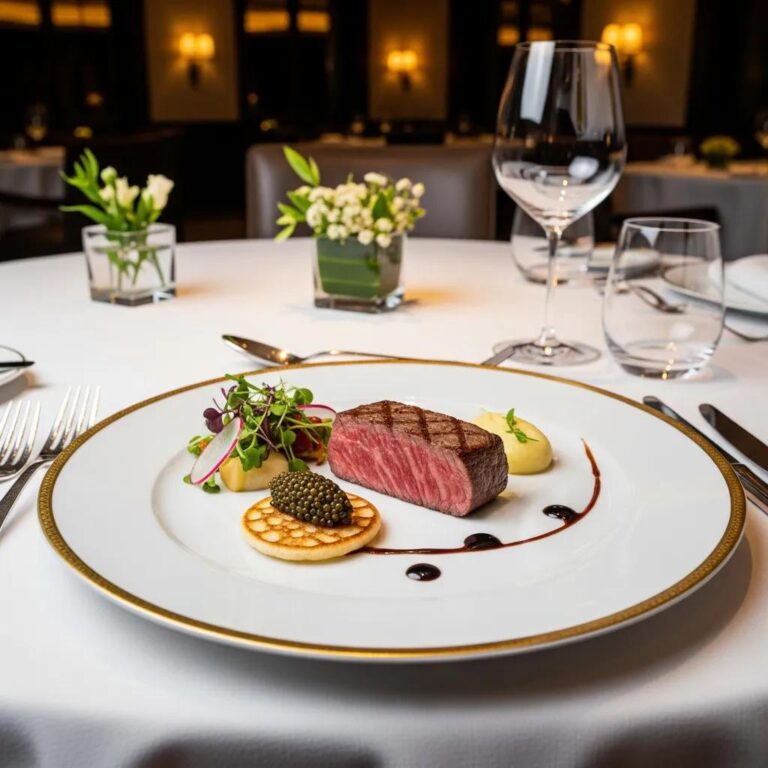
At Kaviar Restaurant, emulsions are used to marry delicate seafood with subtle fat carriers and to finish premium proteins so each bite balances richness and acidity. Chefs favor light oil‑in‑water emulsions and restrained aiolis to complement sushi and sashimi, while richer emulsified reductions and silky butter‑like sauces harmonize with A5 Wagyu without obscuring the beef’s quality. Our emulsions prioritize silkiness and lift rather than weight, preserving the visual refinement and flavor clarity expected in omakase and plated courses.
The table below maps common components to the role emulsions play and the sensory benefits they provide in a high‑end Japanese setting.
This mapping illustrates how targeted emulsions elevate premium ingredients while maintaining balance and refinement on the plate.
Signature Kaviar Dishes That Feature Advanced Emulsification
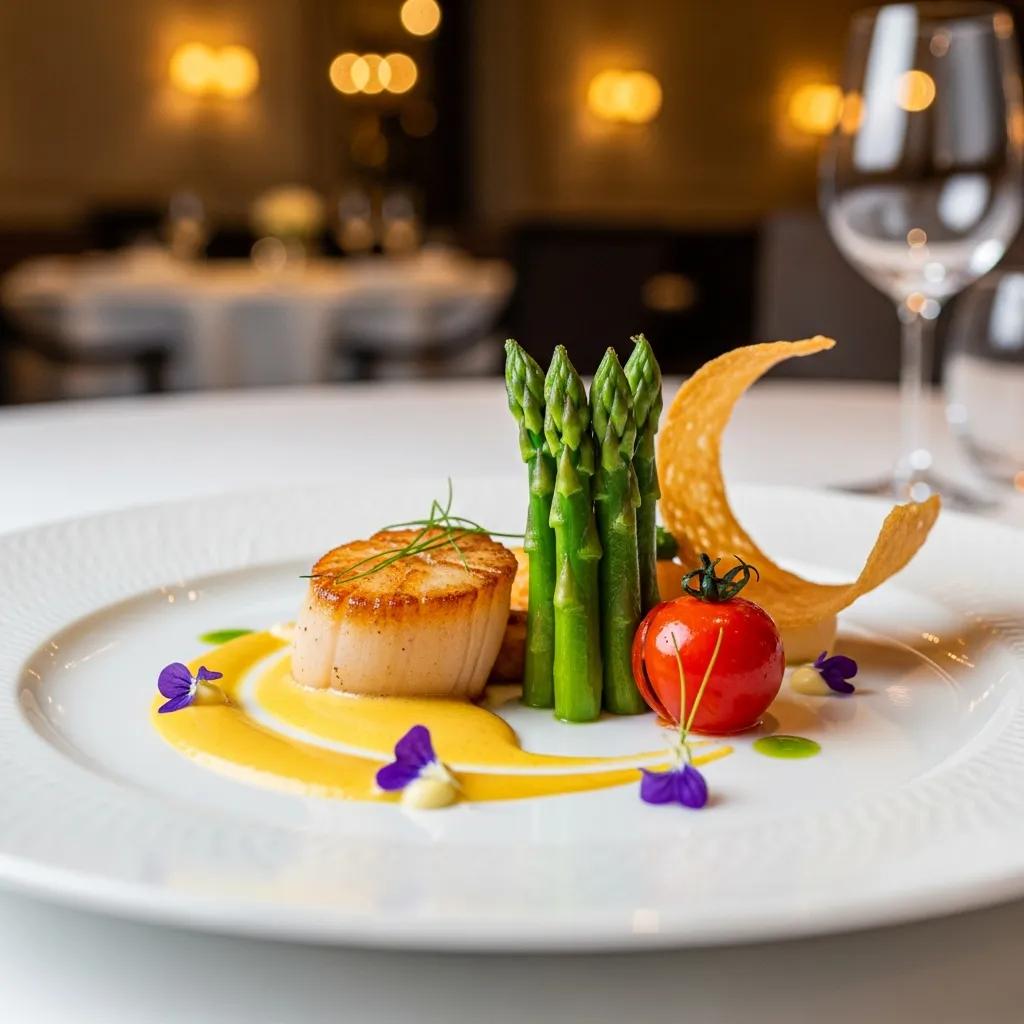
Signature plates at upscale Japanese restaurants typically use emulsions as subtle finishing touches rather than heavy garnishes. Examples in professional practice include toro tartare finished with a delicate caviar emulsion and seared scallops accented by a shoyu‑infused cream emulsion. In these applications, emulsions integrate oil‑soluble flavors, add a glossy mouthfeel, and deliver measured fat so umami is amplified without masking the ingredient. The objective is always subtle enhancement: a spoonful of emulsion should refine texture and aroma while keeping the protein centerstage. Achieving this requires precise shear and seasoning control to hold both stability and sensory clarity through service.
These uses show emulsification as a finishing tool that elevates perceived luxury through texture and balance.
How Emulsified Sauces Improve A5 Wagyu and Caviar Dishes
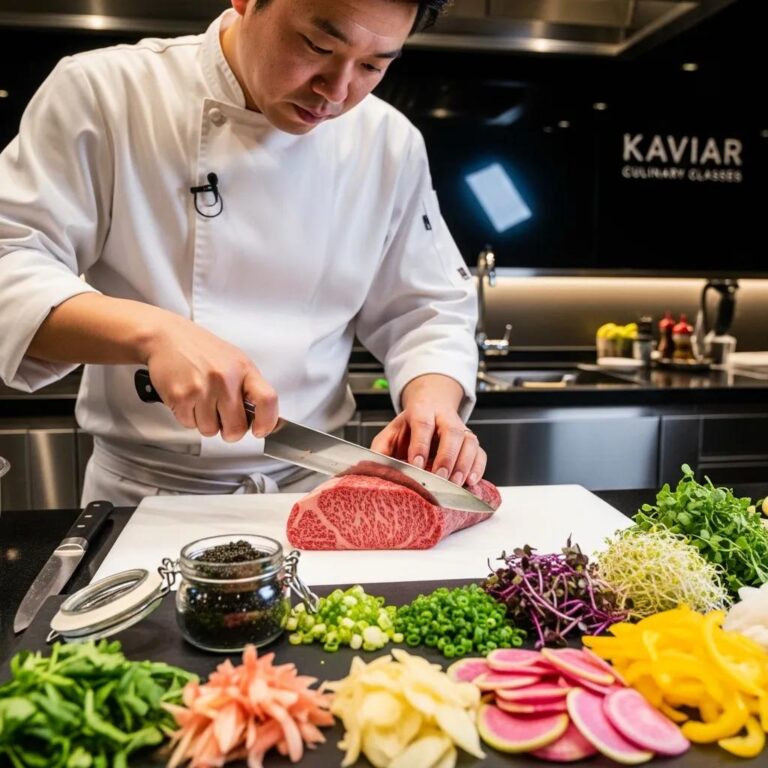
Emulsified sauces change how fats and volatile compounds are dispersed, enabling even coating and improved flavor release across each bite. With fat‑rich proteins like A5 Wagyu, a silkier emulsion spreads flavor without adding cloying weight. For caviar, a restrained emulsion can temper brininess and introduce a complementary creamy note that accentuates rather than competes with the roe. Mechanically, emulsions carry fat‑soluble aromatics and control mouth‑coating, creating a luxurious, lingering finish associated with premium dining. This textural synergy—where emulsions manage fat distribution and aroma delivery—supports elevated tasting experiences in fine‑dining settings.
These sensory principles are why emulsification is central to finishing and pairing strategies in top kitchens.
Advanced Emulsification Techniques in Modernist Cooking
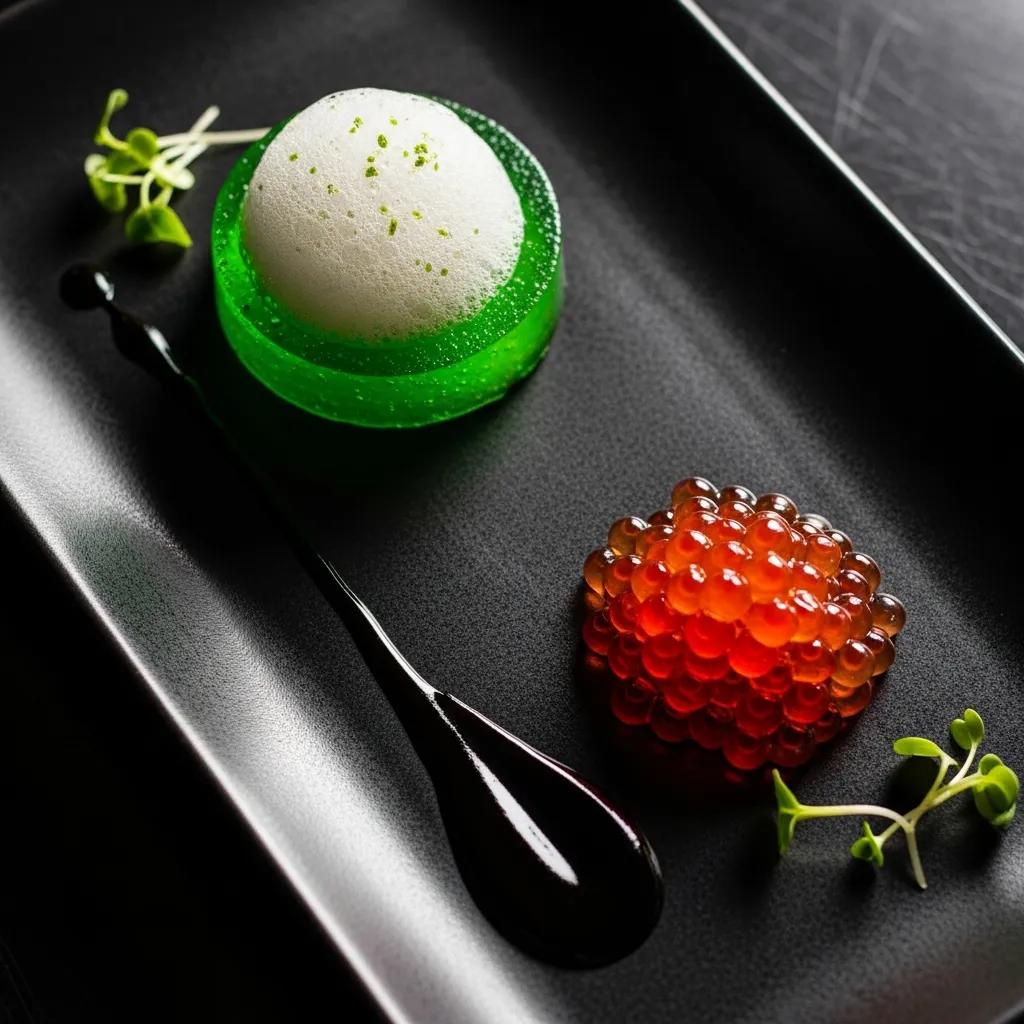
Modernist approaches extend emulsification into controlled dispersions of gas and gel networks to create foams, gels, and spheres that add new textural contrasts and visual drama. Foams trap gas in a stabilized liquid to deliver an airy aroma release; gels use hydrocolloid networks to hold liquid phases for concentrated flavor bursts; spherification encases liquid cores in delicate membranes for a striking textural pop. These methods reuse emulsifier and hydrocolloid science to shape components that transform plating and tactile experience.
Exploring these techniques shows how chefs treat texture as a principal design element rather than a background trait.
Creating Foams, Gels, and Spheres Through Emulsification
Foams form when gas is incorporated into a stabilized liquid—often aided by proteins or emulsifiers—so bubbles remain intact through service, releasing aroma upon contact. Gels arise when hydrocolloids build a polymer network that traps water or oil, allowing quenelles or slices that hold shape and release flavor when broken. Spheres come from spherification, where controlled gelling (calcium or alginate chemistry) produces a thin membrane around a liquid core. Each technique depends on balancing viscosity, stabilizer concentration, and careful handling to deliver the intended texture and release profile on the plate.
These modernist tools expand emulsification from sauce stabilization to sculpting interactive textures that surprise and delight diners.
Emerging Emulsifiers and Innovations in Molecular Gastronomy
Recent trends emphasize plant‑based emulsifiers and engineered hydrocolloids that allow vegan and sustainable versions of classic emulsions without sacrificing mouthfeel. Progress in microencapsulation and controlled‑release techniques lets chefs time aroma delivery more precisely across a tasting sequence. Industry reports from 2023–2025 highlight growth in neutral lecithin isolates and tailored hydrocolloid blends designed for specific sensory targets, broadening options for texture design. As diners demand ingredient transparency and refined texture, these innovations enable chefs to deliver both sustainable sourcing and elevated mouthfeel.
These emerging agents point toward continued experimentation where texture and ingredient integrity remain top priorities.
For reservations or to experience emulsified finishes paired with premium A5 Wagyu and caviar, contact Kaviar Restaurant at 70 N Raymond Avenue, 250, Pasadena, CA or call (626) 605-0330 to inquire about availability.
- Practice small‑batch emulsions: Rehearse ratios and shear for consistent results before service.
- Document rescue protocols: Ensure every cook knows the steps to re‑emulsify quickly.
- Invest in the right equipment: Match tools to production volume for reproducible droplet sizes.
- Choose ingredient‑forward emulsifiers: Pick agents that complement, not compete with, premium proteins.
These routines, combined with strategic emulsifier choices, ensure sauces deliver the sensory precision expected in luxury culinary settings.
Frequently Asked Questions
What common mistakes should I avoid when emulsifying sauces?
Typical mistakes include adding oil too quickly, which overwhelms the emulsifier and causes separation; using incorrect phase ratios; and subjecting components to temperature shock. To prevent these, measure precisely, add oil slowly, and make sure all ingredients are at similar temperatures before starting.
How do I troubleshoot a broken emulsion at home?
If an emulsion breaks, stay calm. Create a fresh base—whisk an egg yolk or use mustard—then very gradually whisk the broken sauce into it. If that fails, try a high‑speed blender or add a small amount of warm water to help re‑integrate the phases. Always taste and check texture after repair to confirm quality.
What advantages do modernist techniques offer in emulsification?
Modernist methods like foams and spherification introduce new textures and refined flavor delivery. Foams provide an airy vehicle for aromas, while gels and spheres concentrate and release flavors in surprising ways. These techniques expand creative options for presentation and textural contrast beyond basic sauce stabilization.
How do I choose the right emulsifier for a recipe?
Choose based on desired flavor, texture, and dietary needs. For rich, flavorful emulsions use egg yolk or mustard. For a neutral profile, opt for lecithin. For vegan preparations, consider hydrocolloids like xanthan or agar. Always consider how the emulsifier interacts with other ingredients and cooking temperatures.
Are emulsification principles useful outside the kitchen?
Yes. Emulsification principles apply in cosmetics, pharmaceuticals, and coatings to create stable mixtures of immiscible liquids. Understanding interfaces, stabilizers, and shear helps formulators achieve consistent texture and stability across industries—much as chefs do with sauces and dressings.
How important is temperature in making emulsions?
Temperature is crucial because it affects viscosity. Warmer temperatures lower viscosity and make oil dispersion easier; cooler temperatures help suspend droplets for longer hold. Avoid extreme differences between components to prevent breaks and tailor temperature to the chosen emulsifier’s tolerance.
How can I use emulsification techniques in everyday cooking?
Start with simple emulsions—vinaigrettes and mayonnaise—and practice adding oil slowly while whisking. Experiment with different emulsifiers and ratios to find what suits your taste. As you gain confidence, apply these methods to sauces for proteins to elevate flavor and texture in everyday meals.
Conclusion
Mastering emulsification elevates both texture and flavor, transforming dishes into more cohesive and refined experiences. By understanding core principles and choosing the right emulsifiers, chefs and serious cooks can create stable sauces that enhance premium ingredients like A5 Wagyu and caviar. Embrace these techniques to sharpen your craft and present dishes with greater precision and balance. Explore our resources and practice the methods here to advance your culinary repertoire.