




Formal Table Settings: A Practical Guide to Fine‑Dining Etiquette
A formal table setting is a considered arrangement of plates, flatware, glassware and linens designed to support a multi‑course meal, clarify service order, and lift the overall dining experience. In this guide we break down how formal place settings work, why intentional placement matters in fine dining, and how precise layouts help with pacing, presentation and guest comfort. If you’ve ever wondered where to place a charger, which fork to use first, or how stemware fits into the sequence, this article answers those questions with clear rules, practical examples and easy reference charts. You’ll find the essential components of a formal setting, step‑by‑step setup tips for plates and glassware, napkin and bread etiquette, and how multi‑course sequencing affects what’s pre‑set vs. what’s brought in. We also cover Japanese adaptations—like chopstick placement and sake service—using Kaviar Restaurant’s signature items as contextual examples that illustrate the principles without distracting from the how‑to guidance. Continue for actionable steps and compact tables you can use as quick reference during service.
What Is a Formal Table Setting and Why It Matters
A formal table setting places plates, utensils, glasses and linens in a deliberate order that follows the meal’s course progression so every item is easy to reach when required. The arrangement typically follows an outside‑in rule for cutlery and a left‑to‑right or triangular grouping for stemware, which together streamline service and visually cue the next course. Beyond utility, formal settings elevate perceived value—consistent spacing, quality chargers and polished flatware frame each dish and set shared expectations between servers and guests. Understanding these basics helps hosts and restaurants design a setting that balances aesthetics, practicality and cultural nuance. Below we list the physical elements you’ll find at a formal place and explain the role each plays.
Core Components of a Formal Place Setting
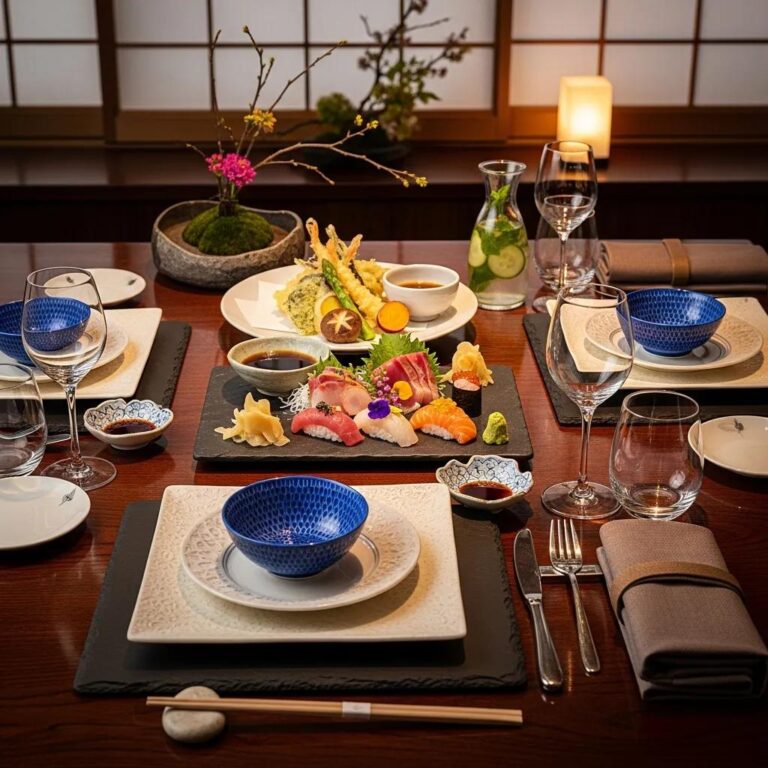
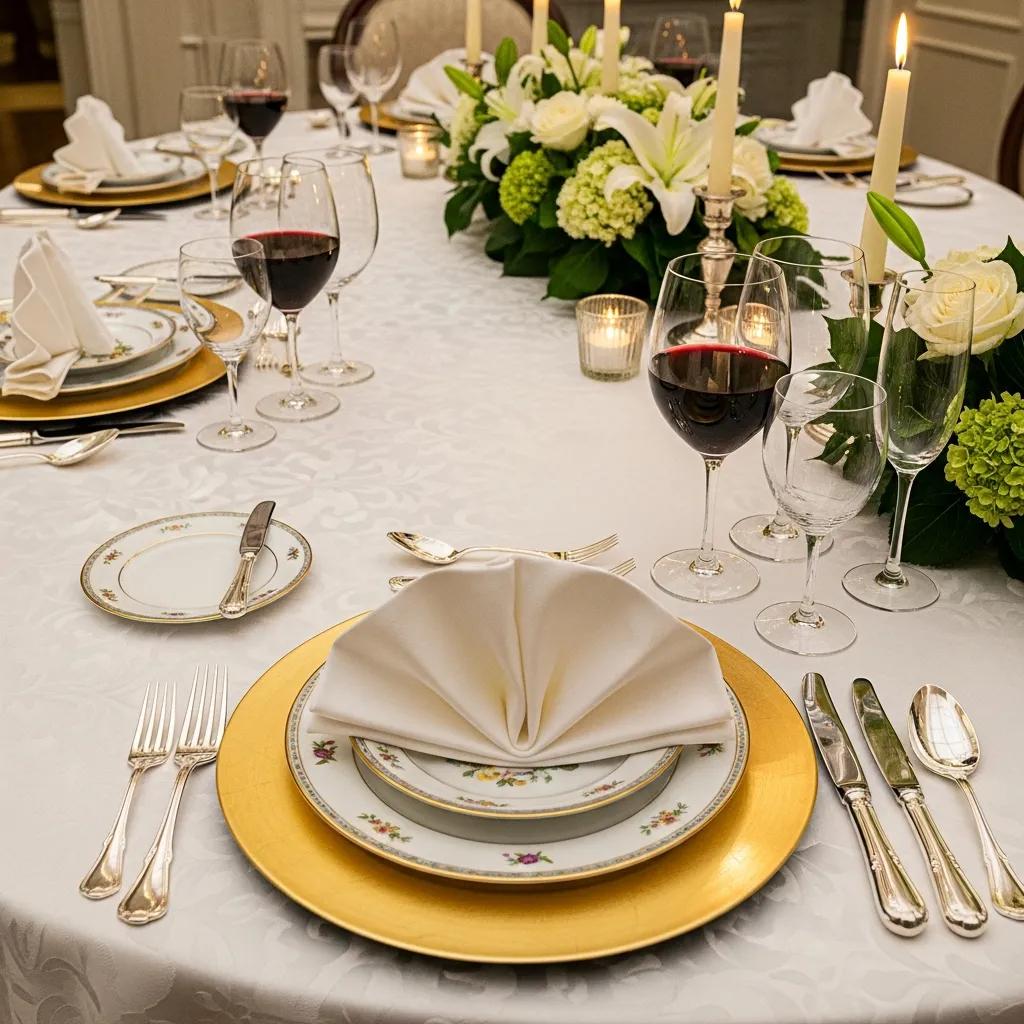
A standard formal place setting includes a charger (or service plate), dinner plate, salad plate, bread plate, napkin, an ordered sequence of forks and knives, spoons for soup or dessert, and multiple glasses arranged above the knives. Each piece serves a purpose: the charger frames early courses, forks sit left in order of use, knives and spoons sit right with blades facing inward, and the bread plate rests at upper left with its butter knife placed horizontally. When these elements are laid out with consistent spacing and alignment they create a visual grid that supports service choreography and guest comfort. The short list below highlights a few key roles you’ll see on a formal table.
- The charger anchors the setting and is usually removed before or during the main course depending on service style.
- Forks on the left are arranged outside‑in according to course order so diners naturally reach for the correct utensil.
- Knives and spoons sit to the right with blades facing inward for safety and uniform presentation.
With those pieces in place, formal settings help direct attention to the food while minimizing confusion and table traffic.
How a Formal Setting Elevates Fine Dining
Formal table settings create visual rhythm and consistent spacing that frame each plate and help servers maintain timing. A thoughtful layout places signature ingredients—delicate seafood or richly marbled beef—at the center of attention, surrounded by coordinated stemware and linens that reinforce the meal’s tone. Functionally, pre‑placed items reduce traffic, mark course transitions, and ensure utensils are available without interrupting service. The result is a smoother flow, a heightened impression of quality, and an environment where guests can focus on the food and company. Below we show step‑by‑step placement for dinnerware, silverware and glassware to achieve that outcome.
How to Arrange Dinnerware, Silverware and Glassware Correctly
Correct placement follows simple functional rules: center the plates, position utensils in order of use from the outside in, and group glassware above the knives. These conventions reduce guesswork for diners and let servers clear and replace pieces cleanly, preserving a steady service cadence. Consistent application maintains symmetry, prevents crowding and preserves the visual balance important in formal dining. The following subsections cover charger and plate placement, utensil positioning with a compact reference table, and glassware layout best practices.
Placement of Plates and Charger Plates
A charger sits beneath the first plated course as a decorative base and is typically centered with roughly two inches between adjacent place settings to allow comfortable movement. Service plates or soup bowls are placed on the charger for early courses and are removed before the main course unless the restaurant’s service style calls for leaving it until later—timing should follow server cues. Salad plates or bread plates are positioned above the forks or to the left upper quadrant, aligned with the charger edge for a neat top‑down presentation. Proper stacking and removal timing help keep plates warm and aid the meal’s pacing, which leads into the outside‑in rule for silverware below.
Fork, Knife and Spoon Placement
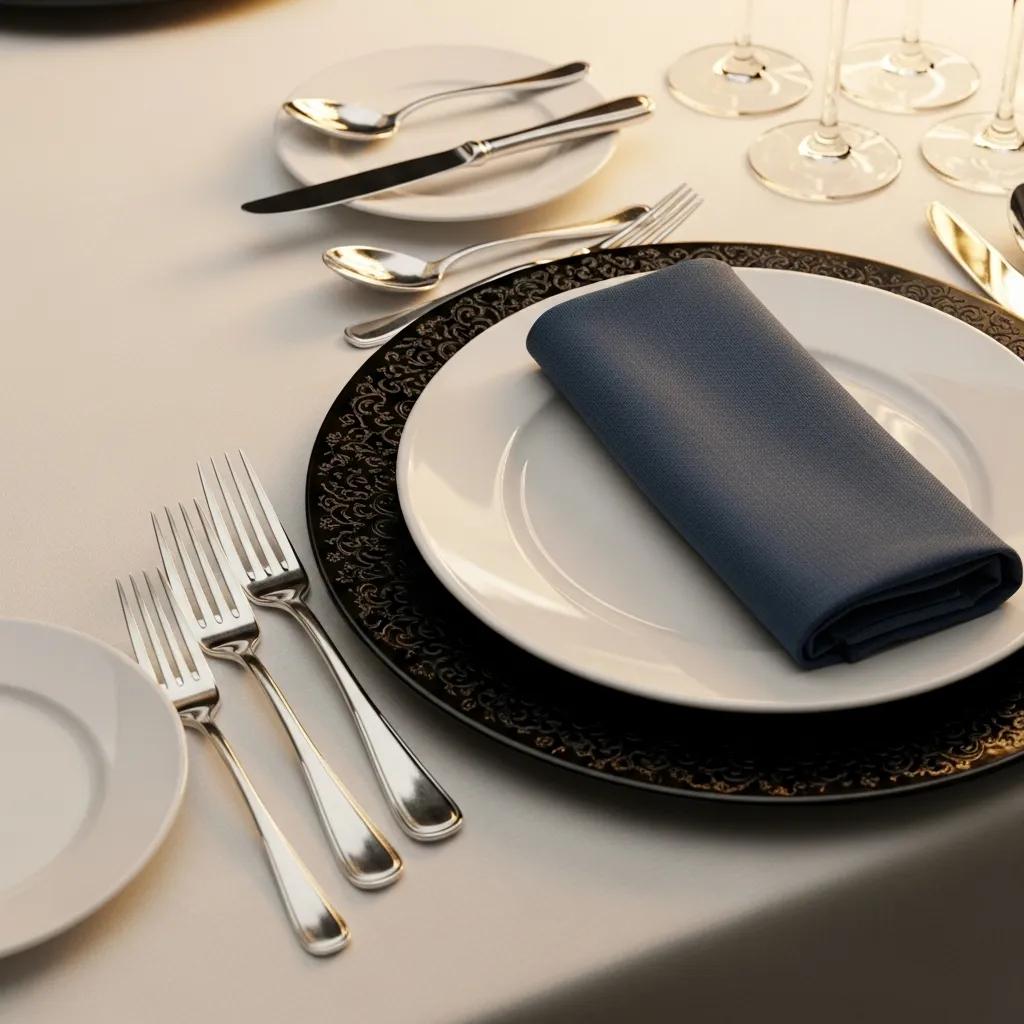
Utensils follow the outside‑in principle: the fork or spoon used first sits furthest from the plate, progressing inward toward the utensil for the main course. Knife blades face the plate for safety and consistency; specialty pieces—fish forks, oyster forks—sit outside the main‑course utensils when required. The table below maps common utensils to their placement and typical use in a Western‑influenced formal setting so you can plan what to pre‑set and what to bring with each course.
This mapping removes ambiguity for guests and helps hosts decide which pieces to pre‑place versus stage in during service.
Where to Position Water, Wine and Champagne Glasses

Glasses typically form a cluster above the knives: the water glass sits closest to the diner, followed by white wine, red wine and then champagne, or arranged as a slight triangle for reach and stability. Taller red‑wine stems sit behind shorter white‑wine glasses to preserve sightlines and reduce tipping risk; stem profile and bowl volume influence pairing and aeration. Leave roughly one to two inches between stems to prevent clinking and maintain an orderly look while allowing servers to refill discreetly. Thoughtful glass placement complements the flatware and supports sequential wine service without overcrowding the setting.
Essential Formal Dining Etiquette
Formal dining etiquette centers on timing, discreet utensil use, respectful handling of shared items and proper napkin use to keep the table clean and composed. These basic practices prevent awkward moments and let service staff coordinate plating and clearing without interruption. Key rules include when to unfold and replace napkins, standard bread‑and‑butter protocol, and waiting for the host or server cue before beginning. The sections below offer practical napkin folding guidance and clear rules for bread plates and butter knives so hosts and guests feel confident throughout the meal.
Napkin Placement and Folding for Formal Occasions
Napkins are usually placed on the charger or to the left of the forks before guests are seated; once seated, unfold the napkin and lay it on your lap, returning it to the left of your plate when finished. For formal events choose simple, elegant folds—a flat rectangle or a loose pocket fold—for restraint and practicality; elaborate folds are best reserved for decorative displays. Avoid tucking napkins into clothing or using them to vigorously wipe the face—blot and dab as needed. Proper napkin use preserves the table’s presentation and signals readiness for the next course.
Bread Plate and Butter Knife Protocol
The bread plate sits at the upper‑left of the main setting with the butter knife laid horizontally across it, blade facing inward and handle angled for easy reach. When buttering, tear an individual portion and spread butter on your own plate rather than returning a used piece to a shared basket to prevent cross‑contamination. Servers typically replenish bread discreetly; guests should avoid using main cutlery to spread butter unless a dedicated spreader is provided. These small habits keep the table tidy and set clear expectations for multi‑course service.
Setting a Formal Table for Multi‑Course Meals
Multi‑course settings balance what’s pre‑placed with what servers will add between courses. Common practice is to pre‑set utensils and glassware needed for the first one or two courses and bring specialty pieces as required. A practical pre‑set includes the charger, main dinner fork and knife, a water glass and one versatile wine glass; additional stemware and specialty utensils arrive with later courses to avoid clutter. Servers remove outer utensils after each course and introduce dessert flatware shortly before dessert, preserving the outside‑in logic so diners always use the nearest utensil first. The compact table below maps common courses to typical utensils and glassware for easy planning.
Sequential Placement: Appetizer to Dessert
For sequential placement, pre‑set neutral essentials—chargers, main dinner fork and knife, a water glass and one wine glass—then add or replace soup spoons, salad forks or extra stems as those courses arrive. Chargers may be removed after the appetizer or before the main depending on the service style; dessert utensils are often presented with the dessert plate to avoid premature use. Servers remove outer pieces between courses to reveal the next required utensil, keeping the outside‑in logic intact and preventing table overcrowding.
Matching Glassware to Wine Pairings
Glassware follows wine characteristics: white wine uses narrower bowls to maintain temperature and concentrate aroma; red wine benefits from larger bowls to encourage aeration and develop bouquet. Sparkling wines suit flutes or tulip glasses that preserve carbonation, while dessert wines use smaller stems. Practical rules include serving the lightest wine first and saving the fullest‑bodied red for the main course. Choosing the right glass amplifies the pairing and complements the course’s texture and sauce profile.
How Kaviar Integrates Formal Settings with Japanese Fine Dining
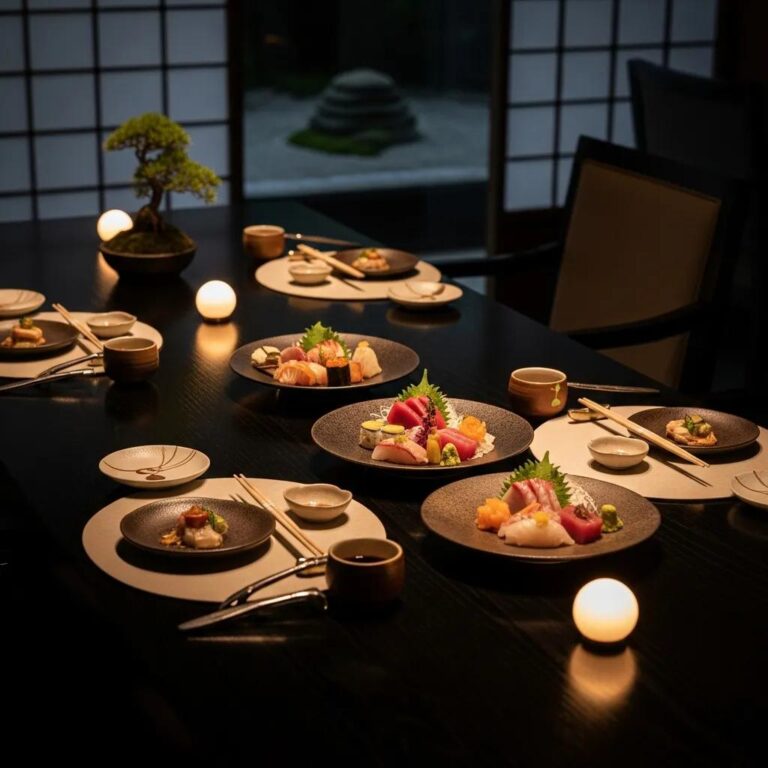
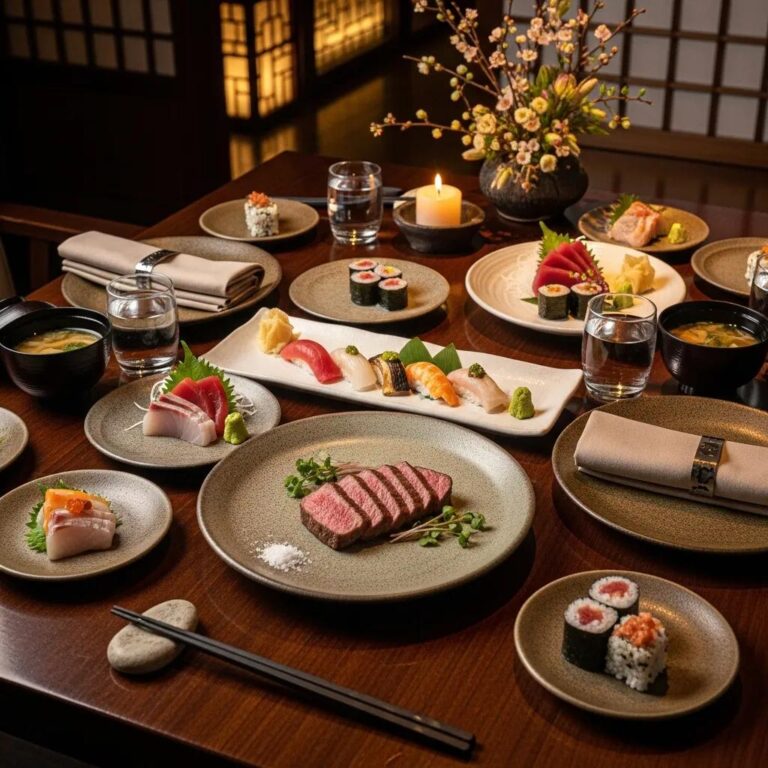
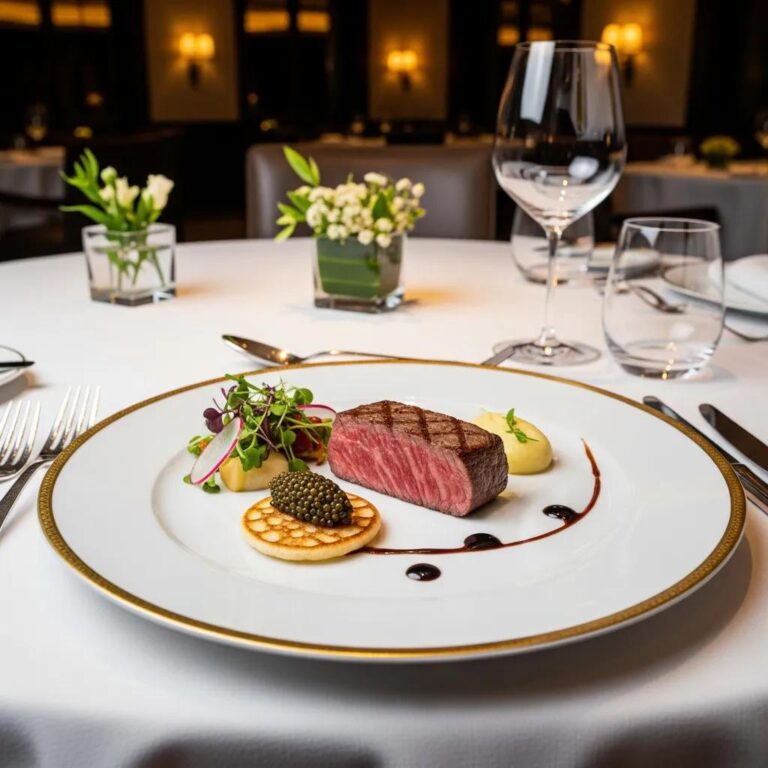
At Kaviar we adapt formal setting principles to Japanese fine dining by incorporating chopstick placement, hashioki (chopstick rests) and sake service into a Western‑style layout while preserving flow and ceremony. Signature dishes like our Caviar Service and Miyazaki A5 Wagyu are presented on clean chargers or service plates with precise utensil placement to guide tasting order and protect delicate garnishes. Servers coordinate sake pours and position sake cups or stemware alongside wine glasses depending on the pairing, and chopsticks are set thoughtfully on rests when Western flatware is also present. These adaptations keep the outside‑in usability intact while honoring Japanese dining customs and ensuring luxury items arrive with the correct tools and glassware.
Integrating Chopsticks and Sake Service
Chopsticks are commonly placed horizontally on a hashioki with tips pointing left, or positioned to the right when paired with Western utensils; each diner receives a clean set to avoid sharing. Sake service uses small cups or stemmed glasses based on temperature and pairing—warm sake poured from a tokkuri into individual cups, chilled sake often in stemware alongside wine glasses. Servers follow pouring etiquette—pouring for others rather than themselves—and remove empty vessels discreetly. Thoughtful integration preserves ritual and function while fitting into the broader formal table layout.
Presenting Caviar and Miyazaki A5 Wagyu
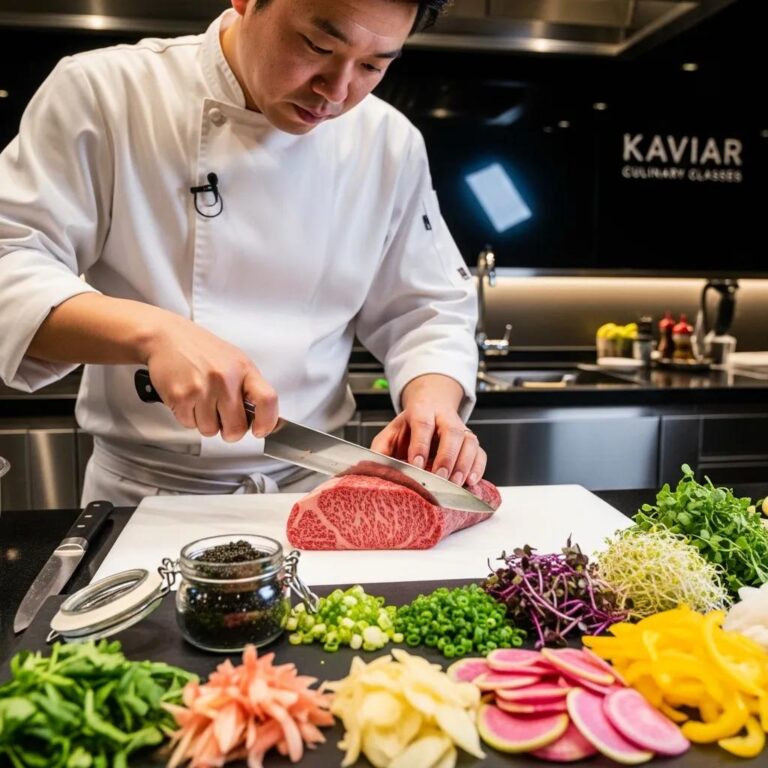
Caviar is served with non‑reactive spoons—mother‑of‑pearl, bone or gold‑plated—to avoid metallic taste, presented chilled on ice for direct tasting. Miyazaki A5 Wagyu is plated with minimal handling: thin slices or lightly seared cuts centered with restrained garnishes to showcase marbling and texture, accompanied by appropriate knives and forks. In a formal service, caviar is introduced with a simple blini or cracker and chilled pairing glassware, followed by A5 Wagyu paired with a fuller‑bodied wine or suitable sake. These choices highlight premium ingredients while respecting their flavors and textures through proper utensils and glassware.
Common Formal Dining Mistakes and How to Avoid Them
Mistakes usually come from utensil order confusion, misplaced glassware or improper napkin and shared‑item handling—each can interrupt service and distract from the meal. Typical errors include starting with the wrong fork, placing knives with blades facing outward, or crowding stems too close to plates. Avoid these issues by following the outside‑in rule, keeping consistent spacing and observing simple napkin and bread protocols. Below we identify frequent utensil placement errors and offer recovery tips so hosts and guests can handle slip‑ups gracefully.
Most Frequent Utensil Placement Errors
Common errors include using the wrong fork or spoon by ignoring outside‑in ordering, setting knives with blades outward, and placing dessert flatware above the plate where it’s easily overlooked or used too soon. Corrections are straightforward: quietly remove outer utensils after a course, realign knives with blades facing inward, and introduce dessert utensils with the dessert to avoid premature use. Hosts should rehearse basic place settings before an event and label service trays for staff during busy shifts—small preparations that reduce mistakes and keep service flowing.
- Keep knife blades facing the plate for safety and visual consistency.
- Remove outer utensils discreetly between courses to reveal the next tool.
- Present dessert utensils with the dessert to prevent early use.
These habits eliminate common awkward moments and help the meal proceed smoothly.
Preventing Napkin and Glassware Slip‑Ups
Standardize napkin placement—on the charger or to the left—so guests know where to return them, and space stemware one to two inches apart to avoid tipping while keeping water glasses closest for convenience. If a napkin drops, pick it up discreetly and place it on your lap; if a glass is knocked, quietly alert staff for a polite resolution. Hosts should avoid overloading tables with unnecessary stemware to reduce clutter. Practicing calm recovery—requesting replacements without fanfare and resuming the meal—preserves decorum and lets service continue uninterrupted.
To see these principles in practice, visit Kaviar Restaurant in Pasadena where formal place‑setting techniques are adapted for Japanese specialties like Caviar Service and Miyazaki A5 Wagyu. Reserve a table by phone or via platforms such as Resy and OpenTable; our service approach demonstrates how deliberate layouts and careful utensil choices enhance luxury presentations. Call or book online to experience these formal‑setting adaptations firsthand.
Frequently Asked Questions
Why use a charger plate in formal dining?
A charger is a decorative base that frames the service plate and elevates presentation during early courses. It provides a cohesive visual anchor and is usually removed before the main course to shift focus entirely to the food.
How do I make my table setting culturally appropriate?
Research the dining customs of the cuisine you’re serving—Japanese settings may require chopsticks and hashioki, while Italian service might emphasize specific pasta utensils. Respectful, informed choices enhance the guest experience; consult cuisine‑specific guides or experts when in doubt.
Tips for hosting a formal dinner without stress?
Plan your menu and layout in advance, create a checklist of dinnerware and utensils, and rehearse the table arrangement. Pre‑set what you can, delegate tasks to staff or helpers, and focus on staying calm—your composure sets the tone for guests.
How do I choose the right wine glass?
Match glass shape to wine style: narrower bowls for white wines to preserve temperature and concentrate aroma, larger bowls for reds to encourage aeration, and flutes or tulip glasses for sparkling wines to retain carbonation. Serve lighter wines first, then progress to fuller‑bodied options.
What if I make a mistake during a formal meal?
Stay composed and handle errors quietly. If you use the wrong utensil, set it aside and switch to the correct one; if you spill, discreetly signal staff for assistance. Most guests focus on the experience, not small missteps.
How can I add seasonal touches to a formal table?
Use seasonal flowers or colors in centerpieces and linens, and incorporate appropriate fruits or decor that reflect the time of year. Subtle seasonal elements create cohesion without overwhelming the table’s formality.
Best practices for serving and sharing food?
Use dedicated serving utensils to avoid cross‑contamination, keep shared items within easy reach without stretching across the table, and encourage modest portions to maintain order. Wait for the host or server cue before beginning service to preserve decorum.
Conclusion
Mastering formal table settings enhances the meal and reflects a host’s care for guests. By learning the components and etiquette—and practicing clear sequencing—you can create an inviting, elevated dining experience. For hands‑on examples and refined service, consider visiting Kaviar Restaurant to see these principles in action. Begin refining your tablecraft and enjoy the difference it makes.