



Fine Dining: From Royal Banquets to Today’s Chef‑Led Tasting Menus
Fine dining draws a continuous line from ceremonial royal banquets to the contemporary chef‑led tasting menu. This piece traces that arc—how elite courtly feasts set standards for presentation and service, how political upheaval (notably the French Revolution) moved culinary talent into public restaurants, and how twentieth‑century movements and globalization reshaped ingredients and expectations. You’ll find the key historical milestones, the chefs and institutions who codified technique, the rise of experiential formats such as omakase and kaiseki, and why items like A5 Wagyu and caviar remain cornerstones of modern luxury dining. We map the influence of guides like Michelin and movements such as nouvelle cuisine, examine today’s trends—sustainability, personalization, provenance—and connect these ideas to a local example of upscale Japanese dining in Pasadena. By the end, diners and industry observers will better understand how history informs tasting menus and how to recognize authentic, chef‑led experiences.
When and How Did Fine Dining Begin? Origins and Early Influences
Fine dining first took shape as public ritual in royal courts, where food served as a display of power, taste and technological command. Court banquets demanded teams of specialized cooks and servers, formal menus for pageantry, and techniques that emphasized preservation, exotic spices and striking visual presentation. Those spectacles taught later cooks how to stage hierarchical, ritualized meals and introduced an early vocabulary of service and plating that evolved into haute cuisine. Tracing these origins explains why modern tasting menus still prize sequence, surprise and ceremony—and sets up how late‑eighteenth‑century revolutions brought those private practices into public dining rooms.
How Did Royal Courts Shape the Language of Luxury Dining?
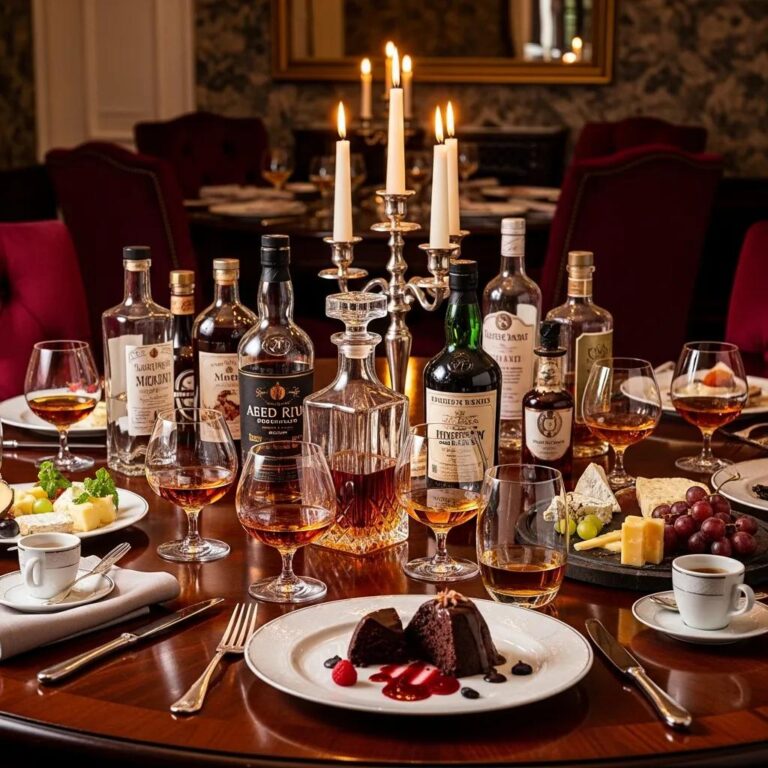
Royal courts institutionalized scale, spectacle and culinary specialization—and in doing so professionalized cooking and set enduring service standards. Courts like Louis XIV’s supported large kitchen staffs, multi‑course banquets and strict rules for display that turned dining into a visible performance of status and taste. The demands of such service produced new techniques—advanced butchery, layered sauces and refined pastry work—and established the idea that culinary skill could itself be cultural capital. That courtly legacy explains why synchronized service, ornate presentation and meticulous pacing still define many luxury dining experiences.
Which Ancient and Medieval Practices Feed Today’s Haute Cuisine?
Ancient and medieval culinary systems contributed preservation methods, spice networks and banquet logistics that later chefs absorbed into haute cuisine. Salting, smoking, spicing and long‑simmered sauces grew from preservation needs and access to exotic trade goods, forming taste preferences for complex, layered flavors. Large feasts also taught planners how to choreograph service and assign kitchen roles—early precursors to the modern brigade—which improved efficiency and repeatability. These continuities reveal the practical origins behind many aesthetic choices still prized in fine dining and set the stage for change driven by social upheaval.
The courtly roots of fine dining naturally lead to the next chapter: how political change redistributed culinary knowledge.
How Did the French Revolution Shift Dining and Birth Haute Cuisine?

The French Revolution accelerated a key transition: cooks displaced from aristocratic households brought their skills into public life, helping seed the modern restaurant. A growing paying public demanded standardization—printed menus, fixed prices and repeatable recipes—and chefs responded by codifying techniques and reorganizing kitchens. That professionalization shaped how chefs trained and how menus were composed, creating the conditions for later rating systems and culinary movements. As refined dining moved from private spectacle to public practice, etiquette and access changed: patrons willing to pay could now buy curated, elevated meals.
Who Were the Chefs That Defined Early French Fine Dining?
Late eighteenth‑ and nineteenth‑century chefs systematized technique, published influential cookbooks and reorganized kitchens into efficient hierarchies that underpin modern professional cooking. Antonin Carême exemplified early codification through elaborate recipes and theatrical presentations, while Auguste Escoffier later refined the brigade system and modern service flow—both helped make culinary excellence teachable and repeatable. Their work built the scaffolding that twentieth‑century guides and critics would evaluate and celebrate.
The foundations of modern gastronomy were shaped as much by writers as by cooks, who together elevated food writing and kitchen practice.
Brillat‑Savarin and Escoffier — Foundations of Modern Gastronomy
In the early nineteenth century, Jean Anthelme Brillat‑Savarin and Alexandre‑Balthazar‑Laurent Grimod de La Reynière helped define a new language for food and dining. Brillat‑Savarin’s La Physiologie du Goût (1825) fused elegant prose with gastronomic observation, showing how culinary thought could be cultural commentary. His work influenced contemporaries such as Marie‑Antoine Carême, who began simplifying and codifying French haute cuisine. That codification continued through the nineteenth century with figures like Jules Gouffé, Urbain Dubois and Émile Bernard, and culminated in Auguste Escoffier’s Le Guide Culinaire (1903), which formalized recipes and kitchen organization for the modern restaurant world.
Exploring the Legacy of Brillat‑Savarin in the Written Works of Auguste Escoffier, 2025
What Did Public Restaurants Change About Dining Etiquette?
Public restaurants introduced consistent menus, predictable prices and formalized service rituals that reshaped social dining norms—moving etiquette out of court protocol and into civic life. Kitchens and front‑of‑house teams learned to deliver standardized courses and discreet service designed for paying guests rather than staged courtly displays. Printed menus encouraged specialization and transparency, while communal dining outside private households altered table manners. Over time, reputation, review and repeat patronage became as important as aristocratic favor in determining a restaurant’s success.
Those public norms later intersected with twentieth‑century forces—industrialization, critics and new culinary philosophies—which we explore next.
Major 20th‑Century Shifts: Guides, Movements and Globalization
The twentieth century brought institutional evaluators, ingredient‑forward movements and rapid global exchange, turning local haute cuisine into an international, ingredient‑driven practice. Influential guides created reputational incentives that rewarded consistency and daring. Nouvelle cuisine and post‑war trends emphasized freshness, lighter sauces and visual restraint, shifting focus from heavy classical preparations to ingredient clarity. Eased global trade introduced Japanese techniques and prized produce to the West, opening the door for fusion, experiential formats and the modern tasting menu.
How Did the Michelin Guide Shape Standards in Fine Dining?
The Michelin Guide created an external benchmark for excellence, pressuring restaurants to uphold quality, innovation and consistency in both cuisine and service. Stars and reviews drove chefs to refine dishes, invest in training and curate tasting sequences that demonstrated technical mastery and creative voice. That reputational system also pushed restaurants to document techniques and source premium ingredients—practices central to today’s luxury dining.
What Did Nouvelle Cuisine and Post‑War Trends Change?
Nouvelle cuisine pushed back against heavy sauces and ornate presentation, promoting freshness, shorter cooking times and visual restraint. Chefs began to highlight single, high‑quality ingredients, seasonal expression and lighter textures—changes that opened space for non‑French approaches, especially Japanese methods that prize purity and balance. These priorities fed the rise of omakase and kaiseki‑style progressions, where sequence and ingredient integrity govern the guest’s experience. The movement’s emphasis on simplicity and seasonality still informs contemporary fine dining.
Below is a concise comparison of major modern trends and their drivers.
These contrasts show how ethical, technological and experiential pressures push restaurants to adapt menus, sourcing and service for today’s luxury diners.
How Has Japanese Fine Dining Shaped Modern Luxury Restaurants?

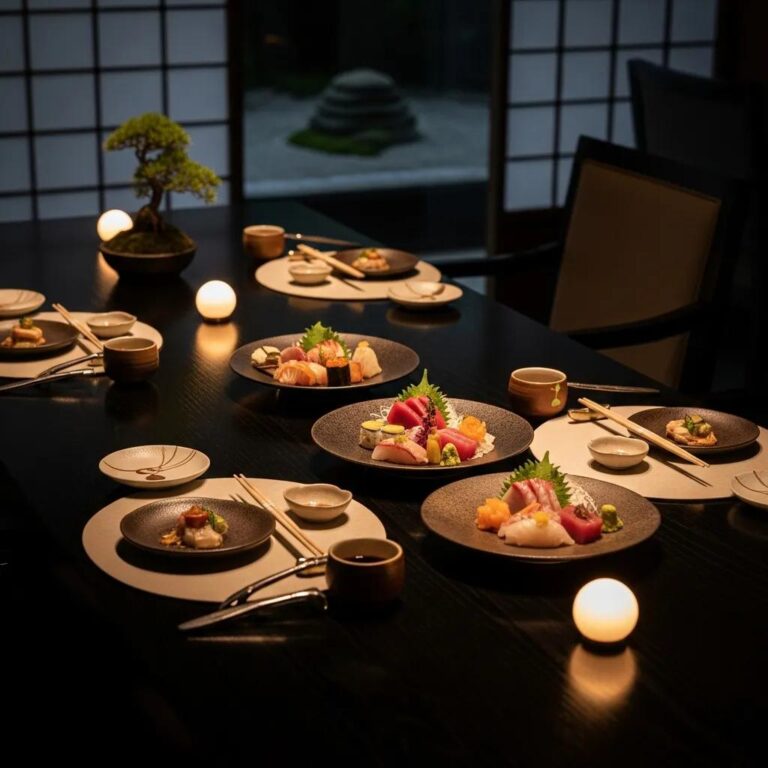
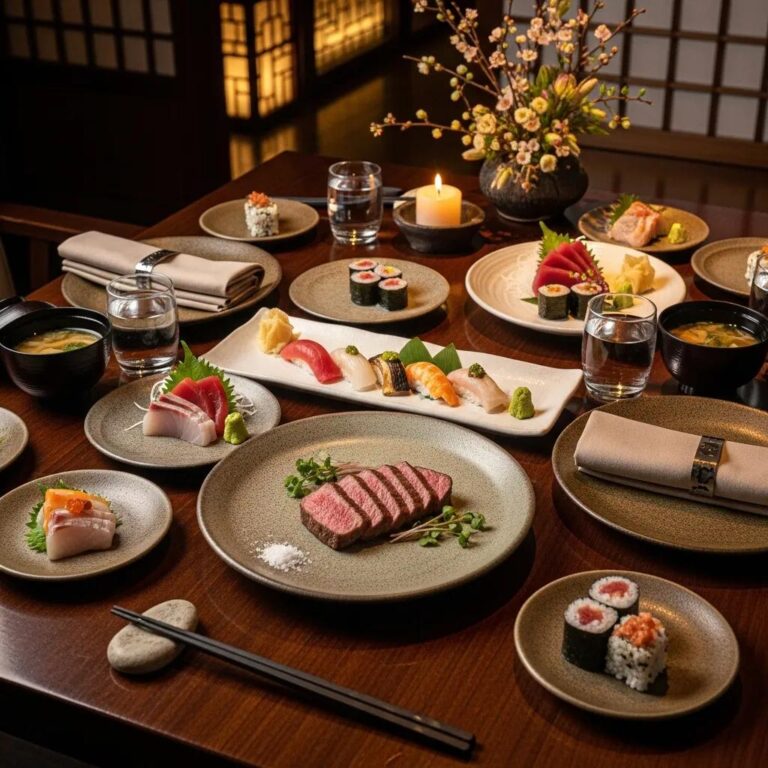
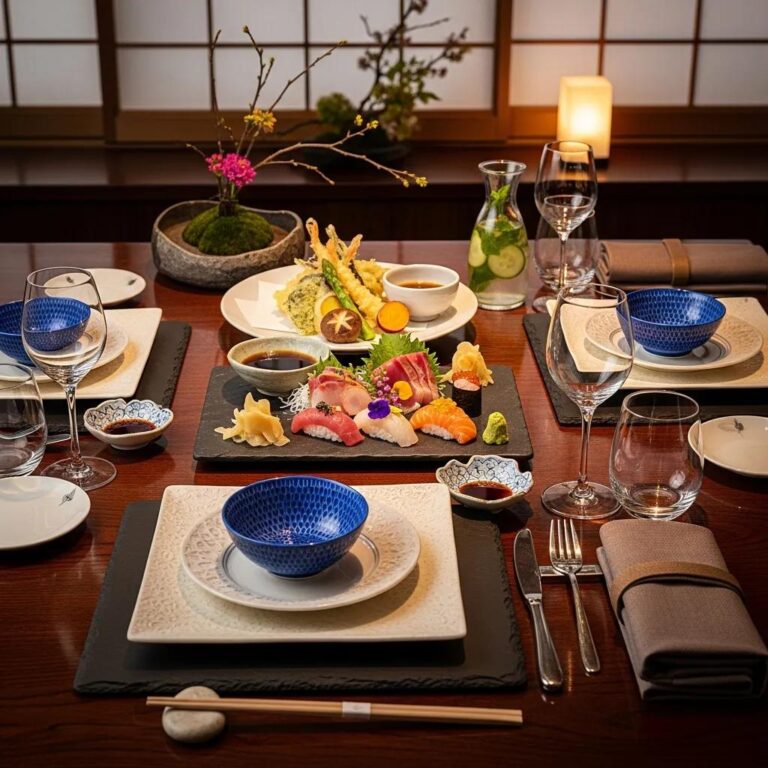
Japanese fine dining introduced philosophies of seasonality, restraint and chef‑led sequencing—most clearly expressed in kaiseki and omakase—that reshaped global expectations for luxury meals. Omakase, literally “I’ll leave it to you,” reframes dining as a trust‑based progression in which the chef composes a narrative through texture, balance and seasonality. Premium ingredients such as A5 Wagyu and caviar signal refinement through strict grading, provenance and sensory impact; they provide clear anchors for price and prestige. Many contemporary tasting menus borrow Japanese pacing, restraint and reverence for singular ingredients for good reason.
The History and Philosophy of Omakase
Omakase grew out of sushi counter culture as a method of chef‑driven curation in which guests surrender choice so the chef can present the best, seasonally available items. Rooted in the sushi bar’s emphasis on immediacy and provenance, omakase often unfolds at a counter to enable chef‑guest exchange. The philosophy prizes timing, technique and ingredient quality, producing an intimate progression where each course prepares the palate for the next. Luxury restaurants have adapted this approach to create memorable, personalized experiences.
How A5 Wagyu and Caviar Function in Japanese and Fusion Fine Dining
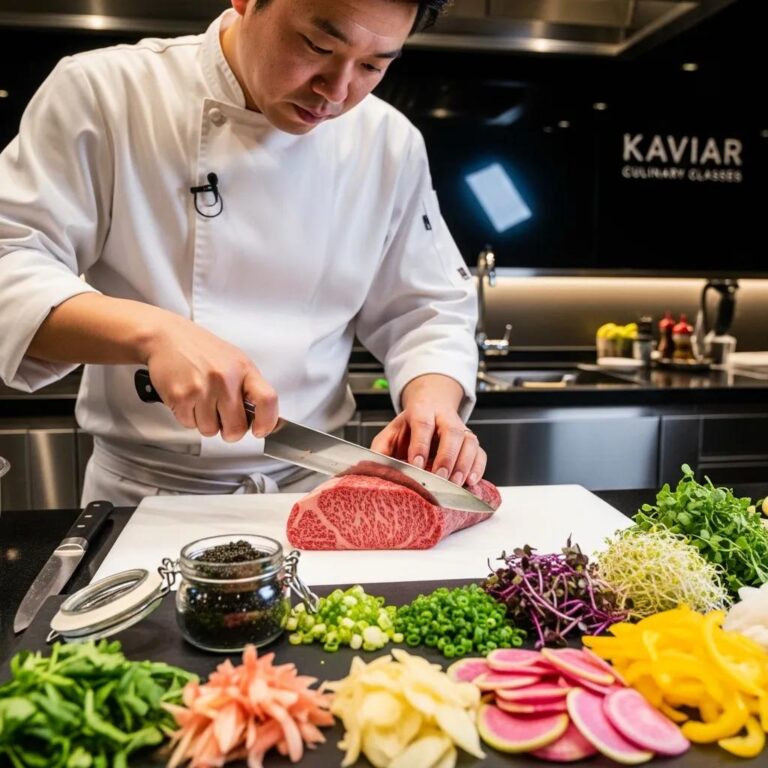
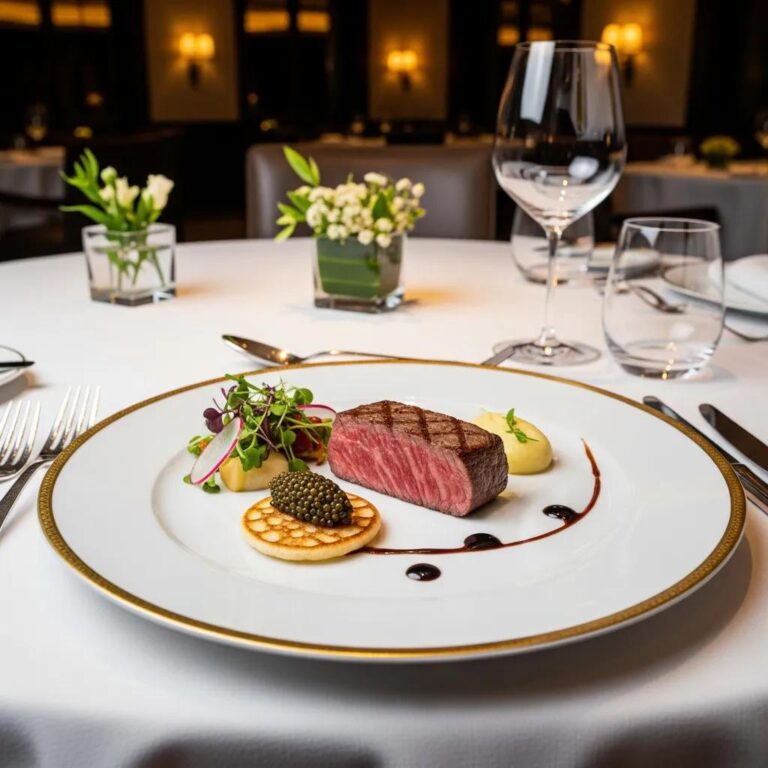
A5 Wagyu and caviar act as sensory anchors in Japanese and fusion contexts because of their precise grading, distinctive texture and concentrated umami. A5 Wagyu denotes the highest marbling and creates a buttery mouthfeel chefs typically showcase with minimal handling and precise searing to preserve its character.
Caviar contributes saline depth, textural contrast and aromatic nuance, often used sparingly as a finishing detail to lift a dish. The table below outlines origin, quality markers and typical culinary roles to clarify how these ingredients are positioned on menus.
These distinctions explain why chefs use such items sparingly and strategically: provenance and sensory impact justify premium pricing and shape the pace of a tasting sequence.
Antonin Carême: Revolution, Reform, and the Rise of a New Cuisine
The upheavals of the late eighteenth and early nineteenth centuries reshaped France politically and culturally—and cuisine was no exception. Antonin Carême, often called the first celebrity chef, embraced Enlightenment ideas and sought to make refined cooking more widely understood. He challenged older methods, simplified classical presentations and helped form a new culinary language that bridged elite and popular tastes. Carême’s innovations contributed to a broader gastronomic identity that helped solidify France’s reputation as a culinary capital.
A culinary revolution: The first celebrity chef and the unification of French culture, 2014
Bringing these historic influences into a local context, Kaviar Restaurant interprets omakase and ingredient‑led luxury through focused menus, chef‑driven sequences and a reservation‑first model that secures curated experiences. The restaurant features signature preparations such as a dedicated Caviar Service and an A5 Wagyu offering—direct reflections of the ingredient narratives above. Guests who wish to experience a chef‑led tasting can reserve by phone at (626) 605-0330 or through the restaurant’s reservation portal to guarantee curated seating and menu availability.
What Trends Are Shaping Modern Fine Dining?
Today’s fine dining reframes luxury around experience, sustainability and personalization. Technology smooths the guest journey while provenance and ethical sourcing shape menu choices. Experiential elements—chef interaction, storytelling and subtle multi‑sensory touches—justify premium pricing by creating memorable, repeatable moments. Sustainability and local sourcing answer diners’ demand for traceability and stewardship, and technology helps capture preferences and manage reservations so that personalization becomes operationally feasible.
How Experiential Dining Recasts the Restaurant Visit
Experiential dining treats a meal as a curated narrative of taste, atmosphere and human connection. Omakase counters, deliberately paced tasting sequences and table‑side rituals foster intimacy and singularity, encouraging diners to value the encounter as much as the food. These elements support higher price points and deeper guest loyalty, which is why restaurants design lighting, sound and service choreography to amplify each meal’s arc.
Those experiential choices explain why diners increasingly book specific service styles and why chefs build menus as performative progressions.
Experiential features that define modern luxury:
- Chef interaction: Direct conversation and live preparation build trust and tailor the experience.
- Sequential storytelling: Courses move deliberately from subtle to bold to shape the palate.
- Multi‑sensory design: Lighting, sound and presentation raise perception and memory of taste.
Why Sustainability and Local Sourcing Matter
Sustainability and local sourcing matter because diners increasingly judge luxury by ethics and provenance. Traceability lets chefs tell stories about farms, fisheries and producers, linking plate to place and making each course more meaningful. Practically, local sourcing can reduce transport emissions and support seasonal menus that highlight freshness; morally, it aligns restaurants with conservation and fair practices valued by today’s patrons. When integrated thoughtfully, these practices become selling points that signal authenticity and modern responsibility.
The table below pairs major trends with their drivers and shows how an upscale Japanese restaurant might respond.
How Kaviar Restaurant Brings This History to Life in Pasadena
Kaviar Restaurant distills the long arc of fine dining—ceremony, sequence and premium ingredients—through Japanese craftsmanship to create a contemporary luxury experience in Pasadena. Our menu philosophy centers on chef‑led curation: tasting sequences and plated service reflect kaiseki precision and the trust‑based spirit of omakase. Signature items like a dedicated Caviar Service and A5 Wagyu preparations show how provenance and grading inform both taste and value. A reservation‑first approach preserves exclusivity and ensures ingredient availability. By combining ritualized pacing, premium proteins and focused presentation, Kaviar situates itself within the lineage from royal spectacle to the modern tasting menu.
How Kaviar Marries Historical Tradition with Japanese Craft
Kaviar applies ceremonial pacing and disciplined technique—drawn from haute cuisine and Japanese traditions—to compose meals that emphasize balance, timing and texture. Service includes thoughtfully ordered courses that guide the palate, clear attention to provenance, and front‑of‑house choreography that nods to historical pageantry while remaining guest‑centered and understated. The kitchen’s focus on craftsmanship follows the brigade concept—clear roles, precision and quiet coordination—while chef‑led choices reflect omakase principles of trust and careful curation. The result is a bridge between ritual and contemporary Japanese artistry, delivered as a considered dining narrative.
Which Signature Dishes Showcase Kaviar’s Premium Ingredients?
Kaviar’s menu spotlights premium ingredients with preparations designed to foreground texture and umami: a Caviar Service that adds briny, textural finish to simple vessels, and A5 Wagyu served with minimal handling and precise searing to showcase marbling. These dishes are paired with restrained accompaniments so the ingredient’s character remains front and center rather than hidden under heavy sauces. We recommend reserving tasting‑service seating to experience the full progression—some items are curated and available in limited quantities. The table below maps offerings to their experiential attributes and booking guidance.
To book a curated tasting at Kaviar Restaurant, call (626) 605-0330 or visit the reservation portal. Booking secures access to signature items and chef‑curated sequences.
- Why reserve in advance: Guarantees seating and access to limited preparations.
- What to expect: Chef‑driven pacing, premium ingredients and focused service.
- Practical tip: Share dietary preferences when booking so the chef can plan the sequence.
This article has traced fine dining from royal courts through revolution, codification and cross‑cultural exchange to today’s experience‑centered restaurants that prioritize provenance and craftsmanship. If you’re curious about a chef‑led Japanese tasting featuring curated caviar service and A5 Wagyu in Pasadena, we recommend reserving in advance by phone at (626) 605-0330 or via the restaurant’s reservation portal to secure a curated tasting.
Frequently Asked Questions
What are the defining traits of modern fine dining?
Modern fine dining centers on experience, sustainability and personalization. Restaurants build memorable visits through chef interaction, storytelling and thoughtful multi‑sensory touches. Diners also expect transparency in sourcing and ethical practices, and technology now helps tailor menus and streamline reservations. Together, these elements shift luxury from mere price toward a meaningful, well‑crafted encounter.
How do cultural influences shape contemporary fine dining?
Cultural influences introduce new techniques, ingredients and philosophies that expand what luxury dining can be. Japanese practices like omakase and kaiseki have reshaped pacing and presentation in Western restaurants, emphasizing seasonality, minimalism and the chef‑guest relationship. As chefs borrow and adapt global traditions, they create inventive dishes that enrich the guest experience.
Why do chef‑led experiences matter?
Chef‑led experiences deepen the connection between chef and diner and let the kitchen present a coherent culinary narrative. When a chef curates a sequence, they can highlight ingredient quality and seasonal availability while personalizing the meal for guests. This direct engagement builds trust, showcases craft and encourages repeat visits.
How has technology changed fine dining?
Technology has streamlined operations and enhanced personalization. Reservation systems optimize seating and reduce waiting; data helps chefs anticipate preferences and tailor menus; and social media and reviews influence how restaurants present themselves publicly. Used well, technology supports efficiency without compromising the intimacy of a refined meal.
What role does ingredient sourcing play?
Ingredient sourcing is central: it affects flavor, quality and the ethical story behind a dish. Diners increasingly prize local, seasonal and traceable ingredients, and chefs respond by building partnerships with farms and fisheries. When provenance is transparent, the plate connects to place and the dining experience gains depth and authenticity.
How do tasting menus differ from à la carte dining?
Tasting menus offer a curated sequence of dishes designed to showcase a chef’s technique and point of view. Rather than selecting individual items, diners experience a planned progression—often moving from lighter to richer flavors—that reveals seasonal ingredients and narrative intent. The format prioritizes cohesion and discovery over individual choice.
Conclusion
Understanding fine dining’s evolution clarifies why today’s tasting menus emphasize experience, provenance and craftsmanship. Recognizing the role of premium ingredients and chef‑led narratives helps diners choose more meaningful meals. If you’d like to explore this approach in Pasadena, consider reserving a tasting at Kaviar Restaurant—an experience that honors tradition while embracing contemporary innovation.