




Wine Cellaring at Home: Practical Guide to Ideal Conditions and Long-Term Preservation
Storing wine properly keeps its flavor intact, prevents premature oxidation, and lets bottles age as intended by keeping local conditions steady. This guide lays out the science of home cellaring — temperature stability, humidity control, light protection, vibration management, and sensible bottle orientation — and turns those principles into clear, repeatable steps for collectors. Many enthusiasts face fluctuating garage temperatures, dried corks, or improvised shelving that speeds decline; here you’ll find straightforward fixes for everyday care and long-range preservation. Expect numeric targets for temperature and humidity, tips to reduce light and vibration damage, a balanced look at fridges versus dedicated cellars, and simple inventory methods to protect value and drinking windows. Each H2 section offers practical how-to advice, quick-reference tables, and short lists to help you choose between a wine fridge, a DIY cellar conversion, or professional storage.
Kaviar’s fine-dining perspective underscores why attentive wine care matters for peak enjoyment. Though we’re best known for omakase, A5 Wagyu and caviar-forward tasting menus, our service standards for wine are the same standards we recommend at home: steady temperatures, careful handling and sommelier-informed pairings. Consider this guide a bridge between everyday stewardship and the consistent service you experience at luxury restaurants. Practical examples reference how professionally stored bottles are presented and why that consistency matters when planning special dinners.
What Are the Ideal Temperature Conditions for Home Wine Storage?
Temperature is the single most important control for wine longevity: steady, moderate conditions slow the chemistry that causes oxidation and flavor loss. Aim for a stable band rather than occasional cool snapshots. For most homes, the practical storage band is roughly 45–65°F (7–18°C), with a commonly cited cellar target near 55°F (13°C). Keeping temperature steady prevents cork movement and the expansion/contraction cycles that can draw air into bottles — a key factor for both aging and short-term freshness. Below we give precise targets by wine type and realistic tips for achieving consistent conditions in common home setups.
What Is the Optimal Temperature Range for Wine Cellaring?
The typical home cellaring envelope of 45–65°F (7–18°C) balances aging chemistry with everyday practicality; about 55°F (13°C) is often the best compromise for mixed collections. Reds destined for long aging typically prefer 54–57°F (12–14°C), while whites and more aromatic styles do better at 49–54°F (9–12°C); sparkling wines benefit from the cooler end of the scale. Set wine fridges to the target that fits your collection and avoid frequent thermostat changes — dual-zone units are useful for mixed cellars. For service, remember that drinking temperatures differ from cellar targets: allow chilled bottles to warm slightly and bring reds up gently before serving.
Quick reference for storage and serving temperatures.
This table helps match storage strategy to drinking plans and explains why a single steady cellar temperature often makes the best compromise for mixed collections.
How Do Temperature Fluctuations Affect Wine Quality?
Repeated temperature swings speed up chemical reactions inside the bottle by causing the liquid and trapped air to expand and contract; over time that movement can nudge the cork and allow oxygen in. Extra oxygen produces oxidation — flattened fruit, browning in whites, and premature maturity in reds — shortening a wine’s useful window. Common problem scenarios include storing bottles in an uninsulated garage or beside heat-producing appliances, where daily or seasonal swings accelerate decline. To reduce risk, use insulated closets or a temperature-controlled wine fridge with alarms, and track trends with a standalone thermometer rather than guessing from room temperature.
Consistent monitoring and modest investments in insulation or a thermostat-stabilized unit dramatically reduce fluctuation-related damage. That brings us to humidity control, the complementary factor that preserves corks.
Effects of Temperature Fluctuations on Wine Stability and Sensory Quality During Transport and Storage
Temperature variations are common during transport and can noticeably change a wine’s sensory profile. Studies show that elevated or unstable temperatures during storage or shipment accelerate aging and produce unwanted chemical changes.
The influence of elevated storage temperatures on wine composition and quality is well documented, and those changes often remain hidden until the bottle reaches the consumer.
Impact of Elevated Storage Temperature on Wine Composition and Quality
Numerous investigations confirm that higher storage temperatures can cause undesirable shifts in wine composition and sensory character. These effects may not be obvious until the wine is poured.
How Can You Maintain Proper Humidity for Long-Term Wine Preservation?
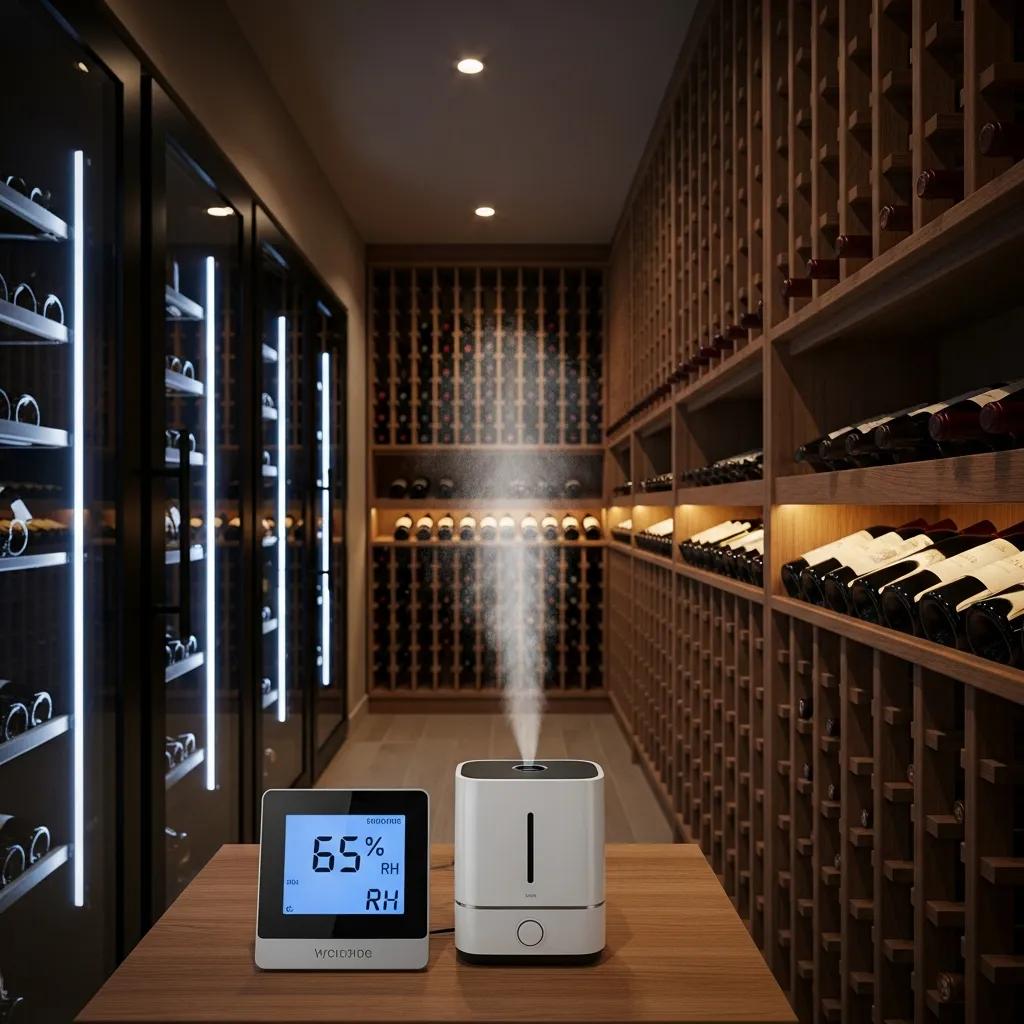
Relative humidity protects corks and labels and reduces the chance of seal failure. The goal is to keep corks supple without encouraging mold or label damage. Target humidity typically falls between 50–80%, with roughly 60–70% the practical sweet spot for most home cellars — high enough to prevent cork drying, low enough to avoid moisture problems. A calibrated hygrometer at bottle level gives accurate readings so you can respond to seasonal change. Combined temperature and humidity control is the most reliable way to preserve seals and label condition. The next sections outline specific targets and proven ways to control humidity in typical home setups.
What Is the Ideal Humidity Level to Protect Wine Corks?
A 50–80% relative humidity range keeps natural corks resilient; most experts recommend aiming near 60–70% for long-term storage to reduce cork shrinkage and oxidation risk. Too little humidity dries corks and invites air; too much encourages mold on labels and racking surfaces — usually cosmetic, but inconvenient for handling and resale. Place a calibrated hygrometer inside your storage space at bottle level and check it regularly if you don’t have automated logging.
If readings drift outside the target window, the corrective steps below will help you restore balance.
What Are Effective Methods to Control Humidity in Home Wine Storage?
Active humidity control — small cellar humidifiers or humidification kits designed for beverage coolers paired with a hygrometer — works well for dedicated cellars and larger collections. For wine fridges, passive solutions such as evaporation trays or sealed containers with distilled water will modestly raise humidity; simple sponge or reservoir tricks help in small closets. Proper insulation and a tight seal reduce outside air exchange and make any humidification approach far more effective. Consider maintenance: active humidifiers need periodic cleaning, so choose a solution that fits your cellar size and commitment level.
Short comparison of humidity goals and tools.
This comparison clarifies how tool choice scales with collection size and points owners toward sustainable humidity management.
How Does Light and Vibration Impact Wine Storage at Home?
Light and vibration are often overlooked but important: ultraviolet and visible light can trigger photochemical reactions (so-called lightstrike), while vibration disturbs sediment and interferes with slow maturation. Keep bottles out of direct sunlight and strong artificial light to avoid photochemical breakdown of delicate compounds, especially in clear or thin glass. Likewise, place your cellar away from heavy appliances, laundry areas, or busy routes to reduce mechanical disturbance. The practical mitigation strategies that follow will help you build a quiet, dark environment that preserves wine character.
Why Should Wine Be Protected from UV and Artificial Light?
Lightstrike happens when UV and high-energy visible light react with phenolic and sulfur compounds, producing off-aromas often described as wet cardboard or cooked cabbage. Clear or lightly tinted bottles and wines with fragile aromatics (lighter whites, some rosés) are most vulnerable. Use opaque storage, covered shelving, or UV-blocking film for display cases, and avoid placing bottles where bright sunlight or fluorescent lighting cycles reach them. Protecting light-sensitive wines preserves the aromatic clarity sommeliers look for when recommending pairings at fine-dining venues.
Exposure to light can produce sensory faults commonly known as ‘lightstruck’ or ‘goût de lumière’.
Light-Induced Changes in Bottled White Wine and Photochemical Mechanisms
Bottled white wine exposed to UV-visible light over time can undergo photochemical changes that alter composition and sensory properties — the phenomenon often called ‘lightstruck’ or ‘goût de lumière’.
How Can You Minimize Vibration to Preserve Wine Quality?
Vibration transfers energy to bottles and keeps fine sediment suspended, which can blur maturation and mute clarity. Typical sources include refrigerators, HVAC systems, and busy floors; place long-term storage away from these and on solid, level surfaces to damp vibrations. Anti-vibration racks, rubber matting or dedicated low-vibration wine fridges help sensitive collections, and choosing appliances with gentle compressors reduces micro-vibrations. For cellar-to-table pairings, leaving bottles undisturbed until decanting preserves the clarity and balance expected in fine-dining service.
What Are the Best Wine Storage Solutions for Home Cellaring?
Choosing between wine fridges, dedicated cellars, and DIY storage depends on collection size, aging goals, and space. Each option offers trade-offs in cost, environmental control and scalability. Wine fridges are compact and energy-efficient with reliable temperature control for modest collections; dedicated cellars provide the best long-term stability but need greater upfront investment for insulation and climate systems. DIY closet or basement conversions can work well when properly insulated and fitted with suitable cooling and humidification, but they require planning and upkeep. Below are practical benefits, decision points and a comparison to guide your selection.
What Are the Benefits of Using Wine Fridges and Coolers?
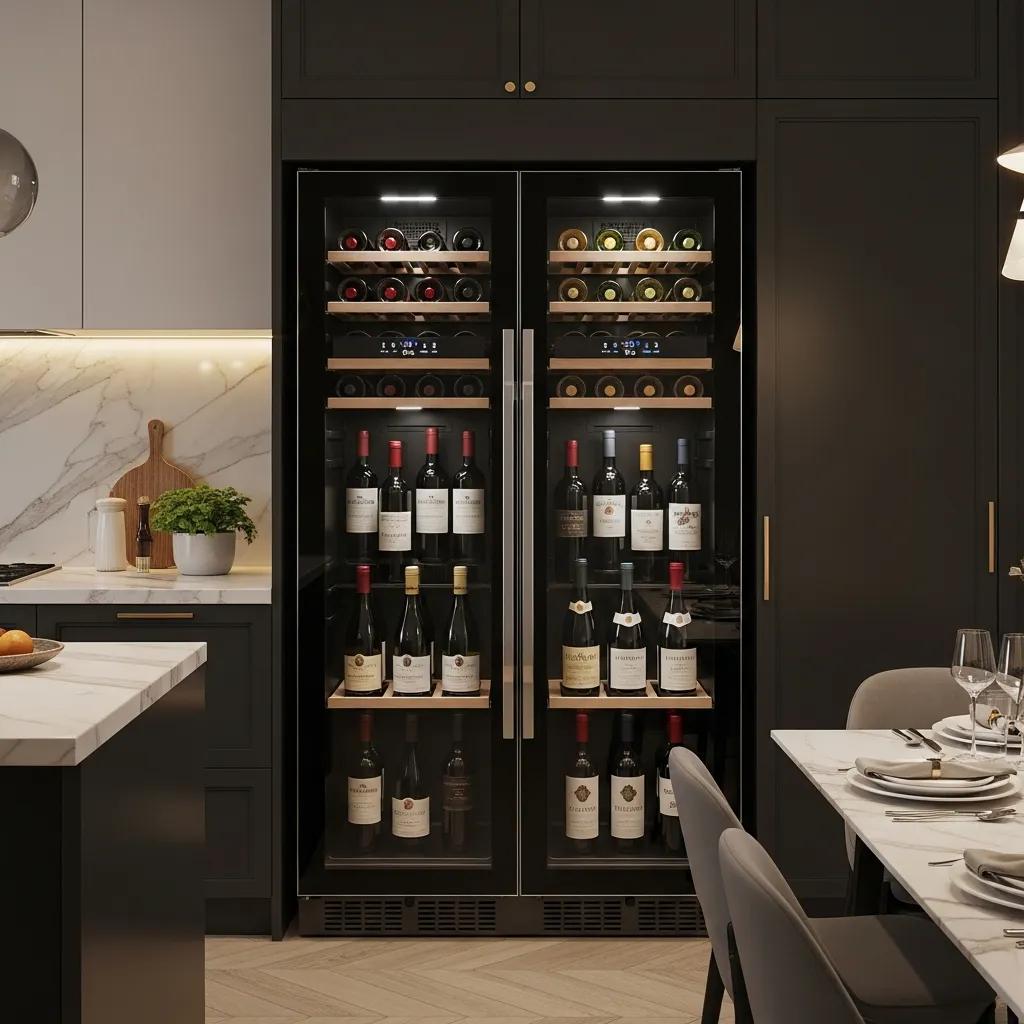
Wine fridges offer stable temperatures, compact footprints and often UV-protected doors, making them a solid choice for mixed or growing collections kept in living spaces. Dual-zone models store whites and reds at different temperatures, which is useful if you like bottles ready to serve without constant thermostat changes. Other advantages include lower installation cost versus building a cellar and eased maintenance; many units include thermostats and vibration-reduction features. Check capacity, compressor type and whether the unit holds adequate humidity — if not, add passive humidification to protect corks.
Key features to prioritize when selecting a unit:
- Temperature accuracy: Reliable thermostat control within ±2°F.
- UV protection: Tinted or UV-filtering glass doors.
- Vibration control: Soft mounts, anti-vibration racks or low-vibration compressors.
These features determine whether a fridge is a staging area or a genuine aging solution, and they lead into DIY cellar design considerations below.
This table helps you weigh options against your collection goals and budget.
How Can You Design a DIY Wine Cellar or Storage Closet?
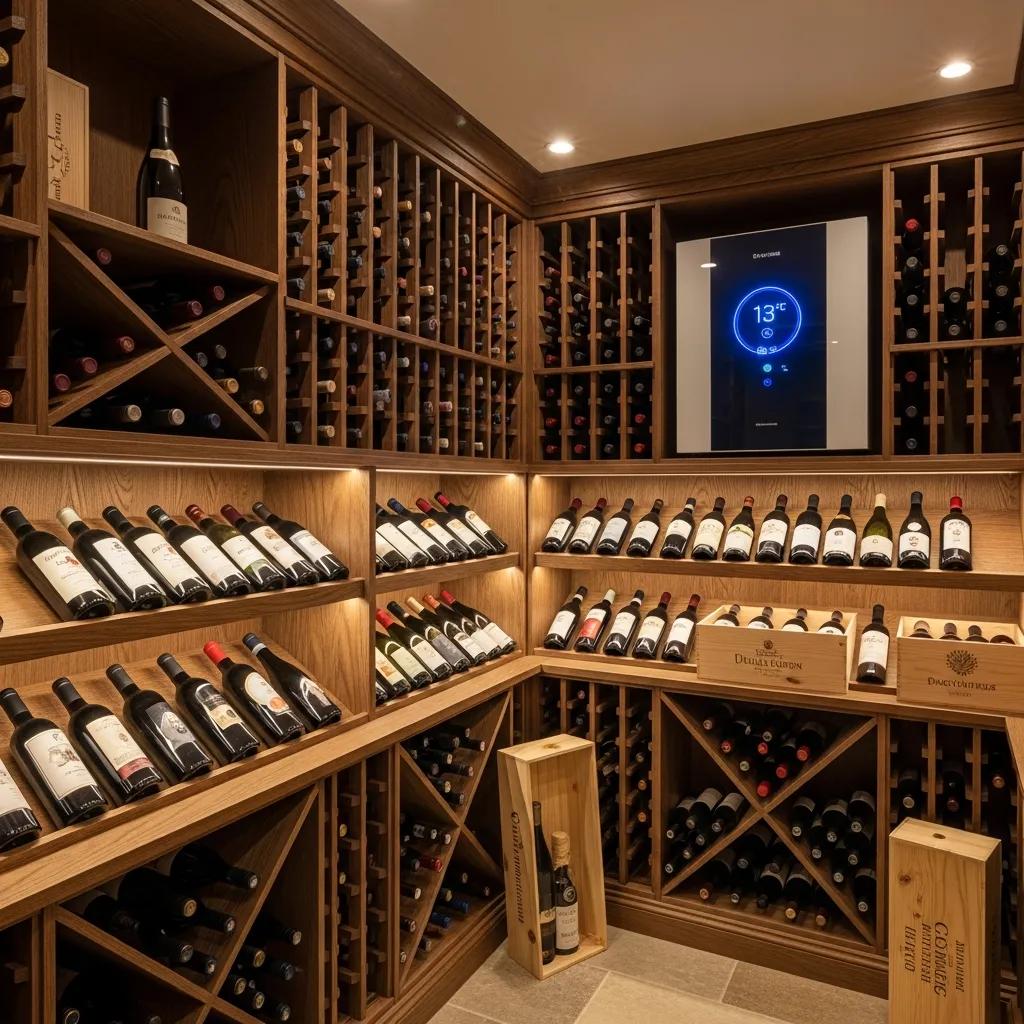
Begin by assessing the room’s baseline: temperature swings, humidity trends and sunlight exposure. Add insulation and vapor barriers to reduce air exchange, then install a cooling system sized for the room volume and plan airflow so cold air circulates through racks rather than pooling. Small cellar systems or ducted wine coolers are common solutions. Choose wood or metal racking that holds corked bottles horizontally and design shelving for future expansion and clear labeling. Add a hygrometer and a small humidifier if needed, and seal doors and access points — these steps turn a marginal closet into a dependable aging environment.
Practical checklist for a conversion:
- Inspect baseline room conditions and moisture levels.
- Add insulation and vapor barriers where needed.
- Choose cooling and humidification equipment sized to the space.
Each step reduces risk and brings a DIY conversion in line with the environmental controls described earlier for optimal preservation.
How Should Wine Bottles Be Oriented and Organized for Optimal Storage?
Bottle orientation and a reliable inventory system protect seals and help you find the right bottle for the occasion. Orientation depends on closure type and storage duration: natural-cork bottles do best stored horizontally to keep corks moist, while screwcaps and many synthetics can sit upright without drying. Organize by region, vintage and drinking window to manage rotation and pairing planning; a simple spreadsheet or inventory app with consistent fields saves time and prevents accidental over-aging. Below we describe the mechanisms and practical methods to structure your collection for both preservation and service.
Why Is Horizontal Storage Recommended for Corked Bottles?
Storing corked bottles on their side keeps the liquid against the cork, preserving moisture and elasticity and preventing small gaps that admit oxygen. For long-term cellaring, a sturdy horizontal rack also promotes airflow, minimizes vibration and keeps labels visible for inventory checks. Screwcaps and many synthetic closures are exceptions — they don’t require continuous contact and can be stored upright to save space and avoid sediment disturbance.
Horizontal racks for corked bottles balance preservation with accessibility and support the rotation practices discussed next.
What Are Best Practices for Organizing and Inventorying Your Wine Collection?
A practical inventory tracks a short set of fields: producer and wine name, vintage, purchase date, storage location and a target drink-by window. These fields let you prioritize rotation and plan pairings. Use consistent labeling (colored tags, shelf numbers) and update records when bottles are moved or consumed to avoid double-counting. For everyday bottles favor first-in/first-out rotation; reserve special, age-worthy vintages for targeted holding and flag them in your inventory for events. Collectors planning restaurant-style pairings benefit from a searchable list with flavor notes and pairing suggestions.
Simple inventory to start with:
- Producer and wine name.
- Vintage and purchase date.
- Location and drink-by estimate.
A disciplined inventory turns storage into predictable service, mirroring sommelier practices used in fine-dining settings.
What Common Mistakes Should Be Avoided in Home Wine Storage?
Common, avoidable mistakes — poor sealing, excessive heat, incorrect humidity and disorganization — are the usual causes of premature decline and lost enjoyment. Learn the sensory cues of oxidation or spoilage and follow simple rules (drink, decant or discard) to prevent frustration and protect the best bottles. When your collection includes high-value wines or when you plan multi-decade aging, evaluate professional storage to safeguard value and maturation. The next sections cover sealing and aging consequences and decision criteria for moving bottles out of home storage.
How Does Improper Sealing and Over-Aging Affect Wine?
Compromised seals — dried corks or damaged closures — allow oxygen in, producing oxidative notes: loss of primary fruit, sherry-like aromas in unfortified wines and color shifts in whites. Over-aging can push a wine beyond its ideal drinking window so that fruit and aromatic lift fade even when the bottle remains sealed. Telltale signs include muted aromatics, brown-tinged hues and vinegary or wet-cardboard off-odors indicating significant spoilage. When you detect these cues, prioritize drinking or professional assessment rather than extended storage.
When Should You Consider Professional Wine Storage Services?
Professional storage makes sense when bottles reach investment-grade value, when home conditions are unstable, or when you plan multi-decade aging beyond typical household capabilities. Consider the bottle’s replacement cost versus storage fees, seasonal stability of your home environment, and whether you need insurance, security and climate redundancy. For collectors who host or coordinate special dining events, bonded vaults or professional facilities help ensure provenance and ideal maturation — aligning with expectations at upscale venues like Kaviar. If your home can’t maintain steady temperature and humidity or you’ll leave bottles unattended for years, professional storage is often the prudent choice.
Checklist for choosing professional storage:
- Assess value vs. cost: High-value bottles often justify external storage.
- Evaluate home stability: Seasonal swings increase risk.
- Consider insurance and access needs: Security and retrieval policies matter.
This completes the decision framework and practical guidance to steward your home collection with confidence.
Frequently Asked Questions
What are the signs that wine has been improperly stored?
Look for color shifts, off-odors and an overall flat aroma profile. Whites that brown or reds that develop sherry-like notes often indicate oxidation. A vinegary smell or wet-cardboard aroma is a clear warning. Visible issues such as a pushed cork or cloudiness point to excessive heat or light exposure. Regular checks help you catch problems before they ruin a bottle.
How can I tell if my wine is aging properly?
Proper aging shows as gradual complexity: reds often move from bright fruit toward leather, spice or earthy notes; whites retain freshness while gaining layered aromatics. Periodic tastings will tell you whether balance is improving — a well-aged wine should feel integrated, with tannins and acidity in harmony. Keeping tasting notes alongside your inventory helps track progress over time.
What should I do if my wine has been exposed to high temperatures?
Assess the bottle immediately. Check for cooked aromas, off-odors or color changes. If the wine smells vinegary or ‘cooked,’ it may be compromised and is best consumed soon. If it seems intact, move it to a stable, cool environment and monitor it for changes. In marginal cases, consider drinking sooner rather than risking further deterioration.
Can I store wine in a regular refrigerator?
A standard refrigerator can work short-term, but it isn’t ideal for long-term storage. Typical fridges run colder than recommended (around 35–40°F / 1–4°C), which can mute flavors, and compressor vibration can disturb sediment. If you must use one, limit the time, keep bottles upright and consider a dedicated wine fridge for longer preservation.
How often should I check the conditions of my wine storage?
Check temperature and humidity at least once a month. Use a reliable hygrometer and thermometer to spot trends and inspect bottles for leakage or spoilage. If you notice fluctuations, act quickly — a log of checks helps identify recurring issues and determines whether corrective steps are needed.
What are the best practices for transporting wine safely?
Keep temperature steady and movement minimal. Use insulated carriers for extreme weather, transport bottles upright to protect corks, and avoid leaving wine in a hot car. If possible, use a climate-controlled vehicle and move bottles during cooler parts of the day. On arrival, place wine into a stable storage environment right away.
Conclusion
Thoughtful wine storage at home preserves quality and deepens your enjoyment of each bottle. By following the best practices here, you’ll create an environment that protects your investment and lets wines reach their full potential. When you’re ready, explore storage options that suit your collection and goals — a few deliberate choices will elevate your wine experience and reward your careful stewardship.