




Kaviar — Champagne & Sparkling Wines for Luxury Japanese Dining in Pasadena
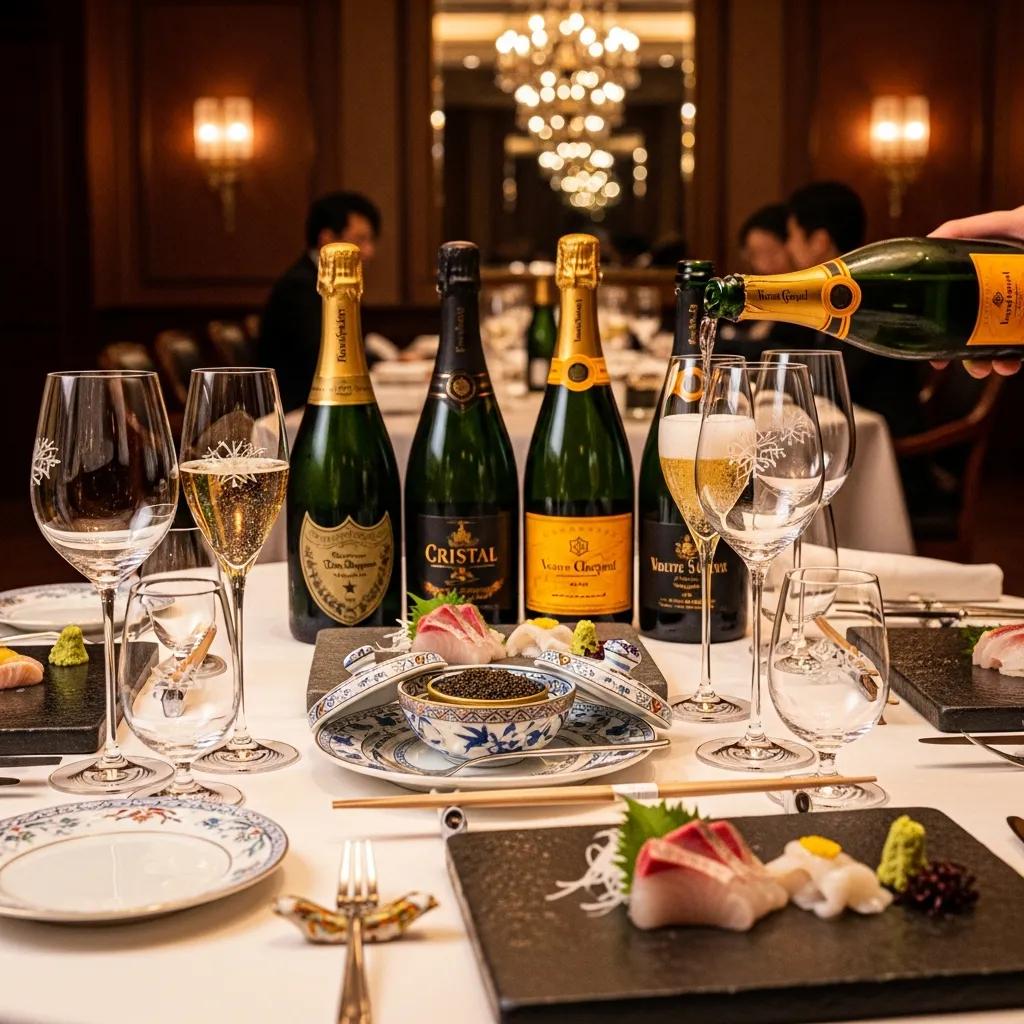
At Kaviar, our champagne and sparkling wine program is a deliberately curated selection meant to lift modern Japanese fine dining. We choose bottles for precise acidity, refined effervescence, and aromatic nuance so they support—rather than compete with—umami-rich ingredients. This guide explains how sparkling styles, from vintage Champagne to Cava and Prosecco, pair with caviar, omakase progressions, A5 Wagyu, and sake-forward cocktails to create balanced, celebratory sequences. If you’re searching for premium champagne Pasadena options or pairing advice, you’ll find clear rules, tasting notes, and menu highlights to help you pick the right bottle or glass for each course. Read on to learn what makes our selection distinctive, practical pairing rules tuned for Japanese flavors, standout bottles with tasting notes, and how our beverage program frames special-occasion service. We also show where to view the drink menu and how to reserve the best seats for an experience-focused omakase.
What Makes Kaviar’s Champagne and Sparkling Wine Selection Unique in Pasadena?
Our list is built to harmonize with delicate Japanese flavors while still delivering the sense of celebration guests expect from sparkling wine. We prioritize fine mousse, balanced acidity, and measured dosage so wines cleanse the palate and highlight sashimi, uni, and rich sauces without overpowering them. A sommelier-led curation and seasonal rotations ensure our offerings stay in step with the evolving omakase—pairings are chosen to support texture and aroma, not mask them. In short, we treat sparkling wine as both a palate reset and an active flavor partner for multi-course tasting menus.
Our beverage philosophy centers on pairing-forward choices that complement premium ingredients like A5 Wagyu and caviar; featured selections appear on our dedicated drink menu and we recommend reserving pairing-focused seating. That practical note invites guests who want an integrated culinary and beverage experience to secure the appropriate seating and guidance. Next, we break down the premium Champagne profiles that typically align with this approach and why they work with Japanese fine dining.
Which Premium Champagne Brands Does Kaviar Feature?
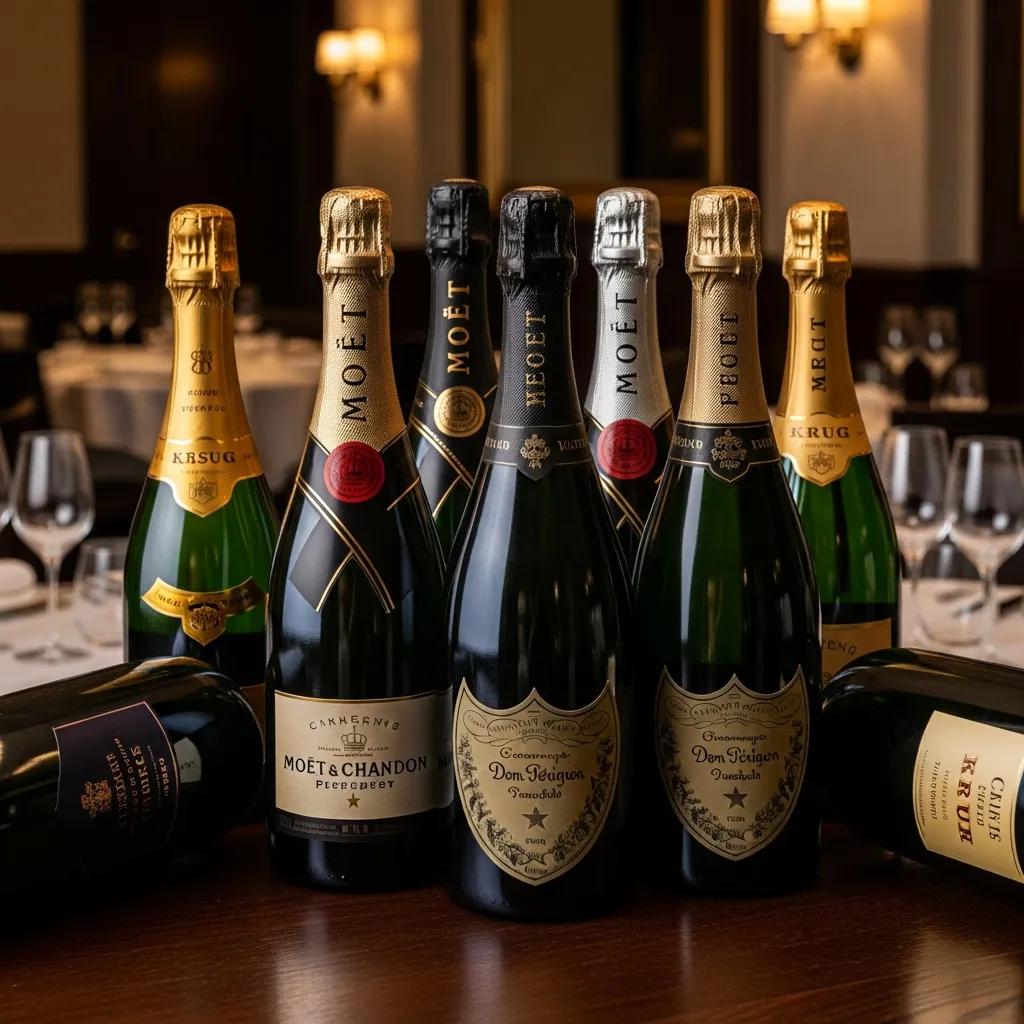
The Champagnes we select balance autolytic richness with bright fruit expression—qualities that pair equally well with delicate sashimi and richer aburi dishes. Houses like Moët & Chandon offer brioche and green-apple notes with steady acidity, making them versatile for caviar and lighter omakase turns. Vintage and prestige cuvées bring fuller body and deeper toastiness that can support seared or truffle-accented plates without overwhelming subtle seafood. Understanding these brand archetypes helps guests choose whether they want a wine that enhances flavors or one that refreshes the palate through contrast.
Our sommeliers use these archetypes to craft a meal progression—starting with high-acid, low-dosage styles early on and moving toward richer, vintage selections for celebratory moments—so the beverage sequence reads like a cohesive narrative across the tasting menu.
How Does Kaviar Curate Its Sparkling Wine Collection for Japanese Fine Dining?
We evaluate wines against three practical benchmarks: acidity, mousse fineness, and aromatic footprint—each judged relative to the umami intensity of common omakase courses. We favor low-to-moderate dosage and fine bubbles that lift fatty textures (think A5 Wagyu) while preserving the delicate aromatics of raw fish. Seasonal rotation lets our team introduce regionally specific sparklers—Cava, Prosecco, vintage Champagne—when they match current menu ingredients. Bottles are assessed not only for tasting notes, but for how their finishing acidity and texture interact with yuzu, shiso, soy reductions, and other Japanese accompaniments.
This selection logic—match intensity, respect texture, and sequence by aromatic complexity—creates a predictable framework that shapes both our by-the-glass list and curated bottle service. The next section lays out actionable pairing rules informed by these principles.
How Do You Pair Champagne and Sparkling Wine with Kaviar’s Signature Japanese Dishes?
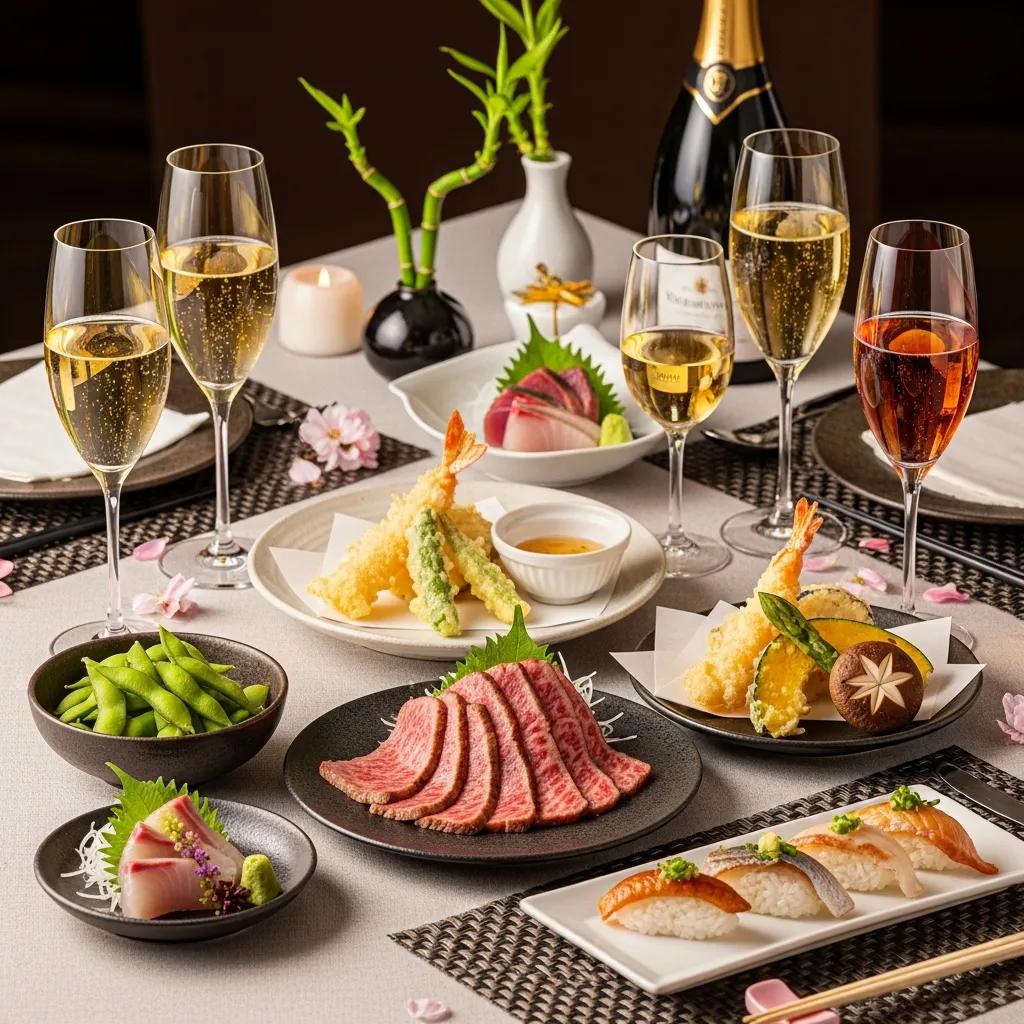
Pairing sparkling wine with Japanese fine dining comes down to three simple ideas: match or contrast intensity, align aromatic affinities, and use effervescence to refresh the palate. Matching intensity means choosing a wine whose body and acidity mirror a dish’s delicacy; contrasting intensity uses high-acid, low-dosage sparklers to cut through fatty or highly umami bites. Aromatic affinity pairs citrus, green apple, or brioche with elements like yuzu, pickled ginger, or seared tuna. And bubbles act as a palate cleanser between courses so each bite reads clearly.
Put into practice, our principles look like this:
- Match intensity for delicate courses: A light Brut or Prosecco keeps raw sashimi expressive and transparent.
- Contrast intensity for fatty dishes: High-acidity Cava or Extra Brut Champagne cuts through A5 Wagyu’s richness.
- Pair aromatic affinity: Choose wines with citrus or brioche notes to echo yuzu or toasted sesame accents.
- Sequence by mousse: Begin with finer mousse for sashimi, then move to fuller bubbles for richer, charred courses.
These rules form a repeatable framework for omakase sequencing and celebratory pairings. The table below maps dishes to recommended sparkling styles and explains why each pairing works.
This chart clarifies how different sparkling styles play distinct, functional roles during a multi-course tasting.
What Champagne Complements Kaviar’s Caviar and Omakase Experience Best?
For caviar and delicate omakase progressions, the most effective Champagnes combine high acidity, a fine mousse, and light autolytic complexity—delivering saline lift without masking subtle flavors. Brut and Extra Brut examples with green-apple, lemon-zest, and light brioche notes create the right tension between citrus freshness and gentle breadiness, allowing roe to sing. Serving temperature and glassware matter too: cooler service and tulip or narrow white-wine glasses concentrate aromas while preserving effervescence. Those technical choices—style, temperature, glass—turn Champagne into a true partner for the textural contrast of roe and the measured arc of an omakase.
Choosing a vintage or prestige cuvée adds gravitas for highlight courses, but for most delicate raw plates we lean toward leaner Brut styles to preserve clarity and transparency. Next, we look at how sparklers play against rich Wagyu and varied sushi preparations.
Which Sparkling Wines Enhance the Flavor of A5 Wagyu and Sushi?
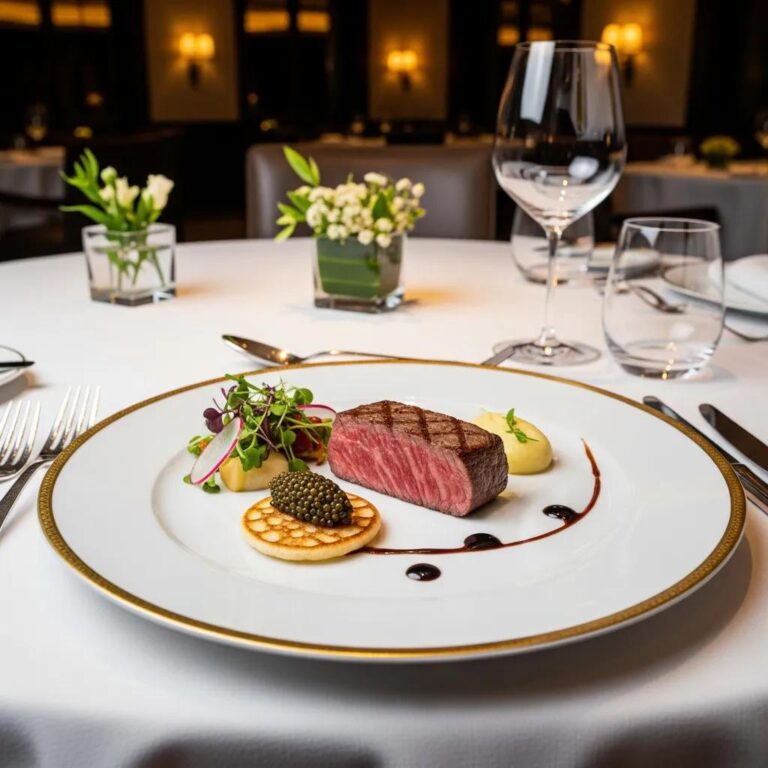
With A5 Wagyu, the goal is to cut richness while honoring savory depth. High-acidity sparklers with persistent mousse do this well: they clean the palate and reset taste receptors so each bite reads fresh. Cava and Extra Brut Champagnes are especially useful for slicing through fatty textures and adding tension that amplifies umami without conflicting with soy or truffle notes. For sushi, aromatic matches—citrus and green apple—work with citrus-dressed or pickled components, while autolytic notes support seared or soy-glazed pieces.
Service guidance helps these pairings shine: keep high-acid sparklers moderately chilled to retain their structure, and bring vintage Champagnes up a touch in temperature to show honeyed complexity for richer sushi courses. These steps help each course arrive with the intended contrast or complement and preserve a coherent tasting progression.
What Are the Highlights of Kaviar’s Champagne and Sparkling Wine Menu?
Our menu balances Champagne, Cava, Prosecco, and select vintage offerings chosen for tasting profile and pairing flexibility. We showcase producers known for fine mousse and balanced acidity, and annotate tasting notes and recommended pairings to make selection easier. Seasonal rotations and limited bottles are prioritized to align with special-occasion service and omakase changes. The compact table below summarizes featured bottles and tasting profiles so guests can scan options quickly before ordering.
This snapshot makes tasting attributes and pairing roles easy to compare as you decide. After the highlights, many guests ask how our beverage program integrates sake-based cocktails and other features to elevate a luxury meal.
What Are the Tasting Notes and Origins of Moët & Chandon at Kaviar?
Moët & Chandon typically shows brioche, green apple, and citrus-zest notes with balanced acidity—qualities that suit a wide range of Japanese dishes. Its autolytic character adds a subtle savory backbone that pairs especially well with caviar and sashimi, while its fresh fruit clarity supports lighter cooked plates. Hailing from Champagne, France, Moët brings expectations of fine mousse and structured acidity that make it a dependable bridge between raw seafood and richer celebratory dishes. Service-wise, conservative chilling and careful handling preserve effervescence and aromatic clarity.
Knowing this profile helps guests choose Moët when they want an elegant, broadly appealing Champagne that complements the tasting menu without overpowering it. The next subsection contrasts Cava and similar alternatives and where value-driven sparklers fit on our list.
Which Sparkling Wines Like Capdevila Pujol Cava Are Available at Kaviar?
Cava and other non-Champagne sparklers appear on our list as high-acid, value-forward options that offer excellent texture-to-price balance for pairing. Capdevila Pujol Cava, for example, delivers crisp citrus, green apple, and a saline finish that pairs well with fried dishes and fatty meats by adding contrast. Prosecco offers a lighter, aromatic route for early-course sashimi or as a palate-opening aperitif. Including both prestige Champagne and regionally distinct sparklers gives us flexibility for celebration and precise course matching, so every guest can find a sparkling partner that fits their goals.
By offering both categories, we provide tools for both ritual and discovery across omakase and special-occasion service.
How Does Kaviar’s Beverage Program Elevate the Luxury Dining Experience?
Our beverage program amplifies meals through sommelier-led pairings, sake-based cocktails, and seasonal sparkling rotations that enhance texture interplay, aromatic continuity, and presentation. We view drinks as storytelling devices that guide guests through the tasting menu—using sparkling wines to refresh and prepare the palate, and sake-based cocktails to bridge traditional Japanese flavors with contemporary mixology. Attention to service—glassware, temperature control, and sequencing—makes sure each wine or cocktail plays a clear role from amuse-bouche to dessert. In short, the beverage program is integrated into our dining architecture, not an afterthought.
This framework shows how each element advances guest experience goals—from flavor bridging to occasion-driven selection. The following section explains sake-based cocktails and their role alongside a champagne-forward program.
What Are Sake-Based Cocktails and How Are They Featured at Kaviar?
Sake-based cocktails blend sake’s natural umami and subtle sweetness with citrus, herbal notes, or sparkling elements to bridge classic Japanese flavors and modern mixology. These drinks serve as transitional beverages that complement sashimi textures or prepare the palate for a sparkling-wine pairing. Typical approaches include pairing junmai or ginjo sake with yuzu, shiso, or a splash of sparkling wine to add lift and effervescence. By featuring sake-based cocktails alongside Champagne and Cava, our program gains flexibility to accentuate or contrast flavors within an omakase sequence.
Offering these cocktails as aperitifs or pairing options lets guests experience intentional flavor transitions—an approach that honors Japanese ingredients while using sparkling wine’s cleansing power.
How Does the Champagne Selection Enhance Celebratory and Special Occasion Dining?
Champagne and selected vintage cuvées naturally signal celebration; at Kaviar, bottle choice and presentation mark milestones—anniversaries, private events—while fitting into the omakase narrative. Prestige cuvées and vintage Champagnes bring layered aromatics and fuller body suited to finale courses or dishes with truffle and aged soy reductions, adding both flavor weight and ceremonial presence. Service elements—attentive uncorking, careful presentation, and recommended pairings—heighten the moment without overshadowing subtle flavors. For multi-course celebrations, moving from lighter Brut styles to richer vintage selections creates an escalating arc of flavor and anticipation.
This choreography turns Champagne into a focal point of the event, helping create memorable moments for guests celebrating milestones and special gatherings.
How Can You Reserve a Table to Enjoy Kaviar’s Champagne and Sparkling Wine Selection?
Booking a pairing-focused meal at Kaviar is straightforward: our reservation flow and drink menu are set up to accommodate omakase seating and special-occasion requests. Guests who want a pairing-driven experience should specify preferences—chef’s counter seating or interest in a sparkling progression—so our sommelier can prepare a thoughtful sequence. The booking form also accepts notes for anniversaries or special service requests, which helps our team align bottle selection and presentation with the occasion. This lets diners secure an experience where beverage and cuisine are orchestrated for maximum impact.
When planning, consider the seating and timing that best suit your goals; next, we explain where to find the drink menu and how to choose ideal times for pairing-centric visits.
Where Can You Find Kaviar’s Dedicated Drink Menu Online?
Our dedicated drink menu page lists Champagne, sparkling wines, and sake-based cocktails, with tasting notes and pairing suggestions to help you plan ahead. The menu shows featured bottles and by-the-glass options and notes seasonal rotations so guests know what to expect. Checking the menu before booking lets you share preferences with our team and helps the sommelier prepare tailored bottle recommendations for your omakase sequence. Having the menu online supports thoughtful planning for celebratory meals and tasting-focused reservations.
Reviewing the menu before your visit helps secure pairings that align with your culinary goals and the tasting sequence you prefer. The next section describes the best times and occasions to experience our full pairing program.
What Are the Best Times and Occasions to Experience Kaviar’s Luxury Champagne Pairings?
The ideal moments to enjoy Kaviar’s champagne pairings are evening omakase services, weekend celebratory dinners, and curated tasting events when the beverage program is featured. Chef’s counter seating or dedicated omakase arrangements offer the closest interaction with service staff and sommeliers, enabling bespoke pairings and on-the-spot adjustments. Anniversaries, milestone celebrations, and private gatherings benefit from advance notice so we can select vintage bottles or arrange a sparkling progression. Booking during these times helps ensure access to limited offerings and the most attentive pairing-driven service.
These timing suggestions help guests align their objectives—discovery, celebration, or a deep tasting—with our service model and inventory.
What Do Experts and Customers Say About Kaviar’s Champagne and Sparkling Wine Pairings?
Both critics and guests praise Kaviar for integrating sparkling wine into Japanese fine dining through coherent pairings, attentive service, and memorable presentation. Reviews often highlight our ability to sequence beverages alongside omakase to create texture-driven contrasts and aromatic continuity that elevate each course. Our focus on quality ingredients—A5 Wagyu, uni, caviar—paired with a careful selection of Champagne, Cava, and Prosecco drives strong word-of-mouth among diners seeking special-occasion and discovery-driven experiences. That social proof encourages new guests to book with pairing intent.
Our five-year anniversary in September 2024 further underscores our place in Pasadena’s luxury dining scene, reflecting program evolution and consistent curation; prospective guests can view the milestone as evidence of refined, repeatable service. The following subsection highlights how reviews emphasize our beverage pairing strengths.
Sensory Marketing in Fine Dining: Taste and Ambience
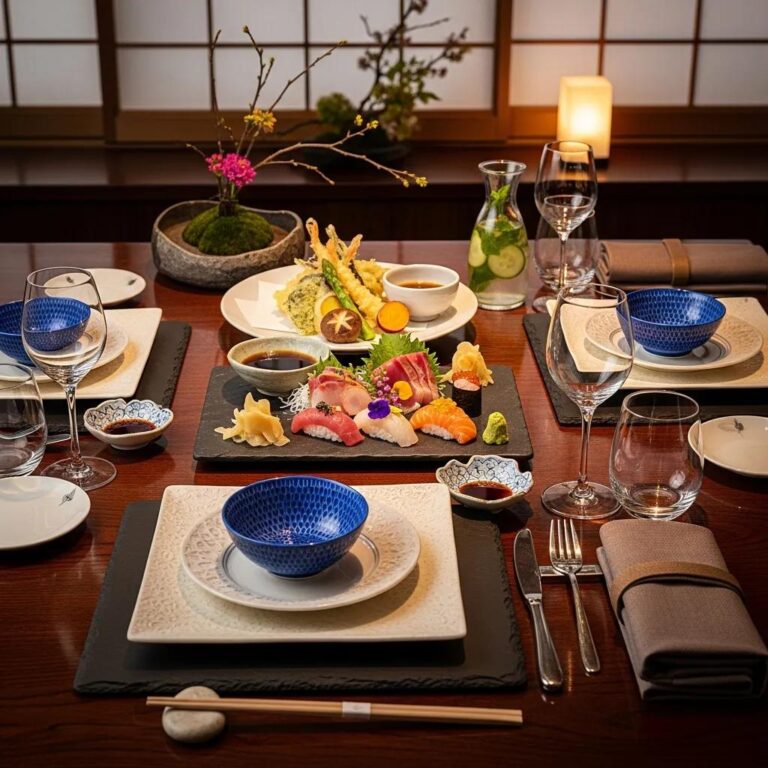
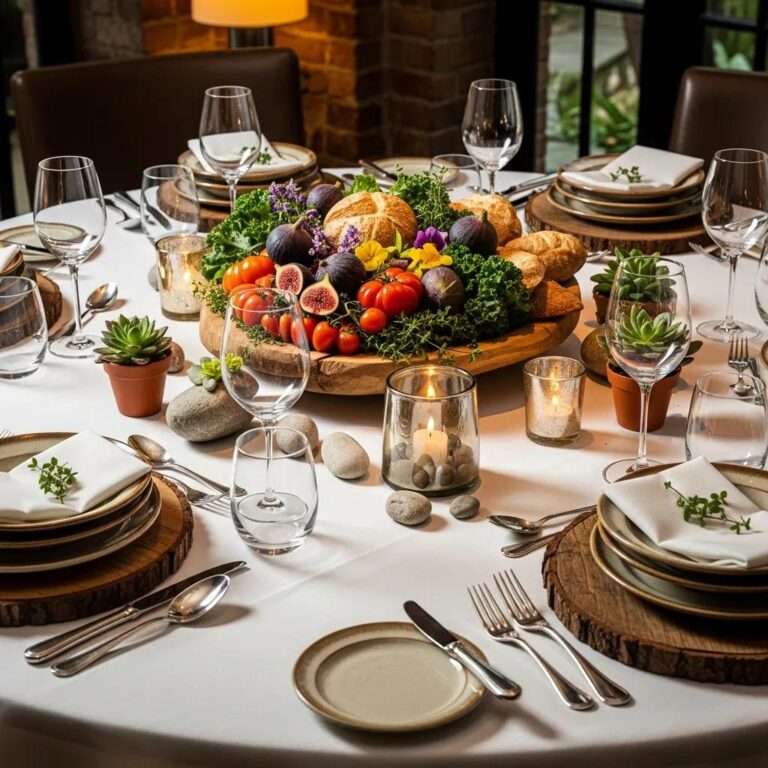
The fine dining experience is a multisensory journey where taste and ambience combine to create lasting impressions and shape perceptions of luxury. This paper examines how these two elements intersect—showing that taste extends beyond flavor to include texture, plating, and storytelling, while ambience acts as a quiet amplifier through sight, sound, and touch. Using examples like Japanese omakase and farm-to-table concepts, the study illustrates how cohesive sensory narratives raise satisfaction, build emotional connections, and support premium pricing.
How Taste and Ambience Shape Consumer Perceptions—Sensory Marketing in Fine Dining, 2024
Which Reviews Highlight Kaviar’s Excellence in Champagne and Japanese Fine Dining Pairings?
Selected reviews and expert commentary consistently single out our sommelier-guided approach—observing that pairing suggestions enhance both subtle and robust menu items without obscuring ingredient quality. Critics note successful contrasts, like Extra Brut pairings with fatty Wagyu, and many praise vintage Champagne choices for spotlight courses. Guest feedback frequently mentions thoughtful presentation, knowledgeable staff recommendations, and the way sparkling wines refresh the palate between courses. These consistent observations validate our approach and help newcomers know what to expect when booking a pairing-focused meal.
Synthesizing these sentiments shows our program’s strengths lie in technical pairing logic, coordinated service, and selection depth—factors that lead to repeat bookings for special occasions.
How Does Kaviar’s 5-Year Anniversary Reflect Its Authority in Luxury Beverage Selection?
Reaching our five-year milestone signals a sustained commitment to refining the beverage program and deepening partnerships with producers and sommeliers, which enhances the quality and variety of sparklers we can offer. The anniversary is a credibility marker: it shows we’ve iteratively tuned pairings, service protocols, and menu rotations to better serve omakase and celebratory diners. For guests, that history suggests reliable expertise and a mature pairing philosophy that continues to evolve with seasonal menus and beverage innovations. Considering this track record when booking gives diners confidence their reservation will receive practiced, thoughtful attention.
Recognizing the anniversary as a sign of authority helps guests choose Kaviar for milestone celebrations and tasting explorations—another reason to reserve early for pairing-centered seating.
The Science of Effervescence in Champagne and Sparkling Wines
Bubbles in a glass of Champagne may seem purely celebratory, but they are also a fascinating subject for fluid physics. Under typical tasting conditions, countless tiny bubbles nucleate and rise after a pour. Effervescence results from the interaction of dissolved CO2, microscopic nucleation sites, and both glass and liquid properties. This review traces the journey of yeast-fermented CO2—from dissolution during fermentation to its release in the glass—and summarizes recent advances in the physicochemical processes behind bubble formation and rise. Understanding this science deepens appreciation for the textures and sensations that make sparkling wine so engaging.
Effervescence in Champagne and sparkling wines: From grape harvest to bubble rise, G Liger-Belair, 2017
Frequently Asked Questions
What types of sparkling wines are best for pairing with Japanese cuisine?
High-acidity sparklers—Champagne, Cava, and Prosecco—are often the best matches for Japanese cuisine. They preserve delicate flavors in sashimi and caviar while cutting through the richness of dishes like A5 Wagyu. Bubbles act as a palate cleanser between courses, and choosing wines with complementary aromatics—citrus, floral, or light brioche—helps highlight traditional Japanese ingredients.
How does the service temperature affect the tasting experience of sparkling wines?
Temperature is key. Sparkling wines are generally best served chilled, around 45–50°F (7–10°C), which preserves effervescence and accentuates freshness. Cooler service can tighten aromas; slightly warmer service helps vintage Champagnes open up and reveal more complex flavors. Appropriate glassware—tulip or a narrow white-wine glass—also concentrates aromas while preserving bubbles.
What are some common mistakes to avoid when pairing sparkling wine with food?
Common missteps include mismatching intensity—serving a delicate wine with a very rich dish—or ignoring acidity, which is essential for cutting fat. Another mistake is serving at the wrong temperature, which can mute aromas and flatten bubbles. Consider the dish’s texture and seasoning, and choose a wine that either mirrors or thoughtfully contrasts those elements.
Can sparkling wines be used in cocktails, and how do they enhance the flavor?
Absolutely. Sparkling wines add effervescence, acidity, and complexity to cocktails, balancing richer or sweeter ingredients and creating a lively mouthfeel. They lift flavors and add freshness—making them a natural partner for sake-based cocktails that bridge traditional Japanese elements with modern barcraft.
What role does a sommelier play in enhancing the dining experience at Kaviar?
Our sommeliers tailor pairings to the omakase by assessing each dish’s flavors and textures and recommending sparklers that either complement or provide contrast. They manage service details—temperature, glassware, and sequence—to ensure each pour enhances the overall progression. Their seasonal knowledge and access to limited selections help guests discover unique pairings that elevate the meal.
How can guests ensure they receive the best pairing experience during their visit?
Reserve in advance and note that you want a pairing-focused meal. Request chef’s-counter seating or indicate special occasions so our team can plan accordingly. Review the drink menu beforehand and share any preferences—this helps the sommelier prepare a customized sequence. Be open to recommendations and ask questions; that dialogue makes the experience more personal and memorable.
Conclusion
Kaviar’s champagne and sparkling wine program is designed to amplify the luxury of Japanese fine dining—balancing delicacy and celebration across every course. Our curated list, sommelier guidance, and attentive service create memorable moments for both intimate dinners and milestone events. Reserve a table to experience a thoughtfully orchestrated tasting where beverage and cuisine are paired with purpose. Explore our drink menu and book today to secure an unforgettable meal.