





The Future of Fine Dining: How AI, Robotics and Smart Innovations Elevate Luxury Omakase
Overview
“Future dining” is where careful craft meets thoughtful technology: AI, robotics, immersive media, and smart systems working together to sharpen service, protect rare ingredients, and deepen the story behind each course. This piece outlines practical applications—from AI-driven personalization and robotic kitchen assistants to IoT-controlled finishing and AR/VR storytelling—and explains how those tools deliver measurable benefits for luxury restaurants and their guests. High-end kitchens must sustain flawless consistency for items like A5 Wagyu and caviar while delivering bespoke omakase journeys; emerging technologies solve that by combining data-led accuracy with artisanal oversight. You’ll learn how AI tailors menus and bookings, how robotics and smart kitchens safeguard ingredient quality, how immersive media heightens tasting narratives, and which sustainable tech options cut waste and energy use. We map concrete implementations, compare solutions in concise tables, and offer KPIs to help luxury Japanese dining operators and discerning guests evaluate pilot programs.
How Is AI Transforming Personalized Dining Experiences in Fine Dining?
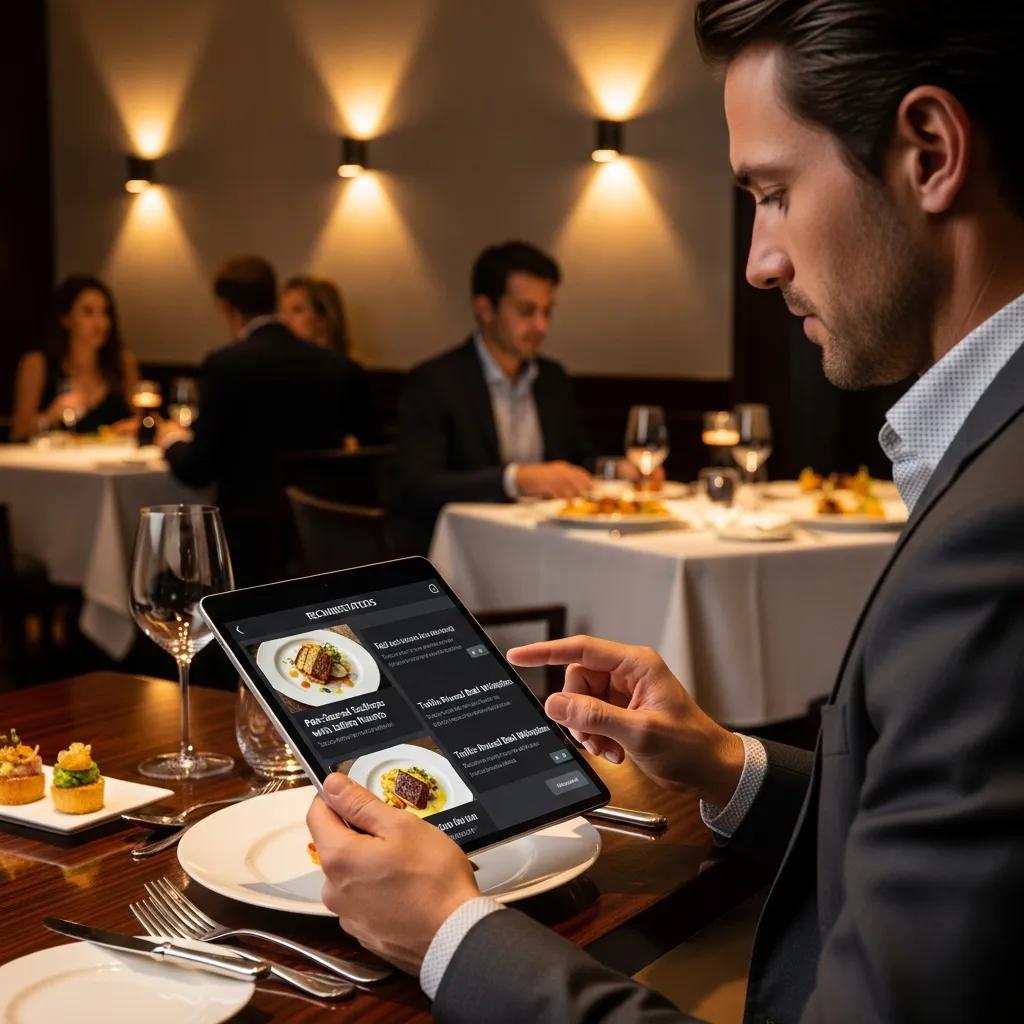
In fine dining, AI personalization means systems quietly analyze guest data to recommend courses, anticipate dietary needs, and pace service so each tasting sequence feels bespoke. Practically, AI uses reservation history, stated preferences, and anonymized behavioral signals to order tasting sequences and surface provenance notes at the right moment — producing a tailored omakase that honors the chef’s intent while enhancing guest delight. The payoff is higher perceived value, smoother arrivals, and operational insights that inform staffing and mise-en-place. Below we outline concrete AI touchpoints for front-of-house and back-of-house workflows to show how personalization can scale without compromising the human craft of haute cuisine.
AI supports three core personalization functions in luxury service:
- Menu recommendations: Intelligent suggestions that shape omakase variations using prior visits and declared allergies.
- Guest profiling: Compact profiles that capture seating preferences, special occasions, and ingredient aversions to enable thoughtful service.
- Reservation optimization: Predictive models that estimate no-shows and ideal table cadence, helping maximize covers without shortening the experience.
Those functions create a virtuous loop: better experiences produce better data, and better data makes personalization more precise. The next section explains the recommendation engines and data sources that power these outcomes.
What Role Does AI Play in Menu Recommendations and Guest Preferences?
Recommendation engines match guest signals to tasting sequences by combining collaborative filtering, content-based matching, and culinary rules that respect diet and seasonality. These systems pull from past orders, direct feedback, and ingredient provenance to suggest thoughtful swaps — for example replacing a heavy caviar course with a lighter textural option for guests who prefer subtlety — while keeping the chef’s narrative intact. Privacy and consent remain essential: profiles should be opt‑in, anonymized for analytics, and transparent for guests to review or correct. In practice, recommendation engines reduce decision fatigue, lift check averages when the upsell aligns with guest taste, and preserve menu coherence through rule-based constraints that avoid incompatible substitutions.
AI recommendations commonly connect to reservation and guest management platforms, further smoothing check-in and helping staff anticipate pacing and staffing needs.
How Does AI Improve Reservation Systems and Guest Management?
AI enhances online reservations by forecasting no-shows, suggesting optimal table assignments, and recommending pacing for multi-course tastings to balance kitchen throughput. Predictive capacity models use historical bookings, party size, and seasonal demand to tune availability and enable dynamic yield management—without compromising the integrity of an omakase. When integrated with major reservation platforms, guest preferences travel from booking to table through automated notes and pre-order prompts, cutting check-in time and enabling a confident, personalized welcome. Operational benefits include fewer empty covers, more accurate staffing forecasts, and a smoother arrival experience that sets the tone for a precisely timed service.
Kaviar currently uses digital menus and QR codes and integrates with Resy and OpenTable. These foundations create a natural path toward AI-enabled personalization and more efficient booking flows while preserving reservation intent and guest convenience.
Integrating AI into reservation systems helps restaurants streamline bookings and operations, benefiting both guests and staff with a more efficient arrival and seating process.
AI Integration for Optimized Restaurant Operations and Reservations
Implementing AI in reservation platforms lets restaurants manage bookings more efficiently, improving the guest experience and easing staff workflows.
What Are the Latest Robotics Innovations in Luxury Restaurant Kitchens?
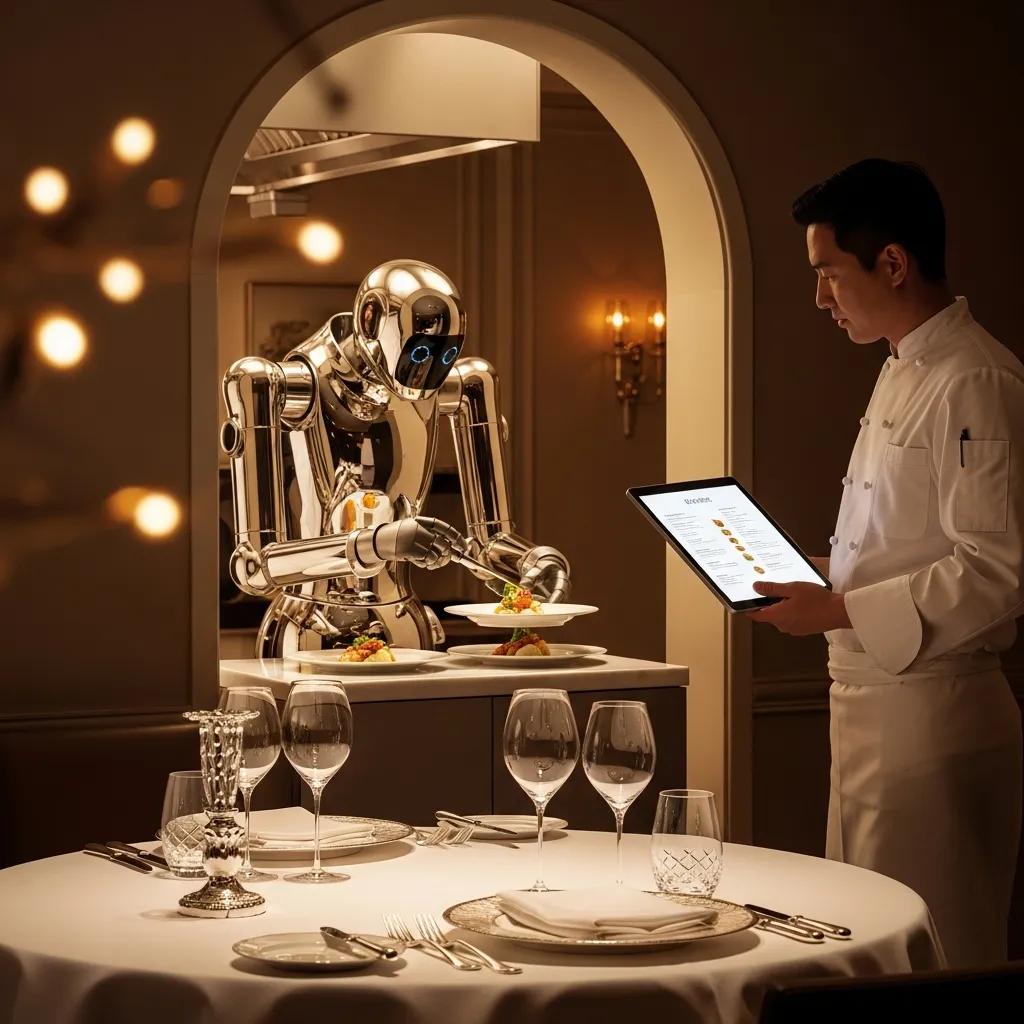
In luxury kitchens, robotics focus on high-precision tasks—portioning, delicate slicing, and repeatable plating—that protect ingredient quality and free chefs to refine flavor and finish. These systems pair deterministic motion control with computer vision and calibrated tooling to deliver repeatable, micro-accurate portions—critical when handling A5 Wagyu or scored servings of caviar. The immediate benefits are consistent presentation across covers, reliable cook times for sequential courses, and lower risk of human error during complex services. Below we outline common robotics use-cases, a concise comparison table, and guest-perception and cost considerations for integration.
Typical robotic applications include precision slicers, automated sous-vide handlers, and plating arms that execute exact garnish patterns while chefs apply final seasoning and artistic touches. Robots extend a chef’s capabilities rather than replace them.
How Do Robotic Chefs Enhance Food Preparation and Consistency?
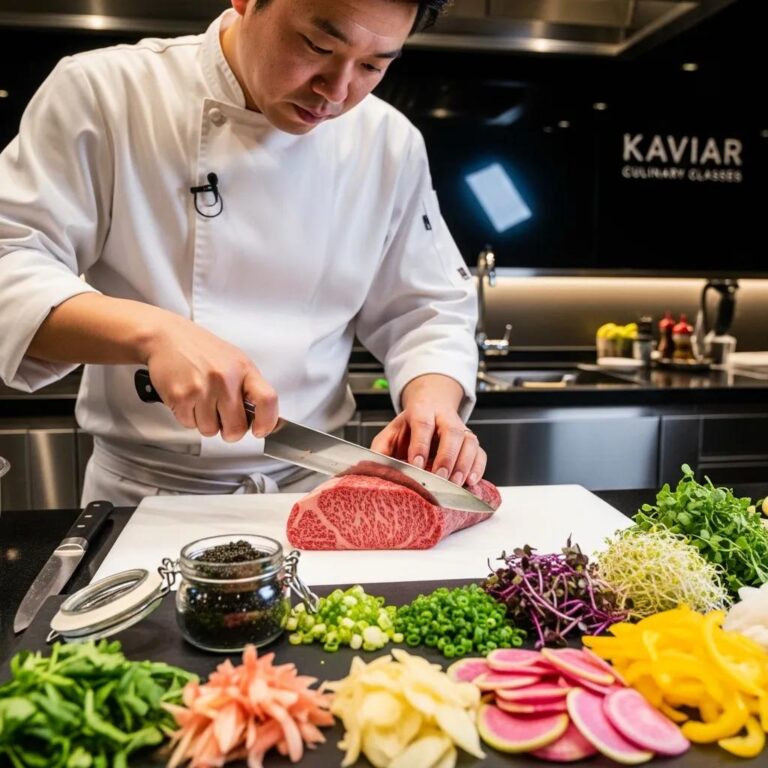
Robotic stations perform narrow, high-precision tasks—micro-slicing Wagyu, painting sauces with uniform strokes, or portioning caviar—using servo actuators and vision-guided alignment. Repeatable motion paths and environment sensing reproduce chef parameters within tight tolerances, reducing variation and ensuring each guest receives an equivalent presentation. When robots take on repetitive precision steps, the culinary team can redirect time to sensory adjustments and final plating. The quality-control benefits include fewer presentation inconsistencies, improved yield on costly proteins, and predictable timing that supports an uninterrupted omakase rhythm.
This focus on precision naturally extends to labor planning and throughput improvements that robotics enable.
What Benefits Do Robotics Bring to Kitchen Efficiency and Labor Support?
Robotics lower repetitive strain on staff and reduce variance in prep time for high-touch components, allowing smaller teams to deliver consistent tasting menus. Quantitative gains include shorter average prep times per course, less spoilage from mis-portioning, and more predictable synchronization with front-of-house pacing. ROI often comes from redeploying skilled cooks from routine tasks to guest-facing or creative work, and from reduced waste thanks to accurate portioning of premium ingredients. Successful adoption requires staff training on robot oversight, basic maintenance, and integrating robotic outputs into final plating so the handcrafted signature remains intact.
To help evaluate options, the table below summarizes common robotic platforms and their best-fit fine-dining use-cases.
Robotic Solutions Comparison Table
Intro: This table compares robotic platforms by primary task, standout attribute, and the fine-dining scenario where each offers the most value.
Summary: Choose the robotic platform that targets the repetitive precision tasks limiting throughput. Focused pilots deliver the fastest operational returns and best protect ingredient value.
How Are Immersive Dining Experiences Shaping the Future of Fine Dining?
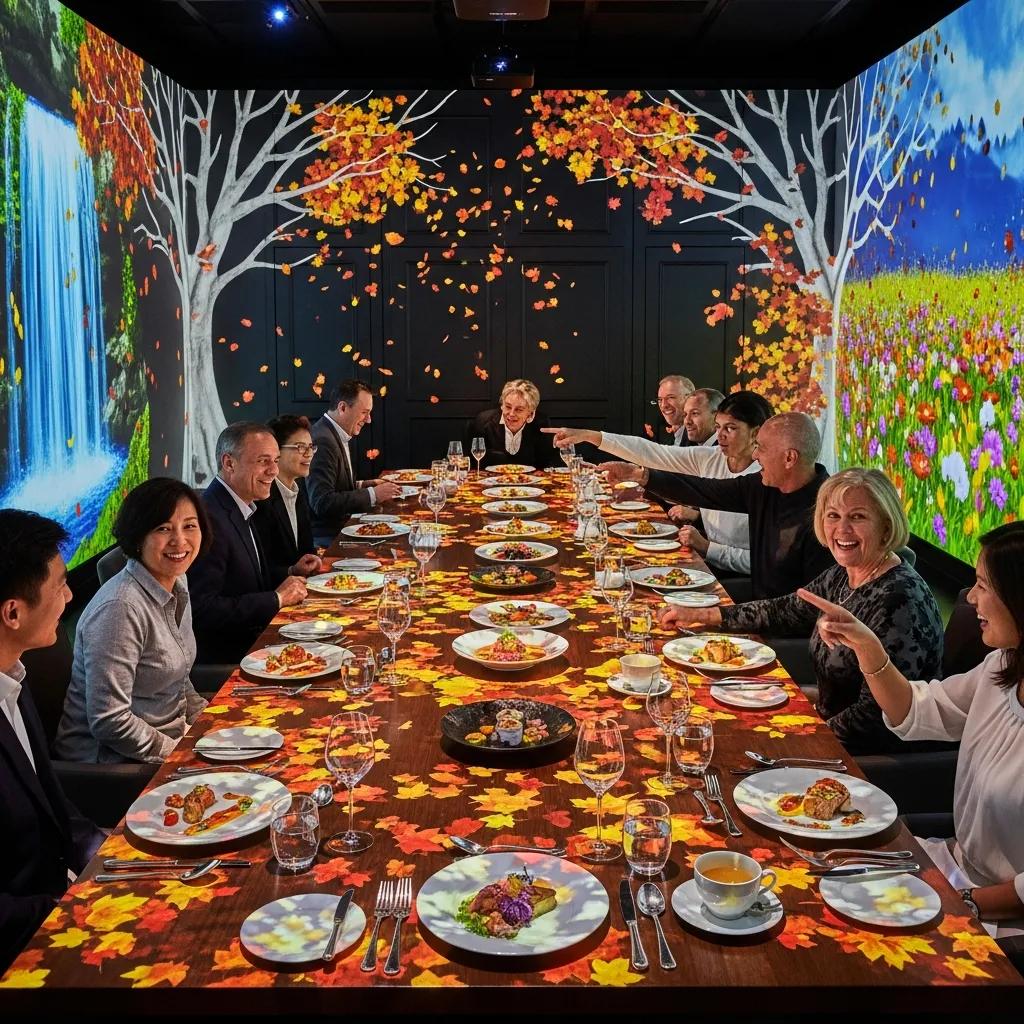
Immersive dining blends AR, VR, and projection mapping to amplify culinary storytelling—adding sensory context like provenance, seasonal themes, and chef commentary without taking attention from the food. Layered media can frame each course: AR overlays deliver ingredient stories on guests’ devices, VR can offer optional provenance journeys, and projection mapping can subtly transform the tablescape to reflect a season or source. The primary benefit for luxury restaurants is narrative enrichment—these layers deepen emotional engagement and help justify premium pricing by creating memorable moments rooted in craftsmanship. Thoughtful choreography is essential so technology complements, not competes with, the tactile and gustatory heart of an omakase.
Immersive tech should always be optional and discreet, letting guests opt into narrative layers while preserving the chef-led tasting sequence. Core immersive modalities and their guest impact include:
- AR menus: Visual provenance overlays and plating previews that enrich understanding without interrupting service.
- VR activations: Curated, ticketed provenance journeys for VIPs that deepen connection to sourcing.
- Projection mapping: Subtle atmospheric layers across a course sequence to reinforce seasonal or origin themes.
When integrated with restraint, these modalities let dining rooms craft meaningful arcs that increase perceived value and support storytelling around ingredients like A5 Wagyu and caviar.
What Technologies Enable Augmented Reality and Virtual Reality Menus?
AR and VR menus rely on mobile AR toolkits, lightweight headsets for intimate activations, and server-side content systems that link media assets to menu items and provenance metadata. Phone-based AR overlays work well for general guests—showing origin maps, tasting notes, and recommended pairings—while VR is best reserved for focused, ticketed experiences. UX best practices emphasize optionality and low friction (QR opt-ins) and concise content that enhances rather than distracts from the meal. In fine dining, AR is most effective when it supports the server’s storytelling, offering immediate visual context for rare ingredients without replacing chef‑to‑guest interaction.
Projection mapping and room-scale immersive experiences extend AR/VR content into the physical space; the next subsection covers practical production considerations.
How Does Projection Mapping Create Multi-Sensory Culinary Journeys?
Projection mapping lays visuals across tables, dishware, or room surfaces and synchronizes imagery with each course to build multi-sensory narratives that reinforce flavor and origin stories. Technically this demands precise timing, projector calibration, and coordinated sound design so visuals align with plate reveals. Examples include projecting seasonal landscapes during a winter tasting or short films of fishers while a seafood course arrives—tactics that increase emotional resonance. Operationally, projection work requires careful run-throughs and exact service choreography to remain complementary and non-distracting.
When used with restraint and clear narrative intent, projection mapping strengthens a tasting menu’s story and leaves lasting impressions that encourage repeat visits and strong word-of-mouth among high-intent diners.
Projection mapping and table-level animations can reframe the dining moment, marrying visual storytelling with culinary technique to immerse guests in the meal’s narrative.
Immersive Projection Mapping for Culinary Storytelling in Fine Dining
Table projections and 3D animations reimagine the dining environment to support culinary storytelling, deepening guests’ emotional engagement with each course.
Digital storytelling is reshaping dining by weaving plot, setting, and character into the meal—immersive tools let diners follow an ingredient’s journey or meet digital guides who frame the experience.
Digital Storytelling and Immersive Technologies in Fine Dining Experiences
This chapter explores how narrative elements—plot, character, setting—are integrated into dining through immersive technologies, enabling guests to trace an ingredient’s journey or interact with curated digital narrators.
What Smart Kitchen Technologies Are Revolutionizing Fine Dining Operations?
Smart kitchen systems—IoT sensors, automated cooking aids, and analytics—bring precise temperature and humidity control, traceable storage conditions, and data-driven menu tuning that protect premium ingredient quality. Sensor networks and closed-loop controls keep storage and cook parameters within tight bands, preventing spoilage and ensuring consistent doneness across service. Benefits include fewer spoilage incidents, more reproducible finishing for delicate proteins, and data that informs purchasing and menu engineering. The short table below compares common smart-kitchen options by accuracy, integration effort, and their impact on premium-ingredient handling to guide investment choices.
Sensor and automation data also feeds dashboards tracking KPIs—waste percentage, temperature excursions, and course timing consistency—metrics that directly affect margins when working with A5 Wagyu and caviar.
How Do IoT Sensors and Automated Cooking Aids Optimize Culinary Precision?
IoT sensors monitor temperature, humidity, and movement across storage and prep zones, while automated aids—precision immersion circulators and temperature-controlled finishing stations—run chef-set programs with repeatable accuracy. These devices feed kitchen management systems alerts and logs, enabling staff to correct deviations and learn from patterns. For perishable luxury items, sensors help maintain ideal aging conditions for Wagyu and stable storage for caviar, reducing the risk of quality loss. Integration outcomes include fewer manual checks, fewer spoilage events, and tighter control over cook endpoints, producing consistent texture and flavor across multi-course services.
The operational data from sensors also supports analytics-driven decisions about portion sizes and ordering cadence, discussed next.
How Is Data Analytics Used for Menu Optimization and Waste Reduction?
Analytics combines sales, reservation, and inventory signals to forecast demand, refine portions, and adapt menus to lower waste while preserving culinary standards. Models predict demand for seasonal fish or specialty Wagyu cuts, enabling smarter procurement and reducing overbuying of costly items. Useful KPIs include waste percentage, food cost percentage, and forecast accuracy—improvements in these metrics protect margins and reduce environmental impact. Analytics-driven menu engineering can also recommend limited-run dishes that maximize use of perishable components, aligning creativity with operational realities.
To help decision-making, the table below summarizes smart-kitchen technologies by characteristic and expected impact.
Smart Kitchen Technology Comparison Table
Intro: This table compares smart-kitchen technologies by defining characteristic, integration complexity, and expected benefit for premium-ingredient handling.
Summary: Targeted investments in smart-kitchen elements that protect high-value ingredients yield measurable spoilage reductions and smoother multi-course execution.
Kaviar’s current digital menu and QR implementations provide a strong guest-facing foundation; pairing those conveniences with back-of-house IoT and automation protects A5 Wagyu and caviar while improving the guest journey from booking to service.
How Is Sustainable Technology Driving Efficiency in Fine Dining Restaurants?
Sustainable technology addresses food waste, energy use, and provenance transparency—three priorities for luxury restaurants looking to justify premium prices through responsible sourcing and operational stewardship. AI inventory systems forecast usage and shelf life, energy management platforms optimize HVAC and kitchen loads, and traceability tools document supplier provenance to build guest confidence. By pairing predictive analytics with automated controls, restaurants reduce unnecessary ordering and energy waste while sustaining culinary quality. Outcomes are measurable: lower waste, reduced utility costs, and stronger provenance narratives for ethically sourced components.
The problem-solution list below highlights sustainability challenges and tech-enabled remedies suited to high-end Japanese dining operators.
Technology solutions that address sustainability challenges:
- AI inventory forecasting: Predicts precise ordering quantities for perishable, high-cost items to minimize spoilage.
- Energy management systems: Adjust kitchen and dining energy use based on occupancy and service demand.
- Traceability platforms: Capture provenance data for ingredients like A5 Wagyu and caviar to support authenticity claims.
Together, these tools build a resilient operation that lowers cost and strengthens provenance stories for luxury ingredients, increasing guest confidence and brand differentiation.
What AI Solutions Help Reduce Food Waste and Manage Inventory?
AI inventory platforms combine historical sales, reservation patterns, spoilage models, and supplier lead times to forecast stock needs more accurately than manual ordering. For high-cost items, AI can recommend smaller, more frequent deliveries or suggest menu swaps to use near-expiry components—protecting margins on items like A5 Wagyu and caviar. Practical benefits include lower spoilage rates and improved inventory turnover; early adopters report double-digit waste reductions. KPIs to track include waste percentage reduction, inventory turnover, and forecast accuracy to measure gains and guide procurement cadence.
Lowering inventory waste complements energy and sourcing strategies explored next.
How Does Technology Support Energy Management and Local Sourcing?
Energy management systems use occupancy sensing, demand-based kitchen ventilation, and scheduled equipment controls to cut unnecessary consumption during downtime. Those controls deliver direct cost savings and smaller carbon footprints—features that resonate with sustainability-minded luxury diners. Local sourcing platforms and traceability tools simplify supplier management by providing verifiable provenance records, helping restaurants document ethical sourcing for caviar and Wagyu and tell richer origin stories. The combined effect is operational savings, stronger supplier partnerships, and greater guest trust in premium ingredient claims.
Sustainability tools can be quantified to demonstrate ROI and guest impact; the table below compares common solutions and likely benefits.
Sustainability Technology Comparison Table
Intro: This table lists sustainability tools, their primary functions, and estimated benefits for fine-dining operations using premium ingredients.
Summary: Together, these tools reduce operating risk for high-cost menus, reinforce provenance claims, and appeal to eco-conscious diners who value transparency and stewardship.
Kaviar can leverage sustainable tech to reinforce premium sourcing claims and reduce waste tied to limited-run omakase components, aligning environmental responsibility with the restaurant’s luxury promise.
What Is Kaviar Restaurant’s Vision for Integrating Technology with Japanese Fine Dining?
Kaviar’s goal is to champion upscale Japanese fine dining and drive reservations while preserving the artisanal heart of omakase and signature dishes featuring A5 Wagyu and caviar. We already use digital menus and QR codes and integrate with Resy and OpenTable for seamless booking and fresh menu presentation. The vision pairs those guest-facing tools with targeted back-of-house tech—precise robotics for delicate prep, IoT monitoring for temperature-sensitive storage, and optional immersive elements that narrate provenance—so technology enhances, rather than replaces, the chef’s craft. Future pilots should prioritize guest consent, minimal friction, and clear KPIs such as reduced spoilage and higher guest-satisfaction scores.
Our current focus on frictionless reservations and accurate digital menus forms the backbone for deeper integration; layering analytics and precision automation on top helps protect luxury ingredients and deliver consistently memorable omakase services while honoring reservation intent and high-touch hospitality.
How Does Kaviar Use Digital Menus and Online Reservations Today?
Kaviar implements digital menus and QR code menus to give guests hygienic, up-to-date menu information and to streamline ordering during service. Integration with reservation platforms like Resy and OpenTable lets guests book easily while reservation details populate guest profiles, improving pre-service communication for special occasions or dietary needs. Immediate benefits include clearer menu transparency, reduced check-in friction, and quicker seasonal updates—advantages that smooth the guest journey from booking to table. These systems also make it straightforward to run pilots—such as pre-order opt-ins for omakase upgrades or AR provenance overlays—because consent and preference data flow through the same platforms.
Digital menu and reservation foundations make pilot programs simpler to run and measure, enabling us to test upgrades with minimal disruption.
What Future Technologies Could Enhance Kaviar’s Omakase and Luxury Ingredient Service?
Promising technologies for Kaviar include chef-assist robotics for precise micro-prep of Wagyu, traceability displays that surface provenance for caviar, and optional immersive activations for private parties. Start with narrow pilots—automated portioning for a single plate or sensor monitoring of one storage area—and review quarterly against KPIs like waste reduction, timing consistency, and guest feedback. Protecting the human touch is central: technology should perform repeatable elements under chef supervision while servers and chefs retain narrative control. Success is measured by higher guest satisfaction, preserved ingredient value, and a smoother reservation-to-service flow.
Kaviar’s roadmap blends practical pilots, clear KPIs, and a commitment to uphold the restaurant’s upscale Japanese fine dining identity for guests who seek omakase, A5 Wagyu, and caviar in Pasadena.
Frequently Asked Questions
What are the key benefits of using robotics in fine dining kitchens?
Robotics bring repeatable precision to tasks like portioning, slicing, and plating, which helps protect high-value ingredients and ensure consistent presentation. By automating those routine precision steps, chefs regain time for finishing touches and flavor work. The result is more reliable plating, reduced waste on premium items, and a kitchen that runs more predictably without losing its handcrafted essence.
How do immersive dining experiences impact customer engagement?
Immersive elements—AR overlays, projection mapping, or optional VR activations—can deepen guests’ emotional connection to the meal by revealing provenance, seasonality, and chef commentary. Used sparingly and by guest choice, these tools create memorable moments that justify premium pricing and encourage sharing, while keeping the food itself as the central focus.
What role does data analytics play in optimizing restaurant operations?
Data analytics turns reservations, sales, and inventory signals into actionable insights for menu design, portioning, and ordering. Clear data reduces overbuying, improves forecast accuracy, and informs staffing, which together lower waste and protect margins while improving service consistency.
How can fine dining restaurants ensure the sustainability of their operations?
Sustainability starts with smarter ordering and energy management. AI inventory forecasting reduces over-ordering of costly perishables, smart energy controls cut unnecessary consumption, and traceability platforms document sourcing to reinforce ethical claims. Together these approaches lower waste, reduce costs, and strengthen provenance messaging for discerning guests.
What are the challenges of integrating technology in fine dining?
Adoption challenges include staff training, cultural change, and preserving the personal touch that defines luxury dining. Teams need time and support to learn new systems, and guests must be given the option to opt-in to tech-driven experiences. The best integrations are discreet, chef-led, and designed to enhance—not replace—the human elements of service.
How does Kaviar Restaurant plan to enhance its technology integration in the future?
Kaviar will pursue targeted pilots that blend advanced robotics, IoT monitoring, and optional immersive storytelling. Early projects will be narrow in scope—automated portioning or sensor-monitored storage—and measured against KPIs like spoilage reduction, timing consistency, and guest feedback. The aim is to augment artisanal omakase with pragmatic technology that protects ingredients and elevates the guest experience.
Conclusion
Thoughtfully applied technology—AI, robotics, and immersive storytelling—can sharpen personalization, protect rare ingredients, and reduce waste, all while elevating the guest experience. When guided by clear KPIs and chef-led oversight, these tools strengthen operational resilience and deepen the narratives that make luxury dining memorable. Explore how Kaviar blends tradition and measured innovation to protect flavor, provenance, and the intimacy of omakase.